
Safety
General information, not medical advice
Your prescriber and the leaflet in your pack know your situation. This page does not.
- Follow your prescriber and the leaflet
- Don't start, stop, or change a dose on your own
- Doses and warnings differ by country and product
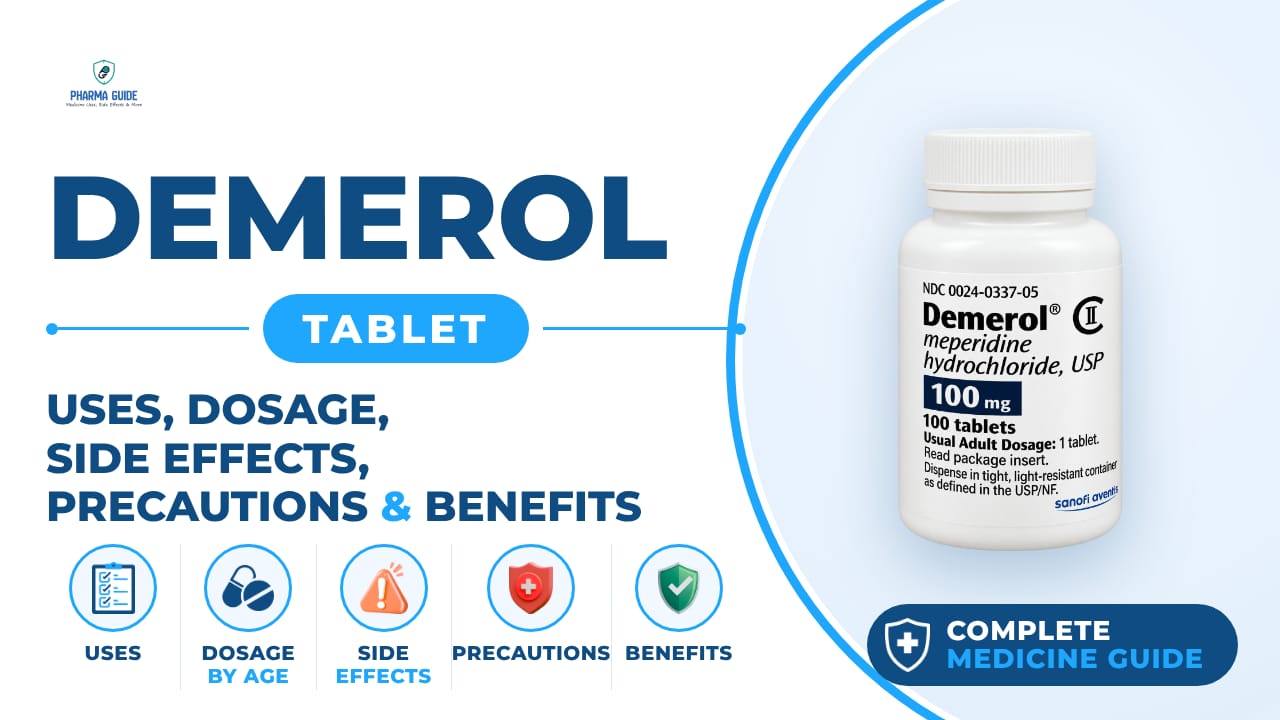
Demerol Tablet: Uses, Dosage, Side Effects, Precautions and Alternates
| Generic name | meperidine (also known as pethidine) |
|---|---|
| Drug class | Opioid analgesic (narcotic) |
| Forms | Tablet, Syrup, Injection |
Quick overview
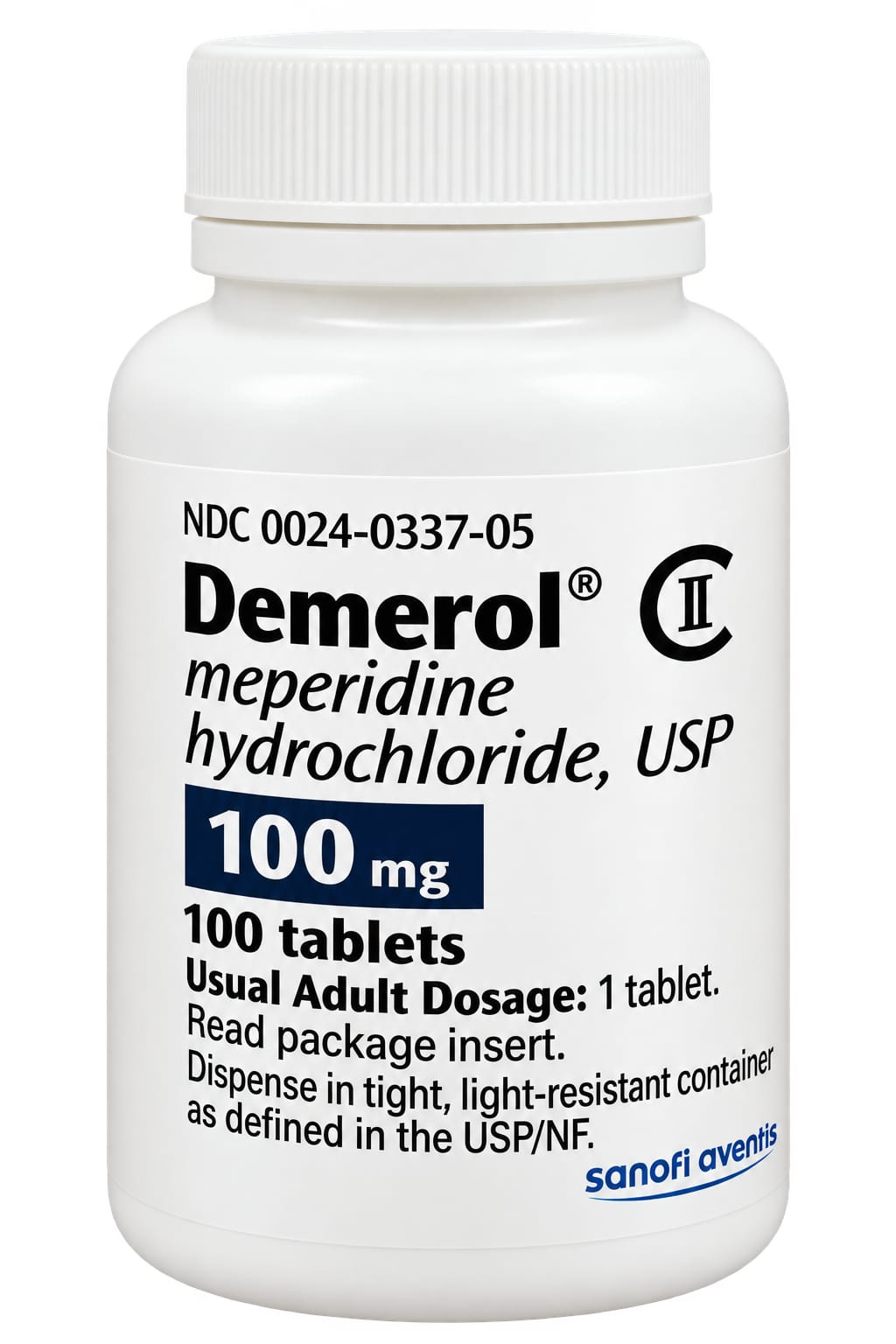
Demerol Tablet (meperidine, also known as pethidine) is a strong prescription opioid analgesic used to manage moderate to severe pain, including short-term pain not controlled by other treatments and pain before or during surgery or other procedures. It works by acting on the brain and spinal cord to change how pain is felt. Demerol carries risks of addiction, misuse, and serious breathing problems, so it should be used exactly as prescribed.
What is Demerol Tablet
Demerol is a strong prescription pain medicine that belongs to a class of drugs called opioid analgesics. An opioid is sometimes called a narcotic.
Demerol Tablet uses
- Managing short-term pain that is severe enough to need an opioid, when other pain treatments do not work well enough or cannot be tolerated
- Relieving moderate to severe pain
- Use before and during surgery or other procedures
Benefits of Demerol Tablet
- Provides relief from moderate to severe pain when an opioid analgesic is required.
- Helps reduce pain intensity when other pain medicines are inadequate.
- Can provide short-term pain relief in selected patients.
- May improve comfort and ability to rest when significant pain is appropriately controlled.
- Is mainly reserved for situations where a healthcare professional determines that meperidine is appropriate.
How Demerol Tablet works
Meperidine works in the brain to change how the body feels and responds to pain, similar to morphine.
Demerol Tablet dosage
Take exactly as prescribed and follow the directions on your prescription label. Do not use in larger amounts or for longer than prescribed. Tablets are taken by mouth. Never crush or break a tablet to inhale the powder or mix it into a liquid to inject the drug. Do not stop using this medicine suddenly after long-term use without asking your doctor how to avoid withdrawal symptoms. Pain medications work best if taken as soon as the first signs of pain occur; waiting until pain worsens may make the medicine less effective. If you have nausea after using this medication, ask your doctor or pharmacist about ways to decrease it, such as lying down with as little head movement as possible.
| Age group | Dose |
|---|---|
| Under 18 years | Pediatric use should be specialist-directed and weight-based; tablets are generally not preferred |
| 18–64 years – Pain | Usually 50–150 mg every 3–4 hours as needed |
| 65+ years | Generally avoid when possible; if required, use a lower dose with close monitoring |
| Kidney/liver impairment | Generally avoid or use with great caution, especially with kidney impairment |
Available forms and strengths
- Tablet
- Syrup
- Injection
Side effects of Demerol Tablet
Common
- Dizziness
- Drowsiness
- Headache
- Nausea, vomiting
- Sweating
- Constipation
- General weakness
- Sedation
- Fainting (syncope)
Serious
- Slow heartbeats, weak or shallow breathing, breathing that stops during sleep
- Severe drowsiness, feeling like you might pass out
- Confusion, mood changes
- Severe constipation
- Tremors, muscle movements you cannot control, or seizures
- Low cortisol levels: nausea, vomiting, loss of appetite, dizziness, worsening tiredness or weakness
- Signs of an allergic reaction: hives, difficult breathing, swelling of face, lips, tongue, or throat
- Symptoms of serotonin syndrome: agitation, hallucinations, fever, sweating, shivering, fast heart rate, muscle stiffness, twitching, loss of coordination, nausea, vomiting, or diarrhea
Warnings and precautions
- Careless use can lead to overdose and death, and even correct use carries a risk of opioid addiction, abuse, and misuse that can lead to death.
- Do not use if you have severe asthma or breathing problems.
- Do not use Demerol if you have used an MAO inhibitor in the past 14 days, as this can cause a dangerous drug interaction.
- This medicine can slow or stop breathing and may be habit-forming; misuse can cause addiction, overdose, or death, especially in a child or someone using it without a prescription.
- Fatal side effects can occur when combined with alcohol or other drugs that cause drowsiness or slow breathing.
- Never share this medicine with anyone else, especially someone with a history of drug abuse; selling or giving it away is against the law.
- Never crush or break a tablet to inhale the powder or mix it into a liquid to inject, as this practice has resulted in deaths from misuse.
- Keep track of the amount of medicine used from each bottle since it is a drug of abuse.
- Using Demerol during pregnancy may cause life-threatening withdrawal symptoms in the newborn baby, who may need medical treatment for several weeks.
- Do not breastfeed while using Demerol, as it can pass into breast milk and cause drowsiness, breathing problems, or death in a nursing baby.
- Tell your doctor if you have kidney disease, as this can affect how the medicine is used.
- Tell your doctor if you have liver disease, as this can affect how the medicine is used.
- Do not drink alcohol while using Demerol. Combining alcohol with this medicine can cause dangerous side effects or death.
- Avoid driving or hazardous activities until you know how this medicine affects you, since it can cause dizziness or drowsiness that may lead to falls, accidents, or severe injuries.
Storage
- Store at 20–25°C (68–77°F) or as directed on the product label.
- Keep in a cool, dry place away from excessive heat and moisture.
- Keep tablets in the original, tightly closed container.
- Protect from direct light and avoid hot or humid storage areas.
- Store securely to prevent accidental ingestion, misuse, or unauthorized access.
- Keep out of reach and sight of children and pets.
When to see a doctor
- Get emergency medical help if you have signs of an allergic reaction: hives, difficulty breathing, or swelling of the face, lips, tongue, or throat.
- Seek emergency help if breathing becomes slow with long pauses, lips turn blue, or the person is hard to wake up.
- Stop using the medicine and call your doctor right away if you have slow heartbeats, weak or shallow breathing, breathing that stops during sleep, severe drowsiness, feeling like you might pass out, confusion, mood changes, severe constipation, tremors, uncontrolled muscle movements, or a seizure.
- Seek medical attention right away if you have symptoms of serotonin syndrome, such as agitation, hallucinations, fever, sweating, shivering, fast heart rate, muscle stiffness, twitching, loss of coordination, nausea, vomiting, or diarrhea.
- If an overdose is suspected, seek emergency medical attention right away. Overdose symptoms may include slow breathing and heart rate, severe drowsiness, muscle weakness, cold and clammy skin, blue-colored skin or lips, fainting, or coma.
Alternatives
- Buprenorphine
- Naproxen
- Ibuprofen
- Acetaminophen (Paracetamol)
- Hydromorphone
Watch the video
FAQs
What is Demerol Tablet used for?
Demerol is used to manage moderate to severe pain, including short-term pain not controlled by other treatments, and pain before or during surgery or other procedures.
How does Demerol Tablet work?
Meperidine works in the brain and spinal cord to change how the body feels and responds to pain, similar to morphine.
What is the usual adult dosage of Demerol Tablet?
For adults aged 18-64 years, the usual dose is 50-150 mg every 3-4 hours as needed for pain.
What are the serious side effects of Demerol Tablet?
Serious side effects include slow heartbeats, weak or shallow breathing, severe drowsiness, confusion, mood changes, severe constipation, tremors, seizures, low cortisol symptoms, allergic reactions, and serotonin syndrome.
Can Demerol Tablet be used during pregnancy?
Using Demerol during pregnancy may cause life-threatening withdrawal symptoms in the newborn baby, who may need medical treatment for several weeks.
General information, not medical advice
Your prescriber and the leaflet in your pack know your situation. This page does not.
- Follow your prescriber and the leaflet
- Don't start, stop, or change a dose on your own
- Doses and warnings differ by country and product
Sources
Video
Related medicines

Injectafer Injection: Uses, Dosage, Side Effects, Precautions and Alternates
Iron products
Injectafer (ferric carboxymaltose) treats iron deficiency anemia and heart failure-related iron deficiency via IV. Learn uses, dosage, side effects, and

Gliclazide Tablet: Uses, Dosage, Side Effects, Precautions and Alternates
Sulfonylurea (hypoglycemic/antidiabetic agent)
Gliclazide Tablet is a sulfonylurea for type 2 diabetes that boosts insulin release. Learn about dosage, side effects, warnings, and precautions.