
Safety
General information, not medical advice
Your prescriber and the leaflet in your pack know your situation. This page does not.
- Follow your prescriber and the leaflet
- Don't start, stop, or change a dose on your own
- Doses and warnings differ by country and product
Denosumab Injection: Uses, Dosage, Side Effects, Precautions and Alternates
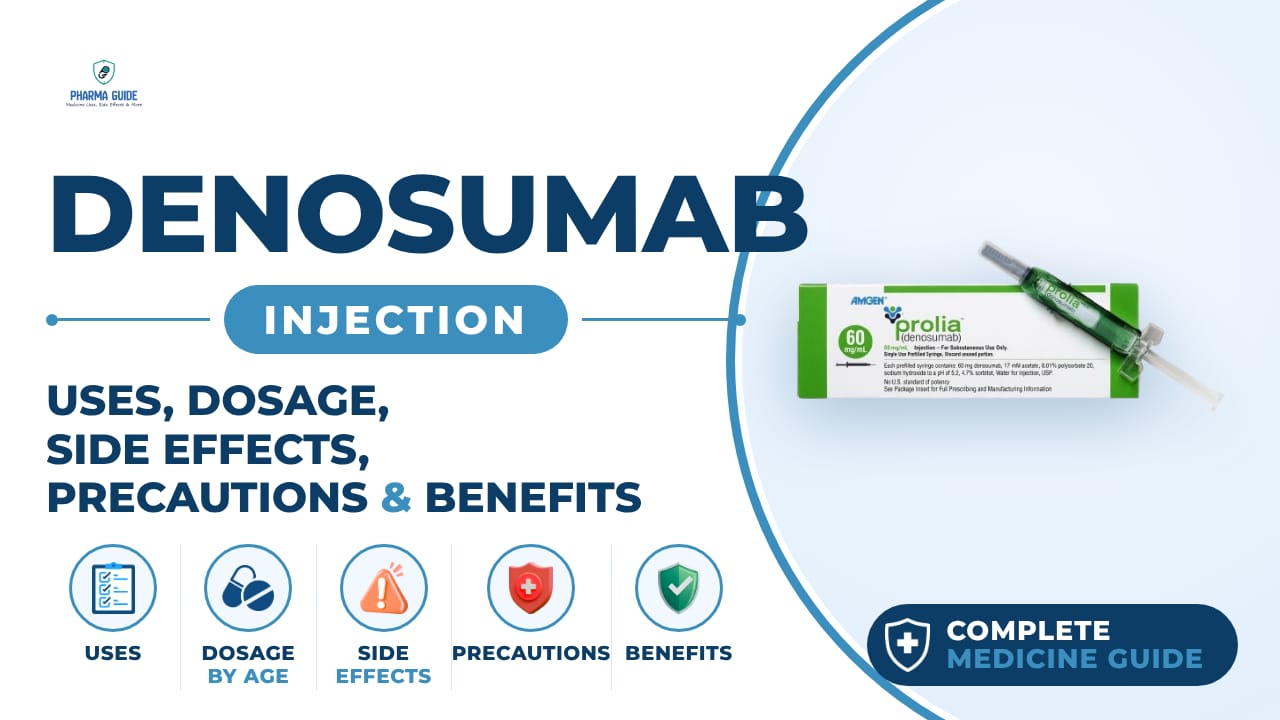
| Generic name | denosumab |
|---|---|
| Drug class | RANK ligand (RANKL) inhibitor |
| Forms | Injection |
Quick overview
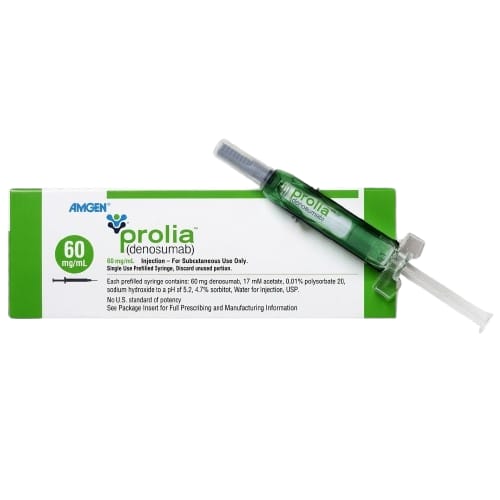
Denosumab Injection (denosumab) is a RANK ligand (RANKL) inhibitor given by injection to help strengthen weak bones and lower the risk of fractures. It is used to treat osteoporosis and other conditions that cause bone loss, and it is available under several brand names, including Prolia and Xgeva. It works by blocking a protein called RANKL, which slows down bone breakdown and helps increase bone density.
What is Denosumab Injection
Denosumab is a man-made antibody medicine given by injection that helps strengthen weak bones and lowers the risk of fractures. It is used to treat osteoporosis and other conditions that cause bone loss, and it comes under several brand names, including Prolia and Xgeva.
Denosumab Injection uses
- Treat certain cases of osteoporosis (a condition in which bones become thin, weak, and break easily)
- Treat bone loss in people with prostate cancer or breast cancer who are taking certain medications that cause bone loss
- Reduce the risk of fractures caused by multiple myeloma or other cancers that have spread to the bones
- Treat a certain type of giant cell tumor of bone (GCTB)
- Treat high calcium levels caused by cancer in people who did not respond to other medications
Benefits of Denosumab Injection
- Significantly reduces the risk of spine, non-spine, and hip fractures
- Increases bone mineral density over time, including with long-term use
- Can be used in people with kidney problems, unlike some other bone medicines
- Given only twice a year for osteoporosis, which some people find easier than daily or weekly pills
How Denosumab Injection works
Denosumab blocks a protein in the body called RANKL. By doing this, it stops the cells that break down bone (called osteoclasts) from forming and working properly. This slows down bone breakdown, which helps bones stay stronger and increases bone density.
Denosumab Injection dosage
This medicine is given as an injection under the skin in the upper arm, upper thigh, or stomach area. It is given by a doctor or nurse in a medical office or clinic, not something you inject yourself at home. Your doctor may also tell you to take calcium and vitamin D supplements while you are being treated; take them exactly as directed. Continue your normal diet unless your doctor tells you otherwise. Keep all your scheduled injection appointments; if you miss one, contact your healthcare provider as soon as possible so the next dose can be rescheduled. Do not stop this treatment on your own without talking to your doctor first, since stopping or delaying doses can raise the risk of spine fractures.
| Age group | Dose |
|---|---|
| Under 18 years | Not fixed |
| 18–60 years | 60 mg, once/day |
| 60+ years | 60 mg, once/day |
Available forms and strengths
Injection
Side effects of Denosumab Injection
Common
- Red, dry, or itchy skin; oozing or crusty blisters; or peeling skin
- Muscle, joint, back, arm, or leg pain
- Swelling of arms or legs
- Unusual tiredness or weakness
- Nausea
- Diarrhea
- Constipation
- Abdominal pain
- Headache
- Runny nose
- Urinary tract infections
- Skin rash or eczema
Serious
- Hives, rash, itching, difficulty breathing or swallowing, swelling of the face, eyes, throat, tongue, or lips
- Fever or chills, cough, shortness of breath, redness, tenderness, swelling or warmth of an area of skin, ear drainage or severe ear pain, frequent or urgent need to urinate, burning feeling when you urinate, severe stomach pain, or other signs of infection
- Painful or swollen gums, loosening of teeth, numbness or heavy feeling in the jaw, poor healing of the jaw (signs of osteonecrosis of the jaw)
- Unusual bleeding or bruising
- Nausea, vomiting, headache, and decreased alertness after stopping treatment, which can occur for up to a year afterward
- New or unusual thigh, hip, or groin pain, which may be a sign of an unusual thigh bone fracture
- Severe skin infection
Warnings and precautions
- This medicine may cause serious or life-threatening low calcium levels in the blood. Your doctor will check your calcium levels before treatment and monitor them during treatment. Tell your doctor right away if you notice numbness or tingling in your fingers, toes, or around your mouth, or muscle stiffness, twitching, cramps, or spasms.
- This medicine can cause a serious jaw bone problem called osteonecrosis of the jaw, especially after dental surgery or treatment. See a dentist for any needed dental work before starting treatment, and keep your mouth clean during treatment.
- This medicine may increase the risk of an unusual break in the thigh bone. You may feel pain in your hip, groin, or thigh for weeks or months before the bone breaks, even without a fall or injury.
- Stopping or significantly delaying this medicine can trigger a rapid rebound effect that raises the risk of multiple spine fractures. This can happen within months to years after stopping. Do not stop this medicine without talking to your doctor, as another medicine is usually needed to protect your bones afterward.
- This medicine may cause broken bones to heal slowly, and in children it may affect bone growth and prevent teeth from coming in properly.
- You should not become pregnant while receiving this medicine, as it may harm the unborn baby. If you can become pregnant, you will need a pregnancy test before starting treatment, and you should use reliable birth control during treatment and for at least five months after your last dose.
- If you become pregnant during this time, call your doctor immediately.
- Tell your doctor if you are breastfeeding before starting this medicine.
- Tell your doctor if you have or have ever had kidney problems, as this can affect your risk of side effects like low blood calcium. People with kidney problems, including those on dialysis, need closer monitoring.
- Check and correct low calcium before treatment.
- Maintain good dental hygiene; dental problems should be evaluated.
- Seek medical attention for symptoms of low calcium, such as muscle cramps or tingling.
Storage
- Store at 2–8°C.
- Do not freeze.
- Protect from light.
- Keep in the original carton.
- Do not shake.
When to see a doctor
- Get emergency help or call your doctor right away if you have signs of a serious allergic reaction, such as hives, rash, itching, trouble breathing or swallowing, or swelling of the face, eyes, throat, tongue, or lips.
- Call your doctor right away if you have signs of infection, such as fever, chills, cough, shortness of breath, redness or swelling of the skin, ear pain, or pain when urinating.
- Call your doctor right away if you have jaw pain, swelling, or numbness, painful or swollen gums, or loosening teeth, which could be signs of a jaw bone problem.
- Call your doctor right away if you have numbness or tingling in your fingers, toes, or around your mouth, or muscle stiffness, twitching, cramps, or spasms, which may be signs of low blood calcium.
- Call your doctor right away if you have new or unusual pain in your thigh, hip, or groin, which could be an early sign of an unusual bone fracture.
- If a dose is running late, get it as soon as possible rather than waiting, and never stop this medicine on your own without a plan agreed with your doctor.
Alternatives
- Ibandronate
- Alendronate
- Zoledronic Acid
Watch the video
FAQs
What is Denosumab Injection used for?
It is used to treat certain cases of osteoporosis, bone loss from prostate or breast cancer treatments, fracture risk from multiple myeloma or bone-spread cancers, giant cell tumor of bone, and high calcium levels caused by cancer that haven't responded to other medications.
How is Denosumab Injection given?
It is given as an injection under the skin in the upper arm, upper thigh, or stomach area by a doctor or nurse in a medical office or clinic, not self-injected at home.
What are the serious risks of Denosumab Injection?
Serious risks include low blood calcium, osteonecrosis of the jaw, unusual thigh bone fractures, slow healing of broken bones, and a rebound risk of multiple spine fractures if treatment is stopped or delayed.
Can Denosumab Injection be stopped on my own?
No, you should not stop this medicine without talking to your doctor first, since stopping or delaying doses can raise the risk of spine fractures, and another medicine is usually needed afterward to protect your bones.
What are common side effects of Denosumab Injection?
Common side effects include skin reactions, muscle or joint pain, swelling of arms or legs, tiredness, nausea, diarrhea, constipation, abdominal pain, headache, runny nose, and urinary tract infections.
General information, not medical advice
Your prescriber and the leaflet in your pack know your situation. This page does not.
- Follow your prescriber and the leaflet
- Don't start, stop, or change a dose on your own
- Doses and warnings differ by country and product
Sources
Video
Related medicines

Injectafer Injection: Uses, Dosage, Side Effects, Precautions and Alternates
Iron products
Injectafer (ferric carboxymaltose) treats iron deficiency anemia and heart failure-related iron deficiency via IV. Learn uses, dosage, side effects, and

Gliclazide Tablet: Uses, Dosage, Side Effects, Precautions and Alternates
Sulfonylurea (hypoglycemic/antidiabetic agent)
Gliclazide Tablet is a sulfonylurea for type 2 diabetes that boosts insulin release. Learn about dosage, side effects, warnings, and precautions.