
Safety
General information, not medical advice
Your prescriber and the leaflet in your pack know your situation. This page does not.
- Follow your prescriber and the leaflet
- Don't start, stop, or change a dose on your own
- Doses and warnings differ by country and product
Dentogel Gel: Uses, Dosage, Side Effects, Precautions and Alternates
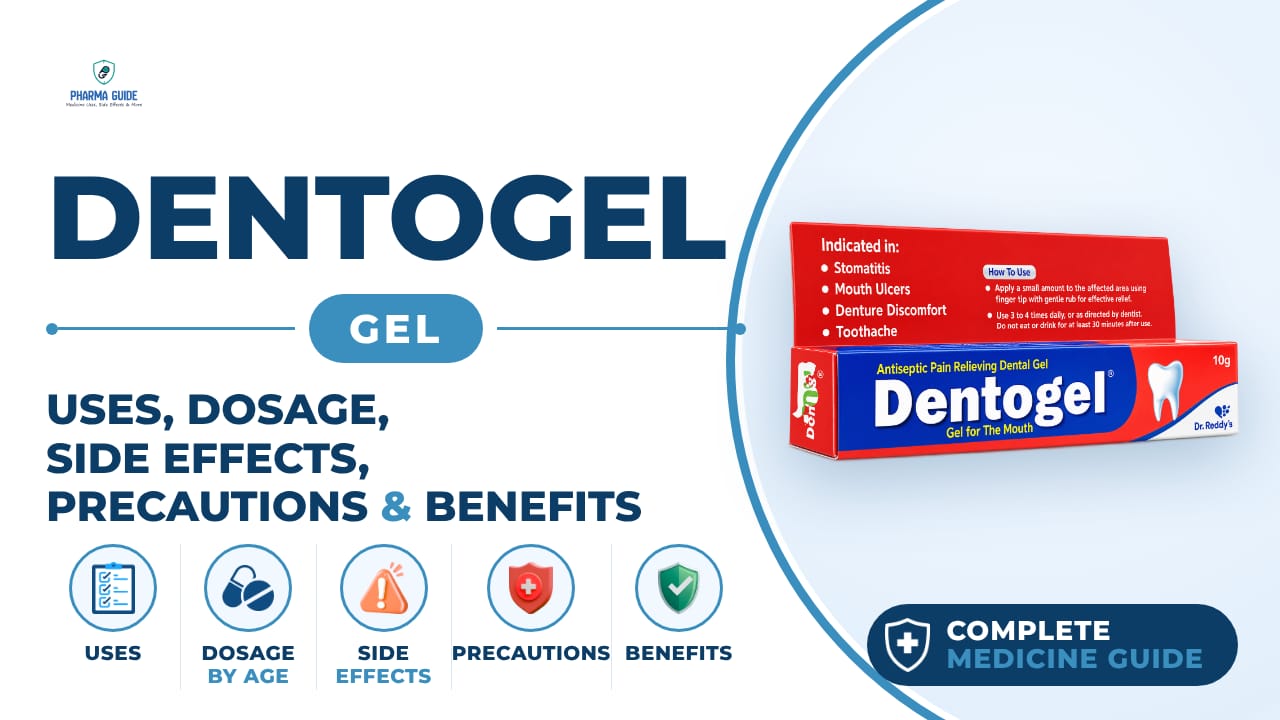
| Generic name | Choline Salicylate + Lidocaine (Lignocaine) + Benzalkonium Chloride |
|---|---|
| Drug class | Salicylate NSAID + local anaesthetic (amide type) |
| Forms | Gel |
Quick overview
Dentogel Gel contains Choline Salicylate, Lidocaine (Lignocaine), and Benzalkonium Chloride, combining a pain-and-swelling reliever, a numbing agent, and an antiseptic. It is applied inside the mouth to relieve pain, swelling, redness, and discomfort from mouth ulcers, sore gums, and other oral irritation. It is used for conditions such as mouth ulcers, gingivitis, stomatitis, teething pain, and soreness from dentures, braces, or dental procedures. It should be used exactly as directed and for as long as your doctor recommends.
What is Dentogel Gel
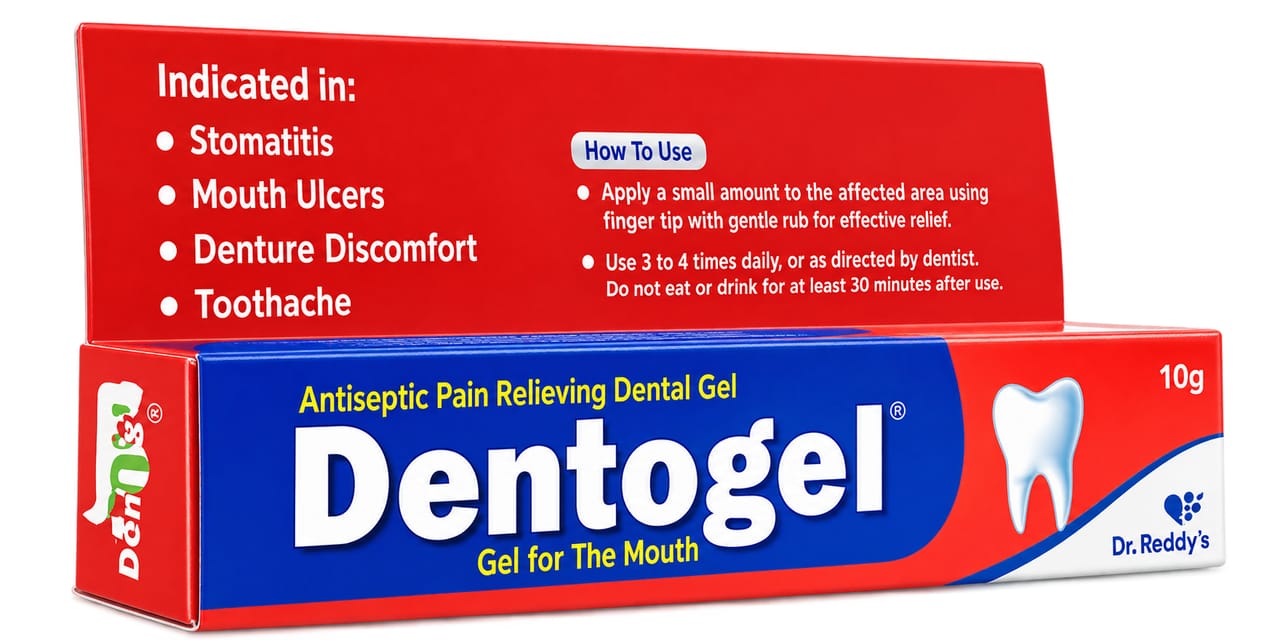
Dentogel is a topical gel applied inside the mouth to relieve pain, swelling, redness, and discomfort from mouth ulcers, sore gums, and other oral irritation. It combines a pain-and-swelling reliever, a numbing agent, and an antiseptic.
Dentogel Gel uses
- Mouth ulcers and sores
- Gingivitis (gum inflammation)
- Sore gums
- Stomatitis
- Teething pain
- Irritation due to dentures or braces
- Soreness after dental procedures
Benefits of Dentogel Gel
- Relieves pain from mouth ulcers and minor injuries inside the mouth
- Helps relieve pain and inflammation from minor gum problems
- Eases soreness after dental procedures
- Provides localized pain relief
- Helps reduce inflammation
- Lidocaine provides a numbing effect
How Dentogel Gel works
Dentogel contains three active ingredients that work together. Choline salicylate reduces pain and swelling by blocking certain pain-causing chemicals in the body. Lidocaine numbs the lining of the mouth to block pain signals. Benzalkonium chloride is an antiseptic that helps control bacteria and keep the area clean.
Dentogel Gel dosage
For use inside the mouth only; do not swallow the gel. Wash your hands before and after applying. Clean and dry the affected area before applying. Apply a thin layer to the affected area using a clean finger, cotton swab, or applicator, and gently massage it in. Avoid contact with the eyes. Avoid eating or drinking for about 30 minutes to an hour after applying, since food may be harder to swallow and you may be more likely to bite your tongue while the area is numb. In children, use only from 2 years of age and under medical guidance. Use it for as long as your doctor recommends, even if symptoms start to improve.
| Age group | Dose |
|---|---|
| Under 12 years | Age-specific dosing is not well standardized |
| 12–17 years | A small amount applied locally to the affected mouth area |
| 18–64 years | Apply a thin layer/small amount to the affected area, commonly after meals and at bedtime as directed |
Available forms and strengths
- Gel
Side effects of Dentogel Gel
Common
- Mild irritation and numbness at the application site
- Brief burning, tingling, or stinging sensation
- Altered sense of taste
- Local redness or irritation
- Mild stomach discomfort if a small amount is swallowed
Serious
- Blistering and peeling of skin
- Allergic reaction such as rash, itching, or swelling of the face, tongue, or throat
- Severe dizziness
- Difficulty breathing
Warnings and precautions
- Do not use this gel to treat burns or cuts on the skin.
- This gel is for use in the mouth only. Avoid contact with the eyes, mucous membranes, or open wounds.
- Do not use it on broken, infected, or badly inflamed skin, or on large burns or deep wounds without medical advice.
- Do not use if you are allergic to salicylates/aspirin, lidocaine, or other local anaesthetics.
- Use with caution in children because of the risk of swallowing, and in people with bleeding disorders, stomach ulcers, asthma sensitive to NSAIDs, or those taking blood thinners.
- This gel is not suitable for infants below 4 months of age.
- Using too much can cause difficulty breathing, temporary numbness, and tingling at the application site; seek medical help right away if this happens.
- Apply only if your doctor recommends it during pregnancy, especially later in pregnancy, because of the salicylate ingredient.
- It isn't known whether this medicine passes into breast milk, so use only if your doctor recommends it while breastfeeding.
- No dose change is usually needed if you have kidney disease. Tell your doctor if you have a history of liver problems before using this gel, as they will decide if it's safe for you.
- It's best to avoid alcohol while using this gel, since it may worsen mouth irritation or ulcers and increase the risk of side effects.
- This gel is not expected to affect your ability to drive, though it may cause drowsiness or dizziness in some people, in which case avoid driving or operating machinery until you feel alert.
Storage
- Store below 30°C
- Store at room temperature, away from direct sunlight and moisture
- Keep cap tightly closed
- Keep out of reach of children and pets
- Use before the expiry date
When to see a doctor
- Seek immediate medical attention if you notice skin rash, itching or swelling of the face, tongue, or throat, severe dizziness, or difficulty breathing.
- Stop using the gel and get medical help right away if you get a rash, swelling of the face or lips, wheezing, or difficulty breathing.
- See a doctor if your mouth sores are extremely painful or do not heal after a long time, or if symptoms or ulcers last more than 7 days, or if you have severe irritation, swelling, or trouble breathing.
Alternatives
- Lidocaine oral gel
- Benzocaine oral gel
- Chlorhexidine oral gel
Watch the video
FAQs
What is Dentogel Gel used for?
It is used for mouth ulcers and sores, gingivitis, sore gums, stomatitis, teething pain, irritation from dentures or braces, and soreness after dental procedures.
How does Dentogel Gel work?
It contains three active ingredients: Choline salicylate reduces pain and swelling by blocking pain-causing chemicals, Lidocaine numbs the mouth lining to block pain signals, and Benzalkonium chloride acts as an antiseptic to control bacteria.
How should Dentogel Gel be applied?
Wash your hands, clean and dry the affected area, then apply a thin layer using a clean finger, cotton swab, or applicator and gently massage it in. It is for use inside the mouth only and should not be swallowed.
What are the common side effects of Dentogel Gel?
Common side effects include mild irritation and numbness at the application site, brief burning or tingling, altered taste, local redness, and mild stomach discomfort if swallowed.
Can children use Dentogel Gel?
It can be used in children from 2 years of age under medical guidance, with caution due to the risk of swallowing. It is not suitable for infants below 4 months of age.
General information, not medical advice
Your prescriber and the leaflet in your pack know your situation. This page does not.
- Follow your prescriber and the leaflet
- Don't start, stop, or change a dose on your own
- Doses and warnings differ by country and product
Sources
Video
Related medicines

Injectafer Injection: Uses, Dosage, Side Effects, Precautions and Alternates
Iron products
Injectafer (ferric carboxymaltose) treats iron deficiency anemia and heart failure-related iron deficiency via IV. Learn uses, dosage, side effects, and

Gliclazide Tablet: Uses, Dosage, Side Effects, Precautions and Alternates
Sulfonylurea (hypoglycemic/antidiabetic agent)
Gliclazide Tablet is a sulfonylurea for type 2 diabetes that boosts insulin release. Learn about dosage, side effects, warnings, and precautions.