
Safety
General information, not medical advice
Your prescriber and the leaflet in your pack know your situation. This page does not.
- Follow your prescriber and the leaflet
- Don't start, stop, or change a dose on your own
- Doses and warnings differ by country and product
Depacon Injection: Uses, Dosage, Side Effects, Precautions and Alternates

| Generic name | valproate sodium (valproic acid) |
|---|---|
| Drug class | Anticonvulsant (fatty acid derivative anticonvulsant) |
| Forms | Injection |
Quick overview
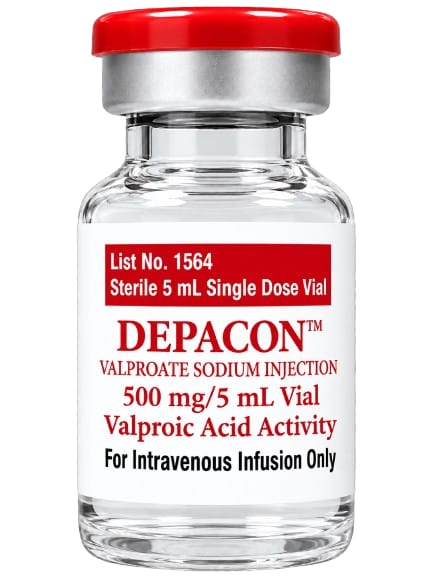
Depacon Injection contains valproate sodium (valproic acid), an anticonvulsant medicine used to treat seizures from epilepsy. It is given through a vein for a short time when a person cannot take valproate by mouth. It is used alone or together with other seizure medicines to manage complex partial seizures and absence seizures. It is given only by or under a doctor's supervision, typically for no more than about two weeks before switching to an oral form.
What is Depacon Injection
Depacon is an injectable form of valproate sodium, a medicine used to treat seizures (epilepsy). It is given through a vein when a person cannot take valproate by mouth for a short time.
Depacon Injection uses
- Treatment of complex partial seizures, alone or together with other seizure medicines
- Treatment of simple and complex absence seizures, alone or together with other seizure medicines
- Add-on treatment for patients with multiple seizure types that include absence seizures
- Used as a short-term intravenous substitute when a patient cannot take valproate by mouth
Benefits of Depacon Injection
- May reduce seizure frequency
- May improve seizure control when oral medicine cannot be taken
- May help prevent seizures from disrupting daily activities
- May support more stable seizure management
- May help maintain daily functioning when seizures are controlled
How Depacon Injection works
Scientists are not completely sure how this medicine stops seizures, but it is thought to work by raising levels of a brain chemical called GABA, which helps calm overactive nerve signals.
Depacon Injection dosage
This medicine is given only by or under the direct supervision of your doctor, usually in a medical facility. It is given through a needle placed in a vein, and the infusion must run slowly over at least 60 minutes. This medicine is not meant to be used for more than about two weeks; you will be switched to an oral valproate medicine as soon as you are able to take it by mouth. Elderly patients are usually started on a lower amount and increased more slowly, with close monitoring for fluid intake, dehydration, and sleepiness. Use with caution has not been studied in children younger than 2 years of age, and extra caution is needed in this age group.
| Age group | Dose |
|---|---|
| Under 18 years | Not recommended |
| 18–64 years | 10–15 mg/kg/day |
| 65+ years | 10–15 mg/kg/day |
Available forms and strengths
Injection
Side effects of Depacon Injection
Common
- Dizziness
- Headache
- Nausea
- Vomiting
- Abdominal pain
- Diarrhea
- Sleepiness
- Weakness
- Changes in taste
- Numbness or tingling of the skin
- Pain or inflammation at the injection site
- Chest pain
- Sweating
- Euphoria
- Nervousness
- Tremor
- Sore throat
- Reduced sensation of touch
- Fever
- Loss of appetite
- Indigestion
- Constipation
- Vision problems
- Loss of control of body movements
- Mood changes
- Amnesia
- Flu symptoms
- Bronchitis
- Runny or stuffy nose
- Hair loss
- Weight loss
Serious
- Liver failure, sometimes fatal
- Life-threatening pancreatitis
- Serious allergic reactions affecting multiple organs (fever, rash, swollen glands, yellow eyes or skin)
- Low platelet count and bleeding problems
- High ammonia levels in the blood, sometimes with confusion or coma (hyperammonemic encephalopathy)
- Low body temperature (hypothermia)
- Birth defects and decreased IQ in children exposed during pregnancy
- Severe skin reactions such as Stevens-Johnson syndrome or toxic epidermal necrolysis
- Suicidal thoughts or behavior
Warnings and precautions
- This medicine can cause liver failure that can be fatal, usually within the first six months of treatment. Children under 2 years old are at much higher risk, especially if they have other health conditions. Your doctor will check your liver with blood tests before and during treatment.
- This medicine should not be used in people with certain inherited mitochondrial disorders (caused by POLG gene mutations), as it raises the risk of severe liver failure and death.
- Using this medicine during pregnancy increases the risk of serious birth defects, particularly spine and brain defects, and can lower a child's IQ.
- Life-threatening inflammation of the pancreas (pancreatitis) can occur at any time during treatment, sometimes suddenly and severely.
- This medicine must not be used in people with known urea cycle disorders, a group of rare genetic conditions, because it can cause dangerous, sometimes fatal increases in blood ammonia with brain symptoms.
- This medicine can cause dangerously low body temperature, which may happen with or without high ammonia levels.
- Rare but serious allergic reactions affecting multiple organs (called DRESS) can occur, which may be life-threatening.
- Giving this medicine too fast through the IV line has been linked to more side effects, so it should always be given slowly over 60 minutes unless your doctor says otherwise.
- Elderly patients may become unusually sleepy on this medicine, sometimes with reduced eating or drinking and weight loss, so doses are raised slowly and monitored closely in older adults.
- This medicine can seriously harm an unborn baby, including causing brain and spine defects, heart problems, and lower IQ. It should only be used in pregnancy if no other option can control the seizures.
- Women who can become pregnant should use effective birth control while taking this medicine, and should take folic acid before and during early pregnancy.
- This medicine passes into breast milk. Talk to your doctor to weigh the benefits of breastfeeding against the possible risks to the baby, and watch the baby for signs of liver problems.
- People with kidney failure may need less of this medicine cleared from their body, but dosage usually does not need to be changed; blood test results may be harder to interpret correctly in kidney disease.
- This medicine should not be given to people with liver disease or significant liver problems, since it can cause serious and sometimes fatal liver failure.
- This medicine can increase drowsiness caused by alcohol and other substances that slow down the brain and nervous system, so it's best to avoid alcohol while using it.
- This medicine can make you dizzy, drowsy, or less alert. Do not drive or operate dangerous machinery until you know how this medicine affects you.
Storage
- Store vials at controlled room temperature 59-86°F (15-30°C)
- No preservatives have been added
- Any unused portion of the vial or diluted solution should be discarded
When to see a doctor
- Get medical help right away if you notice stomach pain, tiredness, loss of appetite, nausea, vomiting, or yellowing of the skin or eyes, as these can be signs of serious liver problems.
- Seek urgent care if you have sudden, severe stomach pain along with chills, nausea, vomiting, fever, or lightheadedness, as this could mean a serious pancreas problem.
- Contact your doctor immediately if you develop fever, rash, swollen glands, stomach pain, or yellowing of the skin or eyes, as this may be a serious allergic reaction affecting multiple organs.
- Get help right away for unusual drowsiness, confusion, low body temperature, or vomiting, as these could be signs of dangerously high ammonia levels affecting the brain.
- Tell your doctor right away if you notice fever, sore throat, mouth ulcers, easy bruising, bleeding gums, or small red or purple spots on the skin, which could mean a serious blood problem.
- If you think you might be pregnant while taking this medicine, contact your doctor immediately because of the risks to your unborn baby.
Alternatives
- Lacosamide
- Divalproex sodium
- Valproate sodium
Watch the video
FAQs
What is Depacon Injection used for?
It treats complex partial seizures and absence seizures, used alone or with other seizure medicines, and serves as a short-term IV substitute when a patient cannot take valproate by mouth.
How is Depacon Injection given?
It is given by or under a doctor's supervision through a vein, with the infusion run slowly over at least 60 minutes. It is typically used for no more than about two weeks before switching to an oral form.
What are the serious risks of Depacon Injection?
Serious risks include liver failure, life-threatening pancreatitis, high ammonia levels, low platelet count and bleeding problems, severe allergic reactions, severe skin reactions, low body temperature, and birth defects if used during pregnancy.
Can Depacon Injection be used during pregnancy?
It can seriously harm an unborn baby, including brain and spine defects, heart problems, and lower IQ, so it should only be used in pregnancy if no other option can control seizures, and effective birth control plus folic acid are recommended.
Is Depacon Injection safe for children?
It is not recommended for those under 18 years, and children under 2 years old are at much higher risk of fatal liver failure, especially with other health conditions.
General information, not medical advice
Your prescriber and the leaflet in your pack know your situation. This page does not.
- Follow your prescriber and the leaflet
- Don't start, stop, or change a dose on your own
- Doses and warnings differ by country and product
Sources
Video
Related medicines

Injectafer Injection: Uses, Dosage, Side Effects, Precautions and Alternates
Iron products
Injectafer (ferric carboxymaltose) treats iron deficiency anemia and heart failure-related iron deficiency via IV. Learn uses, dosage, side effects, and

Gliclazide Tablet: Uses, Dosage, Side Effects, Precautions and Alternates
Sulfonylurea (hypoglycemic/antidiabetic agent)
Gliclazide Tablet is a sulfonylurea for type 2 diabetes that boosts insulin release. Learn about dosage, side effects, warnings, and precautions.