
Safety
General information, not medical advice
Your prescriber and the leaflet in your pack know your situation. This page does not.
- Follow your prescriber and the leaflet
- Don't start, stop, or change a dose on your own
- Doses and warnings differ by country and product
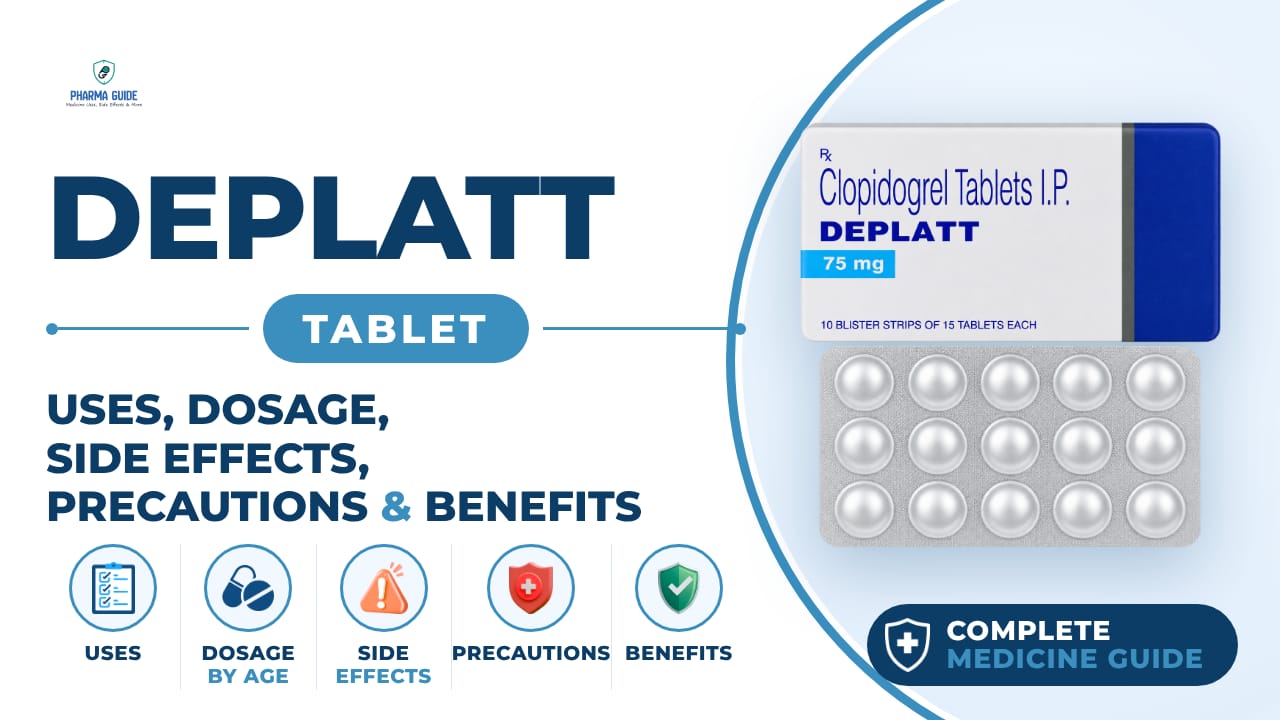
Deplatt Tablet: Uses, Dosage, Side Effects, Precautions and Alternates
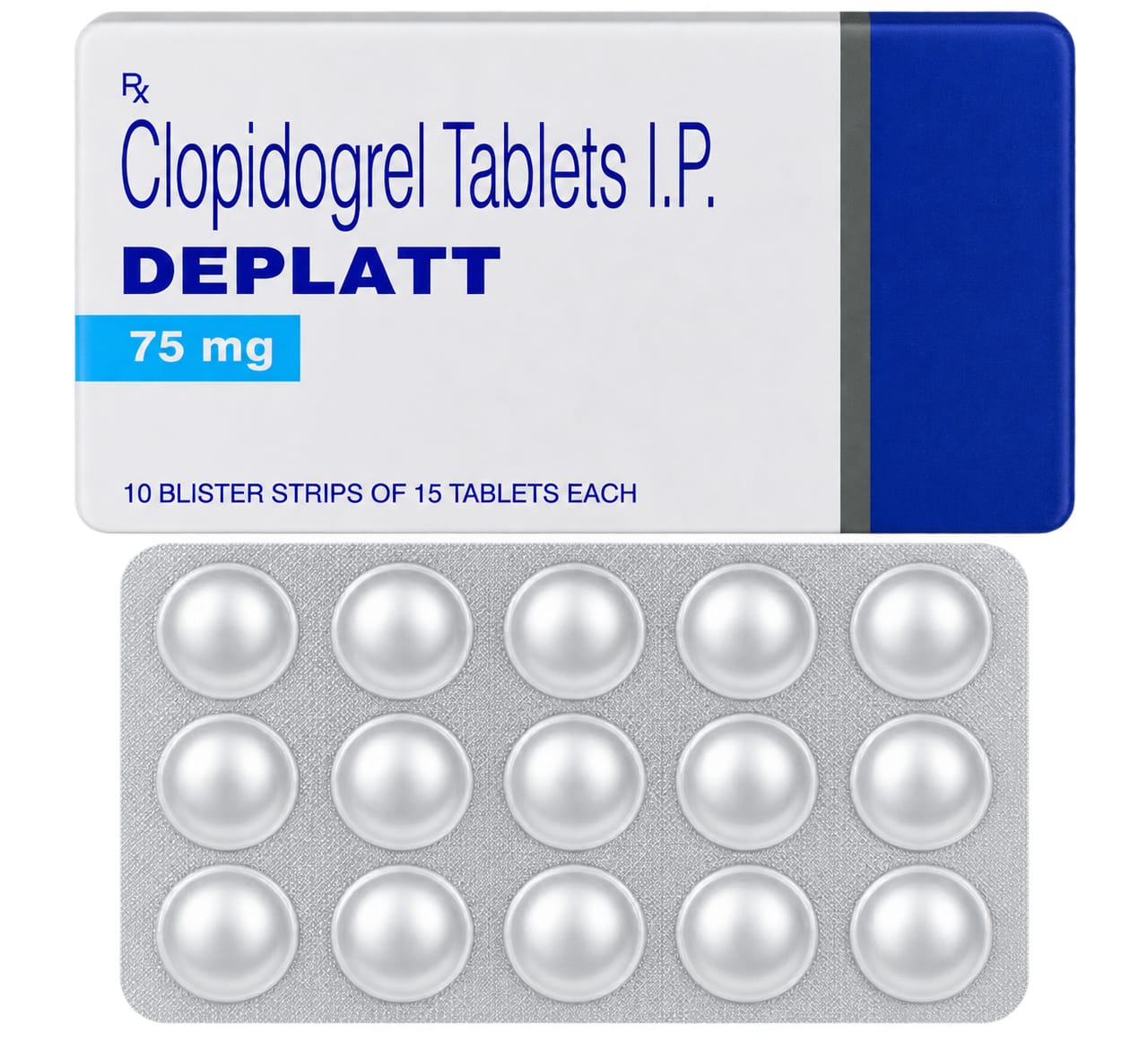
| Generic name | Clopidogrel |
|---|---|
| Drug class | Antiplatelet |
| Forms | Tablet |
Quick overview
Deplatt Tablet contains Clopidogrel, an antiplatelet medicine that helps stop platelets from sticking together and forming clots. It is used to lower the risk of heart attack, stroke, and other heart and blood vessel problems, especially in people with a history of heart disease or those who have had a stent placed. It is a prescription medicine and should be used exactly as directed by a doctor.
What is Deplatt Tablet
Deplatt Tablet is a prescription medicine containing Clopidogrel, an antiplatelet (blood-thinning) medicine that helps stop blood cells called platelets from sticking together and forming clots. It is used to lower the risk of heart attack, stroke, and other heart and blood vessel problems, especially in people with a history of heart disease or those who have had a stent placed.
Deplatt Tablet uses
- Prevention of heart attack and stroke
- Peripheral arterial disease
- Acute coronary syndrome (unstable angina, heart attack)
- Percutaneous coronary intervention (after angioplasty or stent placement)
- Prevention of recurrent ischemic stroke
- Management of coronary artery disease
Benefits of Deplatt Tablet
- Reduces blood clots that may lead to stroke and heart attack
- Reduces the risk of blood vessel blockages
- Helps manage cardiovascular diseases such as coronary artery disease
- Reduces the likelihood of complications following heart procedures, such as stent placement
- Improves overall heart health by promoting better blood circulation
How Deplatt Tablet works
Clopidogrel blocks a chemical signal (ADP) that platelets need to stick together and form clots. By stopping platelets from clumping, it keeps blood flowing smoothly and lowers the chance of clots forming in the arteries, which reduces the risk of heart attack, stroke, and other clot-related problems.
Deplatt Tablet dosage
Take it with or without food, though taking it with food or a glass of milk may help prevent stomach upset. Swallow the tablet whole with a full glass of water; do not crush or chew it. Take the tablet at the same time every day to keep a steady level of medicine in your body. Do not stop taking this medicine suddenly without talking to your doctor, as stopping early can increase the risk of heart attack or stroke. If you miss a dose, take it as soon as you remember, but if it is almost time for your next dose, skip the missed one and do not double the dose. Your doctor may ask you to stop this medicine temporarily before any planned surgery or dental treatment.
| Age group | Dose |
|---|---|
| Under 18 Years | Use only if prescribed by a healthcare professional |
| Adults (18–64 Years) | 75 mg once daily as prescribed |
| Older Adults (65+ Years) | 75 mg once daily; monitoring may be required |
Available forms and strengths
Tablet
Side effects of Deplatt Tablet
Common
- Dizziness
- Bleeding (nosebleeds, gum bleeding, bruising)
- Stomach upset/indigestion
- Headache
- Change in taste
- Diarrhoea
- Loss of appetite
- Joint pain
- White patches in the mouth or on the tongue
- Redness of skin
- Tiredness
- Muscle or joint pain
- Rash or itching
Serious
- Severe allergic reaction symptoms such as swelling of the face, lips, tongue, or throat, difficulty breathing, skin rash or hives
- Unusual or prolonged bleeding (nosebleeds, gum bleeding), blood in urine or stools, vomiting blood or material that looks like coffee grounds, severe or unexplained bruising, coughing up blood
- Stroke-like symptoms such as sudden numbness or weakness, especially on one side of the body, difficulty speaking or understanding speech, sudden vision changes, sudden severe headache
Warnings and precautions
- Stopping this medicine suddenly can raise your risk of heart problems. If treatment needs to be paused for surgery, it should be restarted as soon as possible.
- Tell your doctor before taking this medicine if you have a risk of bleeding, such as a stomach ulcer or bleeding inside the body, have had a recent serious injury or surgery, have surgery planned in the next week, or have had a recent stroke or brain bleeding.
- This medicine is not recommended for children and teenagers, as its safety in this age group has not been established.
- If you cut or injure yourself while on this medicine, bleeding may take longer than usual to stop.
- This medicine may raise your risk of bleeding, so be careful when shaving, using sharp objects, or trimming your nails.
- Do not take this medicine if you are allergic to it or if you have active bleeding, such as a bleeding stomach ulcer or bleeding in the brain.
- This medicine is not recommended during pregnancy because it may affect the baby. Talk to your doctor before taking it if you are pregnant or planning to become pregnant.
- This medicine is not recommended while breastfeeding. Talk to your doctor before taking it if you are breastfeeding.
- This medicine should be used with caution if you have kidney disease. Tell your doctor about any kidney problems before taking it.
- This medicine is not recommended in people with severe liver disease and should be used carefully in those with liver disease. Tell your doctor about any liver problems before taking it.
- Avoid drinking alcohol while taking this medicine, as it may increase the risk of bleeding.
- This medicine is unlikely to affect your ability to drive or use machines, but check with your doctor, especially if you feel dizzy or drowsy.
Storage
- Store Deplatt A 75 Tablet at room temperature, ideally between 20°C and 25°C (68°F to 77°F).
- Keep the tablets in their original packaging to protect them from moisture and light.
When to see a doctor
- Get medical help right away if you have signs of a severe allergic reaction, such as swelling of the face, lips, tongue or throat, trouble breathing, or a skin rash or hives.
- Seek immediate medical attention if you have unusual or prolonged bleeding such as nosebleeds or gum bleeding, blood in your urine or stools, vomiting blood or material that looks like coffee grounds, severe or unexplained bruising, or coughing up blood.
- Get emergency help for stroke-like symptoms such as sudden numbness or weakness (especially on one side of the body), trouble speaking or understanding speech, sudden vision changes, or a sudden severe headache.
- Contact your doctor if you have severe stomach or abdominal pain.
- Seek medical care if you notice yellowing of your skin or eyes (jaundice), which may signal liver problems.
- Seek emergency medical treatment if you suspect you have taken more than the prescribed dose.
Alternatives
- Ticagrelor
- Cilostazol
- Dipyridamole
Watch the video
FAQs
What is Deplatt Tablet used for?
Deplatt Tablet is used to prevent heart attack, stroke, and other heart and blood vessel problems, especially in people with heart disease or those who have had a stent placed. It also helps manage conditions like peripheral arterial disease, acute coronary syndrome, and coronary artery disease.
How does Deplatt Tablet work?
Deplatt Tablet contains Clopidogrel, which blocks a chemical signal (ADP) that platelets need to stick together and form clots. This keeps blood flowing smoothly and lowers the chance of clots forming in the arteries.
What is the dosage of Deplatt Tablet for adults?
Adults aged 18-64 years are generally prescribed 75 mg once daily, while older adults (65+ years) take the same dose with possible monitoring. It should be taken as directed by a doctor, with or without food.
Can I stop taking Deplatt Tablet suddenly?
No, you should not stop taking Deplatt Tablet suddenly without consulting your doctor, as stopping early can increase the risk of heart attack or stroke.
What are the common side effects of Deplatt Tablet?
Common side effects include dizziness, bleeding (nosebleeds, gum bleeding, bruising), stomach upset, headache, change in taste, diarrhoea, and joint pain.
General information, not medical advice
Your prescriber and the leaflet in your pack know your situation. This page does not.
- Follow your prescriber and the leaflet
- Don't start, stop, or change a dose on your own
- Doses and warnings differ by country and product
Sources
- KD. Tripathi. Drugs Affecting Coagulation, Bleeding and Thrombosis. Seventh edition. 2013.
- Mylan Pharmaceuticals. Food Study of Clopidogrel Bisulfate Tablets 75 mg to Plavix Tablets 75 mg. NIH U.S. National Library of Medicine ClinicalTrials.gov.
- Craig J. Beavers; Imama A. Naqvi. Clopidogrel. NIH National Library of Medicine, National center for biotechnology information. May 2022.
- Peng-Xin Ge, Li-Ping Jiang, Ting Tai, Ting Zhu, Jin-Zi Ji, Yi-Fei Li, Qiong-Yu Mi, Hong-Guang Xie. Short-term standard alcohol consumption enhances platelet response to clopidogrel through inhibition of the Nrf2/Ces1 pathway and induction of Cyp2c in mice. NIH National Library of Medicine. August 2021.
- Matthew T Roe et al. Elderly patients with acute coronary syndromes managed without revascularization. NIH National Library of Medicine. August 2013.
- APL Swift Services (Malta) Limited. Electronic medicines compendium (EMC). Revised March 2021.
- Sanofi Winthrop Industrie. Electronic medicines compendium (EMC). Revised September 2021.
- Drugs.com Clinical Review Team. Aspirin Vs Clopidogrel Clinical Drug Monograph.
- Electronic Medicines Compendium (EMC). Patient Information Leaflet (PIL).
- NHS.
- Clopidogrel bisulfate. 2006.
- Shereif H. Rezkalla and Michele Benz. Antiplatelet Therapy from Clinical Trials to Clinical Practice. NCBI; PMC US National Library of Medicine. April 2003.
- Cipla Ltd. Clopivas-AP Tablets (Clopidogrel + Aspirin). Ciplamed. Revised April 2017.
- US Food and Drug Administration (FDA). Package leaflet information for the user; Plavix (clopidogrel bisulfate).
- April Hazard Vallerand, Cynthia A. Sanoski. Sixteenth Edition. Philadelphia: F. A. Davis Company; 2019.
Video
Related medicines

Injectafer Injection: Uses, Dosage, Side Effects, Precautions and Alternates
Iron products
Injectafer (ferric carboxymaltose) treats iron deficiency anemia and heart failure-related iron deficiency via IV. Learn uses, dosage, side effects, and

Gliclazide Tablet: Uses, Dosage, Side Effects, Precautions and Alternates
Sulfonylurea (hypoglycemic/antidiabetic agent)
Gliclazide Tablet is a sulfonylurea for type 2 diabetes that boosts insulin release. Learn about dosage, side effects, warnings, and precautions.