
Safety
General information, not medical advice
Your prescriber and the leaflet in your pack know your situation. This page does not.
- Follow your prescriber and the leaflet
- Don't start, stop, or change a dose on your own
- Doses and warnings differ by country and product
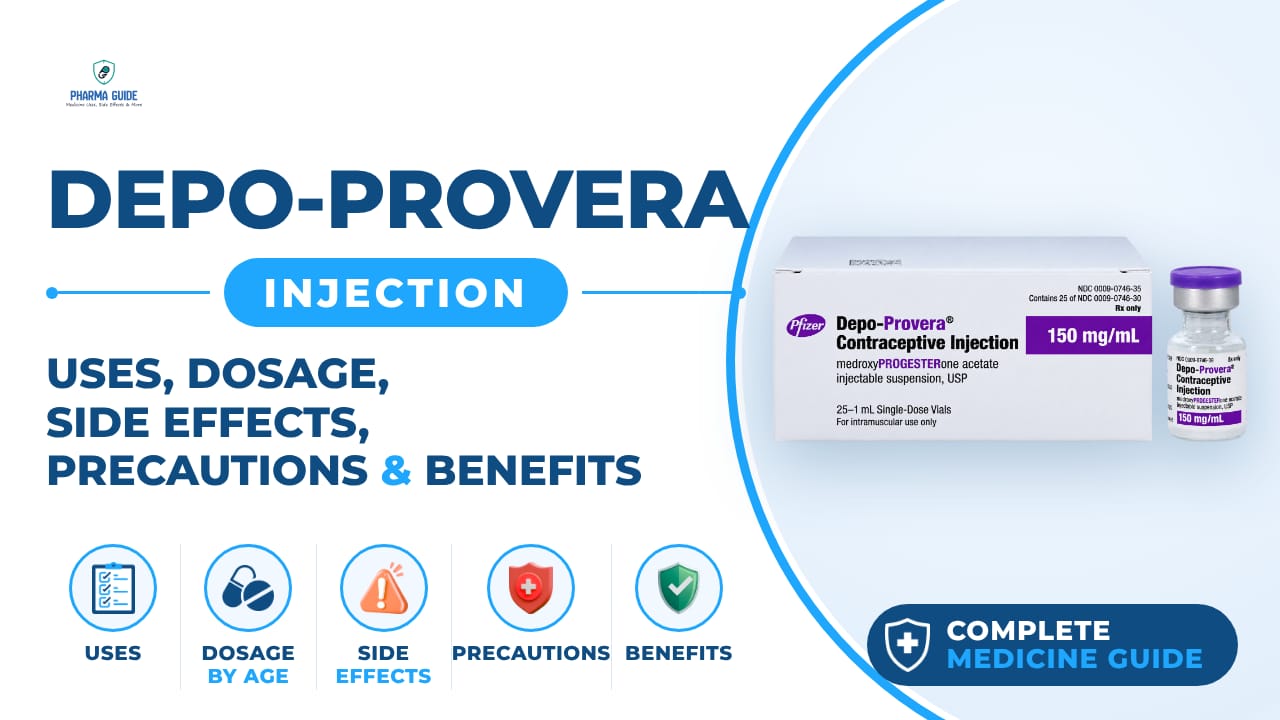
Depo-Provera Injection: Uses, Dosage, Side Effects, Precautions and Alternates
| Generic name | Medroxyprogesterone acetate |
|---|---|
| Drug class | Progestogen (contraceptive hormone / antineoplastic) |
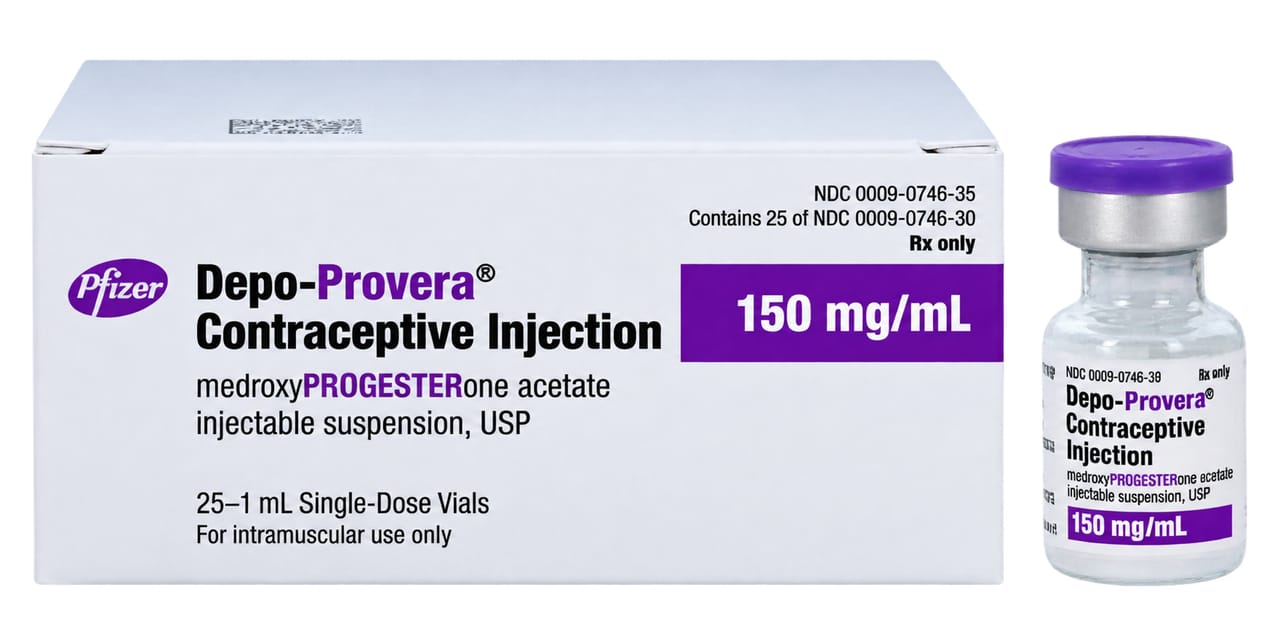
| Forms | Vial (injection), Pre-filled syringe (injection) |
Quick overview
Depo-Provera Injection contains medroxyprogesterone acetate, a progestogen hormone, and is given as a shot into the muscle. It is used for contraception, endometriosis, and as part of treatment for certain cancers. The injection is usually given every 3 months, and it works by preventing ovulation and changing the uterine lining and cervical mucus.
What is Depo-Provera Injection
Depo-Provera is an injectable form of the hormone medroxyprogesterone acetate, a progestogen similar to the natural hormone progesterone made by the ovaries. It is given as a shot and is used for contraception, endometriosis, and certain cancers.
Depo-Provera Injection uses
- Contraception (prevents pregnancy)
- Treatment of endometriosis
- Adjunctive or palliative treatment of certain cancers, including cancer of the breast, kidney, and endometrium (lining of the uterus)
Benefits of Depo-Provera Injection
- Highly effective at preventing pregnancy when injections are given on schedule
- Only requires an injection every 3 months rather than daily dosing
- Helps reduce pain and discomfort caused by endometriosis by stopping growth of cells outside the uterus
How Depo-Provera Injection works
Depo-Provera works by stopping hormones needed to release an egg from the ovaries, and it also causes changes in the lining of the uterus and cervical mucus that make pregnancy less likely. For cancer treatment, it works by slowing the growth of certain cancer cells, though it is not a cure.
Depo-Provera Injection dosage
Depo-Provera is given by a doctor or trained nurse as an injection into the muscle of the buttock or upper arm. The vial or syringe should be shaken well right before use so the dose is an even suspension.
For contraception, the first injection should be given only during the first 5 days after the start of a normal period. If you are not breastfeeding after childbirth, the first contraceptive injection should be given within 5 days after the baby is born. If you are breastfeeding, the first injection should be given at 6 weeks after childbirth, after your doctor confirms you are not pregnant.
If switching from another contraceptive, the injection should be timed to keep continuous contraceptive protection, such as within 7 days of the last active contraceptive pill. You must return for injections every 3 months to keep contraceptive protection working. If more than 14 weeks pass between contraceptive injections, your doctor will need to check you are not pregnant before giving the next dose.
Treatment for endometriosis is usually continued for at least 6 months. For cancer treatment, your doctor will determine how long injections continue based on your response.
| Age group | Dose |
|---|---|
| Under 18 Years | Use only if medically appropriate and advised by a healthcare provider |
| Adults (18–64 Years) | 150 mg injection every 3 months (12–13 weeks) |
| Older Adults (65+ years) | Not routinely recommended; use based on individual medical advice |
| Postpartum Use | Timing and suitability determined by a healthcare provider |
Available forms and strengths
- Vial (injection)
- Pre-filled syringe (injection)
Side effects of Depo-Provera Injection
Common
- Nausea, vomiting, diarrhea or constipation
- Dizziness, headache
- Fatigue, drowsiness or sleepiness, trouble sleeping
- Hot flushes, sweating, high fever
- Changes in mood or energy: nervousness, confusion, depression, loss of concentration
- Weight changes, changes in appetite
- Changes to menstrual periods or vaginal secretions, irregular vaginal bleeding or spotting
- Breast tenderness or secretions, pain during sex, decreased libido
- Skin problems such as acne, rash, itching, or darkened skin patches
- Excessive hair growth or unusual hair loss
- Abdominal pain, bloating or discomfort
- Backache, leg cramps, muscle spasms, joint pain
- Swelling or puffiness, fluid retention
- Frequent urination, dry mouth, increased thirst
Serious
- Signs of an allergic reaction: rash, itching, hives, swelling of the face, lips, tongue or other body parts, shortness of breath, wheezing or trouble breathing
- Pressure or tightness in the chest, jaw or back pain, difficulty breathing, or coughing up blood
- Weakness or numbness in arms or legs, severe pain or swelling in the calf (possible blood clot)
- Sudden partial or complete loss of vision, sudden double vision, or sudden onset of migraine
- Severe abdominal pain (possible ectopic pregnancy)
- Hand tremors, sweating, cramps in calves at night
- Seizures, paralysis, fainting, memory loss, hearing loss
- Yellowing of the skin and/or eyes (possible liver problem)
- Loss of body fat in certain areas such as the face (changes in metabolism)
- Unusually heavy or continuous vaginal bleeding
- Persistent pain, pus, or bleeding at the injection site
Warnings and precautions
- This medicine should not be used if you are pregnant or think you might be pregnant. It is not to be used as a pregnancy test. If you become pregnant while using it, tell your doctor right away.
- Small amounts of the medicine pass into breast milk, but this has not been shown to harm nursing infants' milk supply or the baby's development.
- To reduce the amount passed to the infant in the first weeks, wait until 6 weeks after childbirth before starting this medicine while breastfeeding.
- There is no specific information on how kidney disease affects this medicine, but you should tell your doctor if you have kidney disease or kidney problems before starting treatment.
- This medicine should not be used if you have severe liver disease or liver problems. If yellowing of the skin or eyes (jaundice) develops, your doctor may decide not to give further injections.
- There is no specific information on how this medicine interacts with alcohol, but you should tell your doctor if you drink alcohol.
- Be careful when driving or using machinery until you know how this medicine affects you, since it may cause dizziness, sleepiness, or affect your vision.
- Long-term use of this medicine has been linked to a higher risk of meningioma, a usually benign brain tumor. The medicine should be stopped if a meningioma develops, and it should be used with caution in people with a past history of meningioma.
- This medicine can reduce the calcium stored in your bones, which may lead to bone thinning (osteoporosis) with long-term use. This bone loss may not fully reverse, and the risk of broken bones may be higher, especially after menopause. It is generally not recommended for more than 2 years unless other birth control options aren't suitable.
- This medicine does not protect against sexually transmitted infections such as HIV/AIDS, hepatitis B and C, genital herpes, genital warts, syphilis, or gonorrhea. Using condoms can help lower the risk of these infections.
- Women under 35 years old who start this medicine may have a slightly increased risk of breast cancer, similar to the risk with birth control pills.
- After stopping the medicine, it can take a long time for periods and fertility to return—up to 18 months in some cases—so plan ahead if you want to become pregnant.
- Do not use this medicine if you have unexplained vaginal bleeding, known or suspected breast cancer, a history of stroke or blood clots, or liver problems.
Storage
- Keep in a cool dry place where the temperature stays below 30°C
- Do not keep it in the refrigerator or freezer
- Normally you should take it straight from the pharmacy to your doctor; do not leave it in a car
- Keep out of reach of children
- Store away from moisture, heat or sunlight; do not store in the bathroom, near a sink, in the car, or on window sills
- Do not use after the expiry date
- If you no longer need the medicine or it is out of date, take it to a pharmacy for safe disposal
When to see a doctor
- Call your doctor straight away, or go to the nearest hospital Emergency Department, if you notice signs of an allergic reaction, chest pain or tightness, difficulty breathing or coughing up blood, weakness or numbness in an arm or leg, severe calf pain or swelling, sudden migraine, severe abdominal pain, seizures, paralysis, fainting, or yellowing of the skin or eyes.
- Tell your doctor immediately if you have sudden partial or complete loss of vision, sudden double vision, or a sudden onset of migraine while using this medicine.
- See your doctor right away if your vaginal bleeding becomes unusually heavy or continuous, as this is not a typical effect of this medicine.
- Call your health-care provider immediately if you have sharp chest pain, coughing up blood, sudden shortness of breath, sudden severe headache, vomiting, dizziness, fainting, vision or speech problems, weakness or numbness in an arm or leg, severe calf pain or swelling, severe lower abdominal pain, or persistent pain, pus, or bleeding at the injection site.
- If you think you or someone else has been given too much of this medicine, seek urgent medical attention even if there are no symptoms.
Alternatives
- Nexplanon Implant
- Copper IUD
- Progestin-Only Pills
Watch the video
FAQs
How often is Depo-Provera Injection given?
It is usually given every 3 months (12-13 weeks) as an injection into the muscle of the buttock or upper arm.
How does Depo-Provera Injection work?
It stops hormones needed to release an egg from the ovaries and changes the uterine lining and cervical mucus, making pregnancy less likely. For cancer treatment, it slows the growth of certain cancer cells.
How long does it take for fertility to return after stopping Depo-Provera?
After stopping the medicine, it can take a long time for periods and fertility to return, up to 18 months in some cases, so plan ahead if you want to become pregnant.
Can Depo-Provera Injection affect bone health?
Yes, it can reduce calcium stored in the bones, which may lead to bone thinning with long-term use, and this bone loss may not fully reverse. It is generally not recommended for more than 2 years unless other birth control options aren't suitable.
Does Depo-Provera Injection protect against sexually transmitted infections?
No, it does not protect against sexually transmitted infections such as HIV/AIDS, hepatitis B and C, genital herpes, genital warts, syphilis, or gonorrhea. Using condoms can help lower the risk of these infections.
General information, not medical advice
Your prescriber and the leaflet in your pack know your situation. This page does not.
- Follow your prescriber and the leaflet
- Don't start, stop, or change a dose on your own
- Doses and warnings differ by country and product
Sources
- Australian Commission on Safety and Quality in Health Care - Depo-Provera Consumer Medicine Information
- FDA Depo-Provera Contraceptive Injection Package Insert
- Drugs.com Depo-Provera medication guide
- New Zealand Data Sheet - DEPO-PROVERA 150 mg/mL Injection
- Pfizer Laboratories (South Africa) Depo-Provera 150 Injection Package Insert
- childbirthinjuries.com Depo-Provera long-term side effects information
Video
Related medicines

Injectafer Injection: Uses, Dosage, Side Effects, Precautions and Alternates
Iron products
Injectafer (ferric carboxymaltose) treats iron deficiency anemia and heart failure-related iron deficiency via IV. Learn uses, dosage, side effects, and

Gliclazide Tablet: Uses, Dosage, Side Effects, Precautions and Alternates
Sulfonylurea (hypoglycemic/antidiabetic agent)
Gliclazide Tablet is a sulfonylurea for type 2 diabetes that boosts insulin release. Learn about dosage, side effects, warnings, and precautions.