
Safety
General information, not medical advice
Your prescriber and the leaflet in your pack know your situation. This page does not.
- Follow your prescriber and the leaflet
- Don't start, stop, or change a dose on your own
- Doses and warnings differ by country and product
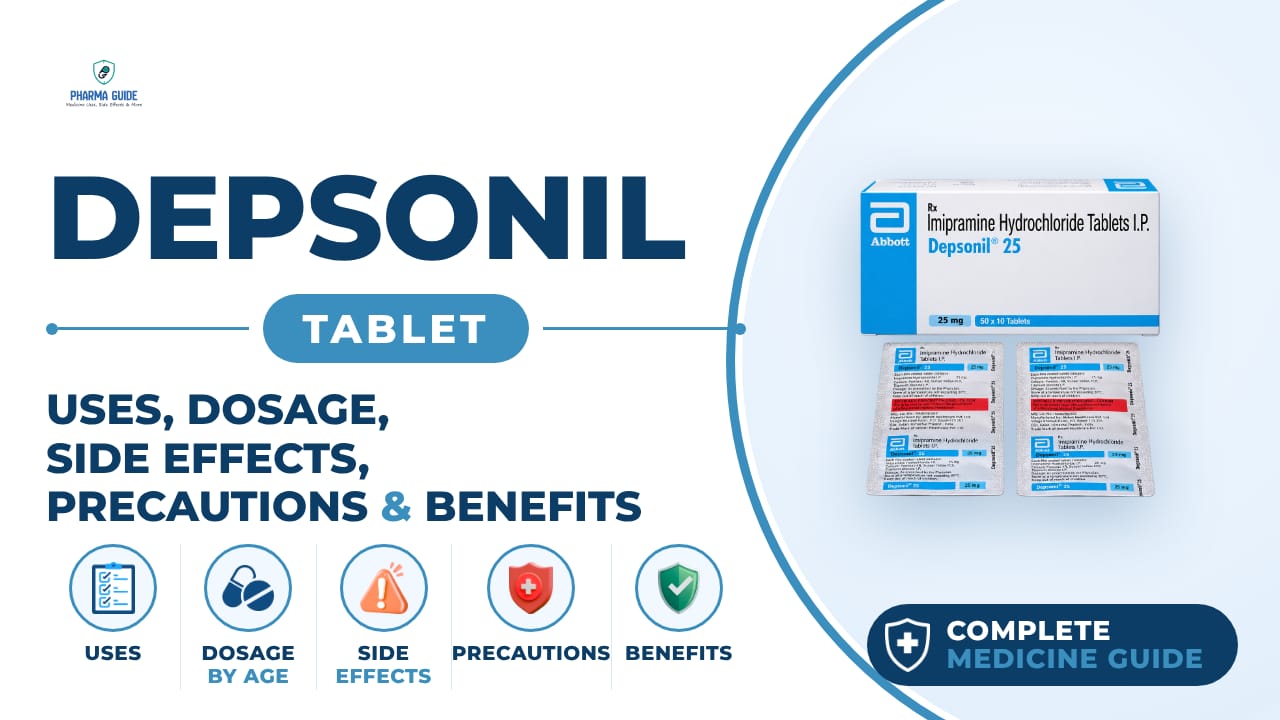
Depsonil Tablet: Uses, Dosage, Side Effects, Precautions and Alternates
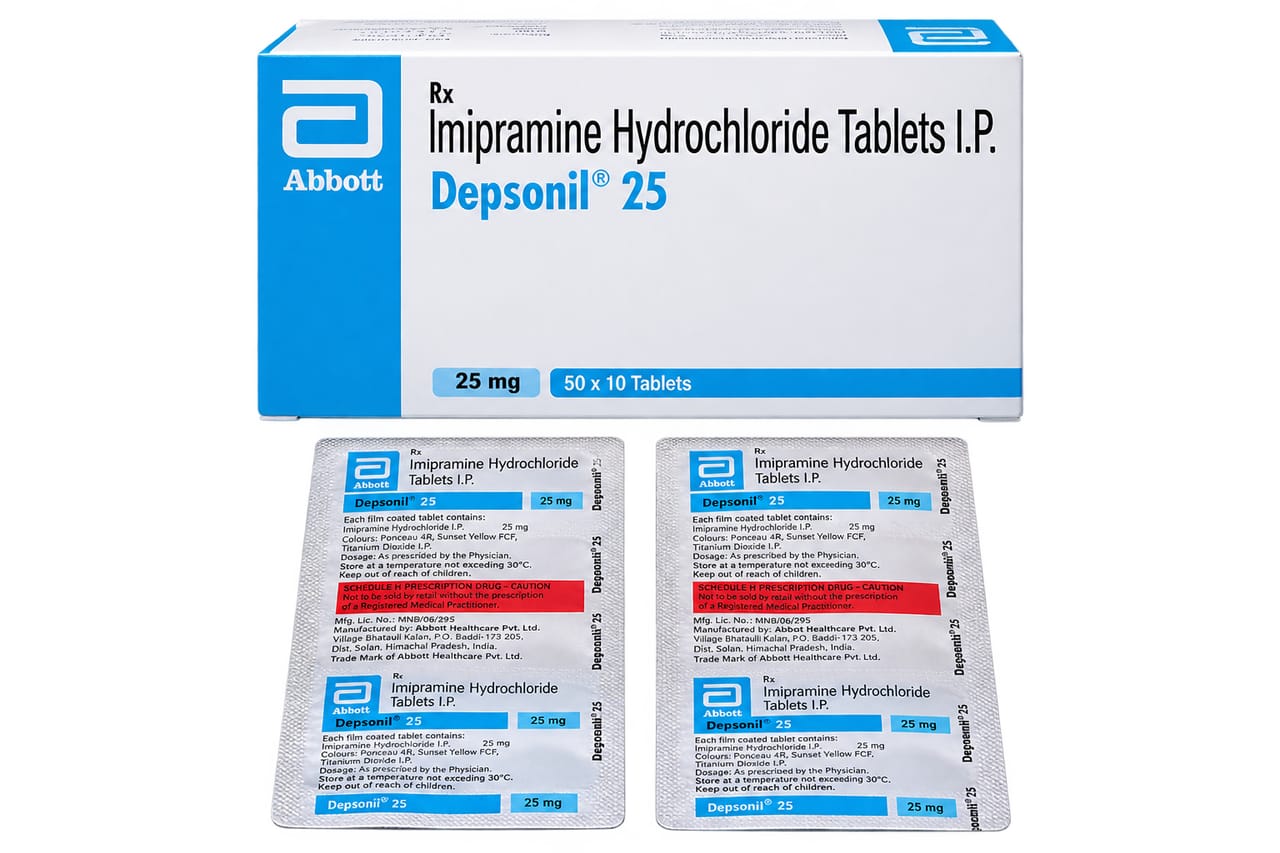
| Generic name | Imipramine |
|---|---|
| Drug class | Antidepressant (Tricyclic antidepressant) |
| Forms | Tablet |
Quick overview
Depsonil Tablet contains Imipramine, a tricyclic antidepressant. It is a prescription medicine used mainly to treat depression and bedwetting (nocturnal enuresis) in children. It also helps with anxiety, obsessive compulsive disorder, and certain nerve pain and migraine prevention. It works by restoring the balance of brain chemicals that affect mood, sleep, and pain, and by helping children hold more urine during sleep.
What is Depsonil Tablet
Depsonil Tablet contains Imipramine, a tricyclic antidepressant. It is a prescription medicine used mainly to treat depression and bedwetting in children.
Depsonil Tablet uses
- Depression
- Anxiety
- Obsessive compulsive disorder
- Nerve pain and migraine prevention
- Bedwetting (nocturnal enuresis) in children
Benefits of Depsonil Tablet
- Helps improve mood and emotional well-being in depression and anxiety
- Can relieve certain types of nerve pain and help prevent migraine
- Helps improve bladder control during sleep in children with bedwetting
- Usually taken once a day
How Depsonil Tablet works
Imipramine helps restore the balance of brain chemicals (like serotonin and norepinephrine) that control mood, sleep, and how pain is felt. In children, it helps by increasing the bladder's capacity to hold urine and reducing involuntary urination during sleep.
Depsonil Tablet dosage
Swallow the tablet whole with a glass of water; do not chew, crush, or break it unless your doctor says to. Take it with or after food, at the same time each day to help you remember. Follow the dose and duration exactly as written on your prescription; do not change the dose or stop early on your own. For bedwetting in children, it is usually given shortly before bedtime.
If a dose is missed, take it as soon as you remember, but if it is almost time for the next dose, skip the missed one — never take two doses together. Do not stop taking this medicine suddenly, as it can cause withdrawal symptoms like dizziness, irritability, and flu-like feelings.
| Age group | Dose |
|---|---|
| 6–12 years | 25 mg once daily at bedtime |
| 12–18 years | 25–50 mg/day |
| 18–60 years | 50–150 mg/day |
| 60+ years | 25–50 mg/day |
Available forms and strengths
- Tablet
Side effects of Depsonil Tablet
Common
- Nausea or vomiting
- Dry mouth
- Drowsiness or difficulty sleeping
- Headache
- Weight change or weight gain
- Reduced sexual desire
- Constipation
- Tremor
- Dizziness
- Tiredness
- Difficulty concentrating
- Low blood pressure
Serious
- Rapid heart rate (pulse)
- Blurred vision
- Difficulty urinating or decreased frequency of urination
- Sudden lowering of blood pressure on standing (orthostatic hypotension)
- Abdominal pain
- Rapid weight gain
- Yellow coloring of eyes or skin
- Unusual tiredness and weakness
- Increased sensitivity of eyes to sunlight
- Skin rash
Warnings and precautions
- Depsonil is not generally recommended during pregnancy and can cause unwanted side effects in pregnant women, including possible effects on the newborn like breathing problems, lethargy, or tremors shortly after birth. Talk to your doctor before taking it if you are pregnant.
- Breastfeeding women should not take Depsonil, as it can pass into the baby through breast milk and may cause serious side effects. Consult your doctor before using it while breastfeeding.
- Use with caution if you have kidney disease. Your doctor may need to adjust your dose or monitor your kidney function, especially in cases of severe kidney disease.
- Depsonil is not recommended in people with severe liver disease. Talk to your doctor if you have any liver problems before taking this medicine.
- Do not drink alcohol while taking Depsonil, as it can worsen side effects and increase risks like confusion, dizziness, nausea, and fainting.
- This medicine may cause drowsiness, dizziness, or difficulty concentrating, so do not drive or operate machinery until you know how it affects you.
- This medicine can take two to four weeks to start working, and longer for full effect. Do not stop it after two weeks just because you don't notice a change.
- Never stop this medicine suddenly, as doing so can cause dizziness, electric-shock-like sensations, irritability, and flu-like symptoms. Your doctor will reduce the dose gradually if treatment needs to stop.
- Do not take this medicine if you are allergic to imipramine or any ingredient in it. It must not be combined with a type of antidepressant called a monoamine oxidase inhibitor (MAOI), or started too soon after stopping one.
- This medicine should not be used by people with certain conditions, including heart disease, suicidal tendencies, bipolar disorder, schizophrenia, thyroid problems, and diabetes, unless a doctor advises it.
- An overdose of this medicine can cause seizures, dangerous heart rhythm problems, and coma, and is especially risky with older tricyclic medicines. Go to the emergency department immediately if too much is taken, and bring the pack with you.
- Taking certain other medicines together with this one, such as tramadol, migraine triptans, linezolid, St John's wort, or other antidepressants, can raise serotonin to dangerous levels. Anti-inflammatory painkillers and blood thinners can increase bleeding risk when combined with this type of medicine.
- This medicine is not intended for children under 6 years old.
- Older adults should use this medicine cautiously because of the risk of low sodium levels in the blood, and those with heart disease need extra caution; a lower dose may be needed and other medicines they take may interact with it.
Storage
- Store below 30°C in the original pack, away from direct sunlight and moisture.
- Keep out of the reach of children.
- Do not use this medicine after the expiry date has passed.
When to see a doctor
- Tell your doctor or go to the hospital right away if you have thoughts of harming yourself, or if such thoughts appear or get worse, especially in the first few weeks of treatment, after a dose change, or if you are under 25 years old.
- Get urgent medical care if you have agitation along with fever, shivering, a racing heart, muscle twitching, or confusion, especially if you are taking more than one medicine that affects serotonin.
- Stop the medicine and get help immediately if you develop a rash, swelling of the face or lips, wheezing, or difficulty breathing.
- If you think you have taken too much of this medicine, seek emergency medical help right away rather than waiting for symptoms to appear.
Alternatives
- Imipramine
- Imiprex
- Depranil
Watch the video
FAQs
What is Depsonil Tablet used for?
Depsonil Tablet contains Imipramine and is used to treat depression, anxiety, obsessive compulsive disorder, certain nerve pain, migraine prevention, and bedwetting (nocturnal enuresis) in children.
How should Depsonil Tablet be taken?
Swallow the tablet whole with water, without chewing, crushing, or breaking it unless advised by your doctor. Take it with or after food at the same time each day. For bedwetting in children, it is usually given shortly before bedtime.
What happens if I miss a dose of Depsonil Tablet?
If you miss a dose, take it as soon as you remember, but if it is almost time for the next dose, skip the missed one. Never take two doses together.
Can Depsonil Tablet be stopped suddenly?
No, stopping Depsonil suddenly can cause withdrawal symptoms like dizziness, electric-shock-like sensations, irritability, and flu-like feelings. Your doctor will reduce the dose gradually if treatment needs to stop.
What are the common side effects of Depsonil Tablet?
Common side effects include nausea or vomiting, dry mouth, drowsiness or difficulty sleeping, headache, weight change, reduced sexual desire, constipation, tremor, dizziness, tiredness, difficulty concentrating, and low blood pressure.
General information, not medical advice
Your prescriber and the leaflet in your pack know your situation. This page does not.
- Follow your prescriber and the leaflet
- Don't start, stop, or change a dose on your own
- Doses and warnings differ by country and product
Sources
- myupchar.com - Depsonil Tablet
- pingmedoc.com - Depsonil 25mg Tablet
- truemeds.in - Depsonil 25 Tablet 10
- practo.com - Depsonil 25 MG Tablet
Video
Related medicines

Injectafer Injection: Uses, Dosage, Side Effects, Precautions and Alternates
Iron products
Injectafer (ferric carboxymaltose) treats iron deficiency anemia and heart failure-related iron deficiency via IV. Learn uses, dosage, side effects, and

Gliclazide Tablet: Uses, Dosage, Side Effects, Precautions and Alternates
Sulfonylurea (hypoglycemic/antidiabetic agent)
Gliclazide Tablet is a sulfonylurea for type 2 diabetes that boosts insulin release. Learn about dosage, side effects, warnings, and precautions.