
Safety
General information, not medical advice
Your prescriber and the leaflet in your pack know your situation. This page does not.
- Follow your prescriber and the leaflet
- Don't start, stop, or change a dose on your own
- Doses and warnings differ by country and product
Deriphyllin Tablet: Uses, Dosage, Side Effects, Precautions and Alternates

| Generic name | Etofylline + Theophylline |
|---|---|
| Drug class | Methylxanthines, Antiasthmatic combinations (Bronchodilator) |
| Forms | Tablet |
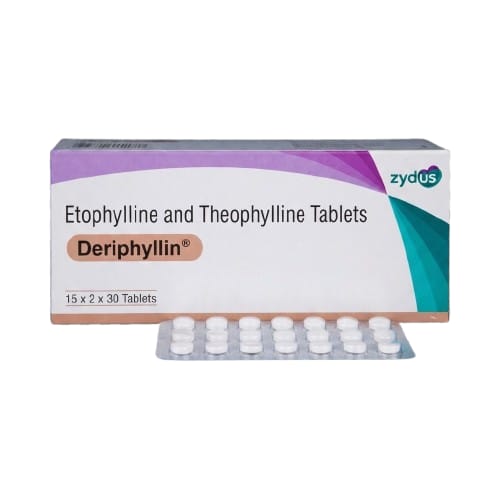
Quick overview
Deriphyllin Tablet is a combination medicine containing etofylline and theophylline, belonging to the methylxanthine class of antiasthmatic bronchodilators. It is used to prevent and treat wheezing, shortness of breath, and chest tightness caused by lung conditions such as asthma, chronic bronchitis, emphysema, and COPD. It works by relaxing airway muscles and reducing lung sensitivity to irritants. It should be used exactly as prescribed, with attention to certain precautions in pregnancy, breastfeeding, and kidney or liver conditions.
What is Deriphyllin Tablet
Deriphyllin Tablet is a combination medicine containing etofylline and theophylline. It is used to prevent and treat wheezing, shortness of breath, and chest tightness caused by lung diseases like asthma, chronic bronchitis, emphysema, and COPD.
Deriphyllin Tablet uses
- Asthma
- Bronchospasm
- Chronic obstructive pulmonary disease (COPD)
- Chronic bronchitis
Benefits of Deriphyllin Tablet
- Helps prevent and ease wheezing, chest tightness, and sudden shortness of breath
- Clears airway blockages so air moves easily in and out of the lungs
- Improves daily airflow with regular use to reduce severe breathing attacks
How Deriphyllin Tablet works
This medicine relaxes the muscles of the airways in the lungs, helping them open up so breathing becomes easier. It also reduces how sensitive the lungs are to things that cause irritation and tightening of the chest muscles.
Deriphyllin Tablet dosage
Take this medicine exactly as instructed by your doctor; do not take more or less than prescribed. Swallow the tablet whole with water; do not crush, break, or chew it. It is generally taken on an empty stomach, though some guidance suggests taking it after food to reduce stomach irritation, so follow your doctor's specific instructions. Try to take it at the same time each day for the best effect.
This medicine is for regular, ongoing control of breathing problems, not for sudden breathing attacks; keep a fast-acting inhaler on hand for emergencies. If you miss a dose, take it as soon as you remember, but skip it if it is almost time for your next dose; do not take a double dose to make up for a missed one. Do not stop taking this medicine without talking to your doctor, even if you feel better.
| Age group | Dose |
|---|---|
| Under 6 Years | Use only if prescribed by a doctor |
| 6–12 Years | Dose is adjusted according to body weight and medical condition |
| 12+ Years (Adults & Teens) | Usually 1 tablet 1–2 times daily (depending on tablet strength and doctor's advice) |
| 65+ Years (Older Adults) | Dose may require careful adjustment based on health condition and response |
Available forms and strengths
- Tablet
Side effects of Deriphyllin Tablet
Common
- Nausea and vomiting
- Headache
- Stomach discomfort and pain
- Diarrhea
- Sleeplessness (insomnia)
- Restlessness or nervousness
- Dizziness
- Faster heartbeat
- Swelling of ankles or feet
- Increased urination frequency
Serious
- Increased or irregular heart rate
- Convulsions (seizures)
- Allergic skin reaction
- Yellowing of skin and eyes
- Twitching and unusual movement of muscles
- Elevated liver enzymes
Warnings and precautions
- Do not use this medicine if you are allergic to theophylline, etofylline, other xanthine-derivative medicines, or any of its other ingredients.
- Tell your doctor about any heart, blood vessel, brain, or thyroid conditions before taking this medicine. If your condition gets worse, tell your doctor right away, as an alternative treatment may be needed.
- This medicine may not work as well if you smoke or use tobacco products, so try to avoid or limit them while taking it.
- Caffeine can increase the chance of side effects, so limit or avoid caffeine while taking this medicine.
- Long-term use of high doses can lead to the medicine building up in your body and causing toxicity. Your doctor may need to check blood levels and may withhold a dose if you show signs of toxicity.
- Older adults should use this medicine carefully, as they have a much higher risk of side effects.
- Use this medicine cautiously if you have active stomach ulcers, since it may make symptoms worse.
- Use this medicine with caution if you have a seizure disorder, as it may worsen your condition.
- Use with caution if you have a heart rhythm disorder, since this medicine may worsen the condition.
- This medicine may interact with many other medicines, herbs, and supplements, which can cause serious side effects. Tell your doctor about everything you are currently taking.
- Children under 12 should use this medicine with caution and only if a doctor has prescribed it.
- This medicine is not recommended during pregnancy unless it is absolutely necessary. It should especially be avoided during the first trimester. Talk to your doctor about the risks and benefits before taking it.
- This medicine should be avoided while breastfeeding, as its ingredients may pass into breast milk and harm the baby.
- Use this medicine with caution if you have kidney disease, since the risk of serious side effects is higher. Your doctor may need to monitor your kidney function or adjust your dose.
- This medicine should be used cautiously if you have liver disease or impairment. Talk to your doctor before using it.
- It's not clear how this medicine interacts with alcohol, so avoid drinking alcohol while taking it, as it may increase the risk of side effects like dizziness and drowsiness. Check with your doctor first.
- This medicine may cause dizziness, drowsiness, or blurred vision. Avoid driving or operating machinery if you experience these symptoms.
Storage
- Store below 30°C
- Keep in a dry and cool place, out of reach of children and pets
- Keep the tablet in its original packaging until you are ready to use it
- Check that the tablet has not expired before use, and dispose of it properly if it is no longer needed or has expired
When to see a doctor
- Get emergency medical help or contact your doctor right away if you think you have taken too much of this medicine.
- Signs of taking too much may include upper stomach pain, restlessness, and stiff muscles. Get medical help quickly if you suspect an overdose.
- Contact your doctor right away if you notice a fast or irregular heartbeat, severe nausea, or restlessness.
- If side effects don't improve or become serious, talk to your doctor right away.
Alternatives
- Doxofylline
- Acebrophylline
- Budesonide
Watch the video
FAQs
What is Deriphyllin Tablet used for?
It is used to prevent and treat wheezing, shortness of breath, and chest tightness caused by lung conditions like asthma, chronic bronchitis, emphysema, and COPD.
How does Deriphyllin Tablet work?
It relaxes the muscles of the airways in the lungs, helping them open up for easier breathing, and reduces how sensitive the lungs are to irritants that cause tightening of the chest muscles.
Can Deriphyllin Tablet be used for a sudden asthma attack?
No, this medicine is for regular, ongoing control of breathing problems, not for sudden breathing attacks. A fast-acting inhaler should be kept on hand for emergencies.
Is Deriphyllin Tablet safe during pregnancy and breastfeeding?
It is not recommended during pregnancy unless absolutely necessary, especially in the first trimester, and should be avoided while breastfeeding as its ingredients may pass into breast milk.
What are the common side effects of Deriphyllin Tablet?
Common side effects include nausea, vomiting, headache, stomach discomfort, diarrhea, insomnia, restlessness, dizziness, faster heartbeat, ankle or feet swelling, and increased urination.
General information, not medical advice
Your prescriber and the leaflet in your pack know your situation. This page does not.
- Follow your prescriber and the leaflet
- Don't start, stop, or change a dose on your own
- Doses and warnings differ by country and product
Sources
Video
Related medicines

Injectafer Injection: Uses, Dosage, Side Effects, Precautions and Alternates
Iron products
Injectafer (ferric carboxymaltose) treats iron deficiency anemia and heart failure-related iron deficiency via IV. Learn uses, dosage, side effects, and

Gliclazide Tablet: Uses, Dosage, Side Effects, Precautions and Alternates
Sulfonylurea (hypoglycemic/antidiabetic agent)
Gliclazide Tablet is a sulfonylurea for type 2 diabetes that boosts insulin release. Learn about dosage, side effects, warnings, and precautions.