
Safety
General information, not medical advice
Your prescriber and the leaflet in your pack know your situation. This page does not.
- Follow your prescriber and the leaflet
- Don't start, stop, or change a dose on your own
- Doses and warnings differ by country and product
Dermatop Cream: Uses, Dosage, Side Effects, Precautions and Alternates
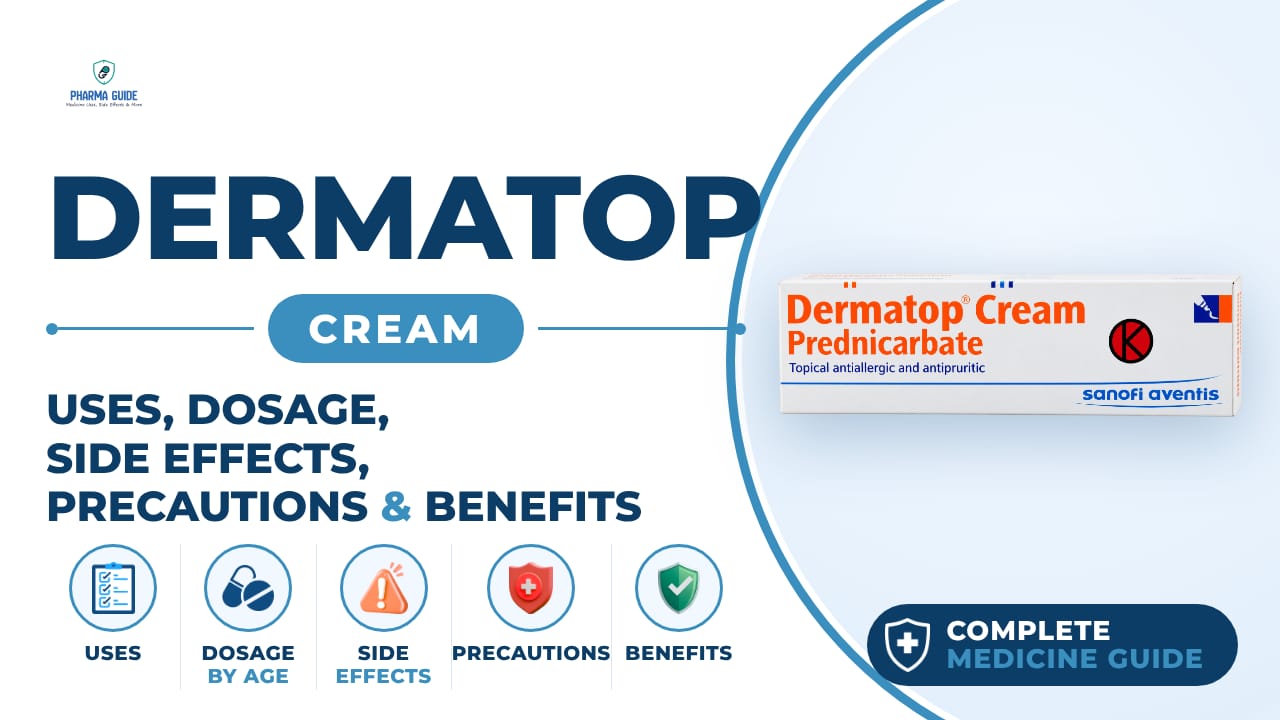
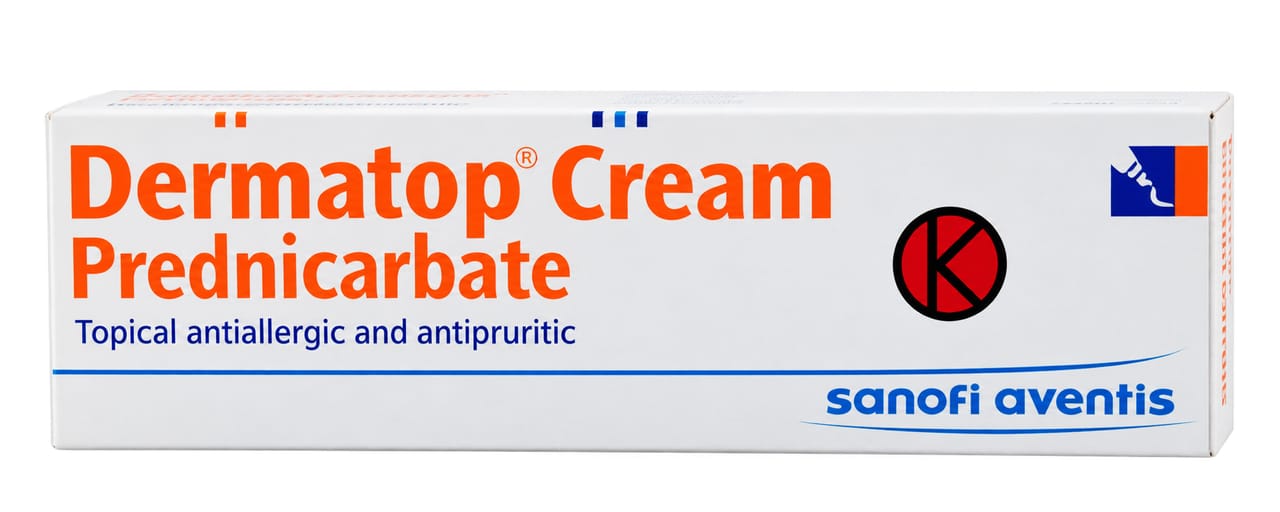
| Generic name | prednicarbate |
|---|---|
| Drug class | Topical Corticosteroids |
| Forms | Ointment, Cream |
Quick overview
Dermatop Cream contains prednicarbate, a topical corticosteroid. It is applied to the skin to relieve inflamed, itchy skin conditions such as eczema and allergic skin reactions. It works by lowering the skin's immune response to reduce swelling, redness, and itching. It is typically used for a limited time and should be applied exactly as directed by a doctor or pharmacist.
What is Dermatop Cream
Dermatop Cream is a steroid medicine that you put on the skin. It is used to calm down inflamed, itchy skin conditions like eczema and allergic skin reactions.
Dermatop Cream uses
- Relief of inflammatory and itchy skin conditions (corticosteroid-responsive dermatoses)
- Allergic reactions
- Eczema
- Psoriasis
- Treats eczema
- Treats dermatitis
- Reduces skin inflammation
- Relieves itching
- Reduces redness and swelling
Benefits of Dermatop Cream
- Reduces redness, swelling, and itching
- Medium potency with lower risk of skin thinning compared to stronger steroids
- Provides localized anti-inflammatory treatment
- Helps reduce itching and redness
- Can improve steroid-responsive skin flare-ups
- Has relatively limited systemic absorption when used appropriately
How Dermatop Cream works
Dermatop belongs to a group of medicines called corticosteroids, or steroids. It works by lowering the skin's immune response, which reduces swelling, redness, and itching.
Dermatop Cream dosage
Use only as directed by your doctor. It is for use on the skin only — do not swallow it. Apply a thin layer to the affected skin areas twice a day and rub in gently. Do not use on the face, underarms, or groin areas unless your doctor tells you to. Do not bandage, wrap, or otherwise cover the treated skin unless your doctor tells you to.
Avoid getting this medicine in or near your eyes. If it gets in your eye, rinse with cool water right away. Do not use cosmetics or other skin care products on the treated areas. Tell your doctor if your skin condition gets worse or does not improve within a week.
Avoid letting this medicine touch latex products such as condoms or diaphragms, since it can damage them. This medicine is usually not used for longer than two weeks unless your doctor says otherwise.
| Age group | Dose |
|---|---|
| Under 1 year | Safety and effectiveness are not established |
| 1–17 years | Apply a thin layer to the affected skin once or twice daily |
| 18–64 years | Apply a thin layer once or twice daily to affected areas |
| 65–74 years | Usually the same topical regimen; use the smallest amount needed, especially on thin or fragile skin |
Available forms and strengths
- Ointment
- Cream
Side effects of Dermatop Cream
Common
- Burning
- Itching
- Drying, scaling, and cracking of the skin
- Pain and irritation of the skin
- Skin rash
- Swelling or dryness
- Inflamed hair follicles (folliculitis)
- Increased hair growth
- Acne or pimples
- Changes in skin color
- Blisters
- Crusting of treated skin
- Stretch marks
Serious
- Hives, difficulty breathing, or swelling of the face, lips, tongue, or throat (allergic reaction)
- Worsening of your skin condition
- Redness, warmth, swelling, oozing, or severe irritation of treated skin
- Increased thirst or urination, dry mouth, fruity breath odor (signs of high blood sugar)
- Weight gain, especially in the face or upper back (Cushing's syndrome)
- Slow wound healing
- Thinning or discolored skin, easy bruising
- Muscle weakness
- Mood changes
- Blurred vision or other vision changes
- Fast, irregular, or pounding heartbeat
Warnings and precautions
- Do not use this medicine for longer than two weeks.
- Using too much of this medicine, using it for too long, covering the treated skin, or applying it to large areas, broken skin, the face, scalp, underarms, or groin can cause your adrenal glands to shut down, even with correct use.
- Do not stop using this medicine suddenly, as this can cause serious withdrawal symptoms or adrenal problems that can be life-threatening.
- Using this medicine for a long time may cause your skin to thin or develop stretch marks.
- This medicine contains paraffin, which can cause latex condoms to leak or break, so contact between the two should be avoided.
- Do not use this medicine if you have a bacterial, fungal, or viral skin infection, tuberculosis of the skin, a syphilitic skin infection, chickenpox, or untreated infections.
- Children may have slower growth, and prolonged use increases risk of raised pressure in the skull.
- This medicine should only be used during pregnancy if your doctor decides the benefits are worth the possible risks to the baby, especially during the first three months.
- Caution is advised if you are breastfeeding, since steroids taken by mouth or injection can pass into breast milk, and it is not fully known if the skin form does too.
- No routine kidney-specific adjustment is required for topical use. No routine liver-specific adjustment is generally required. No significant direct interaction with alcohol is expected. Dermatop does not normally affect driving.
Storage
- Store at controlled room temperature (59 to 86°F or 15 to 30°C).
When to see a doctor
- Get medical help right away if you notice signs of an allergic reaction, such as hives, swelling of the face, lips, tongue or throat, or difficulty breathing or swallowing.
- Seek medical care right away if you have serious eye symptoms such as sudden vision loss, blurred vision, tunnel vision, eye pain or swelling, or seeing halos around lights.
- Seek medical care right away if you have serious heart symptoms such as a fast, irregular, or pounding heartbeat, fluttering in your chest, shortness of breath, or sudden dizziness or fainting.
- Seek medical care right away for severe headache, confusion, slurred speech, arm or leg weakness, trouble walking, loss of coordination, feeling unsteady, very stiff muscles, high fever, profuse sweating, or tremors.
- Talk to your doctor right away if you or your child have more than one of these symptoms: blurred vision, dizziness or fainting, a fast or irregular heartbeat, increased thirst or urination, irritability, or unusual tiredness or weakness.
- Stop using the medicine and check with your doctor right away if you develop a skin rash, burning, stinging, swelling, or irritation on the skin.
- Tell your doctor immediately if you or your child is exposed to measles or chickenpox while using this medicine, since serious or fatal effects can occur if you have not already had these infections.
Alternatives
- Hydrocortisone cream
- Desonide cream
- Mometasone cream
- Triamcinolone cream
Watch the video
FAQs
What is Dermatop Cream used for?
Dermatop Cream is used to relieve inflamed, itchy skin conditions such as eczema, allergic skin reactions, psoriasis, and dermatitis by reducing skin inflammation, redness, and swelling.
How do you use Dermatop Cream?
Apply a thin layer to the affected skin areas twice a day and rub in gently. It is for use on the skin only, should not be used on the face, underarms, or groin unless directed, and should not be bandaged or covered unless your doctor says so.
How long can I use Dermatop Cream?
This medicine is usually not used for longer than two weeks unless your doctor says otherwise, since prolonged use can cause adrenal gland suppression and skin thinning.
What are the side effects of Dermatop Cream?
Common side effects include burning, itching, dry or cracked skin, skin rash, folliculitis, acne, changes in skin color, and stretch marks. Serious effects can include allergic reactions, signs of high blood sugar, Cushing's syndrome, and thinning or discolored skin.
Can Dermatop Cream be used during pregnancy?
This medicine should only be used during pregnancy if your doctor decides the benefits outweigh the possible risks to the baby, especially during the first three months.
General information, not medical advice
Your prescriber and the leaflet in your pack know your situation. This page does not.
- Follow your prescriber and the leaflet
- Don't start, stop, or change a dose on your own
- Doses and warnings differ by country and product
Sources
Video
Related medicines

Injectafer Injection: Uses, Dosage, Side Effects, Precautions and Alternates
Iron products
Injectafer (ferric carboxymaltose) treats iron deficiency anemia and heart failure-related iron deficiency via IV. Learn uses, dosage, side effects, and

Gliclazide Tablet: Uses, Dosage, Side Effects, Precautions and Alternates
Sulfonylurea (hypoglycemic/antidiabetic agent)
Gliclazide Tablet is a sulfonylurea for type 2 diabetes that boosts insulin release. Learn about dosage, side effects, warnings, and precautions.