
Safety
General information, not medical advice
Your prescriber and the leaflet in your pack know your situation. This page does not.
- Follow your prescriber and the leaflet
- Don't start, stop, or change a dose on your own
- Doses and warnings differ by country and product
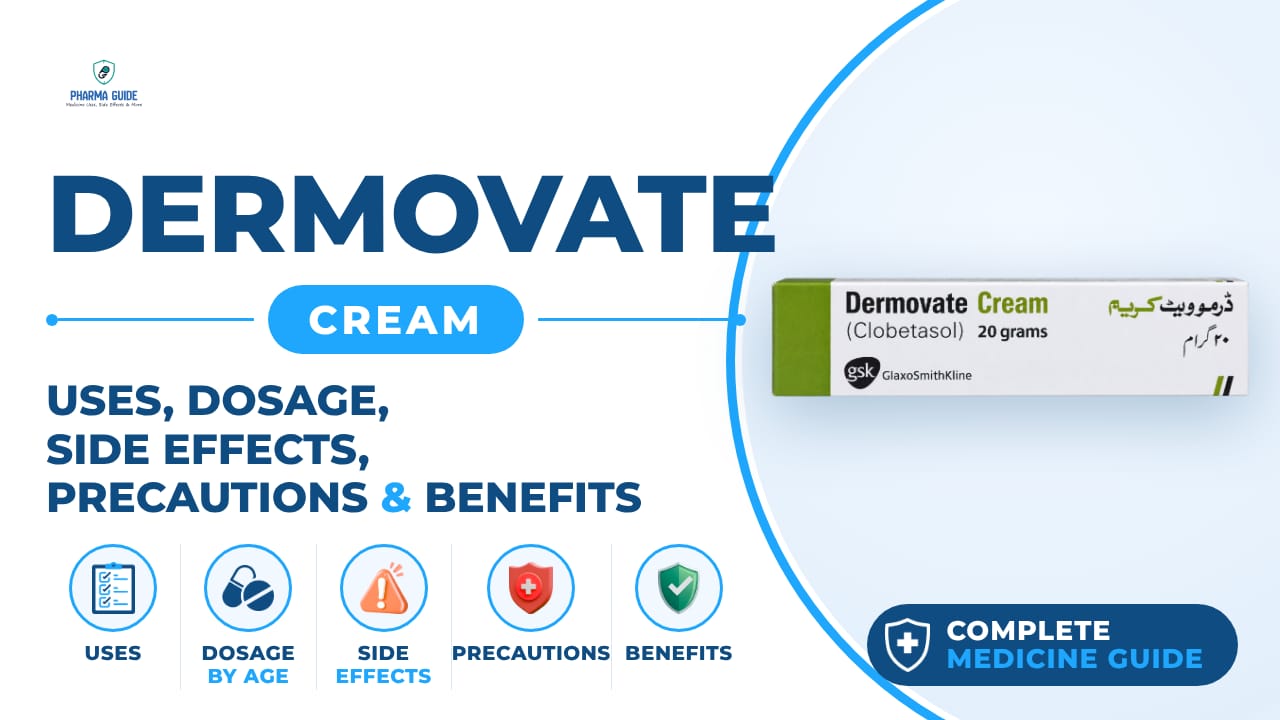
Dermovate Cream: Uses, Dosage, Side Effects, Precautions and Alternates
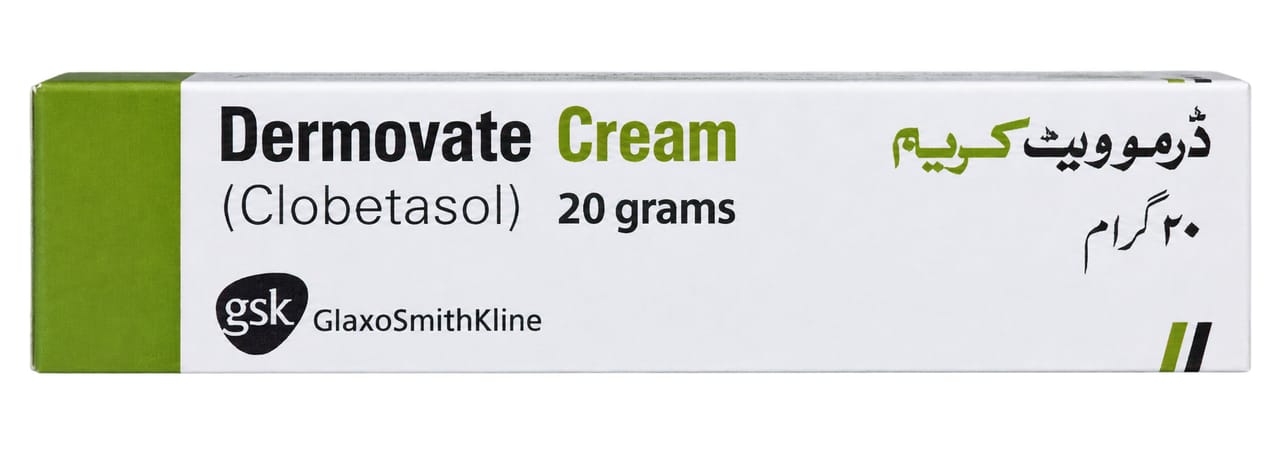
| Generic name | Clobetasol Propionate |
|---|---|
| Drug class | Super-potent (very potent) topical corticosteroid |
| Forms | Cream, Ointment |
Quick overview
Dermovate Cream contains clobetasol propionate, a super-potent topical corticosteroid used for short periods to treat severe, resistant inflammatory skin disorders where milder steroid creams have not worked. It reduces redness, swelling, itching, and irritation, with noticeable improvement often seen within two weeks of regular use. It is applied as a thin layer to the affected skin and is generally used for short courses, as directed by a doctor.
What is Dermovate Cream
Dermovate Cream contains clobetasol propionate, a very strong steroid used on the skin. It is a potent treatment used for short periods to treat severe, resistant inflammatory skin disorders where milder steroid creams have not worked.
Dermovate Cream uses
- Psoriasis (excluding widespread plaque psoriasis)
- Severe eczema / atopic eczema
- Lichen planus
- Discoid lupus erythematosus
- Stubborn or persistent dermatitis
- Severe allergic or irritant contact skin reactions
- Itchy skin conditions that haven't responded to milder treatments
- Seborrheic dermatitis
- An eruption of hard, intensely itchy nodules on the skin
- Erythroderma (widespread skin redness)
- Other inflammatory skin disorders unresponsive to lower-potency steroids
Benefits of Dermovate Cream
- Reduces redness, swelling, and irritation
- Eases itching and discomfort
- Calms the skin's inflammatory response
- Can show noticeable improvement within two weeks of regular use
How Dermovate Cream works
The steroid in this cream reduces inflammation by lowering the release of inflammatory chemicals in skin cells, which helps calm swelling, itching, and redness.
Dermovate Cream dosage
Wash your hands before and after applying the cream, unless you are treating your hands. Clean and dry the affected area first, then apply a thin layer and gently rub it in until absorbed. Do not cover the treated area with bandages or plastic/waterproof material unless your doctor tells you to, and avoid contact with the eyes, face, and genital areas.
If you also use a moisturizer, apply the moisturizer first and let it absorb before applying this cream. Treatment is usually for a short course, generally up to four weeks. Once the condition improves, your doctor may have you use it less often or switch to a milder steroid. For recurring conditions, it may be used less often (such as once daily or twice weekly) on previously affected areas to help prevent flare-ups.
Avoid using on the face; if your doctor says it is needed on the face, use it only for a short number of days. This cream is not recommended for children under 1 year old; use in children only if a doctor prescribes it. In elderly patients, use the smallest effective amount for the shortest time needed.
| Age group | Dose |
|---|---|
| Under 1 year | Do not use |
| 1–11 years | Apply a thin layer once or twice daily; use only for a short course under medical advice |
| 12–17 years | Apply a thin layer once or twice daily, as prescribed |
| 18–64 years | Apply a thin layer once or twice daily |
| 65+ years | Apply a thin layer once or twice daily, using the minimum amount needed |
Available forms and strengths
- Cream
- Ointment
Side effects of Dermovate Cream
Common
- Burning sensation
- Itching
- Skin dryness
- Pain
- Irritation
- Headache
- Change in skin color
- Skin rash
- Skin thinning
- Tearing of the skin
- Stretch marks
- Increased hair growth
- Acne-like eruptions
Serious
- Adrenal gland suppression
- Cushing's syndrome (such as moon face and central obesity)
- Allergic contact dermatitis
- Worsening of skin infections
- Blurred vision
- Serious allergic reactions, such as swelling, itching, and difficulty breathing
- Fatigue, increased thirst, urge to urinate, and weak muscles from raised corticosteroid levels in the blood
- Hives
- Pustular psoriasis (pus-filled, raised bumps that appear after treatment)
- Visible blood vessels on the skin
- Hair loss on the scalp
- Numbness in the fingers
- Unhealing skin condition
- Glaucoma or cataracts if the medicine gets into the eyes
- High blood sugar
- High blood pressure
- Osteoporosis
- Slowed growth in children
Warnings and precautions
Do not use this cream if you are allergic to clobetasol propionate or any of its ingredients, have untreated skin infections, acne, rosacea, skin conditions with ulcers, or perioral dermatitis.
This medicine is for use on the skin only. Don't use it for longer than your doctor has told you to, and avoid covering treated areas with plastic or waterproof materials.
Long-term use can cause a condition called Cushing's syndrome or suppress your body's natural hormone production from the adrenal glands, leading to hormone deficiency. If this happens, the medicine should be stopped gradually rather than suddenly.
Using this cream for a long time, over large areas, under covering/bandages, on skin folds, or on damaged or thin skin (like the face) increases the risk of side effects affecting the whole body. Children are at greater risk because their skin is thinner.
Should not be used on the face because of the risk of skin thinning; if used on the face, it should only be for a few days. Take care it does not get into your eyes, as this can lead to cataracts or glaucoma if exposure continues over time.
Using this medicine with certain other drugs (such as ritonavir or itraconazole) can increase the amount of steroid in your body because these drugs slow down how the steroid is broken down.
Do not use more than the maximum weekly amount your doctor recommends.
There is limited information on using this cream during pregnancy. Animal studies with topical steroids showed some effects on the developing baby, but this hasn't been confirmed in humans. It should only be used in pregnancy if the benefits outweigh the risks, so talk to your doctor first.
It isn't known for certain whether this medicine passes into breast milk when applied to the skin. Breastfeeding mothers should weigh the risks and benefits with their doctor, and should not apply the cream to the breast area to avoid the baby swallowing it.
If used for a long time or over large areas, the medicine may enter the bloodstream. In people with reduced kidney function, the body may clear the medicine more slowly, increasing the risk of body-wide side effects.
If used for a long time or over large areas, the medicine may enter the bloodstream. In people with reduced liver function, the body may process the medicine more slowly, increasing the risk of body-wide side effects.
Storage
- Keep in a cool, dry place below 25°C
- Keep away from direct sunlight and moisture
- Keep away from children's reach
- Don't refrigerate
- Keep tube tightly closed
When to see a doctor
Stop using the cream and tell your doctor if your skin irritation gets worse. Stop using this medicine and get medical help if you have a serious allergic reaction, signs of reduced adrenal gland function, or signs of too much corticosteroid in your blood. Get medical help right away if you notice signs of a serious allergic reaction, such as swelling, itching, or difficulty breathing.
Alternatives
- Eumovate
- Betnovate
- Aveeno
- E45 cream
- Dermovate Ointment
Watch the video
FAQs
What is Dermovate Cream used for?
It treats severe, resistant inflammatory skin disorders unresponsive to milder steroids, including psoriasis (excluding widespread plaque psoriasis), severe eczema, lichen planus, discoid lupus erythematosus, stubborn dermatitis, and seborrheic dermatitis.
How long can you use Dermovate Cream?
Treatment is usually a short course, generally up to four weeks. Once the condition improves, your doctor may have you use it less often or switch to a milder steroid.
Can Dermovate Cream be used on the face?
It should generally be avoided on the face due to the risk of skin thinning. If your doctor says it is needed on the face, it should only be used for a short number of days.
What are the side effects of Dermovate Cream?
Common side effects include burning, itching, skin dryness, pain, irritation, headache, change in skin color, skin thinning, stretch marks, and acne-like eruptions. Serious effects can include adrenal gland suppression, Cushing's syndrome, and worsening skin infections.
Can children use Dermovate Cream?
It is not recommended for children under 1 year old. For children aged 1 and older, it should only be used if prescribed by a doctor, for a short course, as children's thinner skin increases the risk of side effects.
General information, not medical advice
Your prescriber and the leaflet in your pack know your situation. This page does not.
- Follow your prescriber and the leaflet
- Don't start, stop, or change a dose on your own
- Doses and warnings differ by country and product
Sources
Video
Related medicines

Injectafer Injection: Uses, Dosage, Side Effects, Precautions and Alternates
Iron products
Injectafer (ferric carboxymaltose) treats iron deficiency anemia and heart failure-related iron deficiency via IV. Learn uses, dosage, side effects, and

Gliclazide Tablet: Uses, Dosage, Side Effects, Precautions and Alternates
Sulfonylurea (hypoglycemic/antidiabetic agent)
Gliclazide Tablet is a sulfonylurea for type 2 diabetes that boosts insulin release. Learn about dosage, side effects, warnings, and precautions.