
Safety
General information, not medical advice
Your prescriber and the leaflet in your pack know your situation. This page does not.
- Follow your prescriber and the leaflet
- Don't start, stop, or change a dose on your own
- Doses and warnings differ by country and product
Descovy Tablet: Uses, Dosage, Side Effects, Precautions and Alternates
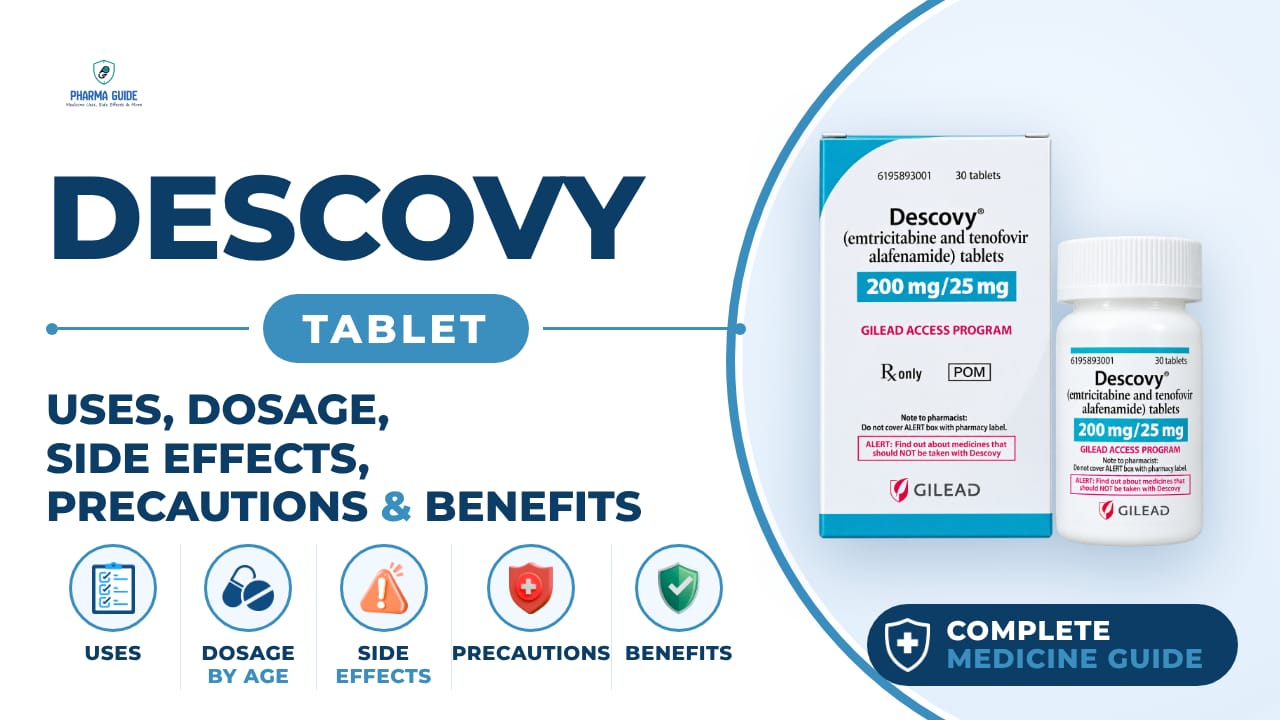
| Generic name | emtricitabine and tenofovir alafenamide |
|---|---|
| Drug class | nucleoside and nucleotide reverse transcriptase inhibitors (NRTIs) |
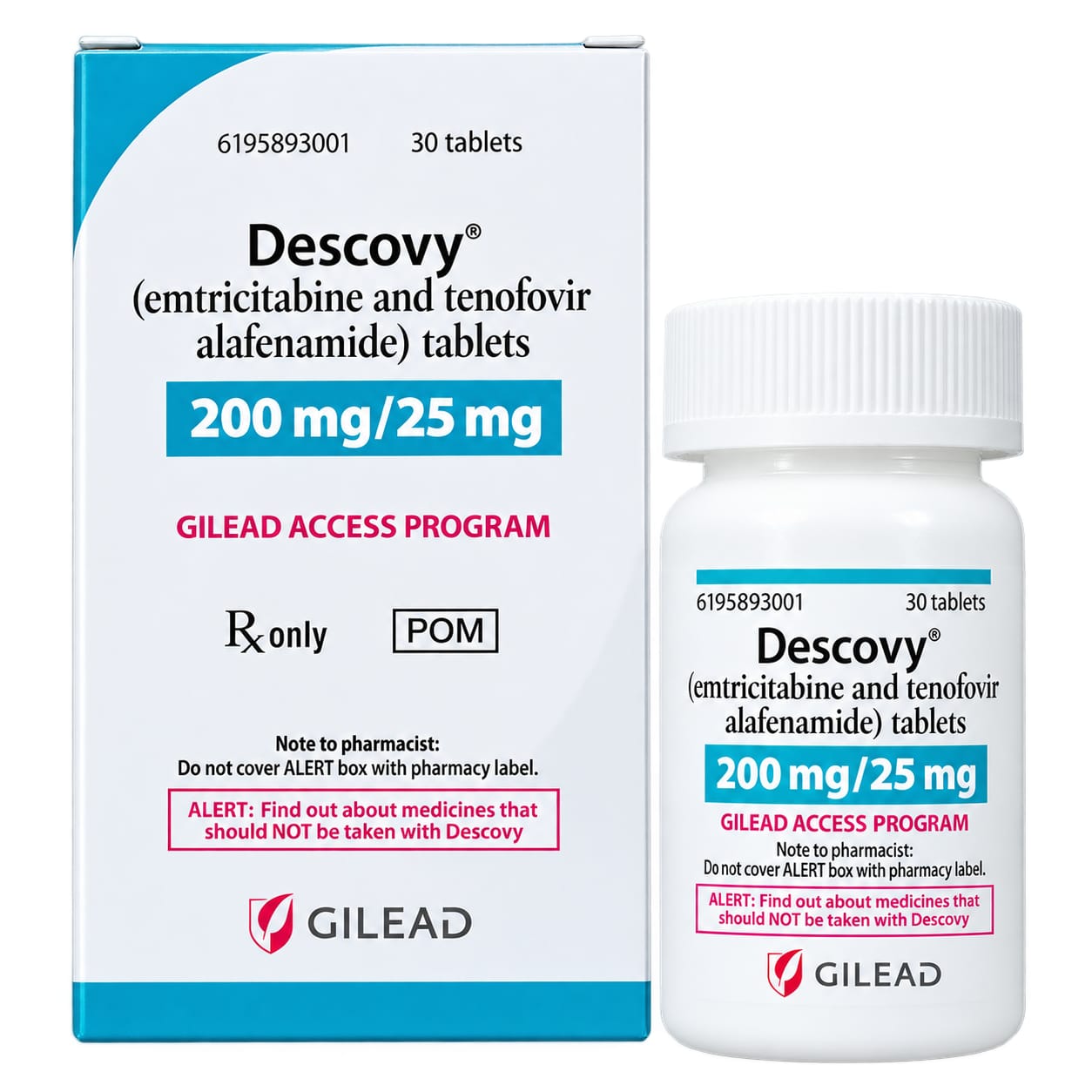
| Forms | Film-coated tablet (200/10 mg), Film-coated tablet (200/25 mg) |
Quick overview
Descovy is a prescription antiviral medicine containing emtricitabine and tenofovir alafenamide, two nucleoside and nucleotide reverse transcriptase inhibitors (NRTIs). It is used either to treat HIV-1 infection together with other anti-HIV medicines, or to help prevent HIV-1 infection in people at risk. It is taken once daily and works by blocking HIV from multiplying in the body.
What is Descovy Tablet
Descovy is a prescription medicine containing two active ingredients, emtricitabine and tenofovir alafenamide, that belong to a group of antiviral medicines. It is used either to treat HIV-1 infection together with other anti-HIV medicines, or to help prevent HIV-1 infection in people at risk.
Descovy Tablet uses
- Treat Human Immunodeficiency Virus-1 (HIV-1) infection in adults and children weighing at least 25 kg, taken together with other anti-HIV medicines
- Reduce the risk of getting HIV-1 infection in at-risk adults and adolescents weighing at least 35 kg (PrEP)
Benefits of Descovy Tablet
- Viral Suppression: Helps prevent HIV from multiplying in the body
- Immune-System Support: Suppressing HIV helps preserve immune function
- Combination Therapy: Provides two NRTI medicines in one tablet
How Descovy Tablet works
Descovy blocks an enzyme called reverse transcriptase that HIV needs to multiply. By incorporating into the virus's genetic material, it stops the virus from copying itself, lowering the amount of HIV in the blood.
Descovy Tablet dosage
Take one tablet by mouth once daily. It can be taken with or without food. The tablet should not be chewed or crushed due to the bitter taste. If you cannot swallow the tablet whole, it may be split in half and both halves taken one after the other right away. Take it regularly at the same time each day and do not miss doses. Do not stop taking this medicine suddenly without talking to your doctor, even if you feel well.
If you miss a dose and notice within 18 hours of your usual time, take it as soon as possible, then take your next dose as usual. If you notice 18 hours or more after your usual time, skip the missed dose and take your next dose at the usual time. Do not take a double dose to make up for a missed dose. If you vomit within 1 hour of taking a dose, take another tablet.
If taking for PrEP, it must be taken every day, not just when you think you've been exposed to HIV. You must be confirmed HIV-negative before starting and while continuing to take it for PrEP.
| Age group | Dose |
|---|---|
| 12–17 Years | 200 mg Emtricitabine + 25 mg Tenofovir Alafenamide once daily for patients weighing at least 35 kg |
| Adults (18–64 Years) | 200 mg Emtricitabine + 25 mg Tenofovir Alafenamide once daily |
| Older Adults (65+ Years) | 200 mg Emtricitabine + 25 mg Tenofovir Alafenamide once daily, with renal assessment |
Available forms and strengths
- Film-coated tablet (200/10 mg)
- Film-coated tablet (200/25 mg)
Side effects of Descovy Tablet
Common
- Nausea
- Diarrhea
- Fatigue
- Headaches
- Abdominal pain
- Indigestion
- Flatulence
- Rash
- Vomiting
- Abnormal dreams
- Dizziness
Serious
- Serious liver problems (hepatotoxicity) with yellowing of skin or eyes, dark urine, light-colored stools, loss of appetite, nausea, and abdominal pain
- Hepatic flare-ups of hepatitis B after stopping treatment
- Signs and symptoms of inflammation from previous infections (immune reconstitution syndrome)
- Lactic acidosis (build-up of acid in the blood), with weakness, unusual muscle pain, trouble breathing, stomach pain with nausea and vomiting, feeling cold, dizziness, or fast or irregular heartbeat
- Allergic reaction with skin rash or hives, swelling of face/lips/mouth/throat, wheezing, chest pain or tightness, or fainting
- Kidney problems, including kidney failure
- Bone problems including osteonecrosis (death of bone tissue)
Warnings and precautions
- If you have hepatitis B along with HIV, do not stop taking this medicine without first talking to your doctor, because your hepatitis B could suddenly get much worse.
- This medicine does not cure HIV or AIDS, and people taking it can still develop infections that happen when the immune system is weak.
- Taking this medicine does not stop you from passing HIV on to others, so you must continue using safer sex practices and never share needles.
- If used to reduce HIV risk, you must be confirmed HIV-negative before starting and must keep testing regularly, because missing doses can increase your risk of getting HIV.
- If you take this medicine alone for HIV prevention while you are already infected with HIV, the virus can become harder to treat in the future.
- Do not take this medicine with certain other drugs, including some anti-seizure medicines, certain antibiotics for tuberculosis, St John's Wort, and some other HIV or hepatitis B medicines, since they can make it less effective.
- If you are pregnant or planning to become pregnant, talk with your doctor. It is not known for certain whether this medicine can harm an unborn baby, so you and your doctor must weigh the potential benefits and risks together. You should not breastfeed while taking this medicine. One of the ingredients passes into breast milk, and if you are HIV-positive breastfeeding can also pass HIV to your baby.
- Tell your doctor if you have kidney problems or are on dialysis. Your doctor will do blood and urine tests to check your kidneys before and during treatment, and may stop the medicine if your kidney function worsens. Tell your doctor if you have liver problems, including hepatitis B or C. People with existing liver disease who take antiretroviral medicines have a higher risk of serious liver complications.
- Be careful when driving or using machinery until you know how this medicine affects you, since it can cause dizziness or trouble concentrating.
Storage
- Keep your tablets in the bottle with the cap tightly closed until you take them
- Keep tablets in a cool, dry place where it stays below 30°C
- Store in the original package to protect from moisture
- Do not store in the bathroom or near a sink, or in the car or on window sills
- Keep it where young children cannot reach it
- If you no longer need the medicine or it is out of date, take it to a pharmacy for safe disposal
- Do not use this medicine after the expiry date
When to see a doctor
Get medical help right away if your skin or the white of your eyes turns yellow, your urine turns dark, your stools turn light-colored, you lose your appetite for several days, or you feel sick to your stomach with abdominal pain, as these can be signs of serious liver problems. Get medical help right away if you feel very weak or tired, have unusual muscle pain, trouble breathing, stomach pain with nausea and vomiting, feel cold especially in your arms and legs, feel dizzy, or have a fast or irregular heartbeat, as these can be signs of a dangerous buildup of acid in the blood.
Stop taking this medicine and get emergency help immediately if you notice lumpy skin rash or hives, swelling of the face, lips, mouth, or throat, wheezing or chest tightness, or fainting, as these may be signs of a serious allergic reaction. If you think you have taken too much of this medicine, seek urgent medical attention even if you feel fine. Tell your doctor immediately if you notice any new symptoms of infection or inflammation, which can appear soon after starting treatment as your immune system recovers.
Alternatives
- Biktarvy
- Genvoya
- Odefsey
Watch the video
FAQs
What is Descovy Tablet used for?
Descovy is used to treat HIV-1 infection in adults and children weighing at least 25 kg, taken together with other anti-HIV medicines, and to reduce the risk of getting HIV-1 infection in at-risk adults and adolescents weighing at least 35 kg (PrEP).
How should I take Descovy Tablet?
Take one tablet by mouth once daily, with or without food, at the same time each day. Do not chew or crush it due to its bitter taste; if you cannot swallow it whole, it may be split in half and both halves taken one after the other right away.
What should I do if I miss a dose of Descovy?
If you notice within 18 hours of your usual time, take it as soon as possible, then take your next dose as usual. If 18 hours or more have passed, skip the missed dose and take your next dose at the usual time. Do not double the dose.
What are the serious side effects of Descovy Tablet?
Serious side effects include liver problems, hepatitis B flare-ups after stopping treatment, immune reconstitution syndrome, lactic acidosis, allergic reactions, kidney problems, and bone problems like osteonecrosis.
Can Descovy be used for HIV prevention (PrEP)?
Yes, Descovy can be used to reduce the risk of HIV-1 infection in at-risk adults and adolescents weighing at least 35 kg, but you must be confirmed HIV-negative before starting and must keep testing regularly, taking it every day.
General information, not medical advice
Your prescriber and the leaflet in your pack know your situation. This page does not.
- Follow your prescriber and the leaflet
- Don't start, stop, or change a dose on your own
- Doses and warnings differ by country and product
Sources
- Descovy Consumer Medicine Information (CMI), Gilead Sciences, Australia
- Descovy for PrEP Patient Brochure, Gilead Sciences
- Descovy Summary of Product Characteristics, European Medicines Agency
Video
Related medicines

Injectafer Injection: Uses, Dosage, Side Effects, Precautions and Alternates
Iron products
Injectafer (ferric carboxymaltose) treats iron deficiency anemia and heart failure-related iron deficiency via IV. Learn uses, dosage, side effects, and

Gliclazide Tablet: Uses, Dosage, Side Effects, Precautions and Alternates
Sulfonylurea (hypoglycemic/antidiabetic agent)
Gliclazide Tablet is a sulfonylurea for type 2 diabetes that boosts insulin release. Learn about dosage, side effects, warnings, and precautions.