
Safety
General information, not medical advice
Your prescriber and the leaflet in your pack know your situation. This page does not.
- Follow your prescriber and the leaflet
- Don't start, stop, or change a dose on your own
- Doses and warnings differ by country and product
Desipramine Tablet: Uses, Dosage, Side Effects, Precautions and Alternates
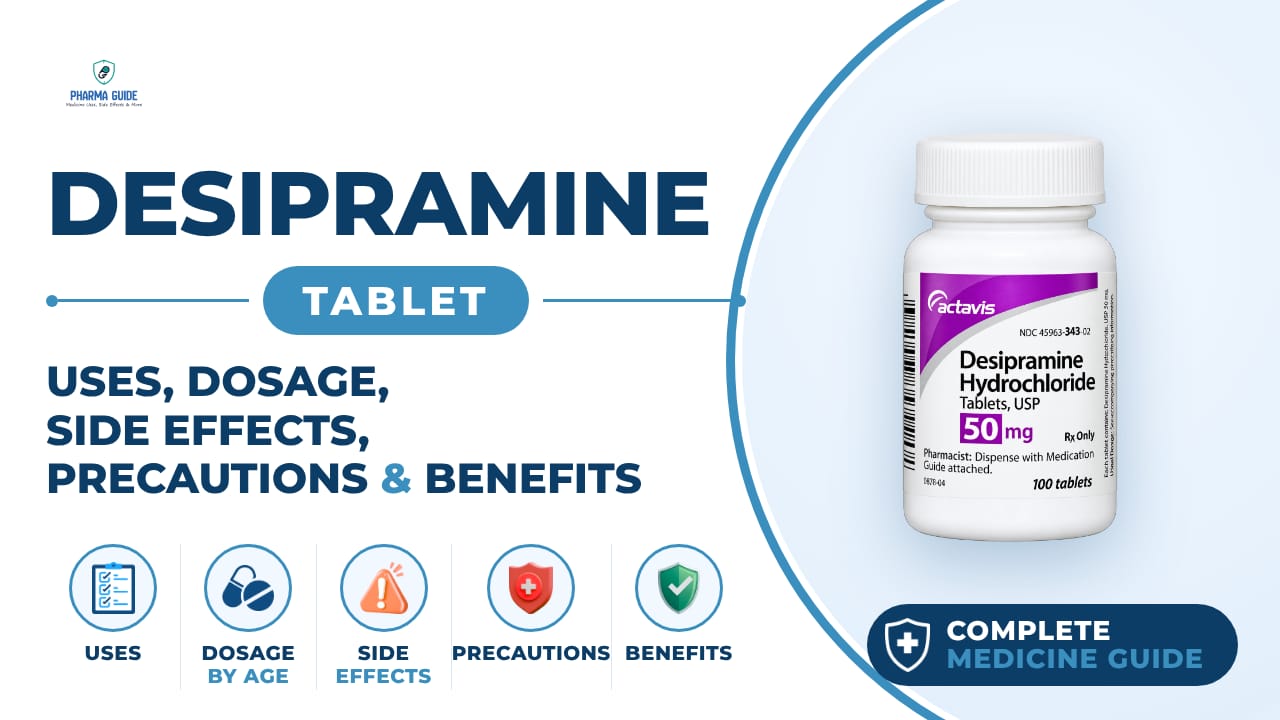
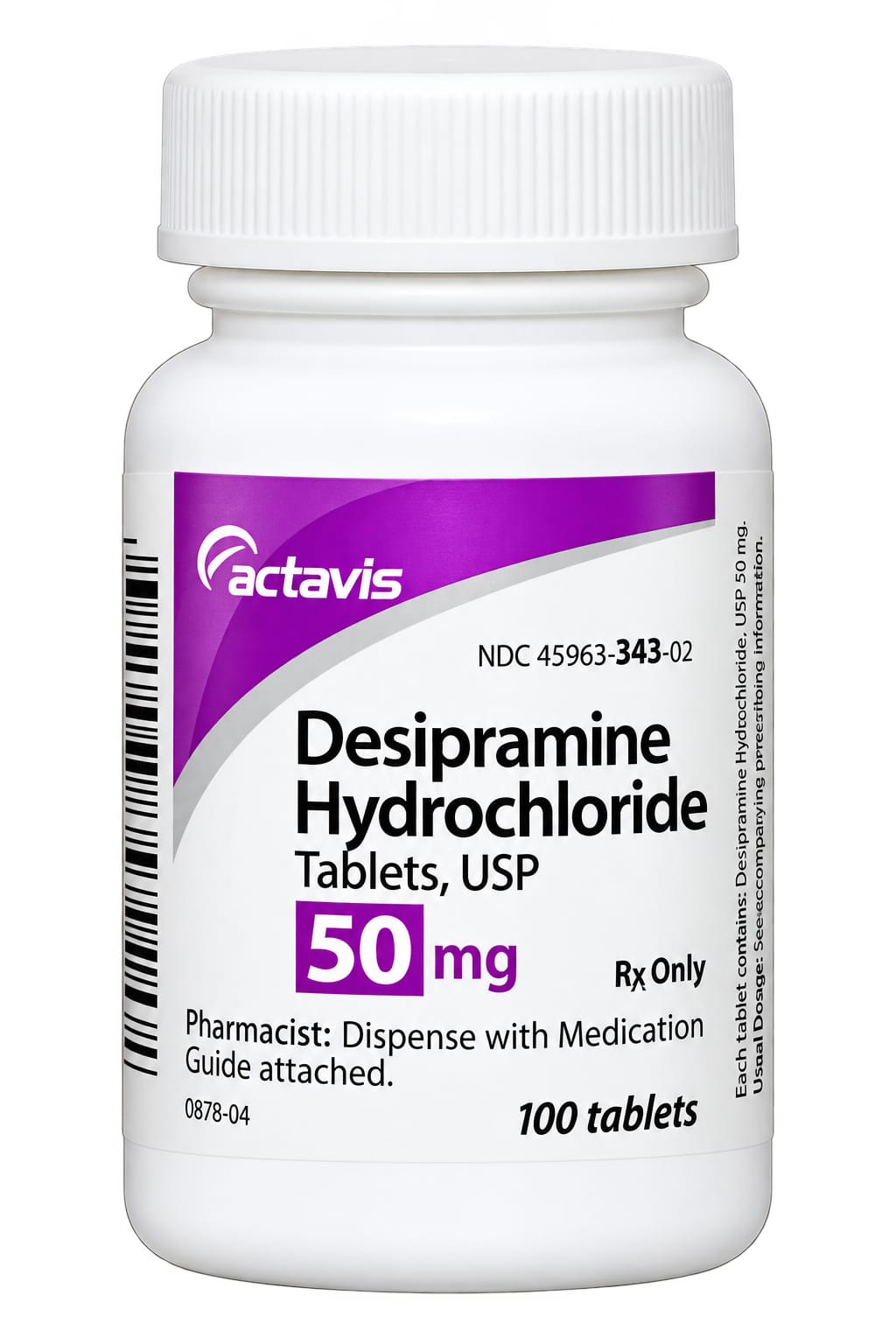
| Generic name | desipramine hydrochloride |
|---|---|
| Drug class | Tricyclic antidepressant |
| Forms | Tablets: 10 mg, 25 mg, 50 mg, 75 mg, 100 mg |
Quick overview
Desipramine Tablet (desipramine hydrochloride) is a tricyclic antidepressant medicine used to treat depression. It is thought to work by raising levels of certain brain chemicals, such as serotonin and norepinephrine, that help regulate mood. It is taken orally and is available in several tablet strengths, with dosing that depends on age and should always follow a doctor's guidance.
What is Desipramine Tablet
Desipramine is a tricyclic antidepressant medicine used to treat depression.
Desipramine Tablet uses
- Treatment of depression, including the depressed phase of manic depressive illness and other forms of depressive illness
- Treats major depressive disorder
- Helps improve mood
- May improve energy and motivation
- Can reduce other symptoms associated with depression
Benefits of Desipramine Tablet
- Helps relieve symptoms of depression
- Provides an oral treatment option for depression
- May be less sedating than some other tricyclic antidepressants
- Can improve daily functioning when treatment is effective
How Desipramine Tablet works
Desipramine is thought to work by raising the levels of certain brain chemicals, such as serotonin and norepinephrine, that help regulate mood.
Desipramine Tablet dosage
Swallow the tablets with a glass of water. Keep taking this medicine even if you do not feel better right away; it may take several weeks to start working. Do not stop taking this medicine suddenly without talking to your doctor, as stopping suddenly can cause withdrawal symptoms.
If you miss a dose, take it as soon as you remember, but if it is almost time for your next dose, skip the missed dose and continue your regular schedule. Do not take two doses at once. Your doctor may prescribe a lower dose if you are elderly. This medicine is not recommended for use in children or teenagers under 18.
| Age group | Dose |
|---|---|
| Under 18 years | Not routinely recommended; specialist-directed only |
| 18–64 years | Common adult dose range: 100–200 mg/day, given once daily or in divided doses |
| 65–74 years | Usually starts lower, often 25–100 mg/day, with cautious titration |
Available forms and strengths
Tablets: 10 mg, 25 mg, 50 mg, 75 mg, 100 mg
Side effects of Desipramine Tablet
Common
- Dry mouth
- Visual disturbances / blurred vision
- Constipation
- Problems emptying your bladder
- Dizziness
- Drowsiness
- Tiredness
- Sweating more than usual
- Shaking/tremors
- Trouble sleeping
- Headache
- Weight gain or loss
- Nausea and vomiting
Serious
- Allergic reaction: difficulty swallowing or breathing, wheezing, swelling of face/lips/tongue/throat, hives or rash
- Irregular or fast heartbeat, palpitations, fainting (heart rhythm problems)
- Chest pain, pressure, shortness of breath, sweating (possible heart attack)
- Sudden numbness or weakness of face, arm or leg, confusion, trouble speaking, loss of balance (possible stroke)
- Seizures (uncontrollable shaking with or without loss of consciousness)
- Serotonin toxicity: agitation, flushing, muscle twitching, heavy sweating, high body temperature, rigid muscles, fast heartbeat, confusion, hallucinations, diarrhea, vomiting
- Angle-closure glaucoma: sudden eye pain, vision changes, swelling or redness around the eye, sudden vision loss
- Bone marrow problems: easy bruising, bleeding, nosebleeds, bleeding gums, red spots on skin, fever and chills, extreme tiredness, pale skin
- Liver problems: nausea, vomiting, right upper stomach pain, dark urine, unusual tiredness, yellowing of skin or eyes
- Low blood sodium: headache, muscle weakness or cramps, confusion, hallucinations
- Mania: elevated or irritable mood, decreased need for sleep, racing thoughts
- New or worsening depression, anxiety, or thoughts of suicide or self-harm
- Low blood pressure on standing: dizziness, fainting, light-headedness, blurred vision, nausea
Warnings and precautions
- Do not take this medicine together with, or within two weeks of stopping, a monoamine oxidase inhibitor (MAOI), as this combination can cause severe reactions including seizures and death.
- This medicine should not be used right after a heart attack or in people with poorly controlled heart failure. Use extra caution if you have heart disease, a history of urinary retention, glaucoma, thyroid disease, or a seizure disorder, since this medicine can affect all of these conditions.
- This medicine should be kept where children cannot reach it, and given in the smallest amount needed, because overdose can be life-threatening. Antidepressants may increase the risk of suicidal thoughts or behavior, especially in children, teens, and young adults, particularly early in treatment or after a dose change.
- This medicine can make your skin more sensitive to sunlight, increasing the risk of sunburn. Tell your surgeon if you are taking this medicine before any planned surgery, since it may need to be stopped beforehand because of possible effects on the heart.
- It is not known whether desipramine is safe to use during pregnancy. Tell your doctor if you are pregnant or planning to become pregnant so the benefits and risks can be weighed. It is not known if desipramine passes into breast milk. Caution is advised because many medicines do pass into breast milk.
- This medicine is removed from the body mainly by the kidneys, so people with kidney problems may be at greater risk of side effects. Tell your doctor if you have kidney problems. Tell your doctor if you have liver disease before taking this medicine.
- Avoid alcohol while taking this medicine, since it can increase sleepiness and other side effects, and the combination can be dangerous. This medicine can affect your alertness, coordination, and judgment. Do not drive or operate machinery until you know how it affects you.
Storage
- Store at 15° to 30°C.
- Keep in a tightly closed container away from heat.
- Keep out of reach and sight of children.
When to see a doctor
- Get medical help right away if you have signs of an allergic reaction, such as trouble breathing or swallowing, wheezing, or swelling of the face, lips, tongue, or throat.
- Seek immediate medical help if you notice eye pain, vision changes, or swelling or redness in or around the eye, as these may be signs of a serious eye problem.
- Get emergency help right away if you develop symptoms of serotonin syndrome, such as fever, sweating, agitation, fast heartbeat, muscle twitching or stiffness, confusion, or loss of coordination.
- Contact your doctor or go to a hospital right away if you have thoughts of harming or killing yourself.
- If you think you or someone else has taken too much of this medicine, get medical help immediately even if there are no symptoms yet, since overdose can be fatal.
- Call your doctor right away if you notice new or worsening chest pain, pounding or fluttering heartbeats, or sudden numbness or weakness, which could signal a serious heart or stroke problem.
Alternatives
- Nortriptyline
- Amitriptyline
- Imipramine
Watch the video
FAQs
What is Desipramine Tablet used for?
Desipramine is a tricyclic antidepressant used to treat depression, including the depressed phase of manic depressive illness and other depressive illness, helping improve mood, energy, and motivation.
How does Desipramine Tablet work?
It is thought to work by raising levels of certain brain chemicals, such as serotonin and norepinephrine, that help regulate mood.
What is the common adult dose of Desipramine Tablet?
For adults aged 18–64 years, the common dose range is 100–200 mg/day, given once daily or in divided doses, while older adults usually start lower with cautious titration.
What are the common side effects of Desipramine Tablet?
Common side effects include dry mouth, blurred vision, constipation, difficulty emptying the bladder, dizziness, drowsiness, tiredness, sweating, tremors, trouble sleeping, headache, weight changes, and nausea or vomiting.
What precautions should be followed when taking Desipramine Tablet?
Avoid combining it with MAOIs, use caution if you have heart disease, urinary retention, glaucoma, thyroid disease, or seizure disorder, avoid alcohol, and be cautious with sun exposure and activities requiring alertness.
General information, not medical advice
Your prescriber and the leaflet in your pack know your situation. This page does not.
- Follow your prescriber and the leaflet
- Don't start, stop, or change a dose on your own
- Doses and warnings differ by country and product
Sources
Video
Related medicines
Tryptomer Tablet: Uses, Dosage, Side Effects, Precautions and Alternates
Tricyclic antidepressant
Tryptomer Tablet (Amitriptyline) treats depression, nerve pain, migraine, and tension headaches. Learn about its uses, dosage, side effects, and precautions.
Norpramin Tablet: Uses, Dosage, Side Effects, Precautions and Alternates
Tricyclic antidepressant
Norpramin Tablet (desipramine) treats depression by restoring brain chemical balance. Learn uses, dosage, side effects, warnings, and precautions.