
Safety
General information, not medical advice
Your prescriber and the leaflet in your pack know your situation. This page does not.
- Follow your prescriber and the leaflet
- Don't start, stop, or change a dose on your own
- Doses and warnings differ by country and product
Desloratadine Tablet: Uses, Dosage, Side Effects, Precautions and Alternates
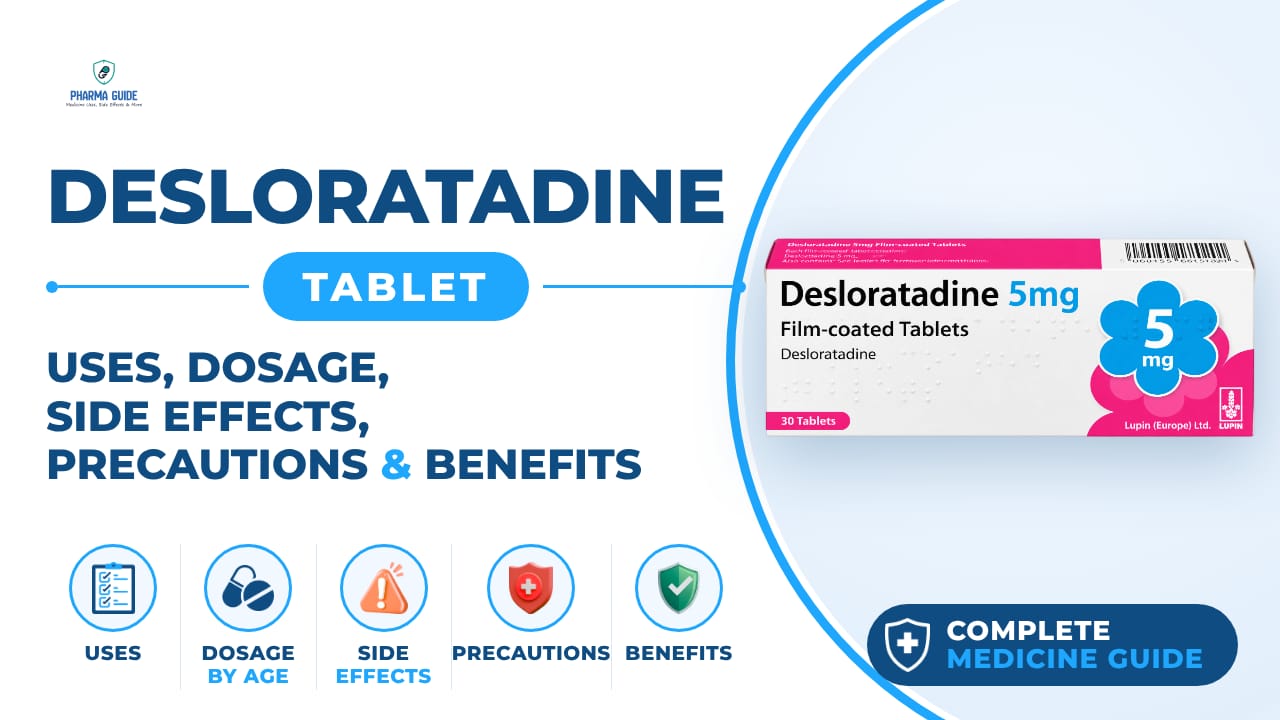
| Generic name | Desloratadine |
|---|---|
| Drug class | Second-generation antihistamine (selective H1-receptor antagonist) |
| Forms | Tablet, Orally disintegrating tablet, Oral solution (syrup) |
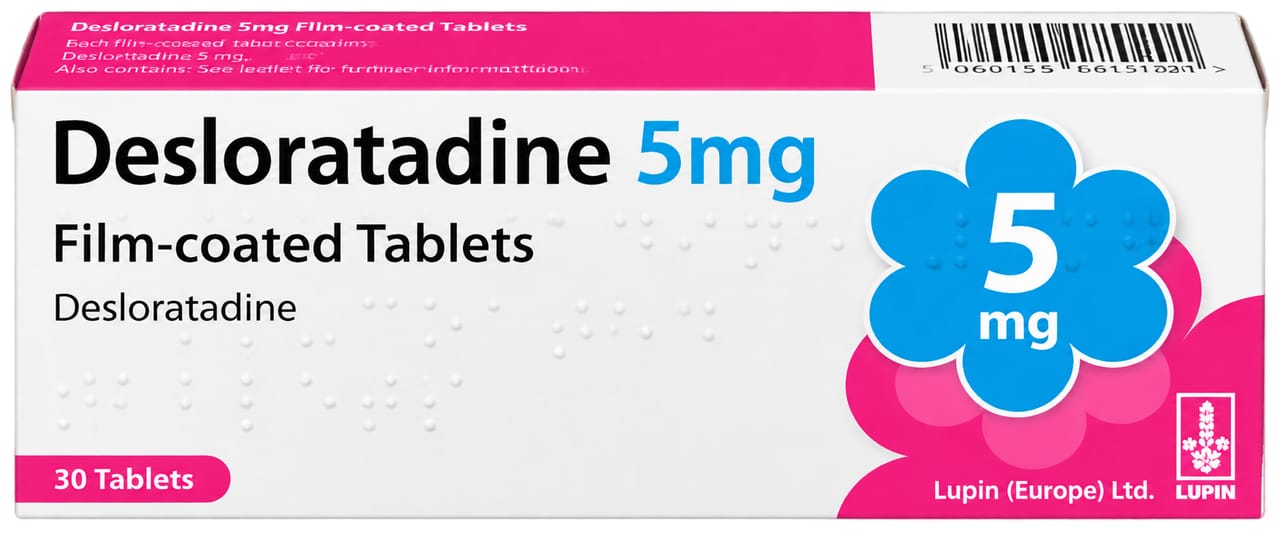
Quick overview
Desloratadine Tablet is a second-generation antihistamine used to relieve allergy symptoms such as sneezing, runny nose, itchy eyes, and hives. It is designed to cause less sleepiness than older antihistamines, but it should still be used carefully and according to medical advice. It is typically taken once daily and is available in several forms and strengths depending on age.
What is Desloratadine Tablet
Desloratadine is a second-generation antihistamine, specifically a selective H1-receptor antagonist. It is used to relieve allergy symptoms such as sneezing, runny nose, itchy eyes, and hives, and is designed to cause less sleepiness than older antihistamines, though it should still be used carefully and according to medical advice.
Desloratadine Tablet uses
- Sneezing
- Runny nose
- Itching of the nose or throat
- Red, itchy, or watery eyes
- Seasonal allergic rhinitis (hay fever)
- Perennial (year-round) allergic rhinitis
- Chronic urticaria (hives), to reduce itching and the number and size of hives
Benefits of Desloratadine Tablet
- May help reduce daily discomfort and improve sleep, concentration, and quality of life when symptoms are related to allergies
- May help lessen itch and reduce the number or severity of hives episodes
- Considered less likely to cause drowsiness than older antihistamines
- Effects can last about 24 hours, allowing once-daily use
How Desloratadine Tablet works
Desloratadine works by blocking histamine, a substance the body releases during allergic reactions that causes symptoms like itching, sneezing, runny nose, and watery eyes.
Desloratadine Tablet dosage
Take desloratadine once a day, with or without food, around the same time every day. Take it exactly as directed; do not take it more often than prescribed.
For the oral solution (syrup), use a calibrated measuring dropper or oral syringe, not a household spoon. For the orally disintegrating tablet, use dry hands to peel back the foil packaging, place the tablet on the tongue immediately, and let it dissolve; it can be swallowed with saliva or water without needing to drink other liquid.
If a dose is missed, take it as soon as remembered, but if it is almost time for the next dose, skip the missed dose and continue the regular schedule; do not double up.
Children's products should be used with extra caution, and adult products should not be substituted for children's formulations. Older adults may need a different amount if they have kidney or liver problems, so medical guidance is important.
| Age group | Dose |
|---|---|
| Under 6 years | Tablet not generally recommended; pediatric formulation preferred |
| 6–11 years | 2.5 mg once daily |
| 12 years & older | 5 mg once daily |
| Adults | 5 mg once daily |
Available forms and strengths
- Tablet
- Orally disintegrating tablet
- Oral solution (syrup)
- 2.5 mg
- 5 mg
Side effects of Desloratadine Tablet
Common
- Headache
- Dizziness
- Dry mouth
- Tiredness or unusual tiredness/weakness
- Sleepiness or drowsiness
- Nausea
- Sore throat
- Muscle pain
- Diarrhea
- Indigestion, stomach discomfort, or heartburn
- Painful menstruation
Serious
- Anaphylaxis (cough, difficulty swallowing, dizziness, fast heartbeat, hives, itching, swelling of eyelids, face, lips, or tongue, shortness of breath, skin rash, chest tightness, unusual tiredness, wheezing)
- Difficulty breathing or swallowing
- Swelling of the face, throat, tongue, lips, eyes, hands, feet, ankles, or lower legs
- Fast, pounding, or irregular heartbeat (tachycardia, palpitations)
- Severe rash, itching, or hives
- Seizures (rare)
- Signs of liver problems such as jaundice (yellowing of the skin)
Warnings and precautions
- Desloratadine has not been well studied in pregnancy, so it is not generally recommended for use during pregnancy. Talk to a doctor before using it if you are or might become pregnant.
- Desloratadine passes into breast milk, so breastfeeding is generally not recommended while taking it. Discuss the benefits and risks with your doctor.
- People with kidney disease may process desloratadine more slowly, which can increase its effects. It should be used with caution in people with severe kidney problems, and a doctor may adjust the dose.
- People with liver disease may process desloratadine more slowly, increasing its effects in the body. It should be used with caution in people with severe liver problems.
- Drinking alcohol is not known to interact directly with desloratadine, but it may increase tiredness in some people, so caution is advised until you know how the combination affects you.
- At the recommended dose, desloratadine is not expected to affect the ability to drive or use machines, but drowsiness has been reported rarely, so people should know how it affects them before driving or doing tasks that require alertness.
- Do not give over-the-counter cough and cold medicines to children under 4 years old unless a doctor says to, since these medicines can cause serious or life-threatening side effects in very young children.
- Desloratadine should be used carefully in people with a personal or family history of seizures, since young children in particular may be more prone to seizures while taking it.
- Desloratadine is not a treatment for sudden, severe allergic reactions (anaphylaxis). Emergency care is needed right away for serious reactions like sudden breathing trouble or widespread swelling.
- Do not take more than the recommended amount, since a higher dose does not necessarily control symptoms better and may increase side effects.
Storage
- Keep this medication in the container it came in, tightly closed, and out of reach of children.
- Store it at room temperature and away from light, excess heat, and moisture (not in the bathroom).
- Keep from freezing.
- Do not keep outdated medicine or medicine no longer needed.
- Ask your healthcare professional how you should dispose of any medicine you do not use.
- Dispose of unneeded medications in a way so that pets, children, and other people cannot take them.
- Do not flush this medication down the toilet; use a medicine take-back program.
When to see a doctor
- Get urgent medical care if you notice swelling of the face or throat, trouble breathing, severe rash, or feeling faint.
- Stop taking desloratadine and get emergency medical help if you have rash, itching, hives, difficulty breathing or swallowing, or swelling of the face, throat, tongue, lips, eyes, hands, feet, ankles, or lower legs.
- See a doctor if your allergy symptoms don't improve within a few days or if they get worse.
- Seek medical review if symptoms last a long time, keep coming back, involve breathing trouble, swelling, or fever, or if you are pregnant, breastfeeding, an infant, an older adult, or have kidney or liver disease.
Alternatives
- Clarinex
- Clarinex Reditabs
- Clarinex-D (combination with pseudoephedrine)
- Loratadine
- Cetirizine
Watch the video
FAQs
What is Desloratadine Tablet used for?
It is used to relieve allergy symptoms such as sneezing, runny nose, itching of the nose or throat, red/itchy/watery eyes, seasonal and perennial allergic rhinitis, and chronic urticaria (hives), helping reduce itching and the number and size of hives.
What is the dosage of Desloratadine Tablet?
It is taken once a day, with or without food, around the same time daily. Dosing by age: 6–11 years, 2.5 mg once daily; 12 years and older and adults, 5 mg once daily. Tablets are not generally recommended under 6 years, where a pediatric formulation is preferred.
What should I do if I miss a dose of Desloratadine Tablet?
Take the missed dose as soon as remembered, but if it is almost time for the next dose, skip the missed dose and continue your regular schedule without doubling up.
What are the side effects of Desloratadine Tablet?
Common side effects include headache, dizziness, dry mouth, tiredness, sleepiness, nausea, sore throat, muscle pain, diarrhea, indigestion, and painful menstruation. Serious effects include anaphylaxis, difficulty breathing or swallowing, swelling of the face or throat, fast or irregular heartbeat, severe rash or hives, rare seizures, and signs of liver problems like jaundice.
Is Desloratadine Tablet safe during pregnancy or breastfeeding?
It has not been well studied in pregnancy, so it is not generally recommended during pregnancy, and since it passes into breast milk, breastfeeding is generally not recommended while taking it. Discuss benefits and risks with your doctor.
General information, not medical advice
Your prescriber and the leaflet in your pack know your situation. This page does not.
- Follow your prescriber and the leaflet
- Don't start, stop, or change a dose on your own
- Doses and warnings differ by country and product
Sources
- World Health Organization
- U.S. Food and Drug Administration
- MedlinePlus
- American Academy of Allergy, Asthma & Immunology
- National Health Service
Video
Related medicines

Injectafer Injection: Uses, Dosage, Side Effects, Precautions and Alternates
Iron products
Injectafer (ferric carboxymaltose) treats iron deficiency anemia and heart failure-related iron deficiency via IV. Learn uses, dosage, side effects, and

Gliclazide Tablet: Uses, Dosage, Side Effects, Precautions and Alternates
Sulfonylurea (hypoglycemic/antidiabetic agent)
Gliclazide Tablet is a sulfonylurea for type 2 diabetes that boosts insulin release. Learn about dosage, side effects, warnings, and precautions.