
Safety
General information, not medical advice
Your prescriber and the leaflet in your pack know your situation. This page does not.
- Follow your prescriber and the leaflet
- Don't start, stop, or change a dose on your own
- Doses and warnings differ by country and product
Desmopressin Nasal Spray: Uses, Dosage, Side Effects, Precautions and Alternates
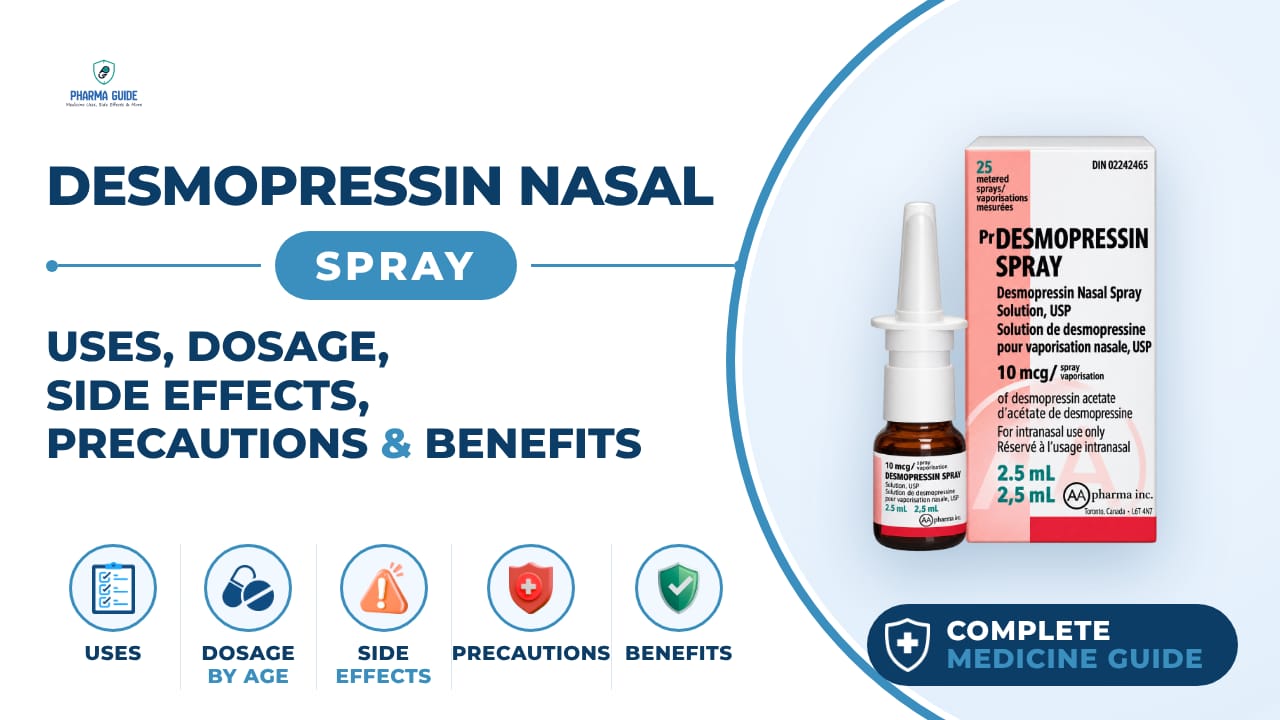
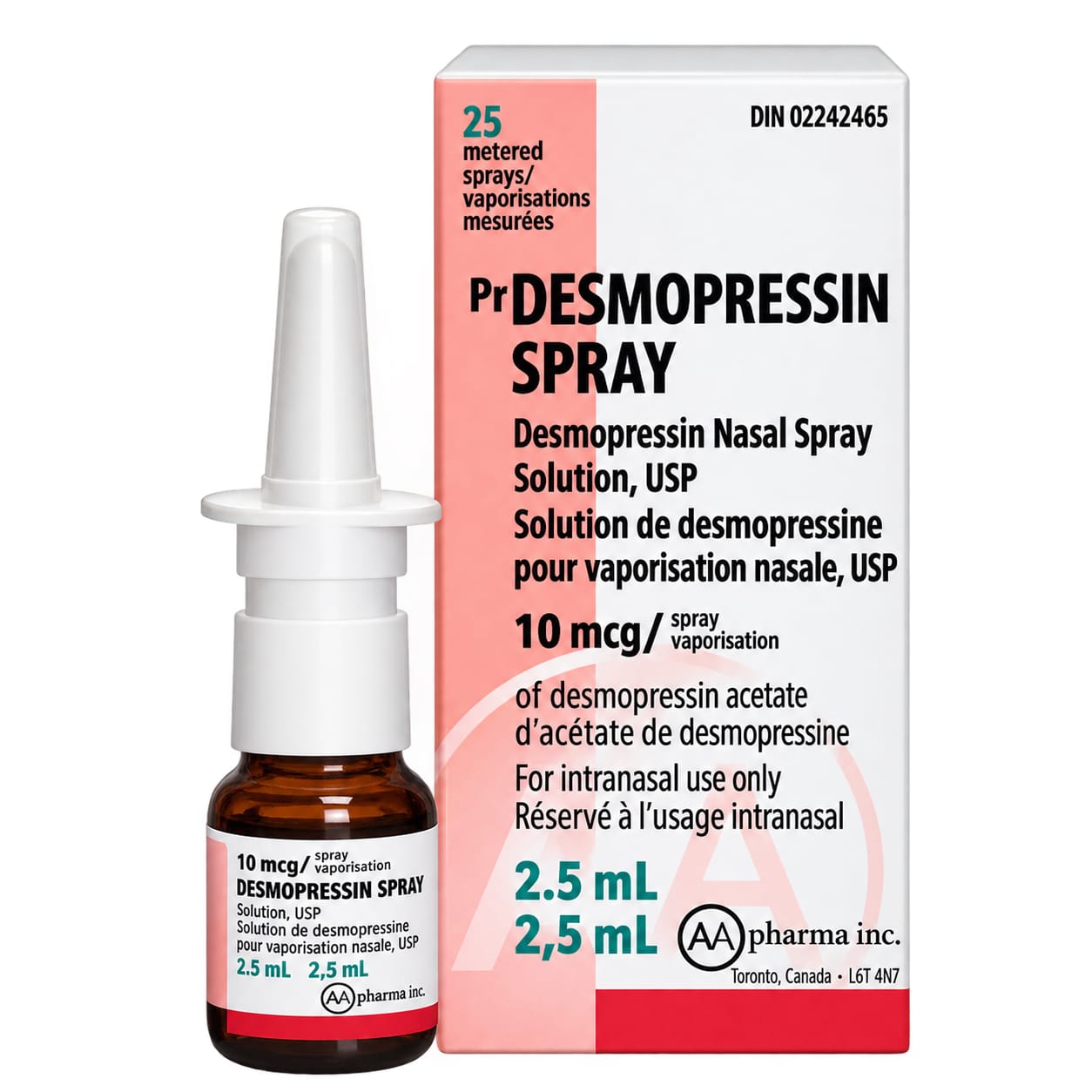
| Generic name | Desmopressin acetate |
|---|---|
| Drug class | Vasopressin analog (antidiuretic hormone replacement) |
| Forms | Nasal Spray |
Quick overview
Desmopressin Nasal Spray contains desmopressin acetate, a man-made version of antidiuretic hormone (ADH, or vasopressin). It is sprayed into the nose and is used to manage central diabetes insipidus, helping to reduce excessive urine production and excessive thirst while supporting water balance in the body. It acts on the kidneys to help them reabsorb more water, reducing urine output.
What is Desmopressin Nasal Spray
Desmopressin Nasal Spray is a man-made version of a natural hormone in the body called antidiuretic hormone (ADH, or vasopressin). It comes as a liquid that is sprayed into the nose.
Desmopressin Nasal Spray uses
- Central diabetes insipidus.
- Excessive urine production due to deficient antidiuretic hormone.
- Excessive thirst associated with central diabetes insipidus.
- Water-balance management in central diabetes insipidus.
- Hormone replacement for deficient vasopressin activity.
Benefits of Desmopressin Nasal Spray
- Helps reduce excessive urine production.
- Helps maintain body water balance.
- Reduces excessive thirst caused by water loss.
- Supports normal urine concentration.
- Helps manage central diabetes insipidus.
How Desmopressin Nasal Spray works
Desmopressin acts on the kidneys to make them reabsorb more water, which reduces the amount of urine the body makes.
Desmopressin Nasal Spray dosage
For intranasal use only — spray into the nostril(s); do not inhale or sniff it in. The spray pump must be primed before first use, and re-primed if it hasn't been used for more than a week. If more than one spray is prescribed, give the doses in alternate nostrils. Hold the bottle upright when spraying to make sure you get the correct dose.
If a dose is missed, take the next dose at the usual time — do not double up. Limit fluid intake as directed by your doctor to lower the risk of your body holding onto too much water. Doses are usually adjusted individually and may be split into two or three doses a day to match your body's daily pattern of urine production.
Children should be supervised by an adult when using the spray to make sure the right amount is given. Gently blow your nose before using the spray so it is clear.
| Age group | Dose |
|---|---|
| Under 18 years | Not recommended |
| 18–64 years | 10–40 mcg, once/day |
| 65+ years | 10–40 mcg, once/day |
Available forms and strengths
- Nasal Spray
Side effects of Desmopressin Nasal Spray
Common
- Headache
- Nasal congestion, runny or stuffy nose
- Rhinitis
- Nosebleed
- Sore throat
- Cough
- Upper respiratory infections
- Nausea
- Flushing
- Mild stomach/abdominal cramps
- Dizziness
Serious
- Signs of low blood sodium (hyponatremia): headache, nausea/vomiting, weight gain, restlessness, tiredness, lethargy, disorientation, loss of appetite, irritability, muscle weakness, muscle spasms or cramps, hallucinations, confusion
- Severe low sodium effects: seizures, coma, or stopped breathing
- Serious allergic reactions: difficulty breathing, swelling of face, lips, tongue or throat, hives
- Slight rise in blood pressure at high doses
Warnings and precautions
- This medicine can cause the body to hold onto too much water, leading to dangerously low blood sodium levels (hyponatremia), which can be fatal if not treated. You must limit your fluid intake as directed, especially around the time of your dose.
- Children and elderly patients are at higher risk of water intoxication and low sodium, so fluid intake must be carefully controlled in these groups.
- This medicine is not meant for treating nephrogenic diabetes insipidus, bedwetting (in the FDA-approved nasal spray formulation), or for people who cannot safely use a nasal spray due to nose problems or reduced alertness.
- Long-term use of this nasal spray can cause scarring or swelling inside the nose, which may make the medicine work less reliably; other forms of desmopressin should be considered if this happens.
- Should not be used by people with known allergy to desmopressin, a history of low blood sodium, or moderate-to-severe kidney problems.
- Use with caution if you have heart or blood vessel disease, since high doses have occasionally caused a slight rise in blood pressure.
- Desmopressin should only be used in pregnancy if clearly needed, after discussing the risks and benefits with your doctor.
- It is not known for certain whether desmopressin passes into breast milk in meaningful amounts; caution is advised, and some sources recommend not breastfeeding while using it.
- This medicine should not be used by people with moderate to severe kidney impairment, since it can build up in the body and increase the risk of side effects.
- No specific problems with alcohol have been reported with this medicine.
- This medicine does not cause drowsiness and should not affect your ability to drive or use machines.
Storage
- Store in refrigerator at 2°-8°C (36°-46°F)
- When traveling, product will maintain stability for up to 3 weeks when stored at room temperature, 22°C (72°F)
- Store bottle in upright position
- Keep out of reach of children
- Discard desmopressin nasal spray solution after 50 sprays since the amount delivered thereafter may be substantially less than the recommended dosage
- Do not try to transfer remaining solution to another bottle
When to see a doctor
- Get medical help right away if you notice signs of low blood sodium such as headache, nausea, vomiting, unusual tiredness, weight gain, confusion, muscle weakness or cramps, loss of appetite, irritability, or hallucinations.
- Seek emergency care for signs of a severe allergic reaction, such as trouble breathing, swelling of the face, lips, tongue, or throat, or hives.
- If you think you have used too much medicine, contact your doctor or a poison control center right away, or go to the nearest emergency department, even if you feel fine, because you may need urgent care. Signs of overdose include confusion, drowsiness, ongoing headache, trouble passing urine, and rapid weight gain.
- Seek medical attention for seizures, loss of consciousness, or if breathing becomes difficult, as these can be severe signs of water intoxication or allergic reaction.
Alternatives
- Minirin
- Desmopressin Injection
- Desmopressin Tablets
Watch the video
FAQs
What is Desmopressin Nasal Spray used for?
It is used to manage central diabetes insipidus, helping reduce excessive urine production and excessive thirst while supporting water balance in the body.
How does Desmopressin Nasal Spray work?
It acts on the kidneys to make them reabsorb more water, which reduces the amount of urine the body makes.
What is the dosage of Desmopressin Nasal Spray for adults?
For adults aged 18 to 64 years and those 65 and older, the dose is typically 10–40 mcg once a day, adjusted individually and sometimes split into two or three doses.
What are the serious side effects of Desmopressin Nasal Spray?
Serious side effects include signs of low blood sodium such as headache, nausea, vomiting, weight gain, confusion, and muscle weakness, as well as severe effects like seizures, coma, or stopped breathing, and serious allergic reactions.
How should Desmopressin Nasal Spray be stored?
It should be stored in a refrigerator at 2°-8°C, kept upright, and discarded after 50 sprays; it can remain stable for up to 3 weeks at room temperature while traveling.
General information, not medical advice
Your prescriber and the leaflet in your pack know your situation. This page does not.
- Follow your prescriber and the leaflet
- Don't start, stop, or change a dose on your own
- Doses and warnings differ by country and product
Sources
Video
Related medicines

Injectafer Injection: Uses, Dosage, Side Effects, Precautions and Alternates
Iron products
Injectafer (ferric carboxymaltose) treats iron deficiency anemia and heart failure-related iron deficiency via IV. Learn uses, dosage, side effects, and

Gliclazide Tablet: Uses, Dosage, Side Effects, Precautions and Alternates
Sulfonylurea (hypoglycemic/antidiabetic agent)
Gliclazide Tablet is a sulfonylurea for type 2 diabetes that boosts insulin release. Learn about dosage, side effects, warnings, and precautions.