
Safety
General information, not medical advice
Your prescriber and the leaflet in your pack know your situation. This page does not.
- Follow your prescriber and the leaflet
- Don't start, stop, or change a dose on your own
- Doses and warnings differ by country and product
Desogestrel Tablet: Uses, Dosage, Side Effects, Precautions and Alternates
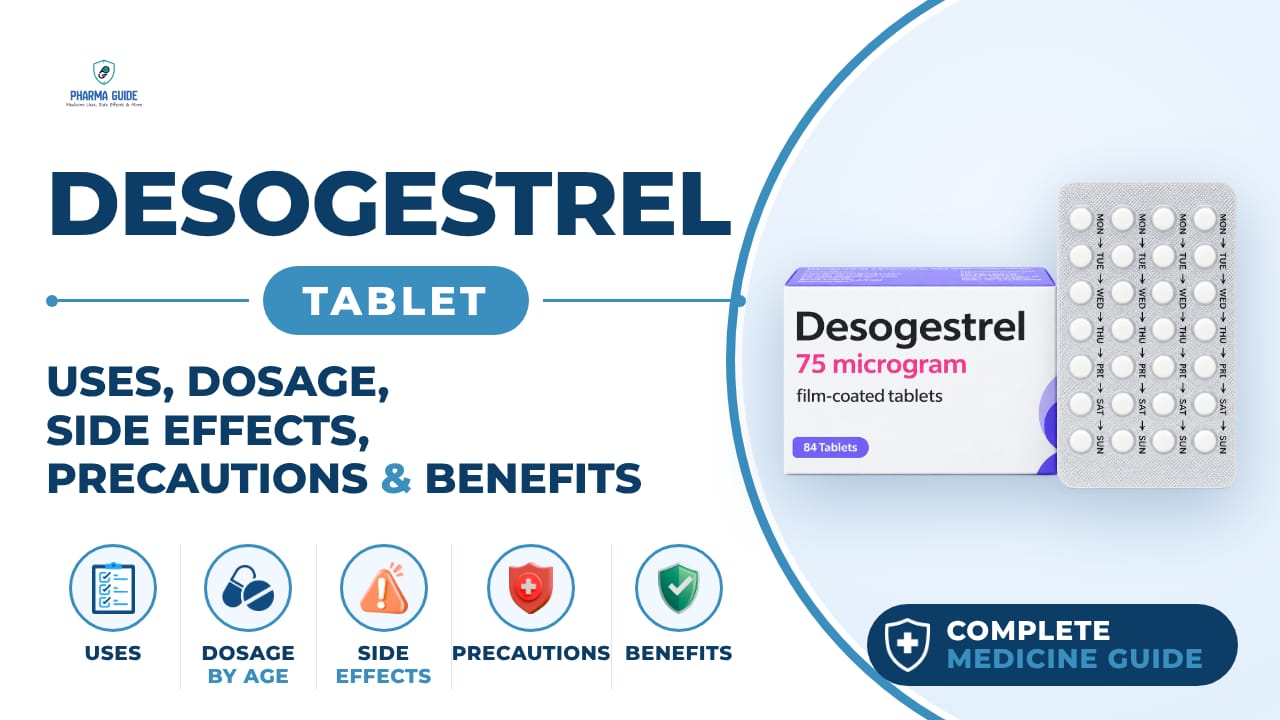
| Generic name | Desogestrel and ethinyl estradiol |
|---|---|
| Drug class | Combined oral contraceptive (progestogen and estrogen combination) |
| Forms | Tablet (28-day blister pack with 21 active white tablets, 2 inactive light-green tablets, and 5 active yellow tablets) |
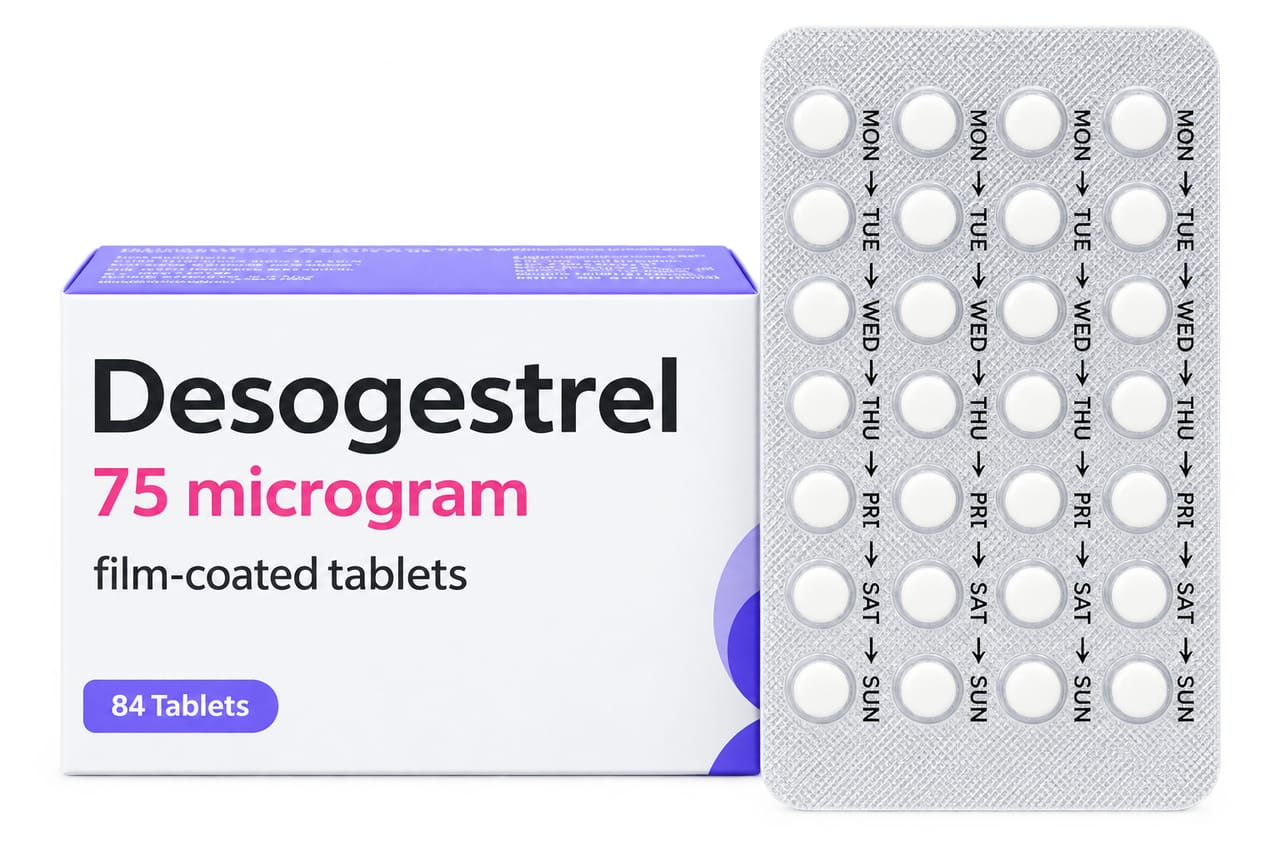
Quick overview
Desogestrel Tablet (desogestrel and ethinyl estradiol) is a combined oral contraceptive pill used to prevent pregnancy. It comes in a 28-day pack with 21 active white tablets, 2 inactive light-green tablets, and 5 active yellow tablets containing a lower dose of estrogen. It works by preventing ovulation, thickening cervical mucus, and altering the lining of the womb. It must be taken daily at the same time and does not protect against HIV or other sexually transmitted infections.
What is Desogestrel Tablet
This medicine is a combination birth control pill that contains two hormones, desogestrel (a progestin) and ethinyl estradiol (an estrogen). It comes as a 28-day pack with 21 active white tablets, 2 inactive light-green tablets, and 5 active yellow tablets containing a lower dose of estrogen.
Desogestrel Tablet uses
- Prevention of pregnancy in women who choose to use this product as a method of birth control
Benefits of Desogestrel Tablet
- Provides contraception
- Suitable for many people who cannot use estrogen-containing contraceptives
- May reduce menstrual bleeding
- May make periods less painful
- Can suppress ovulation more consistently than some older progestogen-only pills
How Desogestrel Tablet works
The hormones in this pill stop the ovaries from releasing an egg each month. They also thicken the mucus at the entrance of the womb, making it harder for sperm to get through, and change the lining of the womb to make it less likely for a fertilized egg to implant.
Desogestrel Tablet dosage
Take one tablet by mouth at the same time every day, without skipping, following the order shown on the pack. You can start the pack on the first day of your period (Day 1 start) or on the first Sunday after your period begins (Sunday start). Take the white tablets first, followed by the light-green inactive tablets, then the yellow tablets, in the order printed on the pack.
If you vomit or have diarrhea, the pill may not work as well; use a back-up method of birth control until you check with your doctor. If you start the pill after giving birth and have not yet had a period, use another method of birth control until you have taken a white tablet daily for 7 days in a row. This medicine does not protect against HIV or other sexually transmitted infections.
| Age group | Dose |
|---|---|
| 18–49 years | 75 micrograms once daily, taken continuously at about the same time each day |
Available forms and strengths
- Tablet (28-day blister pack with 21 active white tablets, 2 inactive light-green tablets, and 5 active yellow tablets)
Side effects of Desogestrel Tablet
Common
- Nausea
- Vomiting
- Bleeding between periods or spotting
- Weight gain or change in weight
- Breast tenderness or enlargement
- Headache
- Difficulty wearing contact lenses
- Abdominal cramps and bloating
- Change in menstrual flow
- Mood changes or nervousness
- Dizziness
- Acne
- Rash
- Vaginal yeast infection (candidiasis)
- Fluid retention (swelling of fingers or ankles)
- Melasma (dark patches on skin, especially the face)
Serious
- Blood clots in the legs (thrombophlebitis) or lungs (pulmonary embolism)
- Stroke (clot or rupture of a blood vessel in the brain)
- Heart attack or chest pain (angina pectoris)
- High blood pressure
- Gallbladder disease
- Benign or cancerous liver tumors, which can rupture and cause severe internal bleeding
- Blood clots in the eye, which may cause vision loss
- Severe depression
- Jaundice (yellowing of skin or eyes)
- Breast cancer (possible small increased risk with long-term use)
- Cervical cancer (possible association, not confirmed)
Warnings and precautions
- Smoking cigarettes while taking this medicine greatly increases the risk of serious heart and blood vessel problems. This danger is higher the older you are and the more cigarettes you smoke. Women over 35 who smoke should not use this medicine.
- This medicine increases the risk of blood clots, stroke, liver tumors, and gallbladder disease, although the chance of serious harm is low in healthy women without other risk factors. The danger is higher in women with conditions like high blood pressure, high cholesterol, obesity, or diabetes.
- Do not take this medicine together with certain Hepatitis C drug combinations, as this can cause dangerously high liver enzyme levels.
- If you develop new, severe, or more frequent migraines or headaches while on this medicine, stop taking it and see your doctor, as this could be a sign of a stroke risk.
- If you have a history of depression, your doctor should watch you closely, and you should stop this medicine if depression becomes severe again.
- Dark patches of skin (chloasma) can occur, especially in women who had this during pregnancy. Avoid too much sun or UV light exposure if this happens to you.
- This medicine does not protect against HIV or other sexually transmitted infections.
- Do not use this medicine if you are pregnant or think you might be pregnant. If you become pregnant while taking it, stop taking the pills right away, since there is no reason to use this medicine during pregnancy.
- If possible, avoid using this medicine while breastfeeding, because it can reduce the amount and quality of breast milk, and small amounts pass into breast milk. Talk to your doctor about using another method of birth control until you have fully weaned your baby.
- No routine dose adjustment is usually required for kidney function, but significant kidney disease should be reviewed by a clinician.
- Stop taking this medicine if you develop jaundice (yellowing of the skin or eyes), since the hormones may not be processed properly if your liver isn't working well. Do not use this medicine if you have or have had liver tumors or certain liver diseases.
- No important direct interaction with alcohol is expected.
- This medicine generally does not affect driving.
Storage
- Store at controlled room temperature between 20°C to 25°C (68°F to 77°F)
When to see a doctor
- Get medical help right away if you have sudden chest pain, coughing up blood, or sudden shortness of breath, as this could mean a blood clot in the lung.
- Get medical help right away if you have pain in your calf, which could mean a blood clot in the leg.
- Get medical help right away if you have crushing chest pain or heaviness in the chest, which could mean a heart attack.
- Get medical help right away if you have a sudden severe headache, vomiting, dizziness, fainting, trouble seeing or speaking, or weakness or numbness in an arm or leg, as this could mean a stroke.
- Get medical help right away if you suddenly lose part or all of your vision, which could mean a blood clot in the eye.
- Tell your doctor if you notice a lump in your breast, which could be a sign of breast cancer or a benign breast condition.
- Get medical help right away if you have severe pain or tenderness in your stomach area, which could mean a ruptured liver tumor.
- Tell your doctor if you have trouble sleeping, weakness, lack of energy, fatigue, or a change in mood, as this could be a sign of severe depression.
- Get medical help if you notice yellowing of your skin or eyes, often along with fever, fatigue, loss of appetite, dark urine, or pale stools, as this could mean a liver problem.
- If you miss two periods in a row, or miss one period after not taking your pills as directed, contact your doctor because you might be pregnant.
Alternatives
- Norethisterone
- Drospirenone progestogen-only pill
- Levonorgestrel-containing contraceptives
Watch the video
FAQs
How do you take Desogestrel Tablet?
Take one tablet by mouth at the same time every day without skipping, following the order on the pack. Start on the first day of your period or the first Sunday after your period begins, taking the white tablets first, then the light-green inactive tablets, then the yellow tablets.
How does Desogestrel Tablet work?
The hormones stop the ovaries from releasing an egg each month, thicken the mucus at the entrance of the womb to block sperm, and change the lining of the womb to make it less likely for a fertilized egg to implant.
What should I do if I vomit or have diarrhea while on this pill?
If you vomit or have diarrhea, the pill may not work as well, so use a back-up method of birth control until you check with your doctor.
Does Desogestrel Tablet protect against STIs?
No, this medicine does not protect against HIV or other sexually transmitted infections.
Can I use Desogestrel Tablet while breastfeeding?
If possible, avoid using this medicine while breastfeeding because it can reduce the amount and quality of breast milk, and small amounts pass into breast milk. Talk to your doctor about using another method of birth control until your baby is fully weaned.
General information, not medical advice
Your prescriber and the leaflet in your pack know your situation. This page does not.
- Follow your prescriber and the leaflet
- Don't start, stop, or change a dose on your own
- Doses and warnings differ by country and product
Sources
- U.S. FDA prescribing information for Desogestrel and Ethinyl Estradiol Tablets, USP and Ethinyl Estradiol Tablets, USP, Apotex Corp., Revised November 2025
- Tanzania Medicines and Medical Devices Authority (TMDA) Summary of Product Characteristics for Desogestrel 150 mcg and Ethinylestradiol 30 mcg Tablets and Inert Tablets, August 2017
- LloydsPharmacy, 'What is the desogestrel only pill?', Oct 18, 2021
Video
Related medicines

Injectafer Injection: Uses, Dosage, Side Effects, Precautions and Alternates
Iron products
Injectafer (ferric carboxymaltose) treats iron deficiency anemia and heart failure-related iron deficiency via IV. Learn uses, dosage, side effects, and

Gliclazide Tablet: Uses, Dosage, Side Effects, Precautions and Alternates
Sulfonylurea (hypoglycemic/antidiabetic agent)
Gliclazide Tablet is a sulfonylurea for type 2 diabetes that boosts insulin release. Learn about dosage, side effects, warnings, and precautions.