
Safety
General information, not medical advice
Your prescriber and the leaflet in your pack know your situation. This page does not.
- Follow your prescriber and the leaflet
- Don't start, stop, or change a dose on your own
- Doses and warnings differ by country and product
Desowen Cream: Uses, Dosage, Side Effects, Precautions and Alternates
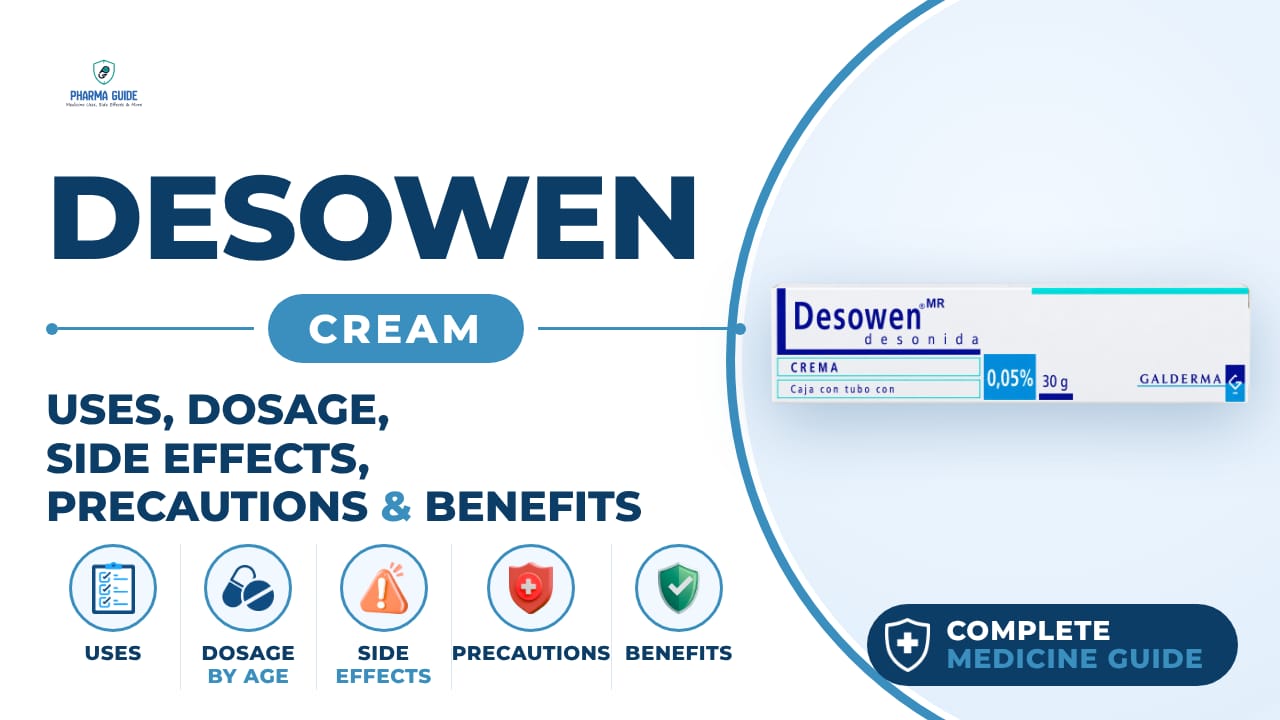
| Generic name | Desonide |
|---|---|
| Drug class | Corticosteroid (topical) |
| Forms | Lotion, Cream |
Quick overview
Desowen Cream contains the corticosteroid desonide and is applied to the skin to reduce redness, swelling, and itching caused by various skin conditions such as eczema, psoriasis, and dermatitis. It works by narrowing blood vessels in the skin and blocking the release of natural chemicals responsible for inflammation. It is intended for short-term use, generally no longer than 8 weeks, and should be used exactly as directed by your doctor.
What is Desowen Cream
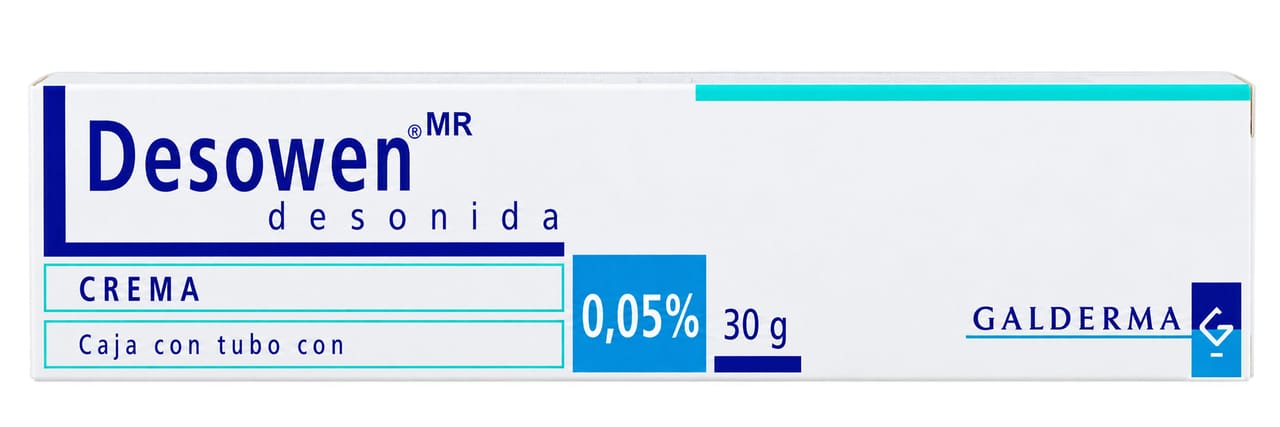
Desowen is a cream/lotion containing the corticosteroid desonide. It is applied to the skin to reduce redness, swelling, and itching caused by various skin conditions.
Desowen Cream uses
- Eczema (atopic dermatitis)
- Psoriasis
- Dermatitis (including contact and seborrheic dermatitis)
- Other steroid-responsive skin conditions causing redness, swelling, and itching
- Treats eczema
- Treats dermatitis
- Relieves skin inflammation
Benefits of Desowen Cream
- Relieves redness, swelling, scaling, and itching
- Soothes dry, inflamed, and intensely itchy patches of skin
- Helps manage flare-ups of contact dermatitis, seborrheic dermatitis, and plaque psoriasis
- Low-potency corticosteroid suitable for sensitive skin areas when prescribed
- Reduces inflammation and itching
- Can help calm eczema and dermatitis flare-ups
How Desowen Cream works
It works by narrowing the blood vessels in the skin and blocking the release of natural chemicals that cause redness, swelling, and itching.
Desowen Cream dosage
For use on the skin only (external use only); shake the lotion well before use. Apply as a thin film to the affected areas, as often as your doctor directs, depending on how severe the skin problem is. Do not let it touch the eyes, eyelids, lips, or the inside of the mouth or nose. Do not apply to broken skin. Wash your hands carefully after applying.
Do not have a bath, shower, or go swimming right after applying, as this may make it less effective. Avoid covering the treated area with bandages or dressings unless your doctor tells you to. Do not use for longer than 8 weeks unless your doctor says otherwise. Use in children only exactly as directed by your doctor.
If you miss a dose, skip the missed one and continue as normal — do not apply a double amount.
| Age group | Dose |
|---|---|
| Under 3 months | Safety and effectiveness are not established |
| 3 months–11 years | Apply a thin layer to the affected area 2–3 times daily |
| 12–64 years | Apply a thin layer 2–3 times daily |
Available forms and strengths
- Lotion
- Cream
Side effects of Desowen Cream
Common
- Skin burning sensation
- Acne
- Inflammation of hair follicles
- Stinging, itching, or irritation at the site of application
- Dryness or redness at the application site
Serious
- Skin becoming fragile and prone to tears and ulcerations
- Aggravation of rosacea
- Blurred vision or other visual disturbances
- Facial swelling
- Severe itching
- Signs of allergic reaction such as rash, swelling of face/tongue/throat, severe dizziness, or breathing difficulty
- Suppression of the immune response, opportunistic infections, and other skin conditions with prolonged or intensive use
- Possible effects on blood sugar levels or adrenal gland function if large amounts are absorbed through the skin
Warnings and precautions
- Do not use this medicine if you have viral skin infections such as cold sores, shingles, or chicken pox.
- Do not use this medicine if you have fungal or parasitic skin infections such as thrush, tinea, or ringworm.
- Do not use it if you have acne or rosacea unless your doctor tells you to.
- Do not use it on skin areas with ulcerous wounds.
- Do not use it right before a bath, shower, or swimming, as this can make it less effective.
- Do not use this cream on children under 2 years old, because of the risk of slowed growth if too much is absorbed through the skin.
- Do not use for longer than 8 weeks, as the risk of side effects increases with longer use, including suppression of the immune response and other skin problems.
- Avoid using large amounts over a long period, since more of the medicine can be absorbed into the body and increase the risk of side effects.
- Should not be used if you have an active bacterial, viral, or fungal skin infection, as it will not treat the infection and may make it worse.
- Use with caution if you have a condition causing excess cortisol in the body, as this medicine may worsen it if absorbed into the bloodstream.
- Use with caution if you have diabetes, since prolonged use of large amounts may affect blood sugar levels.
- There isn't enough safety information, so this medicine is not usually recommended during pregnancy unless your doctor says it is necessary. Talk to your doctor if you are pregnant or planning to become pregnant.
- There isn't enough safety information, so this medicine is not usually recommended while breastfeeding unless your doctor says it is necessary.
- No routine kidney-specific dose adjustment is required for normal topical use.
- No routine liver-specific adjustment is generally required.
- It isn't known how this medicine interacts with alcohol, so it's best to check with your doctor before drinking.
- Desowen does not normally affect driving.
Storage
- Store in the original bottle.
- Keep DESOWEN lotion in a cool, dry place where the temperature stays below 25°C.
- Do not freeze.
- Do not store it, or any other medicine, in a bathroom or near a sink.
- Do not leave them in the car or on window sills.
- Keep DESOWEN lotion where children cannot reach it. A locked cupboard at least one-and-a-half metres above the ground is a good place to store medicines.
- If your doctor tells you to stop using DESOWEN lotion, or it has passed its expiry date, ask your pharmacist what to do with any left over.
- Medicines should not be disposed of via wastewater or household waste.
When to see a doctor
- Get medical help right away if you or someone else may have swallowed this medicine, even if there are no symptoms.
- Tell your doctor if you notice blurred vision or other vision changes while using this medicine.
- Seek immediate medical attention if you notice signs of a serious allergic reaction such as rash, itching or swelling of the face, tongue, or throat, severe dizziness, or trouble breathing.
- Contact your doctor if your symptoms do not improve or get worse after two weeks of use.
- If the lotion gets into your eyes, rinse them with water right away.
Alternatives
- Hydrocortisone cream
- Alclometasone cream
- Fluocinolone acetonide cream
- Pimecrolimus cream
Watch the video
FAQs
What is Desowen Cream used for?
Desowen Cream is used to treat eczema, psoriasis, dermatitis, and other steroid-responsive skin conditions that cause redness, swelling, and itching.
How long can I use Desowen Cream?
Desowen Cream is intended for short-term use, generally no longer than 8 weeks, unless your doctor directs otherwise.
How is Desowen Cream applied?
Apply a thin film to the affected area as often as your doctor directs, avoiding the eyes, eyelids, lips, and inside of the mouth or nose. Wash your hands after applying and avoid bathing or swimming right after use.
Can Desowen Cream be used on children?
Desowen Cream should not be used on children under 2 years old due to the risk of slowed growth if too much is absorbed through the skin. For children 3 months to 11 years, it should be used only exactly as directed by a doctor.
What are the side effects of Desowen Cream?
Common side effects include skin burning, acne, inflammation of hair follicles, and stinging or irritation at the application site. Serious effects can include skin fragility, aggravation of rosacea, blurred vision, facial swelling, and allergic reactions.
General information, not medical advice
Your prescriber and the leaflet in your pack know your situation. This page does not.
- Follow your prescriber and the leaflet
- Don't start, stop, or change a dose on your own
- Doses and warnings differ by country and product
Sources
Video
Related medicines

Injectafer Injection: Uses, Dosage, Side Effects, Precautions and Alternates
Iron products
Injectafer (ferric carboxymaltose) treats iron deficiency anemia and heart failure-related iron deficiency via IV. Learn uses, dosage, side effects, and

Gliclazide Tablet: Uses, Dosage, Side Effects, Precautions and Alternates
Sulfonylurea (hypoglycemic/antidiabetic agent)
Gliclazide Tablet is a sulfonylurea for type 2 diabetes that boosts insulin release. Learn about dosage, side effects, warnings, and precautions.