
Safety
General information, not medical advice
Your prescriber and the leaflet in your pack know your situation. This page does not.
- Follow your prescriber and the leaflet
- Don't start, stop, or change a dose on your own
- Doses and warnings differ by country and product
Desoxyn Tablet: Uses, Dosage, Side Effects, Precautions and Alternates
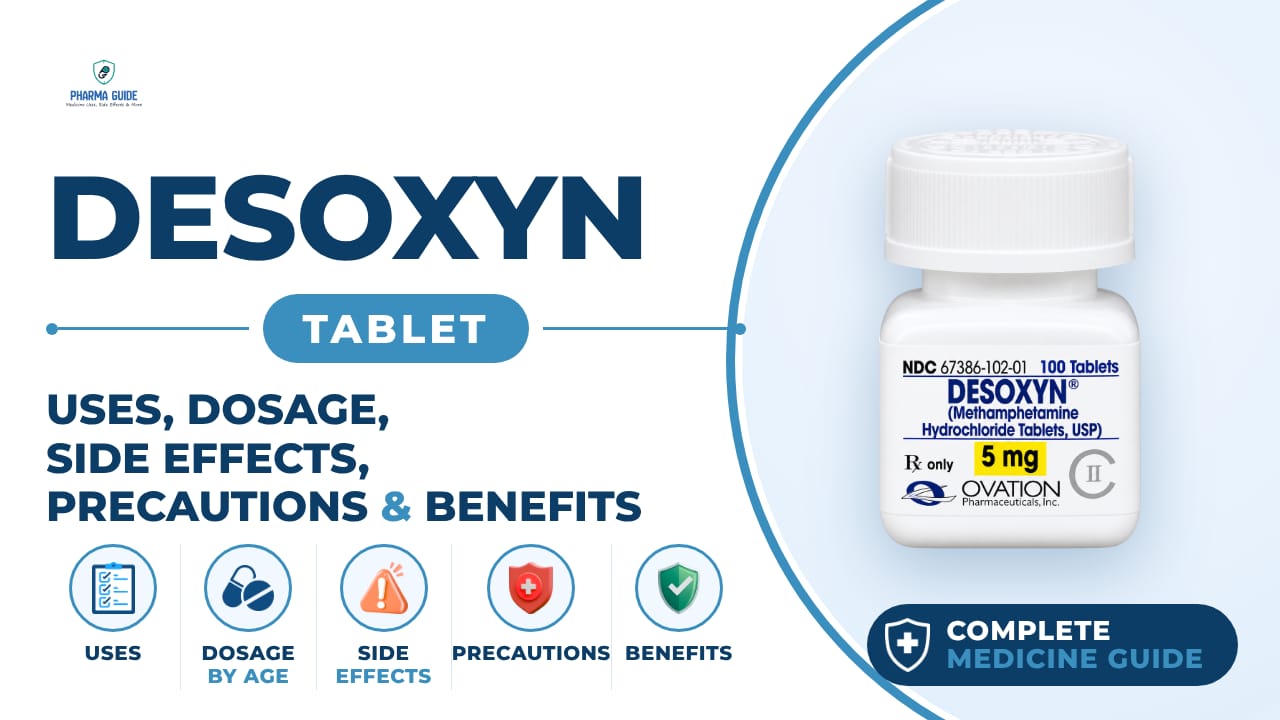
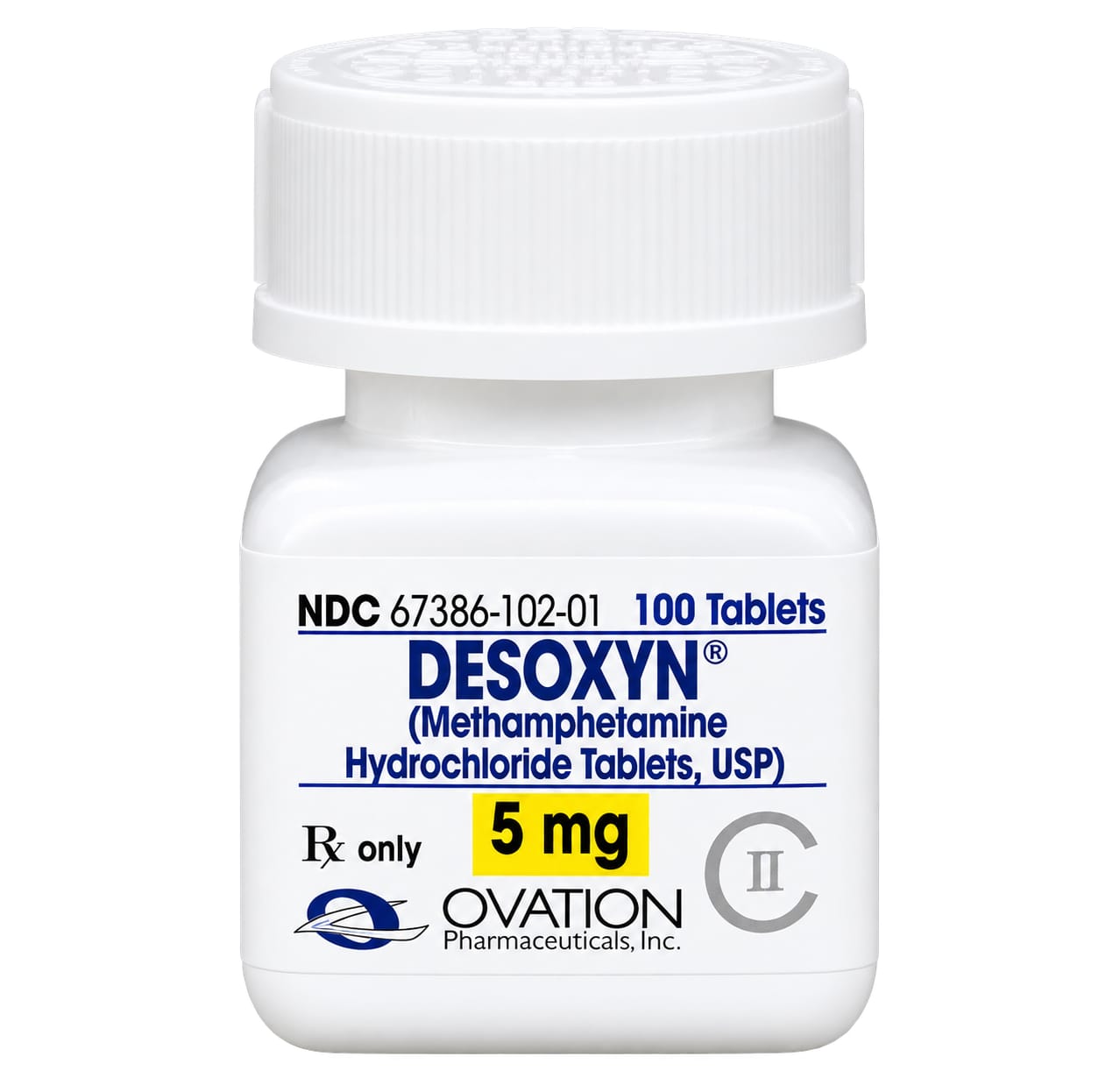
| Generic name | methamphetamine hydrochloride |
|---|---|
| Drug class | Central nervous system (CNS) stimulant |
| Forms | Tablets (5 mg) |
Quick overview
Desoxyn Tablet contains methamphetamine hydrochloride, a central nervous system stimulant used to treat Attention Deficit Hyperactivity Disorder (ADHD) in children 6 years of age and older as part of a comprehensive treatment program. It is a federally controlled substance (Schedule II) because it has a high risk of abuse, misuse, and addiction. It works by raising levels of certain brain chemicals to help improve attention and reduce hyperactivity and impulsivity.
What is Desoxyn Tablet
Desoxyn is a prescription central nervous system stimulant that contains methamphetamine. It is a federally controlled substance (Schedule II) because it has a high risk of abuse, misuse, and addiction.
Desoxyn Tablet uses
- Treatment of Attention Deficit Hyperactivity Disorder (ADHD) in children 6 years of age and older
- Treats ADHD as part of a comprehensive treatment program
- Helps improve attention
- Helps reduce hyperactivity
- Helps reduce impulsivity
Benefits of Desoxyn Tablet
- May help increase attention and decrease impulsiveness and hyperactivity in people with ADHD
- May improve attention and behavioral control in appropriately diagnosed ADHD
- Can be considered when a clinician determines other approaches are unsuitable
How Desoxyn Tablet works
The medicine works as a stimulant that raises levels of certain brain chemicals (norepinephrine and dopamine), which may help improve attention, focus, and reduce hyperactivity, though the exact way it helps ADHD symptoms isn't fully understood.
Desoxyn Tablet dosage
Take exactly as prescribed by your doctor; the dose may be adjusted over time. It is usually taken once or twice a day. Avoid taking it late in the evening because it can cause trouble sleeping. Do not change your dose or stop taking it without talking to your doctor first, since stopping suddenly can cause withdrawal symptoms. It can be taken with or without food. Do not start any new medicine while taking this drug without checking with your doctor first. Do not give this medicine to anyone else.
| Age group | Dose |
|---|---|
| Under 18 years | No established dose |
| 18–39 years | Start 0.5 mg twice daily |
| 40–64 years | Start 0.5 mg twice daily |
Available forms and strengths
- Tablets (5 mg)
Side effects of Desoxyn Tablet
Common
- Fast heartbeat or palpitations
- Dizziness
- Trouble sleeping (insomnia)
- Shaking (tremor)
- Headache
- Diarrhea
- Dry mouth
- Decreased appetite/weight loss
Serious
- Signs of heart problems such as chest pain, trouble breathing, or feeling like you might pass out
- Signs of blood circulation problems in fingers or toes such as numbness, pain, cold feeling, color changes, or unexplained wounds
- Seizures
- New or worsening muscle twitches or tics
- Changes in vision
- Symptoms of serotonin syndrome such as agitation, hallucinations, fever, sweating, fast heart rate, muscle stiffness, loss of coordination, nausea, vomiting, or diarrhea
- New or worsening mental/behavior problems, including hallucinations, mania, or psychosis
- Slowed growth (height and weight) in children
- Signs of an allergic reaction such as hives, difficulty breathing, or swelling of the face, lips, tongue, or throat
Warnings and precautions
- This medicine has a high potential for abuse and misuse, which can lead to addiction. Misuse can result in overdose and death, especially at higher doses or when used in ways not approved, such as snorting or injecting.
- People with serious heart problems should generally avoid this medicine, as sudden death, stroke, and heart attack have occurred in patients taking stimulant medicines at usual doses.
- This medicine can raise blood pressure and heart rate, so these should be monitored regularly during treatment.
- This medicine can cause new or worse mental health problems, including psychosis or manic symptoms, even in people with no prior history of these issues.
- This medicine can slow growth (height and weight) in children, so growth should be monitored closely during treatment.
- This medicine is linked to circulation problems in the fingers and toes, including Raynaud's phenomenon.
- This medicine may lower the seizure threshold and should be stopped if a seizure occurs.
- Combining this medicine with certain other drugs that affect serotonin can cause a serious, potentially life-threatening reaction called serotonin syndrome.
- This medicine can cause new or worsening motor and verbal tics, including worsening of Tourette's syndrome.
- This medicine must not be combined with monoamine oxidase inhibitors (MAOIs) or used within 14 days of stopping an MAOI, due to risk of a dangerous reaction.
- This medicine may cause harm to an unborn baby. There is a pregnancy registry that tracks outcomes for women exposed to this medicine during pregnancy. Tell your doctor if you are pregnant or planning to become pregnant.
- Breastfeeding is not recommended while taking this medicine because it passes into breast milk and could harm the baby.
- Tell your doctor if you have kidney problems before taking this medicine.
- Tell your doctor if you have a history of alcohol abuse or dependence, as this may increase your risk of misuse or addiction with this medicine.
- This medicine may affect your ability to drive or operate machinery safely. Avoid these activities until you know how the medicine affects you.
Storage
- Store at room temperature between 68°F to 77°F (20°C to 25°C)
- Store in a safe place like a locked cabinet
- Protect from light
- Dispose of unused medicine through a medicine take-back program at a DEA-authorized collection site; if unavailable, mix with an undesirable substance like dirt, cat litter, or used coffee grounds, seal in a bag, and throw away in household trash
- Keep out of reach of children
When to see a doctor
- Get emergency help right away if you have signs of a heart problem such as chest pain, shortness of breath, or fainting.
- Call your doctor right away if you notice new or worsening mental symptoms, such as hearing or seeing things that are not real, or new manic symptoms.
- Contact your doctor immediately if you notice new numbness, pain, skin color change, or unexplained wounds on fingers or toes.
- Contact your doctor right away and stop the medicine if a seizure occurs.
- Seek emergency medical care if you experience symptoms of serotonin syndrome such as agitation, hallucinations, fast heart rate, high fever, muscle stiffness, or confusion.
- If too much medicine is taken, get emergency medical help right away or contact a poison control center.
Alternatives
- Methylphenidate
- Atomoxetine
- Guanfacine ER
Watch the video
FAQs
What is Desoxyn Tablet used for?
Desoxyn is used to treat Attention Deficit Hyperactivity Disorder (ADHD) in children 6 years of age and older as part of a comprehensive treatment program, helping improve attention and reduce hyperactivity and impulsivity.
Is Desoxyn a controlled substance?
Yes, Desoxyn is a federally controlled substance (Schedule II) because it has a high risk of abuse, misuse, and addiction.
How does Desoxyn work?
Desoxyn works as a stimulant that raises levels of certain brain chemicals, norepinephrine and dopamine, which may help improve attention and focus and reduce hyperactivity, though the exact mechanism in ADHD isn't fully understood.
What are the common side effects of Desoxyn?
Common side effects include fast heartbeat or palpitations, dizziness, trouble sleeping, tremor, headache, diarrhea, dry mouth, and decreased appetite or weight loss.
Can Desoxyn be taken with MAOIs?
No, Desoxyn must not be combined with monoamine oxidase inhibitors (MAOIs) or used within 14 days of stopping an MAOI due to the risk of a dangerous reaction.
General information, not medical advice
Your prescriber and the leaflet in your pack know your situation. This page does not.
- Follow your prescriber and the leaflet
- Don't start, stop, or change a dose on your own
- Doses and warnings differ by country and product
Sources
Video
Related medicines
Addwize Tablet: Uses, Dosage, Side Effects, Precautions and Alternates
Central nervous system (CNS) stimulant
Addwize Tablet contains methylphenidate, used for ADHD, narcolepsy, vertigo, and tinnitus. Learn about its dosage, benefits, side effects, and precautions.

Injectafer Injection: Uses, Dosage, Side Effects, Precautions and Alternates
Iron products
Injectafer (ferric carboxymaltose) treats iron deficiency anemia and heart failure-related iron deficiency via IV. Learn uses, dosage, side effects, and