
Safety
General information, not medical advice
Your prescriber and the leaflet in your pack know your situation. This page does not.
- Follow your prescriber and the leaflet
- Don't start, stop, or change a dose on your own
- Doses and warnings differ by country and product
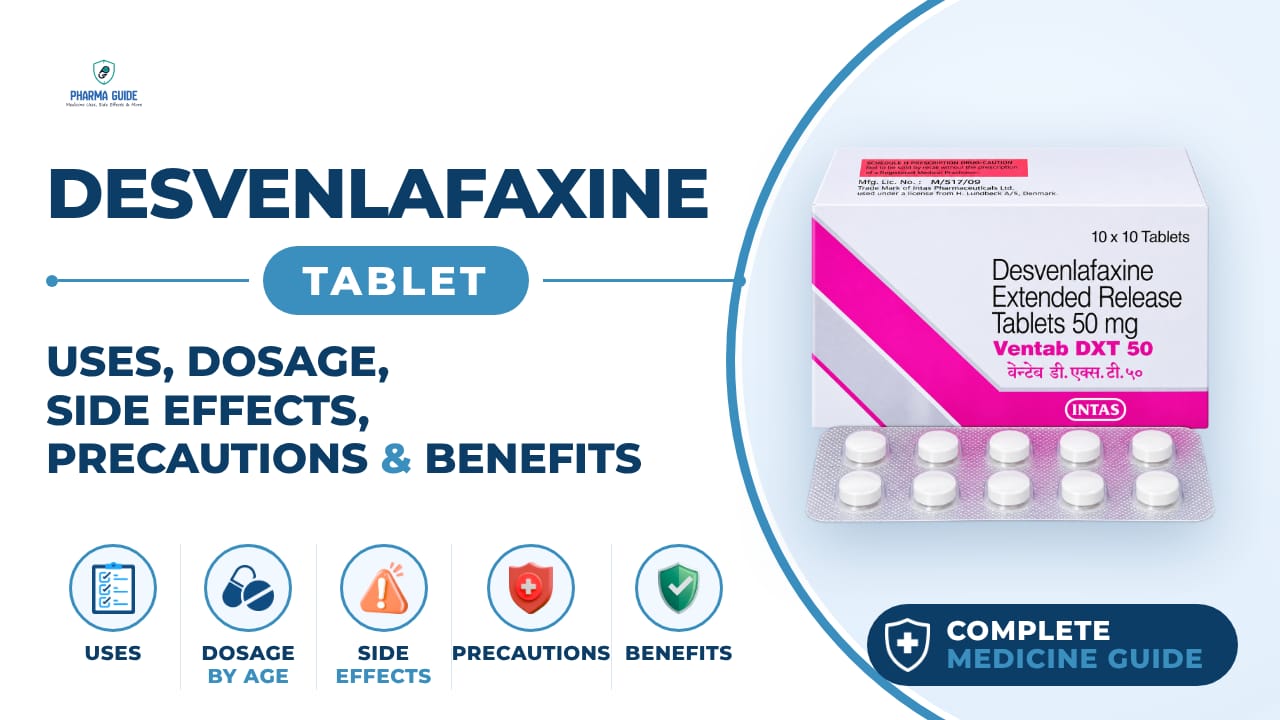
Desvenlafaxine Tablet: Uses, Dosage, Side Effects, Precautions and Alternates
| Generic name | desvenlafaxine |
|---|---|
| Drug class | Serotonin and norepinephrine reuptake inhibitor (SNRI) |
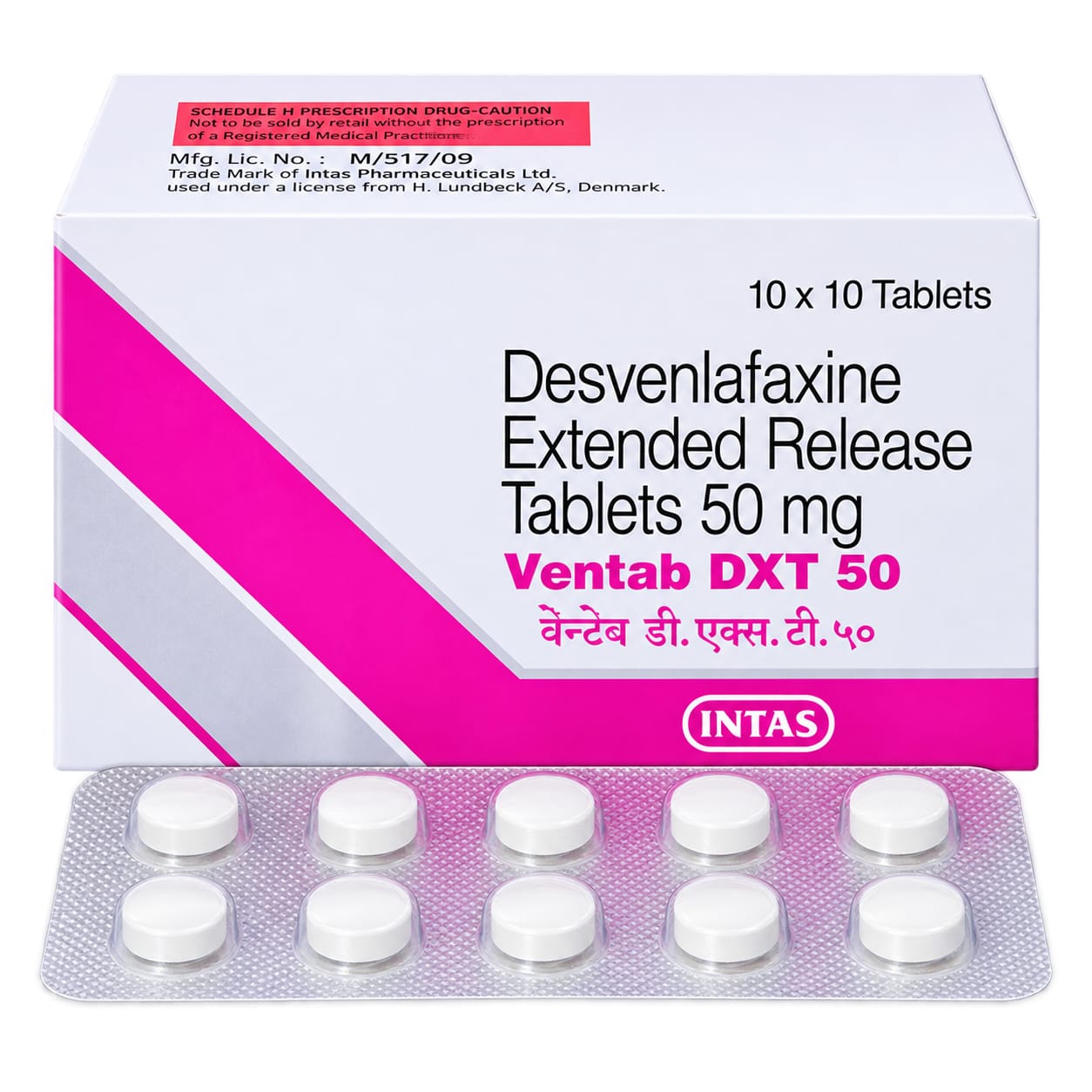
| Forms | Extended-release tablet |
Quick overview
Desvenlafaxine Tablet (desvenlafaxine) is a prescription medicine belonging to the SNRI (serotonin and norepinephrine reuptake inhibitor) drug class. It is used in adults to treat major depressive disorder (MDD) and to help prevent relapse of depression. It works by increasing levels of serotonin and noradrenaline in the brain, which may help restore a feeling of wellness.
What is Desvenlafaxine Tablet
Desvenlafaxine is a prescription medicine used to treat adults with a type of depression called major depressive disorder (MDD). It belongs to a group of medicines called SNRIs, which work on brain chemicals linked to mood.
Desvenlafaxine Tablet uses
- Treatment of adults with major depressive disorder (MDD)
- Prevention of relapse of depression
Benefits of Desvenlafaxine Tablet
- Helps improve mood
- May improve energy and motivation
- Can improve concentration
- May reduce other symptoms associated with depression
How Desvenlafaxine Tablet works
Desvenlafaxine is thought to work by increasing the levels of two brain chemicals, serotonin and noradrenaline, which help nerve cells communicate and may help restore a feeling of wellness.
Desvenlafaxine Tablet dosage
Take this medicine once a day at about the same time each day. It can be taken with or without food. Swallow tablets whole with fluid; do not divide, crush, chew, or dissolve them. This medicine is not approved for use in children or people under 18 years old.
If you miss a dose and it is less than 12 hours until your next dose, skip the missed dose and take your next dose as scheduled; do not double up. You may notice something that looks like a tablet in your stool after taking this medicine — this is just the empty tablet shell, and the medicine has already been absorbed by your body. Do not stop taking this medicine suddenly; your doctor will usually lower your dose gradually before stopping.
| Age group | Dose |
|---|---|
| 18–64 years | 50 mg once daily |
| 65 years and older | Usually 50 mg once daily, with dose adjustment considered for kidney function |
Available forms and strengths
Extended-release tablet.
Side effects of Desvenlafaxine Tablet
Common
- Nausea
- Dizziness
- Trouble sleeping (insomnia)
- Increased sweating
- Constipation
- Feeling sleepy (somnolence)
- Decreased appetite
- Anxiety
- Sexual problems (such as decreased sex drive, delayed ejaculation, or difficulty having an orgasm)
- Dry mouth
- Fatigue
- Headache
- Tremor
- Yawning
Serious
- Thoughts of suicide or self-harm, or worsening depression
- Serotonin syndrome (agitation, hallucinations, fast heart rate, high body temperature, muscle stiffness or twitching, loss of coordination, nausea, vomiting, diarrhea)
- New or worsened high blood pressure
- Increased risk of bleeding or bruising
- Eye problems such as angle-closure glaucoma (eye pain, vision changes)
- Seizures
- Low sodium levels in the blood (headache, confusion, memory problems, weakness, unsteadiness, falls)
- Lung problems (difficulty breathing, cough, chest discomfort)
- Activation of mania or hypomania
- Severe skin reactions
- Allergic reactions (rash, hives, swelling, difficulty breathing)
- Symptoms after suddenly stopping the medicine (dizziness, irritability, anxiety, electric shock sensations, abnormal dreams, increased blood pressure)
Warnings and precautions
- Antidepressants can increase the risk of suicidal thoughts and actions in children, teenagers, and young adults, especially in the first few months of treatment. This medicine is not approved for use in children.
- Do not take this medicine with, or within 14 days of stopping, a monoamine oxidase inhibitor (MAOI), including linezolid or intravenous methylene blue, because of a serious risk of serotonin syndrome.
- This medicine may increase blood pressure, so regular monitoring is needed.
- Taking this medicine with aspirin, NSAIDs, or blood thinners may increase the risk of bleeding.
- This medicine should be avoided in people with untreated narrow-angle glaucoma because it may trigger angle-closure glaucoma.
- Stopping this medicine suddenly can cause withdrawal-like symptoms; the dose should be reduced gradually under medical supervision.
- This medicine should be used cautiously in people with a history of seizures.
- Low sodium levels in the blood can occur, especially in elderly patients or those taking diuretics.
- Talk to your doctor before taking this medicine if you are pregnant or planning to become pregnant, because of possible risks to the baby, including complications after birth. Do not stop or start this medicine without medical advice.
- Talk to your doctor if you are breastfeeding, as the medicine can pass into breast milk.
- People with kidney problems may need a lower dose because the body may clear the medicine more slowly.
- People with moderate to severe liver problems may need a lower maximum dose.
- Avoid drinking alcohol while taking this medicine.
- Be careful driving or using machinery until you know how this medicine affects you, since it may cause dizziness or drowsiness.
Storage
- Store at room temperature between 68°F to 77°F (20°C to 25°C)
- Keep the tablets in their original packaging until it is time to take them
- Keep out of the reach of children
- Ask your pharmacist what to do with any leftover medicine
When to see a doctor
- Get help right away if you have thoughts of suicide or self-harm, or if you notice sudden changes in mood, behavior, or thinking.
- Call your doctor or go to the emergency room right away if you notice signs of serotonin syndrome, such as agitation, confusion, hallucinations, fast heartbeat, high fever, muscle stiffness or twitching, loss of coordination, or nausea, vomiting, and diarrhea.
- Seek medical help right away for signs of low blood sodium, such as headache, trouble concentrating, memory problems, confusion, weakness, or unsteadiness that could lead to falls.
- Tell your doctor right away if you have vision changes or eye pain, which could be a sign of a serious eye problem.
- Tell your doctor right away if you have unusual bleeding or bruising.
- Get medical help right away if you have difficulty breathing, cough, or chest discomfort, which could be signs of a lung problem.
- Seek emergency care if you notice signs of an allergic reaction, such as rash, hives, swelling of the face or throat, or difficulty breathing.
- If you think you have taken too much of this medicine, get urgent medical help right away.
Alternatives
- Sertraline
- Escitalopram
- Fluoxetine
- Venlafaxine
Watch the video
FAQs
What is Desvenlafaxine Tablet used for?
It is used to treat major depressive disorder (MDD) in adults and to help prevent relapse of depression.
How does Desvenlafaxine Tablet work?
It works by increasing levels of serotonin and noradrenaline in the brain, which help nerve cells communicate and may restore a feeling of wellness.
What is the usual dose of Desvenlafaxine Tablet?
Adults aged 18–64 usually take 50 mg once daily. Those 65 and older usually take 50 mg once daily, with dose adjustment considered for kidney function.
What should I do if I miss a dose of Desvenlafaxine Tablet?
If it is less than 12 hours until your next dose, skip the missed dose and take your next dose as scheduled; do not double up.
Can I stop taking Desvenlafaxine Tablet suddenly?
No, stopping suddenly can cause withdrawal-like symptoms such as dizziness, irritability, anxiety, and electric shock sensations, so your doctor will usually lower your dose gradually.
General information, not medical advice
Your prescriber and the leaflet in your pack know your situation. This page does not.
- Follow your prescriber and the leaflet
- Don't start, stop, or change a dose on your own
- Doses and warnings differ by country and product
Sources
- DESVENLAFAXINE- desvenlafaxine tablet, film coated, extended release, Hikma Pharmaceuticals USA Inc., Revised 12/2024
- DESVENLAFAXINE VIATRIS Australian Product Information, Revision 02/02/2026
- Desvenlafaxine Sandoz Consumer Medicine Information, Australian Commission on Safety and Quality in Health Care
- Drugs.com Desvenlafaxine monograph, reviewed October 27, 2025
Video
Related medicines

Injectafer Injection: Uses, Dosage, Side Effects, Precautions and Alternates
Iron products
Injectafer (ferric carboxymaltose) treats iron deficiency anemia and heart failure-related iron deficiency via IV. Learn uses, dosage, side effects, and

Gliclazide Tablet: Uses, Dosage, Side Effects, Precautions and Alternates
Sulfonylurea (hypoglycemic/antidiabetic agent)
Gliclazide Tablet is a sulfonylurea for type 2 diabetes that boosts insulin release. Learn about dosage, side effects, warnings, and precautions.