
Safety
General information, not medical advice
Your prescriber and the leaflet in your pack know your situation. This page does not.
- Follow your prescriber and the leaflet
- Don't start, stop, or change a dose on your own
- Doses and warnings differ by country and product
Dettol Cream: Uses, Dosage, Side Effects, Precautions and Alternates
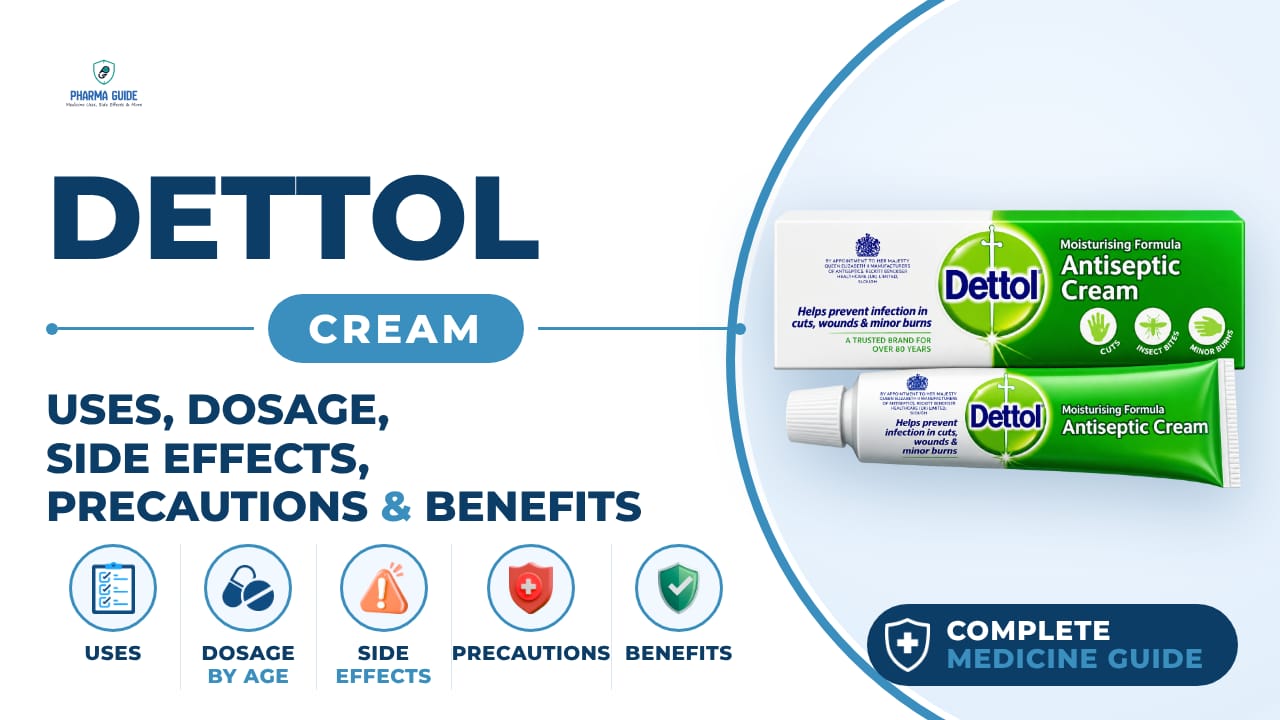
| Generic name | Cetrimide + Chlorhexidine Gluconate |
|---|---|
| Drug class | Topical antiseptic / skin disinfectant |
| Forms | Cream |
Quick overview
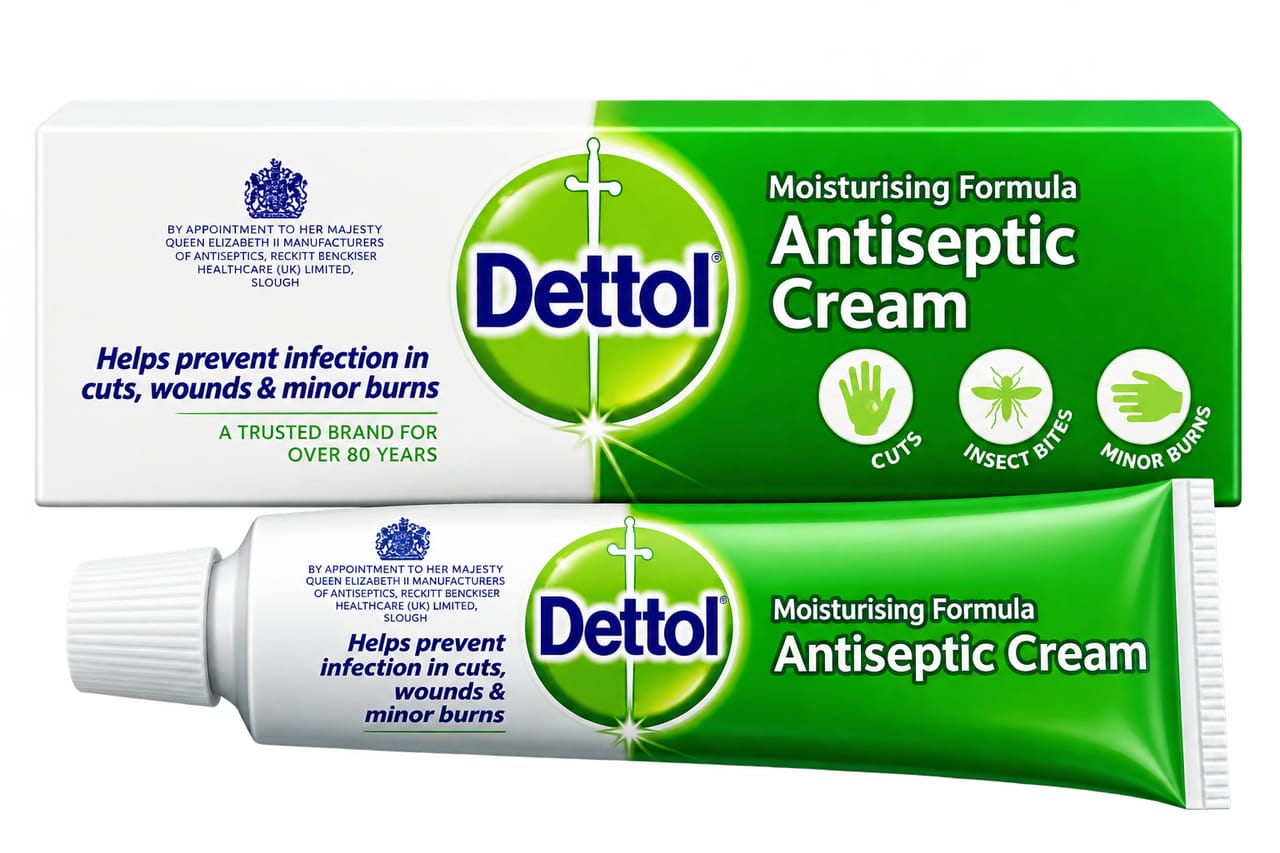
Dettol Cream is a topical antiseptic containing cetrimide and chlorhexidine gluconate, with added aloe vera. It is applied to the skin to help prevent infection in minor wounds, cuts, and other minor skin injuries. The cream offers germ protection while soothing the skin to support healing.
What is Dettol Cream
Dettol Cream is an antiseptic skin cream containing cetrimide and chlorhexidine gluconate, with aloe vera added to soothe the skin. It is applied to the skin to help prevent infection in minor wounds.
Dettol Cream uses
- Managing wound infections and promoting skin hygiene
- Minor cuts, wounds, scrapes and abrasions
- Minor burns and scalds
- Skin irritation and rashes, including mild allergic reactions and redness
- Insect bites and stings
- Managing recurrent bacterial and fungal skin infections in people prone to them
Benefits of Dettol Cream
- Helps manage wound infections
- Promotes skin hygiene
- Protects against skin infections
- Provides antiseptic benefits and germ protection (99.9% germ protection)
- Soothes the skin and supports healing with aloe vera
- Non-sticky, easy to apply, and offers long-lasting protection
How Dettol Cream works
The antiseptic ingredients in the cream kill a wide range of bacteria, fungi and other germs, which helps clean the wound and reduce inflammation, supporting faster healing.
Dettol Cream dosage
Use it as directed on the label or by the physician. Apply a thin layer on the affected area for best results. Use clean hands or a sterile applicator to avoid contamination. Reapply as needed to keep the wound protected and moisturised. For external use only—do not ingest or apply near the eyes. Avoid applying on deep wounds, open sores, or broken skin without medical advice. Do not use on infants below 3 years; consult a paediatrician before applying it to young children.
Use exactly as prescribed by your doctor or pharmacist.
Available forms and strengths
- Cream
Side effects of Dettol Cream
Common
- Skin irritation
- Itching
- Redness
Serious
- Allergic reactions
Warnings and precautions
- Do not use this cream on deep wounds, puncture wounds, animal bites, or serious burns without a doctor's evaluation, since these need proper medical wound care.
- Do not use this cream on deep wounds or sensitive areas.
- Do not use on infants below 3 years old; ask a children's doctor before using it on young children.
- Avoid contact with the eyes, ears, nose, mouth and other mucous membranes. If the cream accidentally gets into these areas, rinse thoroughly with water.
- This cream is not effective against every type of germ and should not be relied on as the only way to prevent infection in high-risk situations.
There is limited safety information on using this cream during pregnancy. It should only be used if clearly needed and as directed on the label, and you should check with a doctor or pharmacist first, especially before using it over large areas of skin.
Avoid applying the cream to the breast area right before breastfeeding. If this happens, rinse the area well with water to limit the baby's exposure.
Storage
- Store below 30°C
- Store in a cool, dry place away from direct sunlight and heat
- Keep out of the reach of children
When to see a doctor
- Stop using the cream and see a doctor if you get irritation, a rash, or any signs of an allergic reaction.
- Discontinue use and consult your physician if you experience any side effects.
- If a skin condition you are treating with this cream does not improve or gets worse after a few days, stop using it and see a doctor instead of continuing on your own.
Alternatives
- Chlorhexidine
- Povidone-iodine
- Chloroxylenol
Watch the video
FAQs
What is Dettol Cream used for?
It is used for managing wound infections, minor cuts, wounds, scrapes, abrasions, minor burns and scalds, skin irritation and rashes, insect bites and stings, and recurrent bacterial and fungal skin infections.
How do I apply Dettol Cream?
Apply a thin layer on the affected area using clean hands or a sterile applicator, and reapply as needed to keep the wound protected and moisturised. It is for external use only and should not be ingested or applied near the eyes.
Can Dettol Cream be used on infants?
No, it should not be used on infants below 3 years old. A paediatrician should be consulted before applying it to young children.
What are the side effects of Dettol Cream?
Common side effects include skin irritation, itching, and redness. A serious but less common side effect is an allergic reaction.
Can Dettol Cream be used during pregnancy?
There is limited safety information on using it during pregnancy, so it should only be used if clearly needed and as directed, after checking with a doctor or pharmacist, especially before use over large areas of skin.
General information, not medical advice
Your prescriber and the leaflet in your pack know your situation. This page does not.
- Follow your prescriber and the leaflet
- Don't start, stop, or change a dose on your own
- Doses and warnings differ by country and product
Sources
Video
Related medicines

Injectafer Injection: Uses, Dosage, Side Effects, Precautions and Alternates
Iron products
Injectafer (ferric carboxymaltose) treats iron deficiency anemia and heart failure-related iron deficiency via IV. Learn uses, dosage, side effects, and

Gliclazide Tablet: Uses, Dosage, Side Effects, Precautions and Alternates
Sulfonylurea (hypoglycemic/antidiabetic agent)
Gliclazide Tablet is a sulfonylurea for type 2 diabetes that boosts insulin release. Learn about dosage, side effects, warnings, and precautions.