
Safety
General information, not medical advice
Your prescriber and the leaflet in your pack know your situation. This page does not.
- Follow your prescriber and the leaflet
- Don't start, stop, or change a dose on your own
- Doses and warnings differ by country and product
Deutetrabenazine Tablet: Uses, Dosage, Side Effects, Precautions and Alternates
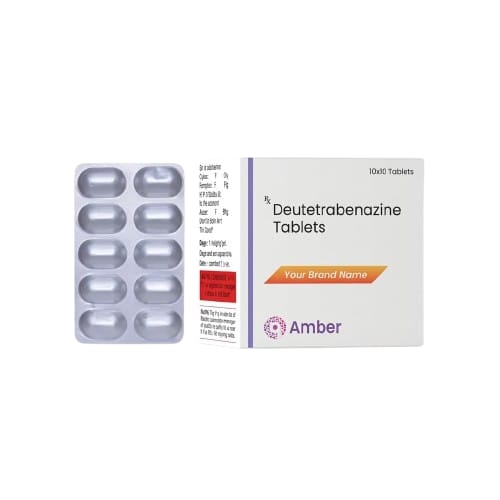
| Generic name | Deutetrabenazine |
|---|---|
| Drug class | VMAT2 inhibitors (vesicular monoamine transporter 2 inhibitor) |
| Forms | Austedo tablets: 6 mg, 9 mg, 12 mg |
Quick overview
Deutetrabenazine Tablet is a prescription medicine, sold under the brand names Austedo and Austedo XR, that belongs to the VMAT2 inhibitor drug class. It is used to reduce involuntary movements caused by tardive dyskinesia and Huntington's disease. It does not cure these conditions or treat other symptoms such as problems with thinking or emotions.
What is Deutetrabenazine Tablet
Deutetrabenazine is a prescription medicine (brand names Austedo and Austedo XR) used to reduce involuntary movements caused by tardive dyskinesia and Huntington's disease. It does not cure these conditions or treat other symptoms such as problems with thinking or emotions.
Deutetrabenazine Tablet uses
- Treats chorea (sudden, uncontrollable movements) caused by Huntington's disease
- Treats tardive dyskinesia (uncontrollable movement of the face, tongue, or other body parts)
Benefits of Deutetrabenazine Tablet
- Helps reduce involuntary movements
- Treats tardive dyskinesia
- Helps control Huntington's disease chorea
- Reduces uncontrolled facial movements
- Helps improve movement control
How Deutetrabenazine Tablet works
The medicine blocks a protein called VMAT2 that controls how much of certain brain chemical messengers (like dopamine, serotonin, norepinephrine, and histamine) are available between nerve cells. By lowering the amount of these messengers, it helps calm the uncontrolled muscle movements.
Deutetrabenazine Tablet dosage
Regular tablets are usually taken twice a day with food. Extended-release (XR) tablets are usually taken once a day, with or without food. Take the medicine at around the same time(s) every day. Swallow tablets whole; do not split, chew, crush, or break them.
If switching from tetrabenazine, take the first dose of deutetrabenazine the day after the last dose of tetrabenazine. Part of the tablet shell may appear in your stool after taking the extended-release form; this is normal and does not mean you missed your full dose.
Do not stop taking the medicine without your doctor's advice; if you stop for more than a week, do not restart without talking to your doctor first. Continue your normal diet unless your doctor tells you otherwise.
| Age group | Dose |
|---|---|
| Under 18 years | Not recommended |
| 18–64 years | 12 mg/day |
| 65+ years | 12 mg/day |
Available forms and strengths
- Austedo tablets: 6 mg, 9 mg, 12 mg
Side effects of Deutetrabenazine Tablet
Common
- Drowsiness
- Tiredness
- Dry mouth
- Urinary tract infection
- Anxiety
- Sleep problems or insomnia
- Diarrhea
- Constipation
- Confusion
- Nasopharyngitis (stuffy or runny nose)
- Depression or low mood
- Agitation or restlessness
- Bruising
- Pain or burning when urinating
- Dizziness
Serious
- Signs of an allergic reaction: hives, difficulty breathing, swelling of the face, lips, tongue, or throat
- Thoughts about suicide or self-harm, or sudden changes in mood or behavior
- Fast or pounding heartbeats, fluttering in the chest, shortness of breath, sudden dizziness like you might pass out
- Severe restlessness or agitation
- Tremors or shaking
- Muscle stiffness
- Problems with balance or coordination
- Severe nervous system reaction: very stiff muscles, high fever, sweating, confusion, fast or uneven heartbeats, tremors, feeling like you might pass out (possible neuroleptic malignant syndrome)
- Falls
- Fainting
Warnings and precautions
- This medicine can increase the risk of depression and suicidal thoughts in people with Huntington's disease. Tell your doctor right away about any new or worsening depression, mood changes, or thoughts of self-harm.
- Do not take this medicine if you have untreated or uncontrolled depression, or if you have thoughts of suicide or self-harm. Do not take this medicine if you have taken reserpine in the past 20 days or an MAO inhibitor in the past 14 days, as a dangerous drug interaction could occur.
- This medicine may affect the heart's electrical rhythm (QT prolongation), which can be dangerous in people with certain heart conditions or electrolyte imbalances. Taking this medicine can cause symptoms similar to Parkinson's disease, such as tremor, stiff muscles, slow movements, and difficulty with balance and walking.
- Tell your doctor if you are pregnant or planning to become pregnant. There isn't enough human data to know the risks, but animal studies with a related drug showed increased stillbirths and newborn deaths.
- It isn't known whether this medicine passes into breast milk. Talk to your doctor about the best way to feed your baby if you are breastfeeding while taking this medicine.
- Do not take this medicine if you have liver disease — your doctor will probably tell you not to take it, since liver problems can significantly increase your risk of serious side effects.
- Drinking alcohol while taking this medicine can add to drowsiness and worsen side effects. Ask your doctor about safe alcohol use during treatment.
- This medicine can make you drowsy or tired. Do not drive a car or operate machinery until you know how it affects you.
Storage
- Store tablets at room temperature between 68°F to 77°F (20°C to 25°C)
- Keep the bottle tightly closed to protect tablets from light and moisture
- Do not throw away the desiccant canister in the bottle until the last dose has been taken
- Keep this medication in the container it came in, tightly closed, and out of reach of children
- Store it at room temperature and away from light, excess heat and moisture (not in the bathroom)
- Dispose of unneeded medications in a way so that pets, children, and other people cannot take them. Do not flush this medication down the toilet. Use a medicine take-back program
When to see a doctor
- Get emergency medical help if you have signs of an allergic reaction: hives, difficulty breathing, or swelling of your face, lips, tongue, or throat
- Call your doctor right away if you have fast or pounding heartbeats, fluttering in your chest, shortness of breath, or sudden dizziness like you might pass out
- Call your doctor or get emergency care right away if you have fever, sweating, confusion, fast or irregular heartbeat, and severe muscle stiffness — these could be signs of a serious nervous system reaction
- Seek help right away if you have shaking, stiffness, trouble moving or keeping your balance, or if you experience falls or fainting
- Call your doctor right away if you or your family notice new or worsening depression, thoughts of harming or killing yourself, extreme worry, agitation, aggressive behavior, or other unusual changes in behavior
- If you think you have taken too much of this medicine, seek emergency medical attention or contact your local poison control center right away
Alternatives
- Levetiracetam
- Tetrabenazine
- Olanzapine
Watch the video
FAQs
What is Deutetrabenazine Tablet used for?
It is used to reduce involuntary movements caused by tardive dyskinesia and chorea associated with Huntington's disease. It does not cure these conditions or treat other symptoms like problems with thinking or emotions.
How does Deutetrabenazine Tablet work?
It blocks a protein called VMAT2 that controls how much of certain brain chemical messengers, like dopamine, serotonin, norepinephrine, and histamine, are available between nerve cells. By lowering the amount of these messengers, it helps calm uncontrolled muscle movements.
How should Deutetrabenazine Tablet be taken?
Regular tablets are usually taken twice a day with food, while extended-release (XR) tablets are usually taken once a day, with or without food. Tablets should be swallowed whole and not split, chewed, crushed, or broken.
What are the serious side effects of Deutetrabenazine Tablet?
Serious side effects include allergic reactions, thoughts about suicide or self-harm, fast or pounding heartbeats, severe restlessness, tremors, muscle stiffness, balance problems, falls, fainting, and a severe nervous system reaction similar to neuroleptic malignant syndrome.
Who should not take Deutetrabenazine Tablet?
It should not be taken by people with untreated or uncontrolled depression, suicidal thoughts, liver disease, or those who have taken reserpine in the past 20 days or an MAO inhibitor in the past 14 days.
General information, not medical advice
Your prescriber and the leaflet in your pack know your situation. This page does not.
- Follow your prescriber and the leaflet
- Don't start, stop, or change a dose on your own
- Doses and warnings differ by country and product
Sources
Video
Related medicines

Injectafer Injection: Uses, Dosage, Side Effects, Precautions and Alternates
Iron products
Injectafer (ferric carboxymaltose) treats iron deficiency anemia and heart failure-related iron deficiency via IV. Learn uses, dosage, side effects, and

Gliclazide Tablet: Uses, Dosage, Side Effects, Precautions and Alternates
Sulfonylurea (hypoglycemic/antidiabetic agent)
Gliclazide Tablet is a sulfonylurea for type 2 diabetes that boosts insulin release. Learn about dosage, side effects, warnings, and precautions.