
Safety
General information, not medical advice
Your prescriber and the leaflet in your pack know your situation. This page does not.
- Follow your prescriber and the leaflet
- Don't start, stop, or change a dose on your own
- Doses and warnings differ by country and product
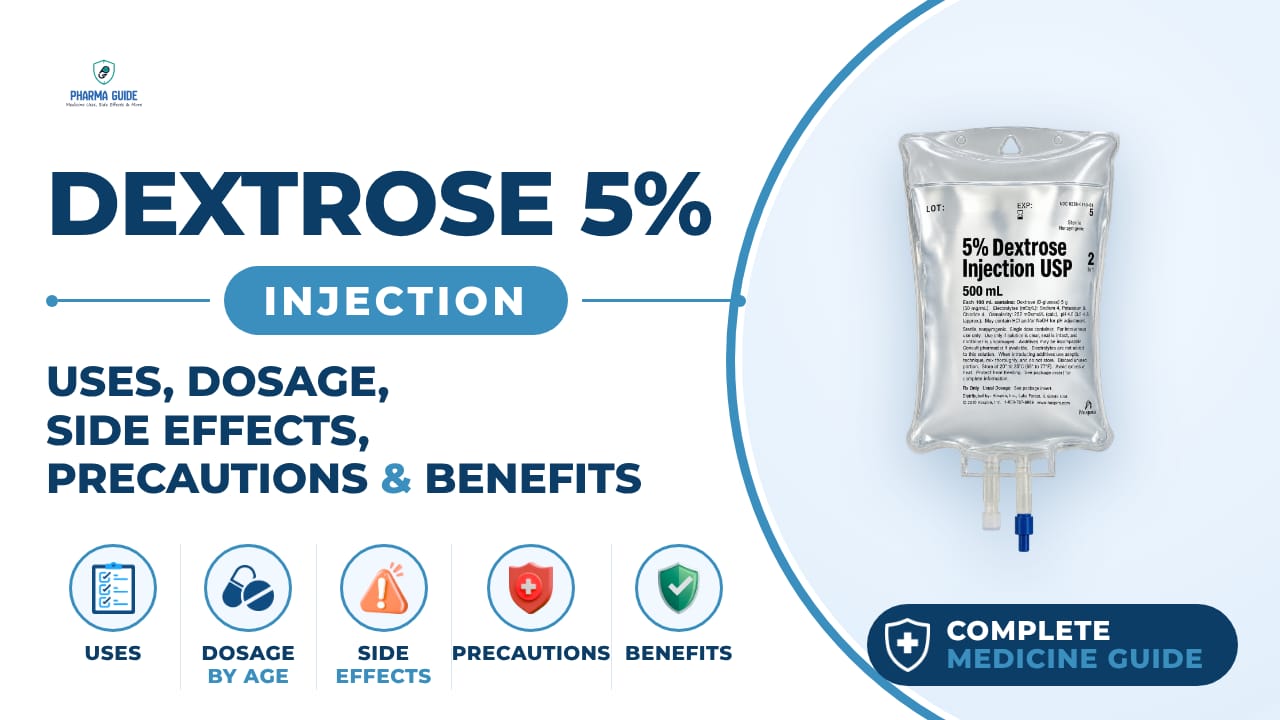
Dextrose 5% Injection: Uses, Dosage, Side Effects, Precautions and Alternates
| Generic name | Dextrose (glucose) |
|---|---|
| Drug class | Glucose elevating agents |
| Forms | Oral liquid (55%) |
Quick overview
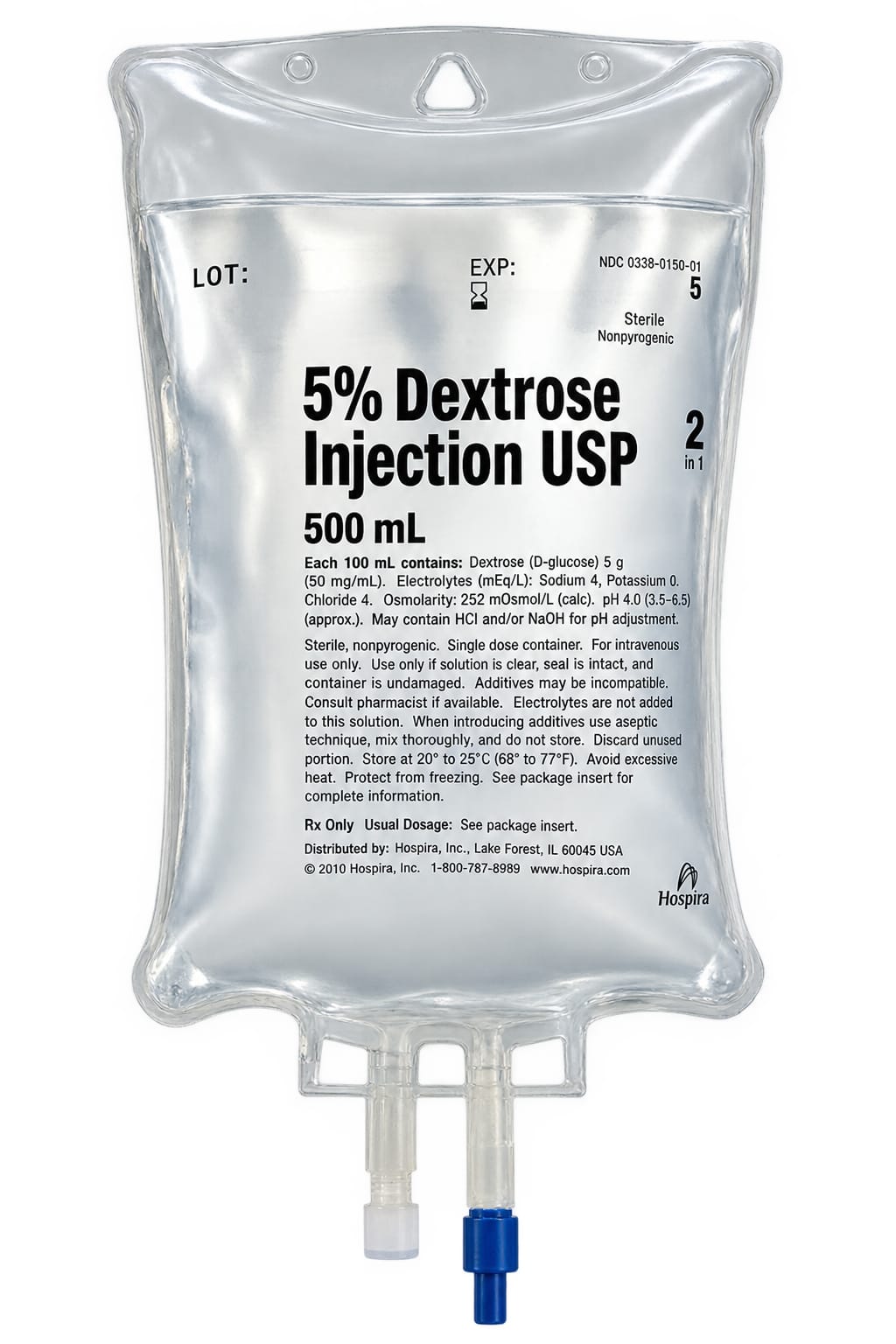
Dextrose 5% Injection is a sugar solution given through an IV into a vein. It is used to treat low blood sugar, insulin shock, and dehydration, to provide nutritional support for people who cannot eat, and as a diluent for mixing other injectable medicines. It is given only by a healthcare professional, typically in a hospital or clinic setting.
What is Dextrose 5% Injection
Dextrose 5% in water is a sugar solution given through an IV into a vein. It replaces lost fluids and gives the body carbohydrates for energy. It can also be used to mix with other injectable medicines so they can be given safely through an IV.
Dextrose 5% Injection uses
- Treating low blood sugar (hypoglycemia)
- Treating insulin shock
- Treating dehydration (fluid loss)
- Providing nutritional support (water and calories) to patients who cannot eat due to illness or injury
- Used as a diluent (mixing liquid) for preparing other injectable medicines in an IV bag
Benefits of Dextrose 5% Injection
- Restores lost body fluids
- Provides carbohydrate calories when a person cannot eat
- Helps delivery of other IV medicines safely into the bloodstream
How Dextrose 5% Injection works
Dextrose supplies carbohydrate calories that the body uses for energy, and it is broken down into carbon dioxide and water.
Dextrose 5% Injection dosage
This medicine is given only through an IV into a vein by a healthcare professional, often in a hospital or clinic setting. It should not be self-injected unless the patient fully understands how to give the injection and safely dispose of needles and tubing.
Check the solution bag for leaks before use; the solution should look clear and colorless. Do not use if the solution has changed color, has particles in it, or if the bag seal is broken. Do not mix with any other medication unless it has been prescribed by a doctor.
Blood sugar, breathing, blood pressure, oxygen levels, and other vital signs are often monitored closely during use. Tell your care team right away if you feel burning, pain, or swelling around the IV needle.
The rate of infusion depends on a person's age, weight, and medical condition, and is decided by the care team.
| Age group | Dose |
|---|---|
| Under 18 years | 500–2000 mL/day |
| 18–60 years | 500–2000 mL/day |
| 60+ years | 500–2000 mL/day |
Available forms and strengths
- Oral liquid (55%)
Side effects of Dextrose 5% Injection
Common
- Mild irritation around the IV needle
- Upset stomach
- Swelling in hands or feet
- Diarrhea
- Vomiting
Serious
- Severe burning, pain, or swelling around the IV needle
- Warmth, redness, oozing, or bleeding where the IV was placed
- Fever or ongoing cough
- High blood sugar symptoms (increased thirst, increased urination, hunger, dry mouth, fruity breath odor, drowsiness, dry skin, blurred vision, weight loss)
- Headache, trouble concentrating, memory problems, weakness, feeling unsteady, hallucinations, fainting, seizure, shallow breathing or breathing that stops
- Low potassium symptoms (confusion, uneven heart rate, extreme thirst, increased urination, leg discomfort, muscle weakness or limp feeling)
- Signs of allergic reaction: hives, difficulty breathing, swelling of face, lips, tongue, or throat
- Anxiety, sweating, pale skin, severe shortness of breath, wheezing, pain, fast or uneven heart rate
- Severe dizziness, trouble breathing, fainting, continued low blood sugar
Warnings and precautions
- Do not use this medicine if you are allergic to dextrose, or if you have significantly high blood sugar levels.
- Newborns, especially premature babies with low birth weight, have a higher risk of developing low blood sugar and need close blood sugar monitoring during treatment.
- Giving dextrose faster than the body can use it may cause high blood sugar, coma, and even death.
- This medicine can cause low sodium levels in the blood (hyponatremia), which can lead to a serious brain condition with headache, nausea, seizures, and vomiting. Young children, older adults, and people on certain other medicines have a higher risk.
- Infusing this solution into a vein in the arm can irritate or damage the vein, or cause a blood clot; the IV line should be removed quickly if this happens.
- Long or prolonged use can cause imbalances in potassium and phosphate levels, and can cause fluid buildup in the body, including fluid in the lungs.
- In severely malnourished patients, restarting nutrition can cause a dangerous shift in body minerals called refeeding syndrome, so nutrient intake should be increased slowly with monitoring.
- In very small, low-birth-weight babies, giving this medicine too fast or in excess amounts may increase the risk of bleeding in the brain.
- Dextrose has been used for decades during labor and delivery. In general, using it during pregnancy is not expected to cause major birth defects, miscarriage, or problems for the mother or baby, but your doctor should know if you are pregnant or trying to become pregnant.
- Dextrose has been used for a long time and is not expected to harm a breastfeeding baby, but there isn't specific research data on its effects during breastfeeding.
- People with kidney disease may be at higher risk of side effects since dextrose is removed from the body mainly through the kidneys. This is especially a concern in older adults, who are more likely to have reduced kidney function.
- Tell your doctor if you have liver disease before using this medicine.
Storage
- Store at room temperature away from moisture and heat.
- Do not freeze.
- Minimize exposure to heat; avoid excessive heat; protect from freezing.
- This medication is given in a hospital or clinic. It will not be stored at home.
When to see a doctor
- Get emergency help right away if you have signs of an allergic reaction, such as hives, trouble breathing, or swelling of your face, lips, tongue, or throat.
- Stop the infusion and call your doctor right away if you have fever, cough, wheezing, increased thirst or urination, confusion, hallucinations, extreme thirst, muscle weakness, weak or shallow breathing, fainting, or severe irritation or signs of infection around the IV needle.
- If you think you have been given too much of this medicine, contact a poison control center or go to an emergency room right away.
- Tell your care team immediately if you notice burning, pain, or swelling around the IV needle.
Alternatives
- Dextrose 10% Injection
- Ringer's Lactate
- Normal Saline 0.9%
Watch the video
FAQs
What is Dextrose 5% Injection used for?
It is used to treat low blood sugar, insulin shock, and dehydration, to provide nutritional support for people who cannot eat, and as a diluent for mixing other injectable medicines.
How is Dextrose 5% Injection given?
It is given only through an IV into a vein by a healthcare professional, typically in a hospital or clinic setting, with the infusion rate decided by the care team based on age, weight, and medical condition.
What are the side effects of Dextrose 5% Injection?
Common side effects include mild irritation around the IV needle, upset stomach, swelling in hands or feet, diarrhea, and vomiting. Serious side effects include high or low blood sugar symptoms, low potassium or sodium symptoms, allergic reactions, and breathing problems.
Who should not use Dextrose 5% Injection?
It should not be used by people allergic to dextrose or those with significantly high blood sugar levels. Caution is needed in newborns, severely malnourished patients, and people with kidney or liver disease.
What are the alternatives to Dextrose 5% Injection?
Alternatives mentioned include Dextrose 10% Injection, Ringer's Lactate, and Normal Saline 0.9%.
General information, not medical advice
Your prescriber and the leaflet in your pack know your situation. This page does not.
- Follow your prescriber and the leaflet
- Don't start, stop, or change a dose on your own
- Doses and warnings differ by country and product
Sources
Video
Related medicines
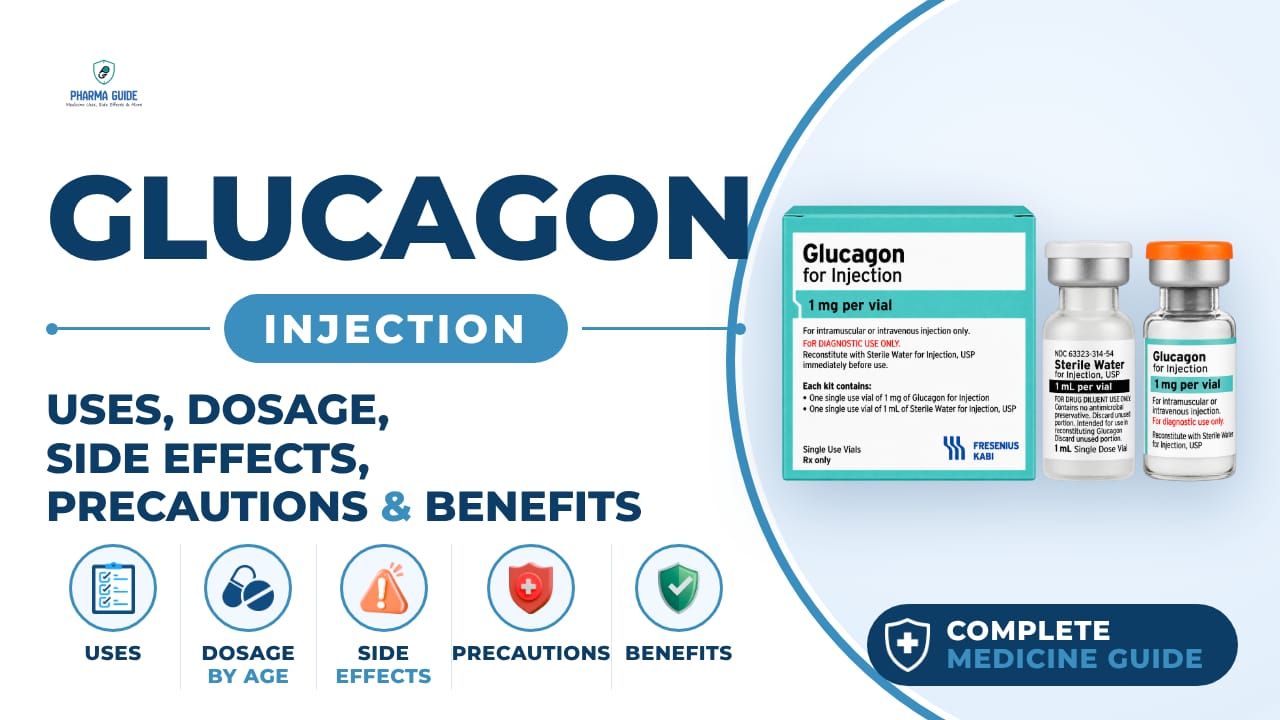
Glucagon Injection: Uses, Dosage, Side Effects, Precautions and Alternates
Glucose elevating agents
Glucagon Injection quickly raises blood sugar during severe hypoglycemia. Learn how it works, dosage, side effects, warnings, and emergency steps.
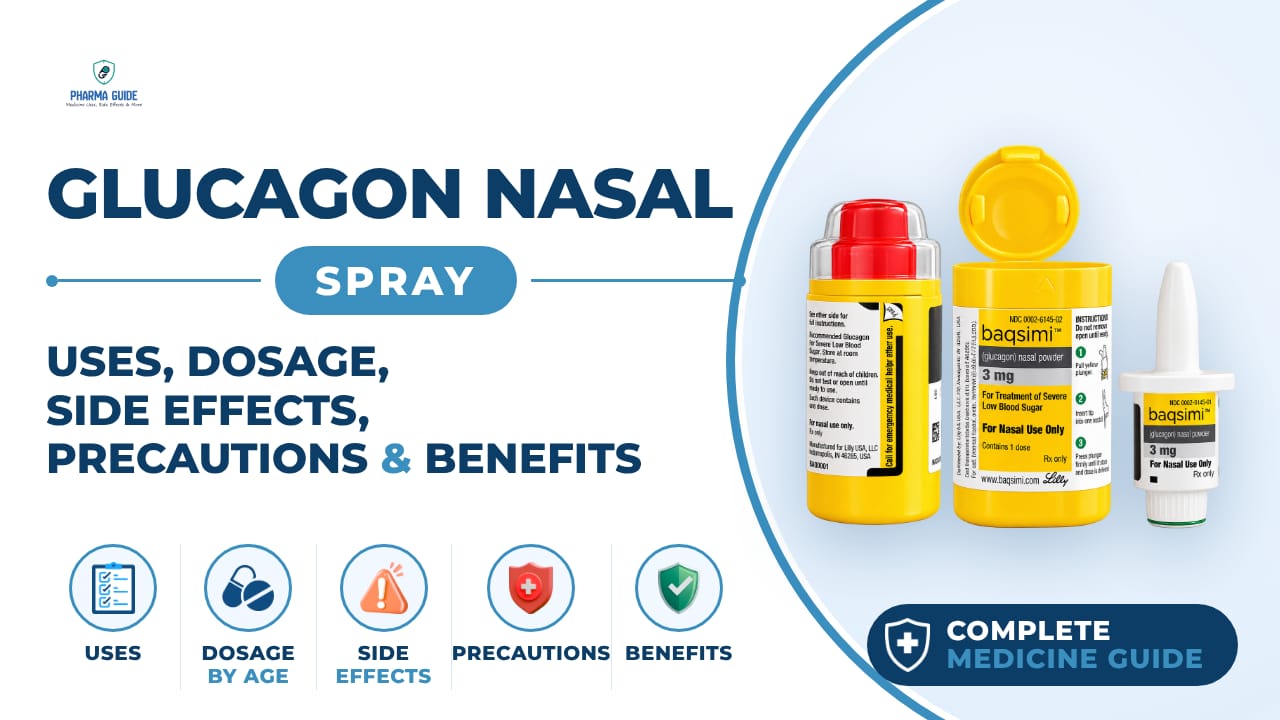
Glucagon Nasal Spray: Uses, Dosage, Side Effects, Precautions and Alternates
Glucose elevating agents
Glucagon Nasal Spray (Baqsimi) is a needle-free nasal powder that treats severe low blood sugar in diabetes. Learn dosage, side effects, and warnings.