
Safety
General information, not medical advice
Your prescriber and the leaflet in your pack know your situation. This page does not.
- Follow your prescriber and the leaflet
- Don't start, stop, or change a dose on your own
- Doses and warnings differ by country and product
Glucagon Nasal Spray: Uses, Dosage, Side Effects, Precautions and Alternates
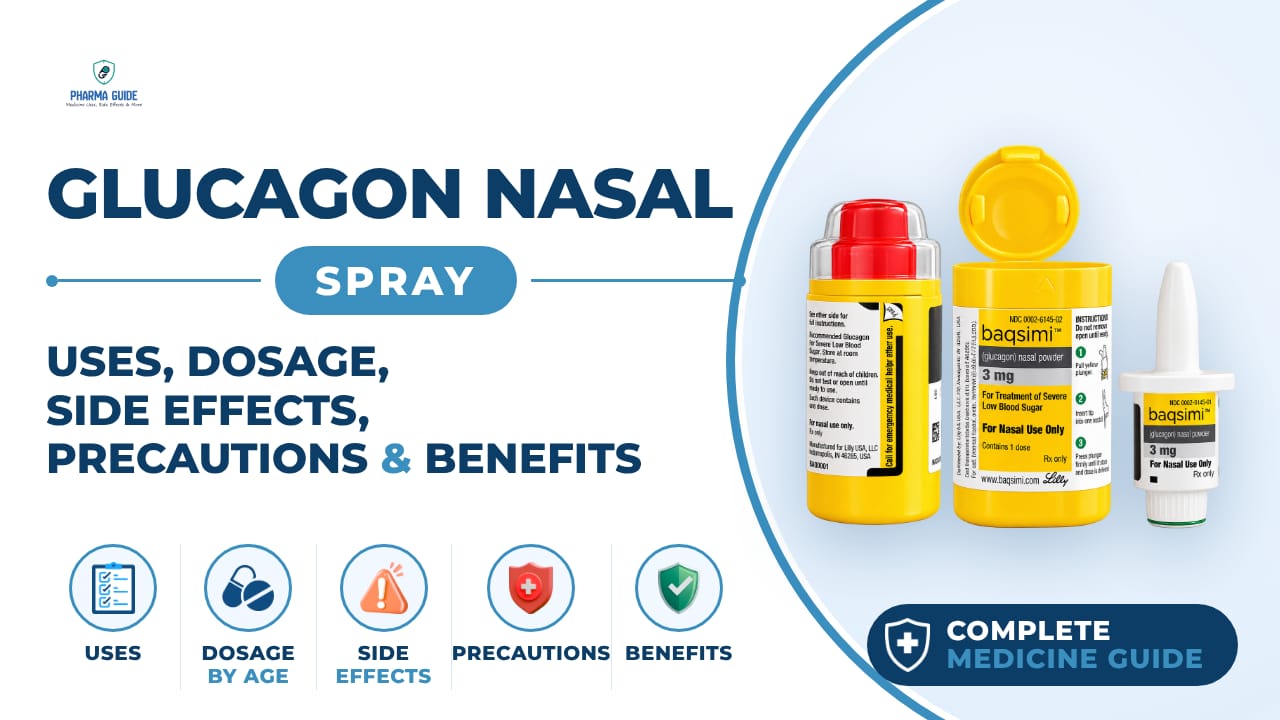
| Generic name | glucagon |
|---|---|
| Drug class | Glucose elevating agents |
| Forms | Nasal powder |
Quick overview
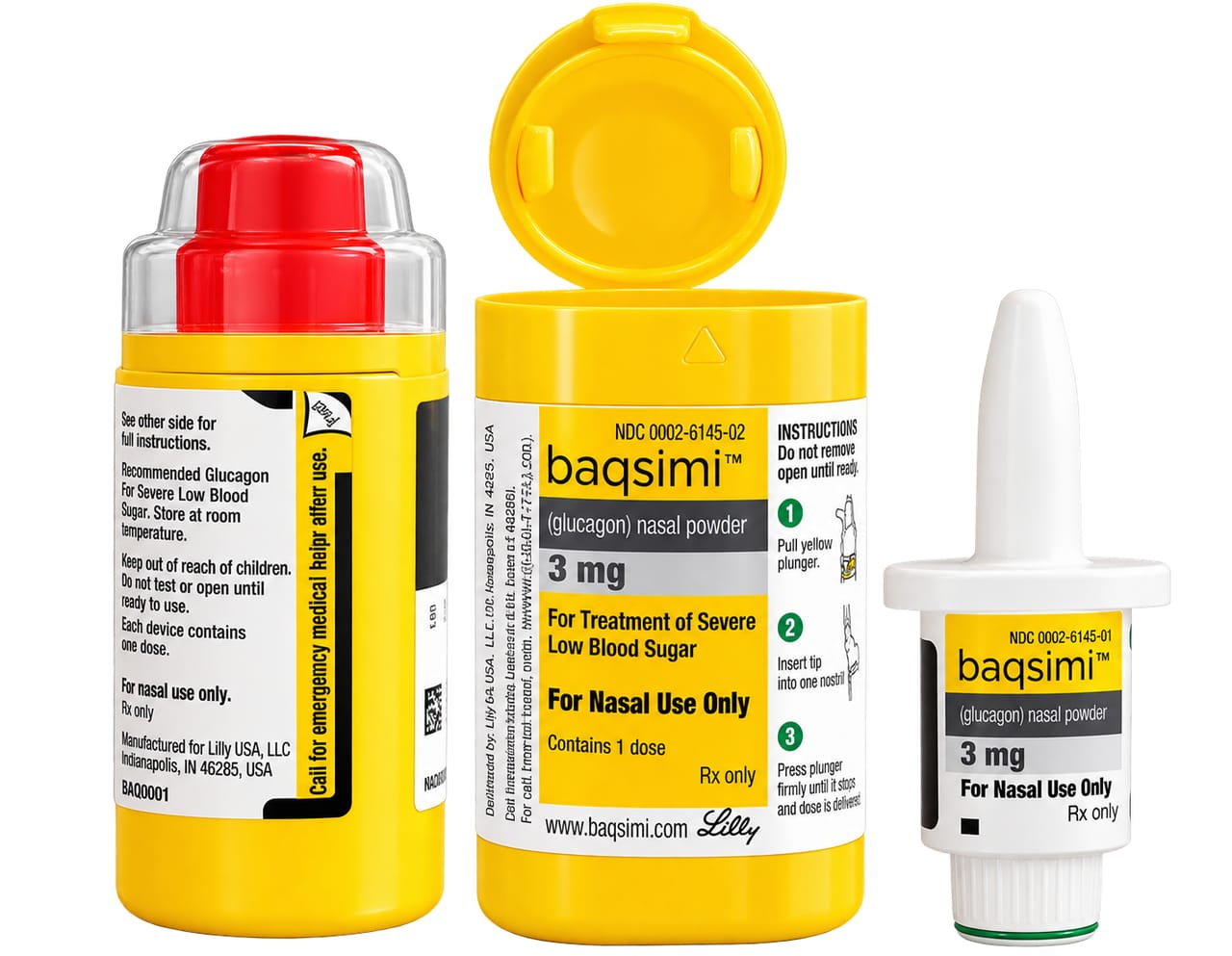
Glucagon Nasal Spray (brand name Baqsimi) is a needle-free emergency medicine sprayed into the nose to treat severe low blood sugar (hypoglycemia) in people with diabetes. It belongs to the glucose-elevating agent drug class and works by prompting the liver to release stored sugar into the bloodstream. It is used in adults and children, with approved starting ages varying by source. It comes as a nasal powder in a single-use device.
What is Glucagon Nasal Spray
Glucagon Nasal Spray, known generically as glucagon, is a needle-free emergency medicine that is sprayed into the nose to treat severe low blood sugar (hypoglycemia) in people with diabetes.
Glucagon Nasal Spray uses
- Treats severe hypoglycemia (dangerously low blood sugar) in people with diabetes who cannot safely eat or drink, who have passed out, or who are having a seizure
- Used in adults and children age 1 year and older (according to Mayo Clinic and Children's Wisconsin) or age 4 and older (according to Drugs.com and GoodRx)
Benefits of Glucagon Nasal Spray
- Needle-free and easy to use, requiring no preparation, mixing, or priming
- Comes in a small, single-use disposable device that is simple to keep on hand at home, school, or work
- Works quickly to restore safe consciousness or responsiveness until the person can eat fast-acting sugar
- Still gets absorbed even if you have a cold or are taking cold medications
How Glucagon Nasal Spray works
Glucagon is a natural hormone that tells the liver to release its stored sugar into the bloodstream, which raises blood sugar levels. It typically starts working within 10 to 15 minutes.
Glucagon Nasal Spray dosage
This medicine is used only in the nose — do not get it in the eyes or on the skin, and rinse right away if that happens. Each device holds only one dose and should not be tested or primed before use. Only take it out of its wrapper right before you need to use it, since it may not work as well if left unwrapped for a while. The dose does not need to be inhaled — just spraying it into the nostril is enough.
Give the dose even if the person is unconscious or having a seizure; do not give food or drink by mouth in that situation, since they could choke. Get emergency medical help right away after giving a dose, even if the person starts to feel better. If there is no improvement after about 15 minutes, a second dose from a new device may be needed.
As soon as the person can swallow safely, give them a fast-acting sugar source (such as juice or regular soda) followed by a small snack or meal to prevent blood sugar from dropping again. After giving the dose to a child, roll them onto their side in case they vomit, to help prevent choking. Caregivers, family members, or teachers should learn how to use the device correctly before an emergency happens. Not for use in children younger than 1 year without specific medical guidance.
| Age group | Dose |
|---|---|
| Under 1 year | Safety and effectiveness not established; no FDA-approved dosage |
| 1–74 years | 3 mg intranasally as a single emergency dose |
| 75 years and older | 3 mg intranasally as a single emergency dose, with appropriate medical monitoring |
Available forms and strengths
- Nasal powder
Side effects of Glucagon Nasal Spray
Common
- Nasal discomfort, stuffiness, or runny nose
- Nosebleed or sneezing
- Nausea and vomiting
- Headache
- Watery, red, or itchy eyes
- Itchy throat or ears
- Dryness or irritation inside the nose
- Change or loss of taste
Serious
- Severe allergic reaction (hives, difficulty breathing, swelling of face, lips, tongue, or throat, feeling light-headed)
- Signs of high blood pressure (severe headache, blurred vision, pounding in the neck or ears, dizziness, nervousness, slow or fast heartbeat)
- Chest tightness, cough, or trouble swallowing
- Puffiness or swelling of the eyelids or around the eyes, face, lips, or tongue
Warnings and precautions
- Do not use this medicine if you have a pancreatic tumor called insulinoma or an adrenal gland tumor called pheochromocytoma, since it can cause dangerous blood sugar or blood pressure changes.
- This medicine can cause a serious allergic reaction, including a life-threatening reaction called anaphylaxis.
- This medicine may not work well if you haven't eaten enough recently, have chronic low blood sugar, or have adrenal gland problems, because your liver may not have enough stored sugar to release.
- If someone has severe symptoms like seizures or has passed out, do not give them food or drink by mouth, since they could choke. Give glucagon instead and call the doctor right away.
- Glucagon is not expected to harm an unborn baby, and treating severe low blood sugar quickly is more important than any small risk from the medicine.
- It isn't fully known if this medicine is safe during breastfeeding, so talk with your doctor about the risks and benefits.
- No specific renal dose adjustment is established. Patients with significant kidney disease may have an increased risk of hypoglycemia from their diabetes treatment and require appropriate monitoring.
- Use with caution if you have liver disease, since this medicine may make the condition worse.
- Avoid alcohol while using this medicine because it can lower your blood sugar.
- Do not drive, use machines, or do anything dangerous until you have eaten something sweet and your symptoms have improved.
Storage
- Store the medicine in a closed container at room temperature, away from heat, moisture, and direct light.
- Keep from freezing.
- Keep Baqsimi device in the shrink wrapped tube until ready to use.
- Throw away Baqsimi device and tube after use.
- Keep out of the reach of children.
- Do not keep outdated medicine or medicine no longer needed.
- Ask your healthcare professional how you should dispose of any medicine you do not use.
When to see a doctor
- Get emergency medical help right away after using this medicine, even if the person starts to feel better.
- Get emergency help immediately for signs of a serious allergic reaction, such as hives, trouble breathing, feeling light-headed, or swelling of the face, lips, tongue, or throat.
- Call your doctor right away if you notice symptoms of high blood pressure, such as a severe headache, blurred vision, or pounding in the neck or ears.
- Tell someone to take you to the doctor or hospital right away if low blood sugar symptoms do not improve after eating or drinking something sweet.
- Call your child's doctor if they had a severe low blood sugar episode requiring glucagon, if they are vomiting, or if you have other questions or concerns.
Alternatives
- Glucagon Emergency Kit
- Zegalogue
- Gvoke
Watch the video
FAQs
What is Glucagon Nasal Spray used for?
It treats severe hypoglycemia (dangerously low blood sugar) in people with diabetes who cannot safely eat or drink, who have passed out, or who are having a seizure.
How fast does Glucagon Nasal Spray work?
It typically starts working within 10 to 15 minutes by prompting the liver to release stored sugar into the bloodstream.
What is the dosage for Glucagon Nasal Spray?
For ages 1 to 74, the dose is 3 mg intranasally as a single emergency dose. For those 75 and older, it is also 3 mg intranasally with appropriate medical monitoring. If there is no improvement after about 15 minutes, a second dose from a new device may be needed.
What should you do after giving a dose of Glucagon Nasal Spray?
Get emergency medical help right away, even if the person starts to feel better. As soon as they can swallow safely, give a fast-acting sugar source like juice or regular soda followed by a small snack or meal.
Who should not use Glucagon Nasal Spray?
It should not be used by people with a pancreatic tumor called insulinoma or an adrenal gland tumor called pheochromocytoma, since it can cause dangerous blood sugar or blood pressure changes.
General information, not medical advice
Your prescriber and the leaflet in your pack know your situation. This page does not.
- Follow your prescriber and the leaflet
- Don't start, stop, or change a dose on your own
- Doses and warnings differ by country and product
Sources
Video
Related medicines
Glucagon Injection: Uses, Dosage, Side Effects, Precautions and Alternates
Glucose elevating agents
Glucagon Injection quickly raises blood sugar during severe hypoglycemia. Learn how it works, dosage, side effects, warnings, and emergency steps.
Dextrose 5% Injection: Uses, Dosage, Side Effects, Precautions and Alternates
Glucose elevating agents
Dextrose 5% Injection is an IV sugar solution used for low blood sugar, dehydration, and nutrition support. Learn uses, dosage, side effects, and warnings.