
Safety
General information, not medical advice
Your prescriber and the leaflet in your pack know your situation. This page does not.
- Follow your prescriber and the leaflet
- Don't start, stop, or change a dose on your own
- Doses and warnings differ by country and product
Glucagon Injection: Uses, Dosage, Side Effects, Precautions and Alternates
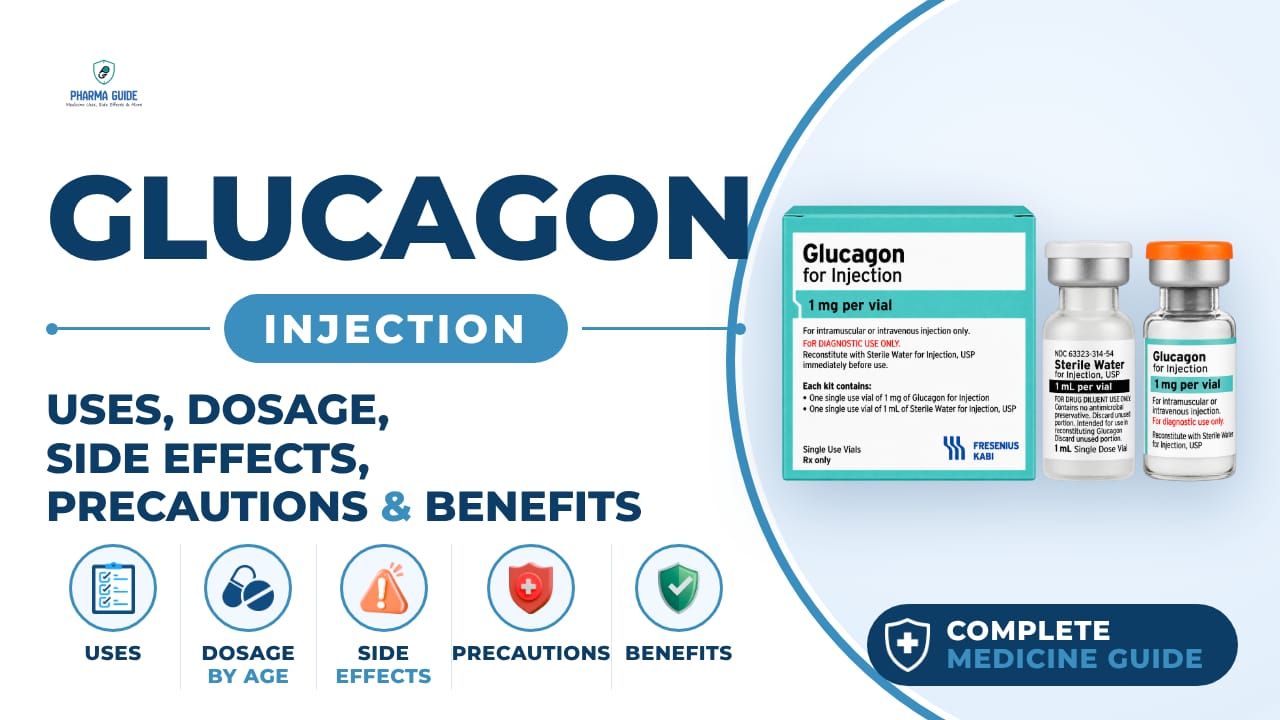
| Generic name | glucagon |
|---|---|
| Drug class | Glucose elevating agents |
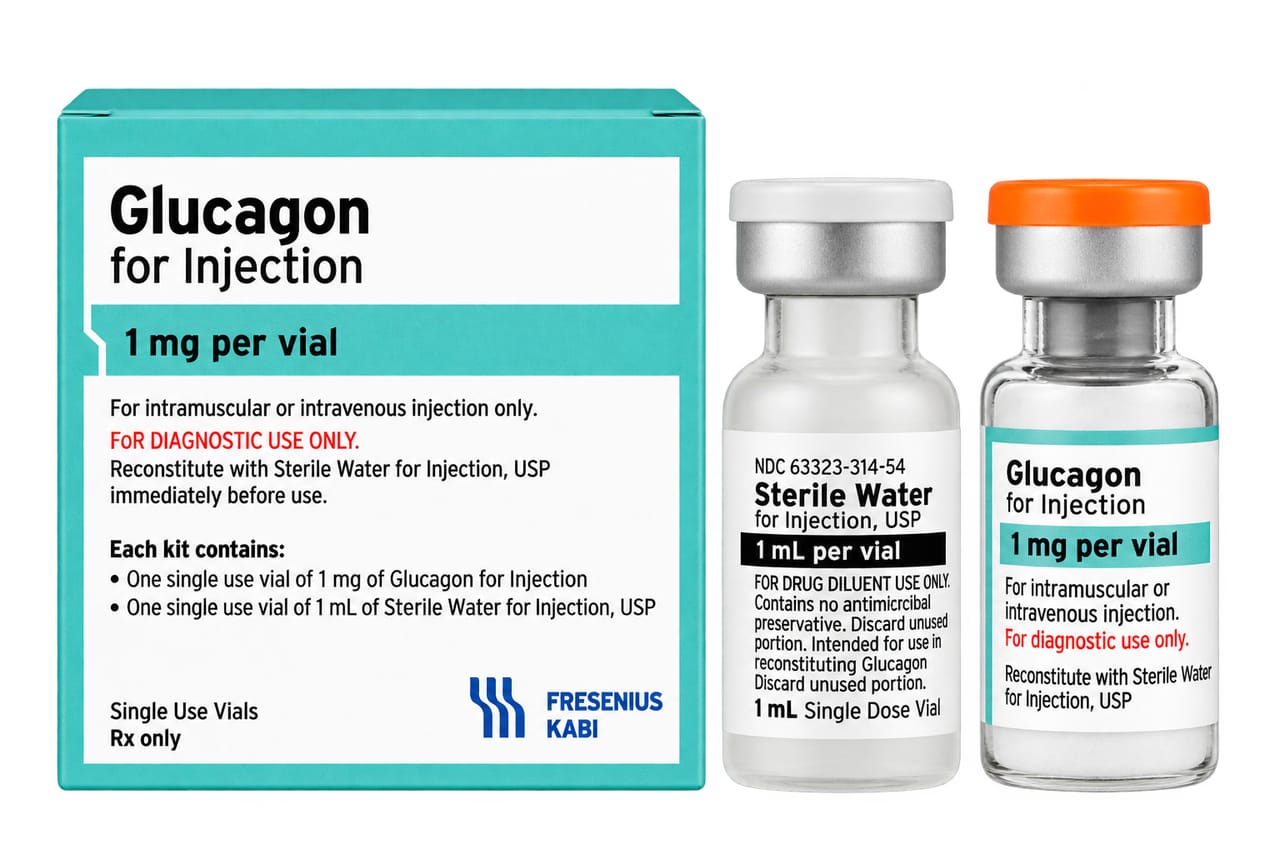
| Forms | Vial for reconstitution with diluent syringe (kit), Single-dose prefilled autoinjector, Single-dose prefilled syringe, Intravenous injection, Intranasal device (nasal powder) |
Quick overview
Glucagon Injection (generic name: glucagon) belongs to the drug class of glucose elevating agents. It is a hormone medicine identical to the natural glucagon made by your body, given as a shot to quickly raise blood sugar levels during a severe low blood sugar emergency. It is also used as a diagnostic aid during certain imaging exams. Always use it exactly as directed and seek emergency help after use.
What is Glucagon Injection
Glucagon is a hormone medicine that is identical to the natural glucagon made by your body. It is given as a shot to quickly raise blood sugar levels during a severe low blood sugar emergency.
Glucagon Injection uses
- Treating severe low blood sugar (severe hypoglycemia) in people with diabetes
- Used as a diagnostic aid during radiologic (X-ray type) exams of the stomach, duodenum, small bowel, and colon to temporarily stop gut movement
Benefits of Glucagon Injection
- Rapidly raises blood glucose
- Treats severe hypoglycemia
- Useful when a person cannot safely swallow sugar
- Can be administered outside a hospital by a trained caregiver
- Provides emergency treatment for insulin-related severe low blood sugar
How Glucagon Injection works
Glucagon tells the liver to break down its stored sugar (glycogen) and release it into the blood, which raises blood sugar. It also relaxes the muscles of the stomach, small intestine, and colon.
Glucagon Injection dosage
Glucagon is given as a shot under the skin, into a muscle, or into a vein, depending on the product and situation. The person giving the shot should act quickly, since prolonged low blood sugar can be harmful. Turn the patient onto their side before and after the injection to prevent choking, especially if they vomit upon waking.
Mix the powder and liquid together only right before use, and use the mixed solution right away. Only use the mixed solution if it is clear and watery looking; discard any unused portion.
Once the person wakes up and can safely swallow, give a fast-acting sugar source like juice or regular soda, followed by a longer-acting snack like crackers with cheese or a sandwich. If the person does not wake up within 15 minutes, a second dose may be given while waiting for emergency help. Always get emergency medical help after giving glucagon, even if the person wakes up. Tell the doctor every time glucagon is used, since diabetes medicines may need to be adjusted afterward.
| Age group | Dose |
|---|---|
| Children 20 kg or more | 1 mg (1 mL) |
| Adolescents (body weight 20 kg or more) | 1 mg (1 mL) |
| Adults 18–64 years | 1 mg (1 mL) |
Available forms and strengths
- Vial for reconstitution with diluent syringe (kit)
- Single-dose prefilled autoinjector
- Single-dose prefilled syringe
- Intravenous injection
- Intranasal device (nasal powder)
Side effects of Glucagon Injection
Common
- Nausea
- Vomiting
- Swelling, pain, or redness at the injection site
- Headache
- Dizziness
- Feeling unusually weak or tired
- Paleness
- Diarrhea
- Drowsiness
- Temporary increase in heart rate
- High blood sugar (in children)
- Abdominal pain
- Itching
Serious
- Severe allergic reaction (hives, trouble breathing, fast or slow heartbeat, swelling of face, lips, tongue, or throat)
- Dangerously high blood pressure, especially in people with a tumor called pheochromocytoma
- Low blood sugar returning after treatment, especially in people with certain pancreas tumors (insulinoma or glucagonoma)
- A skin rash called necrolytic migratory erythema (NME), seen with continuous glucagon infusion, that can cause scaly, itchy red patches, blisters, and skin breakdown
- Heart problems such as big increases in blood pressure and pulse, especially in people with existing heart disease
Warnings and precautions
- Glucagon should be used carefully in people with a history of a tumor called insulinoma or pheochromocytoma, since it can cause dangerous changes in blood sugar or blood pressure in these conditions.
- In people with pheochromocytoma (an adrenal gland tumor), glucagon can cause a sudden, serious rise in blood pressure.
- Serious allergic reactions, including hives, trouble breathing, and low blood pressure, have happened in people given glucagon.
- A skin condition called necrolytic migratory erythema (a scaly, itchy rash) has been reported after continuous glucagon infusions and goes away once the glucagon is stopped.
- If the patient is actually in a coma from very high blood sugar rather than very low blood sugar, glucagon will not help and the person needs immediate medical attention.
- Do not use glucagon if you have a tumor of the adrenal gland (pheochromocytoma) or a tumor of the pancreas (insulinoma), or if you are allergic to glucagon or lactose.
- There isn't enough research in pregnant women, so this medicine should be used during pregnancy only if clearly needed. In an emergency, quickly treating severe low blood sugar is considered more important than any unknown risks.
- It isn't known for certain whether glucagon passes into breast milk, so caution is advised. You and your healthcare provider should decide together whether it's right to use it while breastfeeding.
- Glucagon is broken down in the liver, kidney, and blood, so kidney function may affect how the drug is cleared from the body.
- Glucagon only works to raise blood sugar if there is enough stored sugar (glycogen) in the liver. It will not work well in people with very low liver glycogen stores, such as those who have been starving or fasting for a long time.
- Avoid drinking alcohol, since it can lower your blood sugar.
- Do not drive after severe hypoglycemia until fully recovered and medically safe.
Storage
- Store the kit at controlled room temperature between 20° to 25°C (68° to 77°F) before mixing glucagon with the diluent.
- Glucagon that has been mixed with diluent should be used immediately. Discard any unused portion. Solutions should be clear and of a water-like consistency at time of use.
- Store in a cool, dry place, and do not freeze. Keep in the original package and away from light until it needs to be used.
When to see a doctor
- Get emergency help right away for signs of a serious allergic reaction, such as hives, trouble breathing, a fast or slow heartbeat, or swelling of the face, lips, tongue, or throat.
- After giving glucagon, the caregiver should call for emergency medical help right away, even if the person wakes up.
- If the person does not wake up within 15 minutes of the glucagon shot, give another dose if available and get emergency help immediately.
- A doctor should always be told whenever a severe low blood sugar reaction happens, even if the glucagon worked.
- If you think you have used too much glucagon, get emergency medical help right away.
Alternatives
- Glucagon nasal powder
- Ready-to-use glucagon autoinjector
- Glucagon prefilled syringe
Watch the video
FAQs
What is Glucagon Injection used for?
It treats severe low blood sugar (hypoglycemia) in people with diabetes and is also used as a diagnostic aid during certain radiologic exams of the stomach and intestines to temporarily stop gut movement.
How does Glucagon Injection work?
Glucagon tells the liver to break down stored sugar (glycogen) and release it into the blood, raising blood sugar levels. It also relaxes the muscles of the stomach, small intestine, and colon.
What should I do after giving a glucagon injection?
Turn the patient onto their side to prevent choking, and once they wake up and can swallow safely, give a fast-acting sugar source followed by a longer-acting snack. Always get emergency medical help after giving glucagon, even if the person wakes up.
What happens if the person does not wake up after a glucagon injection?
If the person does not wake up within 15 minutes, a second dose may be given while waiting for emergency help, and emergency medical help should be obtained immediately.
What are the common side effects of Glucagon Injection?
Common side effects include nausea, vomiting, injection site swelling or redness, headache, dizziness, weakness, paleness, diarrhea, drowsiness, temporary increased heart rate, abdominal pain, and itching.
General information, not medical advice
Your prescriber and the leaflet in your pack know your situation. This page does not.
- Follow your prescriber and the leaflet
- Don't start, stop, or change a dose on your own
- Doses and warnings differ by country and product
Sources
Video
Related medicines
Dextrose 5% Injection: Uses, Dosage, Side Effects, Precautions and Alternates
Glucose elevating agents
Dextrose 5% Injection is an IV sugar solution used for low blood sugar, dehydration, and nutrition support. Learn uses, dosage, side effects, and warnings.
Glucagon Nasal Spray: Uses, Dosage, Side Effects, Precautions and Alternates
Glucose elevating agents
Glucagon Nasal Spray (Baqsimi) is a needle-free nasal powder that treats severe low blood sugar in diabetes. Learn dosage, side effects, and warnings.