
Safety
General information, not medical advice
Your prescriber and the leaflet in your pack know your situation. This page does not.
- Follow your prescriber and the leaflet
- Don't start, stop, or change a dose on your own
- Doses and warnings differ by country and product
Diacomit Capsule: Uses, Dosage, Side Effects, Precautions and Alternates
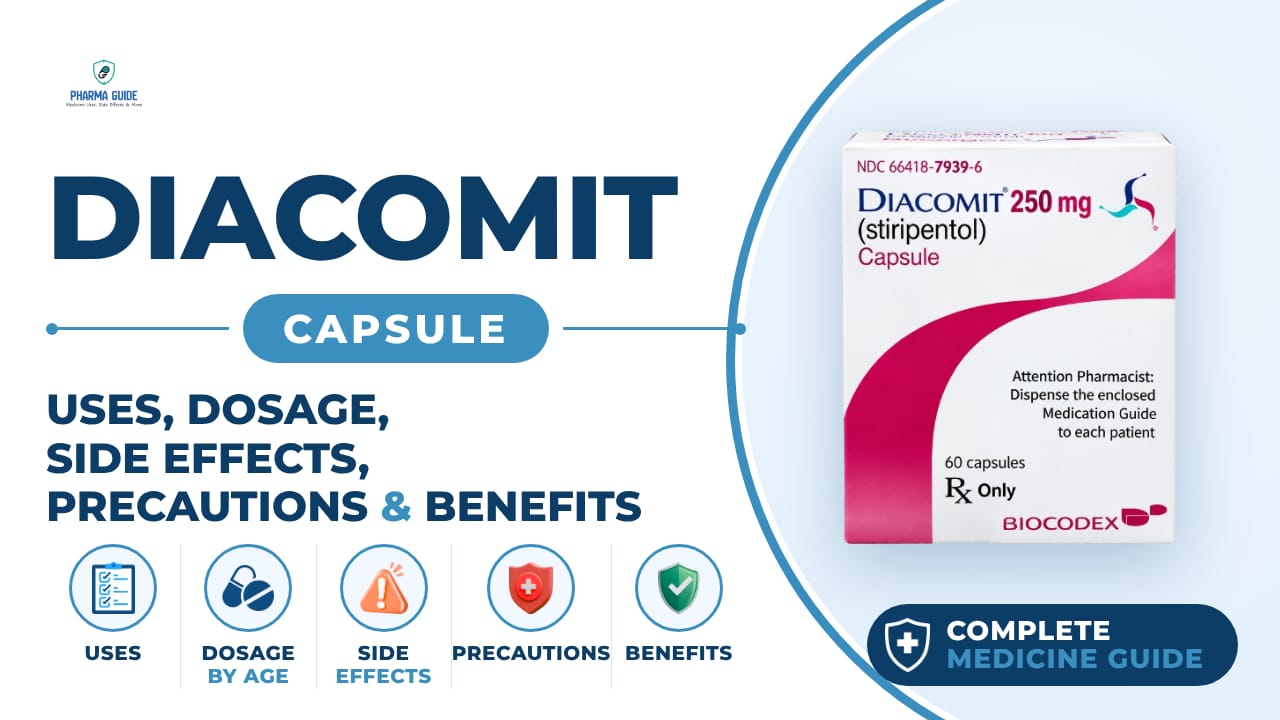
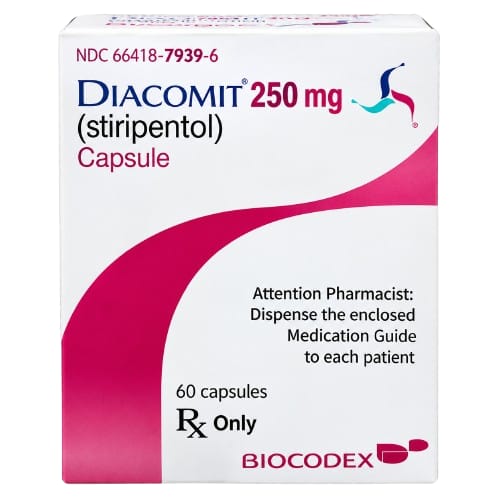
| Generic name | stiripentol |
|---|---|
| Drug class | Antiepileptic (anticonvulsant); gamma-aminobutyric acid reuptake inhibitor |
| Forms | Capsules |
Quick overview
Diacomit Capsule contains the active drug stiripentol, an antiepileptic medicine. It is used together with another seizure medicine called clobazam to treat seizures caused by Dravet syndrome, a rare, severe form of epilepsy that usually starts in a baby's first year of life. It is prescribed for people 6 months of age and older who weigh at least 7 kg (about 15 lb). Diacomit is generally meant to be used long-term as part of a specialist treatment plan.
What is Diacomit Capsule
Diacomit is a prescription medicine that contains the active drug stiripentol. It is used together with another seizure medicine called clobazam to treat seizures caused by Dravet syndrome, a rare, severe form of epilepsy that usually starts in a baby's first year of life.
Diacomit Capsule uses
- Treats seizures linked to Dravet syndrome in people 6 months of age and older who weigh at least 7 kg (about 15 lb), when taken together with clobazam
- Not known to work alone (without clobazam) for Dravet syndrome
Benefits of Diacomit Capsule
- Helps reduce seizures associated with Dravet syndrome
- May reduce the frequency of convulsive seizures
- Can improve seizure control when used with prescribed medicines
- May help reduce seizure-related disruptions to daily activities
- Supports seizure management as part of a specialist treatment plan
How Diacomit Capsule works
Scientists don't fully understand exactly how stiripentol works, but it seems to boost the activity of a brain chemical called GABA, which helps calm down the nerve signals that cause seizures. It may also block certain liver enzymes, which raises the blood levels of the other seizure drug clobazam, making that drug work more strongly too.
Diacomit Capsule dosage
Always take this medicine during a meal; do not take it on an empty stomach. Capsules should be swallowed whole with a full glass of water — do not open, crush, split, or chew them. If you have trouble swallowing capsules, the powder form can be used instead — mix it in a glass of water and drink it right away after mixing.
Do not take with milk or dairy products, carbonated drinks, fruit juice, or foods/drinks containing caffeine or theophylline (such as cola, chocolate, coffee, tea, and energy drinks). It is taken two or three times a day at regular, evenly spaced times to keep a steady level of medicine in the body.
If a dose is missed, take it as soon as you remember, unless it is almost time for the next dose — in that case skip the missed dose and go back to the normal schedule; do not take two doses at once. Do not stop taking this medicine suddenly, even if you feel well, because this can cause seizures to come back or increase; your doctor will guide you on tapering the dose. This is generally meant to be a long-term treatment.
| Age group | Dose |
|---|---|
| Under 18 years | Not recommended |
| 18–64 years | 50 mg/kg/day |
| 65+ years | 50 mg/kg/day |
Available forms and strengths
- Capsules
Side effects of Diacomit Capsule
Common
- Sleepiness or drowsiness
- Decreased appetite
- Agitation
- Trouble with balance or coordination (ataxia)
- Weight loss
- Low muscle tone (floppy muscles)
- Nausea and vomiting
- Tremor
- Trouble speaking clearly
- Trouble sleeping (insomnia)
- Excess saliva
- Fatigue
- Upper respiratory infections like bronchitis or the common cold
Serious
- Low white blood cell counts (neutropenia), which can raise the risk of infection and fever
- Low platelet counts (thrombocytopenia), which can cause easy bruising, nosebleeds, or bleeding that won't stop
- Severe sleepiness that makes driving or using machines dangerous
- Serious weight loss that may affect a child's growth
- Thoughts of suicide or self-harm, new or worsening depression, or other mood/behavior changes
- Aggression or other behavior changes
- Withdrawal symptoms if the medicine is stopped suddenly, including worse seizures or a seizure lasting more than 30 minutes (status epilepticus), which is a medical emergency
- Severe allergic reaction with swelling of the face, lips, tongue, or throat, or trouble breathing
- Pneumonia, including from inhaling food or liquid into the lungs
Warnings and precautions
- This medicine can cause serious sleepiness that may make it dangerous to drive or use machines, especially if combined with alcohol or other sedating medicines
- This medicine can cause loss of appetite and weight loss that may be serious, and children's weight and growth should be checked often
- Blood counts should be checked before starting treatment and regularly afterward, since this medicine may lower white blood cells or platelets
- Do not stop taking this medicine suddenly without talking to your doctor, as this can cause seizures to return more often or a prolonged seizure emergency
- A small number of people taking this type of medicine have thoughts of suicide or self-harm
- This medicine should not be given to anyone who has previously had episodes of delirium (a state of confusion, excitement, restlessness, or hallucinations)
- The powder form contains a sweetener that can be harmful for people with phenylketonuria (PKU), a rare inherited condition
- It isn't known for certain whether this medicine is safe during pregnancy. Animal studies showed some harm to developing babies, but this hasn't been studied in pregnant women. Seizure medicines should not be stopped during pregnancy without medical advice, because having a seizure can also be harmful to both mother and baby.
- Breastfeeding is not recommended while taking this medicine, because it isn't known if the drug passes into breast milk or how it might affect a nursing baby.
- This medicine isn't recommended for people with moderate to severe kidney problems, since the kidneys help clear the drug from the body.
- This medicine isn't recommended for people with moderate to severe liver problems, since the liver helps break down the drug.
- Do not drink alcohol while taking this medicine. Alcohol can increase the risk of severe sleepiness and may also worsen liver problems.
- Driving or using machines is not considered safe while taking this medicine, since it can cause dizziness, poor coordination, and severe sleepiness. Avoid these activities until you know how the medicine affects you.
Storage
- Store at room temperature (68°F to 77°F or 20°C to 25°C)
- May be stored temporarily at temperatures from 59°F to 86°F (15°C to 30°C), such as while traveling
- Keep in a tightly sealed container away from light
- Avoid storing in damp places such as bathrooms
- Keep out of the sight and reach of children
- Ask your pharmacist how to safely dispose of medicine you no longer need; do not throw it away in wastewater or household trash
When to see a doctor
- Get emergency help right away for signs of a severe allergic reaction, such as hives, trouble breathing, or swelling of the face, lips, tongue, or throat
- Call your doctor right away if you have thoughts about suicide or hurting yourself, new or worsening depression, unusual mood or behavior changes, feeling very agitated, aggressive, or hostile
- Call your doctor right away if you have severe drowsiness, major weight loss, easy bruising or bleeding that won't stop, or purple/red spots under the skin
- If you think you've taken too much of this medicine, contact your doctor or a poison control center right away, or go to the nearest emergency room if symptoms are severe
Alternatives
- Cannabidiol
- Topiramate
- Clobazam
Watch the video
FAQs
What is Diacomit Capsule used for?
Diacomit Capsule contains stiripentol and is used together with another seizure medicine called clobazam to treat seizures caused by Dravet syndrome, a rare, severe form of epilepsy that usually starts in a baby's first year of life.
Who can take Diacomit Capsule?
It is prescribed for people 6 months of age and older who weigh at least 7 kg (about 15 lb), and is generally meant to be used long-term as part of a specialist treatment plan.
How should Diacomit Capsule be taken?
It should always be taken during a meal, not on an empty stomach, with capsules swallowed whole with a full glass of water. It should not be taken with milk or dairy products, carbonated drinks, fruit juice, or foods/drinks containing caffeine or theophylline, and is taken two or three times a day at regular, evenly spaced times.
What are the common side effects of Diacomit Capsule?
Common side effects include sleepiness or drowsiness, decreased appetite, agitation, trouble with balance or coordination, weight loss, low muscle tone, nausea and vomiting, tremor, trouble speaking clearly, insomnia, excess saliva, fatigue, and upper respiratory infections.
Can I stop taking Diacomit Capsule suddenly?
No, you should not stop taking this medicine suddenly without talking to your doctor, as this can cause seizures to come back or increase, including a prolonged seizure emergency. Your doctor will guide you on tapering the dose.
General information, not medical advice
Your prescriber and the leaflet in your pack know your situation. This page does not.
- Follow your prescriber and the leaflet
- Don't start, stop, or change a dose on your own
- Doses and warnings differ by country and product
Sources
Video
Related medicines

Injectafer Injection: Uses, Dosage, Side Effects, Precautions and Alternates
Iron products
Injectafer (ferric carboxymaltose) treats iron deficiency anemia and heart failure-related iron deficiency via IV. Learn uses, dosage, side effects, and

Gliclazide Tablet: Uses, Dosage, Side Effects, Precautions and Alternates
Sulfonylurea (hypoglycemic/antidiabetic agent)
Gliclazide Tablet is a sulfonylurea for type 2 diabetes that boosts insulin release. Learn about dosage, side effects, warnings, and precautions.