
Safety
General information, not medical advice
Your prescriber and the leaflet in your pack know your situation. This page does not.
- Follow your prescriber and the leaflet
- Don't start, stop, or change a dose on your own
- Doses and warnings differ by country and product
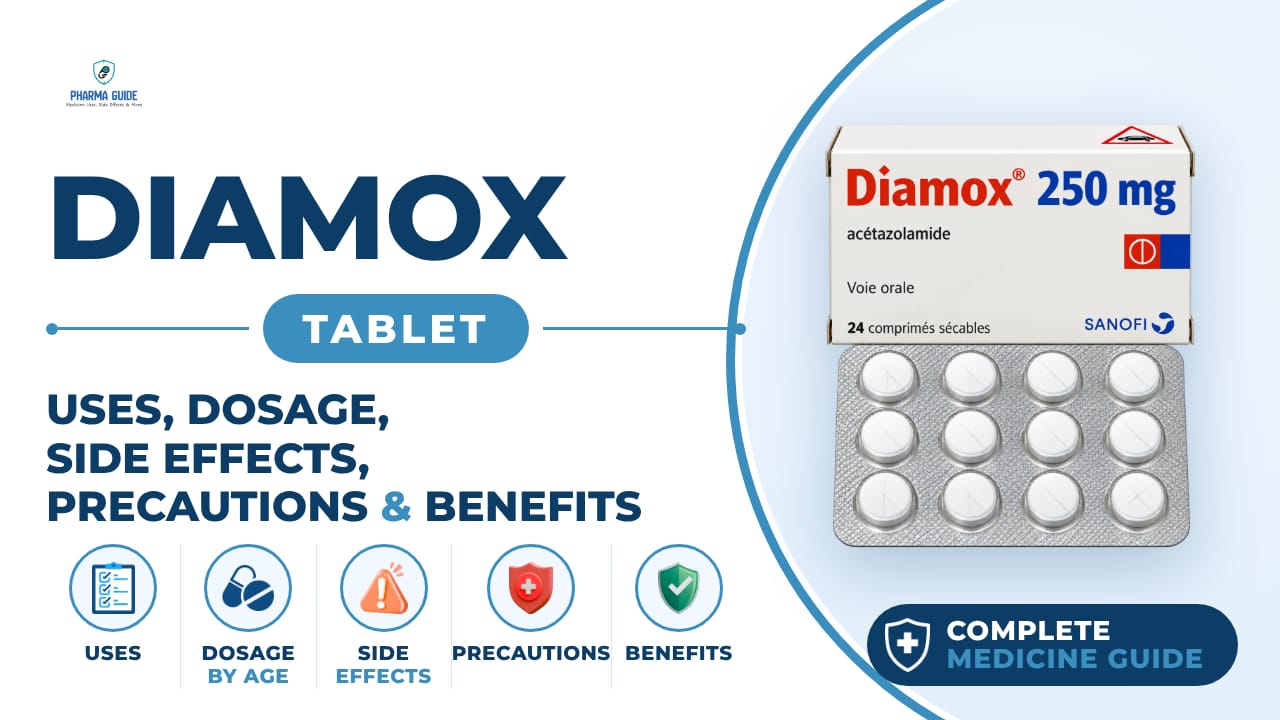
Diamox Tablet: Uses, Dosage, Side Effects, Precautions and Alternates
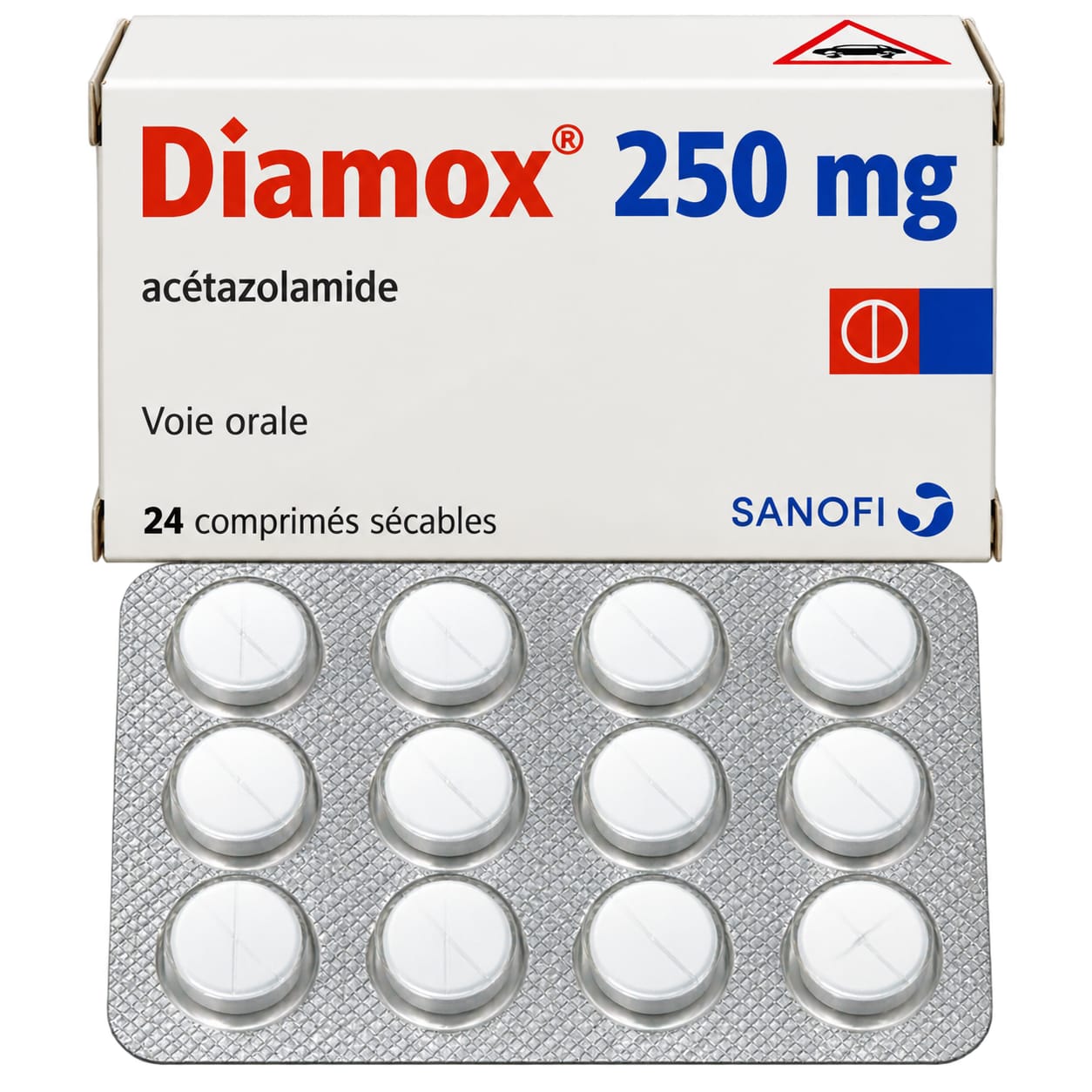
| Generic name | Acetazolamide |
|---|---|
| Drug class | Carbonic anhydrase inhibitor anticonvulsants, Carbonic anhydrase inhibitors |
| Forms | Tablet |
Quick overview
Diamox Tablet contains acetazolamide, a carbonic anhydrase inhibitor. It is used to lower high pressure in the eye caused by glaucoma, and to treat fluid build-up and epilepsy. It works by blocking an enzyme responsible for fluid production in the body. It is available as a tablet and should be used exactly as prescribed by your doctor.
What is Diamox Tablet
Diamox is a prescription tablet containing acetazolamide. It is used to lower high pressure in the eye caused by glaucoma, and to treat fluid build-up and epilepsy.
Diamox Tablet uses
- Lowering raised pressure in the eye and treating chronic simple (open-angle) glaucoma, secondary glaucoma, and acute angle-closure glaucoma before surgery
- Fluid retention (oedema) due to congestive heart failure
- Fluid retention caused by other medicines
- Epilepsy in both adults and children, used together with other medicines
- Preventing or reducing symptoms of altitude (mountain) sickness
Benefits of Diamox Tablet
- Lowers raised pressure inside the eye to help prevent vision loss from glaucoma
- Reduces fluid build-up in the body by increasing urine production
- Helps prevent seizures when used with other epilepsy medicines
- Is not addictive
How Diamox Tablet works
Diamox works by blocking an enzyme in the body that is responsible for making fluid. In glaucoma, blocking this enzyme lowers the pressure inside the eye caused by fluid build-up. It also seems to slow down abnormal nerve activity, which helps prevent seizures in epilepsy. It also acts as a diuretic, helping the body get rid of extra fluid by increasing urine production.
Diamox Tablet dosage
Swallow the tablet with a full glass of water. It can be taken with or without food. If you take more than one dose a day, space the tablets out evenly over the 24-hour period. For congestive heart failure, take the dose in the morning. For congestive heart failure or fluid retention caused by other drugs, your doctor may have you take the medicine for a day or two, then skip a day before your next dose, as instructed.
Take the medicine exactly as your doctor prescribes and do not stop suddenly without checking with your doctor first, especially if you have epilepsy. For glaucoma, take the medicine every day as it controls the condition but does not cure it. If you miss a dose, skip it if it is almost time for the next one; otherwise take it as soon as you remember, then continue as normal — do not take a double dose. Taking your last dose of the day in the early evening may help reduce the need to urinate frequently at night. Diamox is not approved for use in anyone younger than 18 years old, according to one source.
| Age group | Dose |
|---|---|
| Children | 5–10 mg/kg/day in divided doses (as prescribed) |
| Adults (18–64 Years) | 250 mg once or twice daily depending on condition |
| Older Adults (65+ Years) | 250 mg once daily initially, adjusted based on response and kidney function |
Available forms and strengths
- Tablet
Side effects of Diamox Tablet
Common
- Tingling or numbness of fingers, toes, hands, feet, and face
- Loss of appetite
- Feeling extremely thirsty
- Passing more urine than normal
- Flushing
- Headache
- Dizziness
- Tiredness
- Irritability
- Nausea, vomiting, diarrhoea
- Drowsiness, confusion
- Hearing problems, ringing in the ears
- Change in sense of taste
Serious
- Tingling sensation in hands and feet
- Increased urination
- Nausea
- Loss of appetite
- Taste changes
- Fatigue
Warnings and precautions
- Diamox should not be used during pregnancy, especially in the first trimester, unless it is absolutely necessary. Talk to your doctor about the risks and benefits.
- Small amounts of Diamox can pass into breast milk. Talk to your doctor about the risks and benefits before breastfeeding while taking this medicine.
- Diamox should not be used if you have severe kidney disease, and should be used with caution if you have mild to moderate kidney problems, as it raises the risk of serious side effects.
- Diamox should not be used if you have marked or severe liver disease, since this raises the risk of brain and nervous system damage. It should be used with caution in mild to moderate liver problems.
- It is not known how alcohol interacts with Diamox, so check with your doctor before drinking alcohol while taking this medicine.
- Diamox can cause drowsiness, dizziness, or confusion in some people, which may affect your ability to drive or use machines safely. Know how the medicine affects you before doing these activities.
- Do not use Diamox if you are allergic to it, to sulphonamide antibiotics, or to any of its ingredients.
- Do not use Diamox if you have marked liver or kidney disease, adrenal gland problems, unusual salt levels in the body, or low sodium, potassium, or bicarbonate levels in the blood.
- Do not use Diamox if you have chronic non-congestive angle-closure glaucoma or severe glaucoma from certain other causes.
- A decrease in vision or eye pain within hours of taking Diamox could mean fluid is building up in part of the eye. Tell your doctor right away if this happens.
- A small number of people taking anti-epileptic medicines like acetazolamide have had thoughts of harming or killing themselves. Contact your doctor immediately if you have these thoughts.
- Do not stop taking Diamox suddenly if you have epilepsy, as this may make your epilepsy worse.
- Be careful if you are elderly, unwell, or taking other medicines, since side effects like drowsiness, confusion, and dizziness may increase your risk of falling.
Storage
- Keep your tablets in their bottle until it is time to take them
- Keep DIAMOX in a cool dry place where the temperature stays below 30°C
- Do not store it, or any other medicines, in a bathroom or near a sink
- Do not leave it in the car or on window sills
- Keep it where young children cannot reach it
- If you no longer need the medicine or it is out of date, take it to any pharmacy for safe disposal
- Do not use this medicine after the expiry date
When to see a doctor
- Get emergency help right away if you have signs of an allergic reaction, such as hives, difficulty breathing, or swelling of the face, lips, tongue, or throat.
- Call your doctor straight away or go to the Emergency Department if you notice signs of infection, allergy, shock, unusual bruising or bleeding, or yellowing of the skin or eyes.
- If you think you have taken too much Diamox, seek urgent medical attention or contact your doctor, even if you feel fine.
- If you have blood in your urine or painful urination, seek medical help immediately.
Alternatives
- Methazolamide
- Brinzolamide Eye Drops
- Hydrochlorothiazide
Watch the video
FAQs
What is Diamox Tablet used for?
Diamox is used to lower raised pressure in the eye caused by glaucoma, treat fluid retention (oedema) from congestive heart failure or other medicines, manage epilepsy alongside other medicines, and prevent or reduce symptoms of altitude sickness.
How does Diamox Tablet work?
Diamox works by blocking an enzyme in the body responsible for making fluid. In glaucoma, this lowers pressure inside the eye, it slows abnormal nerve activity to help prevent seizures, and it acts as a diuretic by increasing urine production.
What are the common side effects of Diamox Tablet?
Common side effects include tingling or numbness of the fingers, toes, hands, feet, and face, loss of appetite, excessive thirst, increased urination, flushing, headache, dizziness, tiredness, irritability, nausea, vomiting, diarrhoea, drowsiness, confusion, hearing problems, and changes in taste.
Can Diamox Tablet be used during pregnancy?
Diamox should not be used during pregnancy, especially in the first trimester, unless absolutely necessary. You should discuss the risks and benefits with your doctor.
What should I do if I miss a dose of Diamox Tablet?
If you miss a dose, skip it if it is almost time for your next one; otherwise, take it as soon as you remember and then continue as normal. Do not take a double dose.
General information, not medical advice
Your prescriber and the leaflet in your pack know your situation. This page does not.
- Follow your prescriber and the leaflet
- Don't start, stop, or change a dose on your own
- Doses and warnings differ by country and product
Sources
Video
Related medicines

Injectafer Injection: Uses, Dosage, Side Effects, Precautions and Alternates
Iron products
Injectafer (ferric carboxymaltose) treats iron deficiency anemia and heart failure-related iron deficiency via IV. Learn uses, dosage, side effects, and

Gliclazide Tablet: Uses, Dosage, Side Effects, Precautions and Alternates
Sulfonylurea (hypoglycemic/antidiabetic agent)
Gliclazide Tablet is a sulfonylurea for type 2 diabetes that boosts insulin release. Learn about dosage, side effects, warnings, and precautions.