
Safety
General information, not medical advice
Your prescriber and the leaflet in your pack know your situation. This page does not.
- Follow your prescriber and the leaflet
- Don't start, stop, or change a dose on your own
- Doses and warnings differ by country and product
Dianette Tablet: Uses, Dosage, Side Effects, Precautions and Alternates
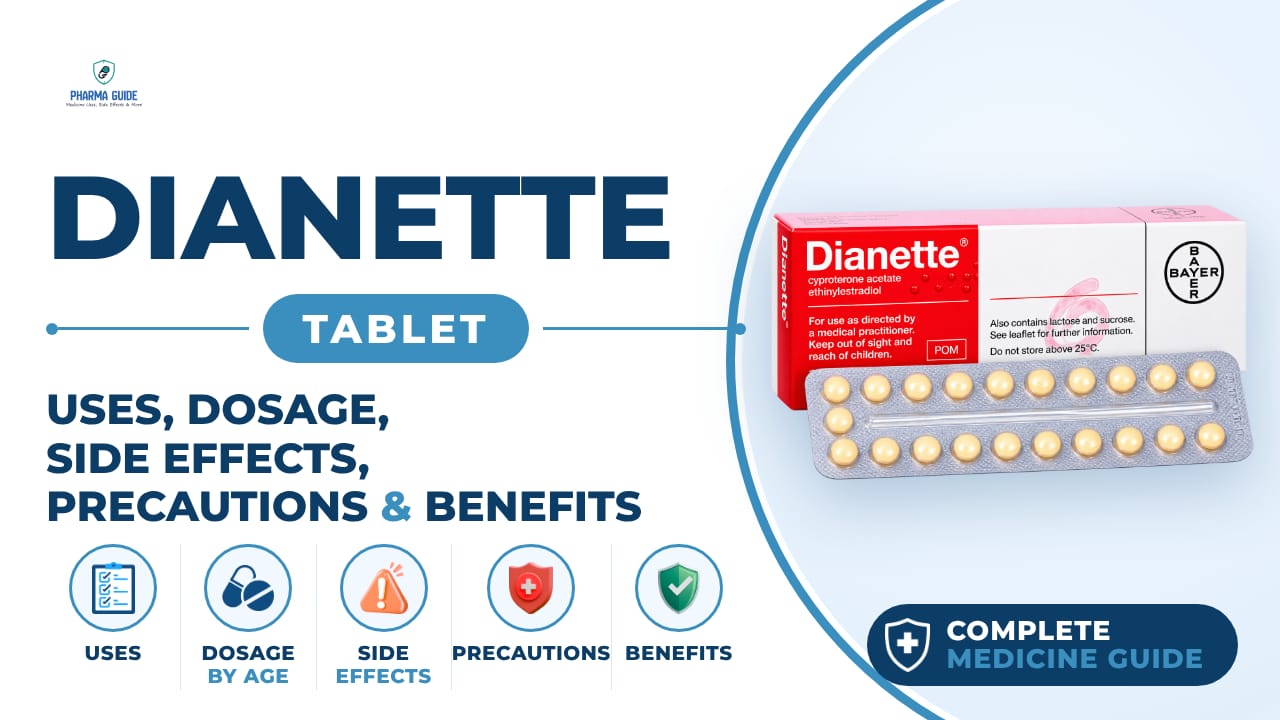
| Generic name | Cyproterone acetate / Ethinylestradiol |
|---|---|
| Drug class | Combined hormonal contraceptive (anti-androgen plus oestrogen) |
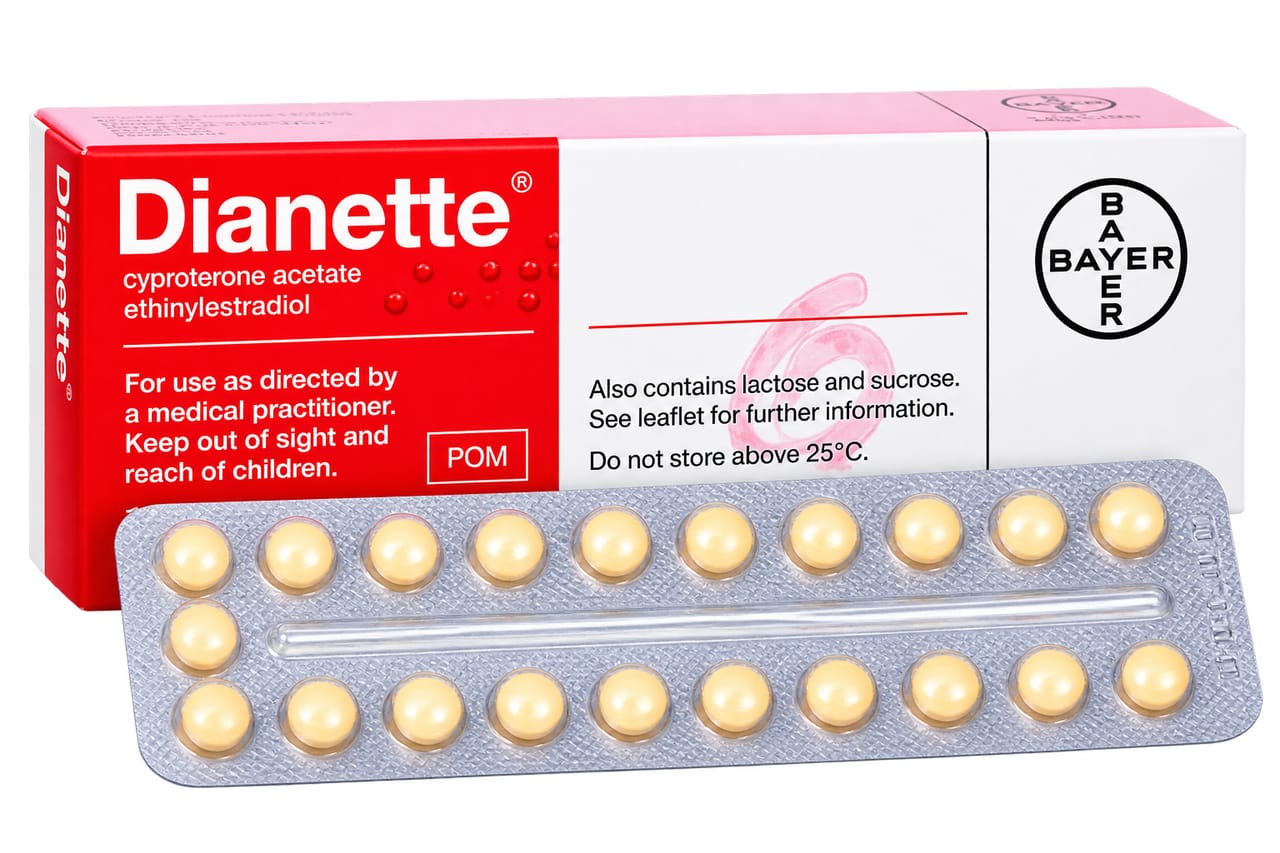
| Forms | Sugar-coated tablets, supplied in strips of 21 tablets, each marked with a day of the week |
Quick overview
Dianette Tablet contains cyproterone acetate and ethinylestradiol, a combined hormonal contraceptive that also acts as an anti-androgen. It is prescribed for women to treat acne, very oily skin and excess hair growth, while also working as a contraceptive when taken as directed. It carries some serious warnings, including an increased risk of blood clots, and should be used exactly as your doctor advises.
What is Dianette Tablet
Dianette is a prescription tablet that contains an oestrogen (ethinylestradiol) and an anti-androgen (cyproterone acetate). It is given to women to treat acne, very oily skin and excess hair growth, and it also works as a contraceptive pill.
Dianette Tablet uses
- Treats skin conditions such as acne and very oily skin in women of reproductive age
- Treats excessive hair growth (hirsutism) in women of reproductive age
- Works as a contraceptive when taken as directed, due to its hormone content
- Treats moderate-to-severe androgen-related acne
- Treats hirsutism
- May improve oily skin and seborrhoea
- Reduces excessive androgen activity in appropriate patients
Benefits of Dianette Tablet
- Can clear up acne and oily skin that has not improved with other anti-acne treatments such as creams or antibiotics
- Reduces excess hair growth caused by too much androgen hormone
- Provides contraceptive protection when taken correctly
- Can reduce persistent androgen-related acne
- Can reduce excessive facial or body hair over time
- Combines anti-androgen and estrogen activity
How Dianette Tablet works
Dianette blocks the effect of androgens (male-type hormones) on the skin and reduces the amount of androgens the body makes. Androgens cause the skin's oil glands to make too much oil, which blocks pores and leads to acne; by lowering this effect, Dianette helps reduce oil production and clear the skin.
Dianette Tablet dosage
Take your pill at the same time every day. Start by taking a pill marked with the correct day of the week on the strip. Follow the direction of the arrows on the strip and take one pill each day until the strip is finished. Swallow each pill whole, with water if necessary; do not chew the pill. After finishing a strip, take a seven-day break with no pills, then start the next strip on day eight even if you are still bleeding.
There are no special instructions about food and drink while taking this medicine. Do not take this medicine if you are pregnant or breast-feeding. It is best for new users to take the first pill on the first day of the next period so there is contraceptive protection from the first pill. If you are sick (vomit) or have severe diarrhoea within a few hours of taking a pill, your body may not have absorbed the full dose, so follow the missed-pill or lost-pill instructions as appropriate.
| Age group | Dose |
|---|---|
| Before first menstrual period | Not indicated |
| Adolescents after menarche | 2 mg cyproterone acetate + 0.035 mg ethinylestradiol once daily for 21 consecutive days |
| 18–39 years | 2 mg + 0.035 mg once daily for 21 days, followed by 7 tablet-free days |
| 40–49 years | Same standard dose: 2 mg + 0.035 mg once daily for 21 days |
Available forms and strengths
- Sugar-coated tablets, supplied in strips of 21 tablets, each marked with a day of the week
- Each tablet contains 2 mg cyproterone acetate and 0.035 mg ethinylestradiol
Side effects of Dianette Tablet
Common
- Feeling sick
- Stomach ache
- Putting on weight
- Headaches
- Depressive moods or mood swings
- Sore or painful breasts
Serious
- Severe depression, sometimes with thoughts of ending life
- Signs of a blood clot such as sudden cough, severe chest pain spreading to the left arm, breathlessness, severe or unusual headache, vision changes, slurred speech, sudden changes in hearing/smell/taste, dizziness or fainting, weakness or numbness, severe abdominal pain, or severe leg pain or swelling
- Signs of a severe allergic reaction or worsening hereditary angioedema, such as swelling of the hands, face, lips, mouth, tongue or throat, or a red bumpy itchy rash
- Signs of breast cancer such as skin dimpling, nipple changes, or lumps
- Signs of cervical cancer such as unusual vaginal discharge or bleeding, pelvic pain, or pain during sex
- Signs of severe liver problems such as severe stomach pain, yellowing of skin or eyes, liver inflammation, or whole-body itching
Warnings and precautions
- This medicine must not be used during pregnancy. If you think you might be pregnant, do a pregnancy test before you stop taking it, and stop taking it and see your doctor if you are pregnant. This medicine should not be taken while breast-feeding.
- Kidney problems are listed among the serious reactions to watch for, and this medicine may worsen kidney dysfunction. This medicine should not be used if you have had severe liver disease with abnormal liver tests, or liver tumours, and you should see a doctor straight away if you get signs of severe liver problems such as stomach pain, yellowing skin or eyes, or whole-body itching.
- No major direct interaction with alcohol is established, though excessive alcohol may worsen some side effects. This medicine has no known effect on your ability to drive or use machines.
- This medicine increases the risk of blood clots (thrombosis) in veins or arteries, which can rarely be fatal or cause lasting disability.
- Smoking while taking this medicine increases the risk of blood clots, especially in women over 35.
- Taking this medicine has been linked to a slightly increased risk of breast cancer and cervical cancer, and rarely to liver tumours including some liver cancers.
- Do not take this medicine with any other hormonal contraceptive at the same time.
- Certain medicines, such as some epilepsy treatments, some HIV and hepatitis C medicines, an antifungal called griseofulvin, certain antibiotics, certain sedatives, and St John's Wort, can stop this medicine from working properly or affect its safety.
- You may need to stop taking this medicine several weeks before planned surgery because of the increased risk of blood clots.
- High doses of cyproterone acetate (the active ingredient) have been linked to an increased risk of a usually non-cancerous brain tumour called meningioma.
Storage
- Keep this medicine out of the sight and reach of children
- Do not store above 25°C
- Do not use after the expiry date shown on the strip
- If the tablets are discoloured or show any signs of deterioration, ask your pharmacist who will advise you what to do
- Do not throw away any medicines down a drain or into a bin; ask your pharmacist what to do with any medicines you do not want, to help protect the environment
When to see a doctor
- Stop taking the tablets and see a doctor straight away if you notice possible signs of a blood clot, such as sudden cough, severe chest pain, breathlessness, severe headache, vision changes, slurred speech, dizziness, numbness, severe abdominal pain, or severe leg pain or swelling.
- See a doctor straight away if you develop severe depression, as this should be treated as a reason to stop the medicine as a precaution.
- See a doctor straight away if you notice swelling of the hands, face, lips, mouth, tongue or throat, or a red itchy bumpy rash, as these may be signs of a severe allergic reaction or worsening angioedema.
- See a doctor as soon as possible if you notice changes in your breasts, such as dimpling, nipple changes, or lumps.
- See a doctor as soon as possible if you get severe stomach pain or yellowing of the skin or eyes, as you may need to stop taking this medicine.
- Make an appointment to see your doctor if breakthrough bleeding or spotting continues for more than the first few months, starts after you've been taking the medicine for a while, or continues after stopping it.
- If you think you may have signs of cancer of the cervix, such as unusual vaginal discharge or bleeding, pelvic pain, or painful sex, see a doctor straight away.
Alternatives
- Diane-35
- Ginette 35
- Cyprodiol
- Cyprest
Watch the video
FAQs
What is Dianette Tablet used for?
Dianette treats acne, very oily skin and excess hair growth (hirsutism) in women of reproductive age, and it also works as a contraceptive when taken as directed.
How does Dianette Tablet work?
Dianette blocks the effect of androgens on the skin and reduces the amount of androgens the body makes, which lowers excess oil production and helps clear the skin.
How should Dianette Tablet be taken?
Take one pill daily at the same time, following the day markings and arrows on the strip until finished, then take a seven-day pill-free break before starting the next strip on day eight.
What are the serious risks of Dianette Tablet?
Dianette increases the risk of blood clots in veins or arteries, and has been linked to a slightly increased risk of breast cancer, cervical cancer, liver tumours, and severe depression. Smoking increases clot risk, especially in women over 35.
Can Dianette Tablet be taken during pregnancy?
No, Dianette must not be used during pregnancy or while breast-feeding, and you should stop taking it and see a doctor if you think you might be pregnant.
General information, not medical advice
Your prescriber and the leaflet in your pack know your situation. This page does not.
- Follow your prescriber and the leaflet
- Don't start, stop, or change a dose on your own
- Doses and warnings differ by country and product
Sources
Video
Related medicines

Injectafer Injection: Uses, Dosage, Side Effects, Precautions and Alternates
Iron products
Injectafer (ferric carboxymaltose) treats iron deficiency anemia and heart failure-related iron deficiency via IV. Learn uses, dosage, side effects, and

Gliclazide Tablet: Uses, Dosage, Side Effects, Precautions and Alternates
Sulfonylurea (hypoglycemic/antidiabetic agent)
Gliclazide Tablet is a sulfonylurea for type 2 diabetes that boosts insulin release. Learn about dosage, side effects, warnings, and precautions.