
Safety
General information, not medical advice
Your prescriber and the leaflet in your pack know your situation. This page does not.
- Follow your prescriber and the leaflet
- Don't start, stop, or change a dose on your own
- Doses and warnings differ by country and product
Diazepam Rectal Gel: Uses, Dosage, Side Effects, Precautions and Alternates
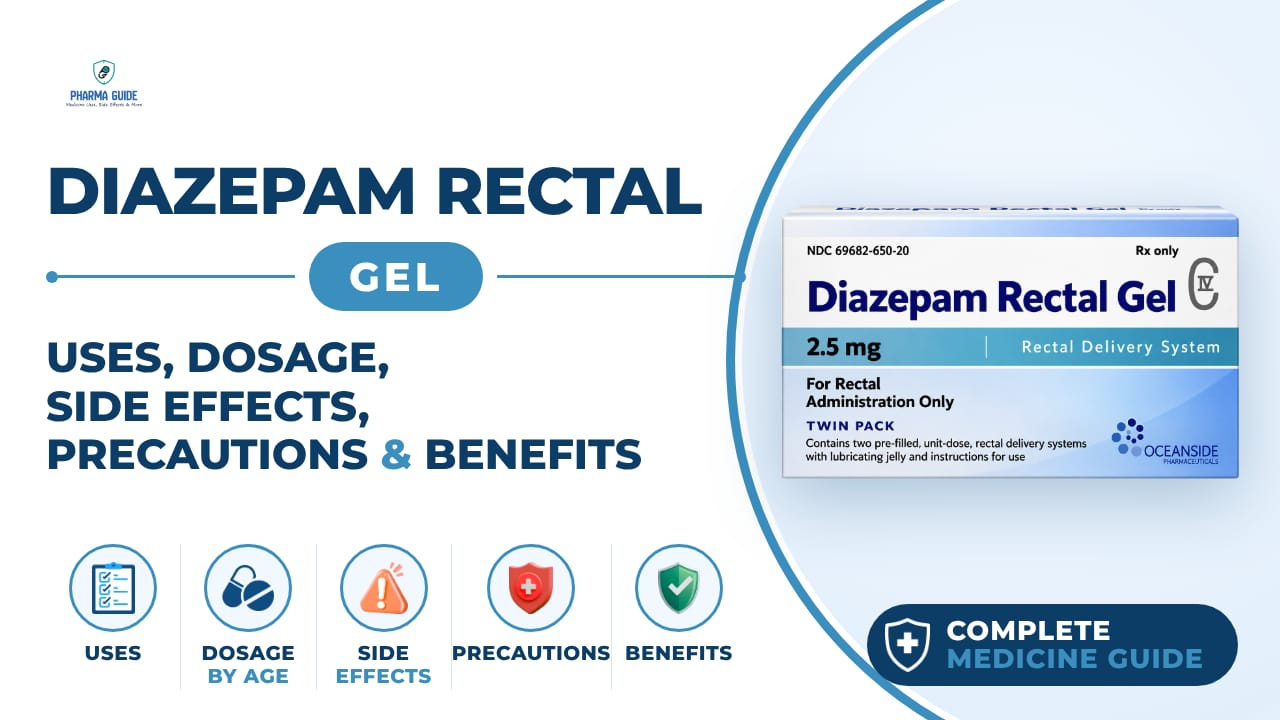
| Generic name | diazepam |
|---|---|
| Drug class | anticonvulsant, benzodiazepine |
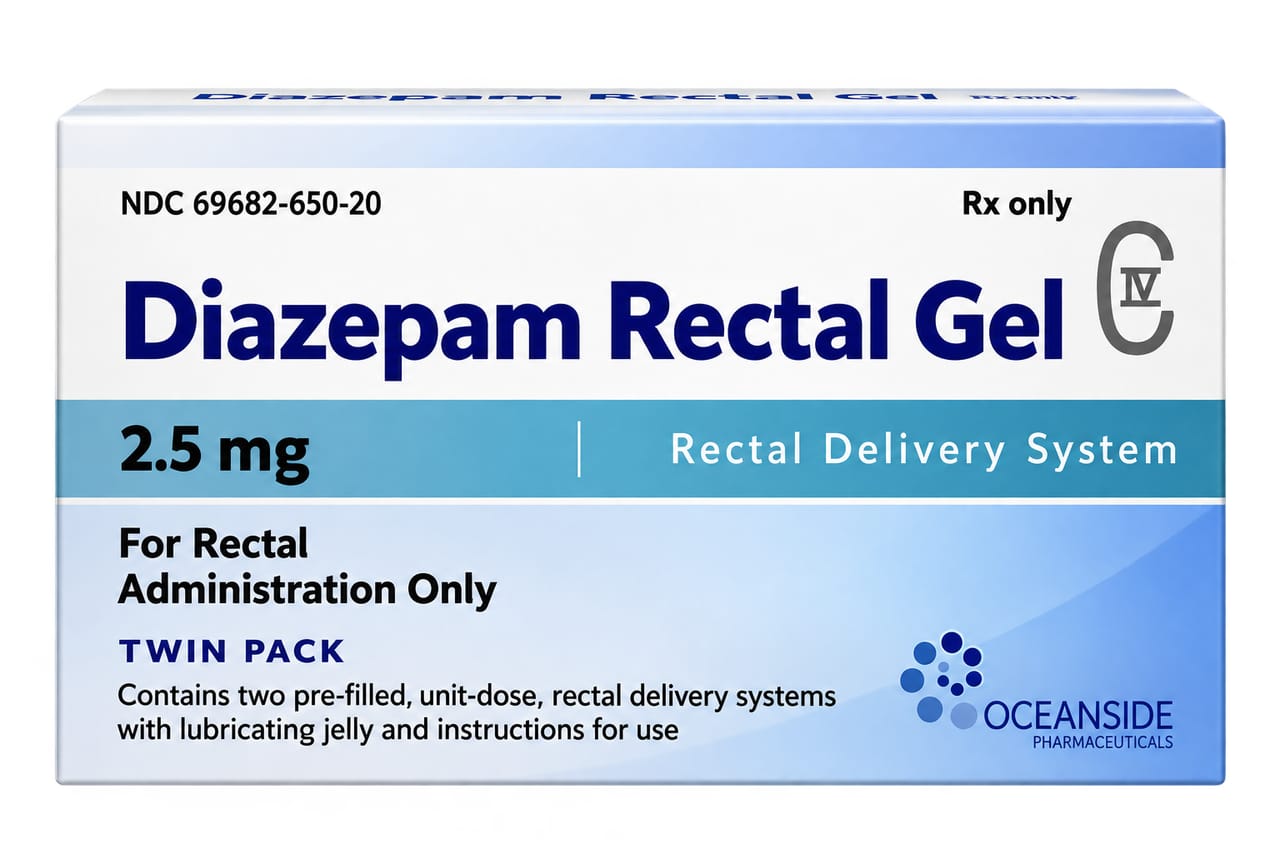
| Forms | rectal gel (prefilled syringe/rectal delivery system) |
Quick overview
Diazepam Rectal Gel (generic name diazepam) is a fast-acting benzodiazepine anticonvulsant given as a rescue treatment to stop seizure clusters in people with epilepsy aged 2 years and older. It is a controlled substance intended for occasional emergency use, not daily treatment. The gel is given rectally and is designed so trained caregivers can administer it outside of a hospital setting.
What is Diazepam Rectal Gel
Diazepam rectal gel is a fast-acting benzodiazepine medicine given as a rescue treatment to stop seizure clusters in people with epilepsy who are 2 years of age and older. It is a controlled substance given only when needed, not for daily use.
Diazepam Rectal Gel uses
- Treats acute repetitive seizures or seizure clusters in people with epilepsy that are different from the person's usual seizure pattern
- Used in emergency situations to control seizures outside of a hospital setting
- Treats seizure clusters
- Treats acute repetitive seizures
- Provides emergency seizure-rescue treatment for selected people with epilepsy
Benefits of Diazepam Rectal Gel
- Calms the central nervous system to quickly control breakthrough or cluster seizures before they turn into longer, dangerous seizures
- Absorbs quickly through the rectum and typically starts working within 2 to 10 minutes
- Designed so trained parents, family members, or caregivers can give it at home or in an emergency, outside a hospital
- Can interrupt a seizure cluster
- Provides an at-home rescue option when specifically prescribed
- Has established effectiveness in adults and children aged 2 years and older
How Diazepam Rectal Gel works
Diazepam calms overactive signals in the brain and nerves by enhancing a natural calming chemical called GABA, which helps stop or prevent seizures.
Diazepam Rectal Gel dosage
Use only as directed by your doctor to treat the specific type of seizure cluster your doctor has described, not your usual seizures. Do not use more often, in a larger amount, or for longer than your doctor tells you to. It should not be used more than 5 times a month or more often than every 5 days; talk to your doctor if you think you need it more often.
A caregiver should be trained to recognize the seizure pattern that needs treatment and to give the gel correctly. Put the person on their side in a place where they cannot fall before giving the medicine. Lubricate the tip before inserting it into the rectum, insert gently until snug, then slowly push the plunger in, wait, and remove. Hold the buttocks together briefly after giving the dose to stop the gel from leaking out.
A second dose may be given 4 to 12 hours after the first dose only if your doctor has directed this. Stay with the person and watch their breathing, color, and response after giving the dose. Do not stop using this medicine or use fewer doses without talking to your doctor first, since stopping suddenly can be dangerous. In elderly patients, this medicine should be used carefully because of a higher chance of unsteadiness or excess sleepiness.
| Age group | Dose |
|---|---|
| Under 5 years | Safety and effectiveness are not established |
| 6–17 years | Dose is weight-based and prescribed individually |
| 18–64 years | Dose is individualized according to body weight, seizure plan |
Available forms and strengths
- Rectal gel (prefilled syringe/rectal delivery system)
Side effects of Diazepam Rectal Gel
Common
- Drowsiness or sleepiness
- Headache
- Stomach or abdominal pain
- Nervousness or mild agitation
- Flushing (vasodilatation)
- Diarrhea
- Dizziness, unsteadiness, or lack of coordination
- Abnormal 'high' mood (euphoria)
Serious
- Severe allergic reaction: breathing problems or wheezing, racing heart, fever, swollen lymph nodes, swelling of face/lips/mouth/tongue/throat, trouble swallowing, hives, nausea or vomiting, dizziness or fainting, stomach cramps, joint pain
- New or increased thoughts of suicide or self-harm, suicide attempt, new or worsening anxiety, depression, or unusual mood or behavior changes
- Signs of misuse or overdose: sudden confusion, feeling paranoid, seizures, trouble breathing
- Withdrawal reactions if stopped suddenly: unusual movements, seizures, severe mental or nervous system changes, hallucinations, extreme increase in activity or talking, losing touch with reality
- Long-lasting withdrawal symptoms: anxiety, trouble remembering or concentrating, depression, trouble sleeping, feeling like insects crawling under the skin, weakness, shaking, muscle twitching, burning or prickling feeling in hands/arms/legs/feet, ringing in the ears
- Severe breathing problems, slow or shallow breathing, or breathing stopping, especially when combined with opioids, alcohol, or other sedating drugs
- Excessive sleepiness or trouble staying awake
- Decreased alertness or coordination affecting activities like driving
Warnings and precautions
- Taking this medicine together with opioid pain or cough medicines can cause severe sleepiness, slowed or stopped breathing, coma, or death.
- This medicine can be misused or lead to addiction, which can cause overdose or death, especially when combined with alcohol or other drugs.
- Using this medicine regularly can lead to physical dependence. Stopping suddenly or lowering the dose too fast can cause serious, even life-threatening withdrawal reactions, including seizures.
- Do not use this medicine if you have a known allergy to diazepam or any ingredient in the product, or if you have acute narrow-angle glaucoma.
- This medicine is not recommended for children under six months of age because it can cause prolonged sedation in very young infants.
- This medicine should not be used every day as a regular seizure treatment, since the body can build up tolerance to it and stopping it suddenly after daily use can make seizures worse.
- Older adults are usually advised against using this medicine because it may not be as safe as other treatment options for them.
- It isn't known for certain if this medicine is safe during pregnancy. Using it late in pregnancy can cause breathing problems, low muscle tone, sluggishness, jitteriness, irritability, shaking, excessive crying, or feeding problems in a newborn baby. Tell your doctor if you are or might become pregnant.
- Diazepam passes into breast milk and can cause sleepiness, poor feeding, and poor weight gain in a breastfed baby. Tell your doctor if you are breastfeeding or plan to; you may need to wait before breastfeeding after using this medicine.
- This medicine is broken down and removed by the kidneys, so it should be used carefully in people with kidney problems.
- Liver disease can slow down how the body clears this medicine, so it should be used carefully in people with liver problems.
- Do not drink alcohol while using this medicine, since it can increase the risk of serious problems such as severe dizziness, sleepiness, and breathing trouble.
- This medicine can affect your alertness and coordination. Do not drive, operate machinery, or do other activities needing alertness until you know how it affects you.
Storage
- Store at room temperature, between 68°F to 77°F (20°C to 25°C). It can be exposed to temperatures between 59°F to 86°F (15°C to 30°C) for shorter periods of time, such as when transporting it. Store in a cool, dry place.
- Keep this medication in the container it came in, tightly closed, and out of reach of children.
- Store it at room temperature and away from excess heat and moisture (not in the bathroom).
- Keep all medication out of sight and reach of children as many containers are not child-resistant. Always lock safety caps.
- To dispose of the remaining diazepam gel, remove the plunger from the syringe body and point the tip over a sink or toilet. Insert the plunger into the syringe and gently push it to release the medication into the toilet or sink. Then flush the toilet or rinse the sink with water until the diazepam gel is no longer visible. Discard all used materials in the trash away from children and pets.
When to see a doctor
- Get emergency help right away if breathing becomes slow, shallow, or stops, or if the person turns blue.
- Call emergency services if the seizure does not stop within the time your doctor told you (for example, about 10 to 15 minutes after the dose), or if a second dose does not stop the seizures.
- Seek emergency care right away for signs of a serious allergic reaction, such as rash, hives, swelling of the face, lips, tongue or throat, or wheezing.
- Call emergency services if the seizures look different or more serious than usual, or if the person does not respond to you after the seizure stops.
- Call your doctor right away or go to the nearest emergency room if you notice sudden confusion, feeling paranoid, thoughts of suicide, seizures, or trouble breathing, which can be signs of misuse.
- Get medical help immediately or call a poison control center if too much of this medicine has been used.
Alternatives
- Midazolam
- Diazepam
- Lorazepam
- Buccal midazolam
Watch the video
FAQs
What is Diazepam Rectal Gel used for?
It is used as an emergency rescue treatment to stop acute repetitive seizures or seizure clusters in people with epilepsy that differ from their usual seizure pattern, outside of a hospital setting.
How fast does Diazepam Rectal Gel work?
It absorbs quickly through the rectum and typically starts working within 2 to 10 minutes.
How often can Diazepam Rectal Gel be used?
It should not be used more than 5 times a month or more often than every 5 days. A second dose may be given 4 to 12 hours after the first dose only if directed by a doctor.
What are the common side effects of Diazepam Rectal Gel?
Common side effects include drowsiness, headache, stomach pain, nervousness, flushing, diarrhea, dizziness or unsteadiness, and euphoria.
Is Diazepam Rectal Gel safe for older adults?
Older adults are usually advised against using this medicine because it may not be as safe as other treatment options for them, and it should be used carefully due to a higher chance of unsteadiness or excess sleepiness.
General information, not medical advice
Your prescriber and the leaflet in your pack know your situation. This page does not.
- Follow your prescriber and the leaflet
- Don't start, stop, or change a dose on your own
- Doses and warnings differ by country and product
Sources
Video
Related medicines

Injectafer Injection: Uses, Dosage, Side Effects, Precautions and Alternates
Iron products
Injectafer (ferric carboxymaltose) treats iron deficiency anemia and heart failure-related iron deficiency via IV. Learn uses, dosage, side effects, and

Gliclazide Tablet: Uses, Dosage, Side Effects, Precautions and Alternates
Sulfonylurea (hypoglycemic/antidiabetic agent)
Gliclazide Tablet is a sulfonylurea for type 2 diabetes that boosts insulin release. Learn about dosage, side effects, warnings, and precautions.