
Safety
General information, not medical advice
Your prescriber and the leaflet in your pack know your situation. This page does not.
- Follow your prescriber and the leaflet
- Don't start, stop, or change a dose on your own
- Doses and warnings differ by country and product
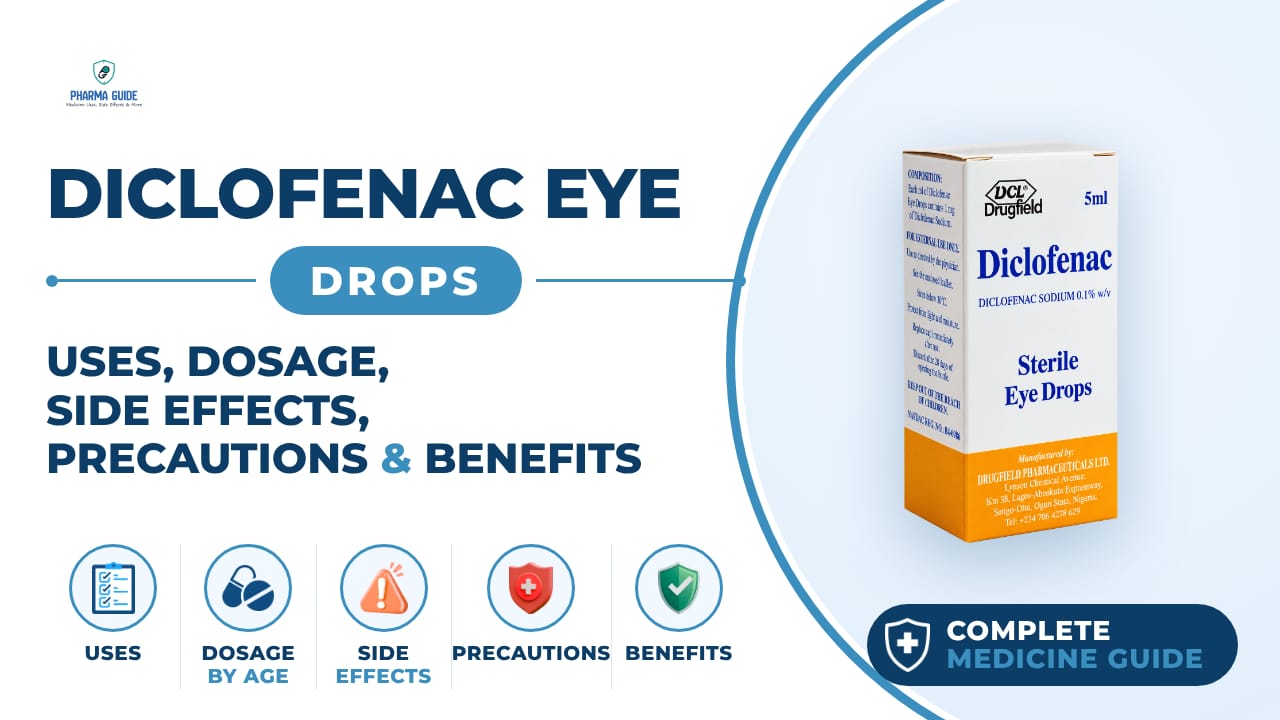
Diclofenac Eye Drops: Uses, Dosage, Side Effects, Precautions and Alternates
| Generic name | Diclofenac sodium |
|---|---|
| Drug class | Nonsteroidal anti-inflammatory drug (NSAID) for eye use |
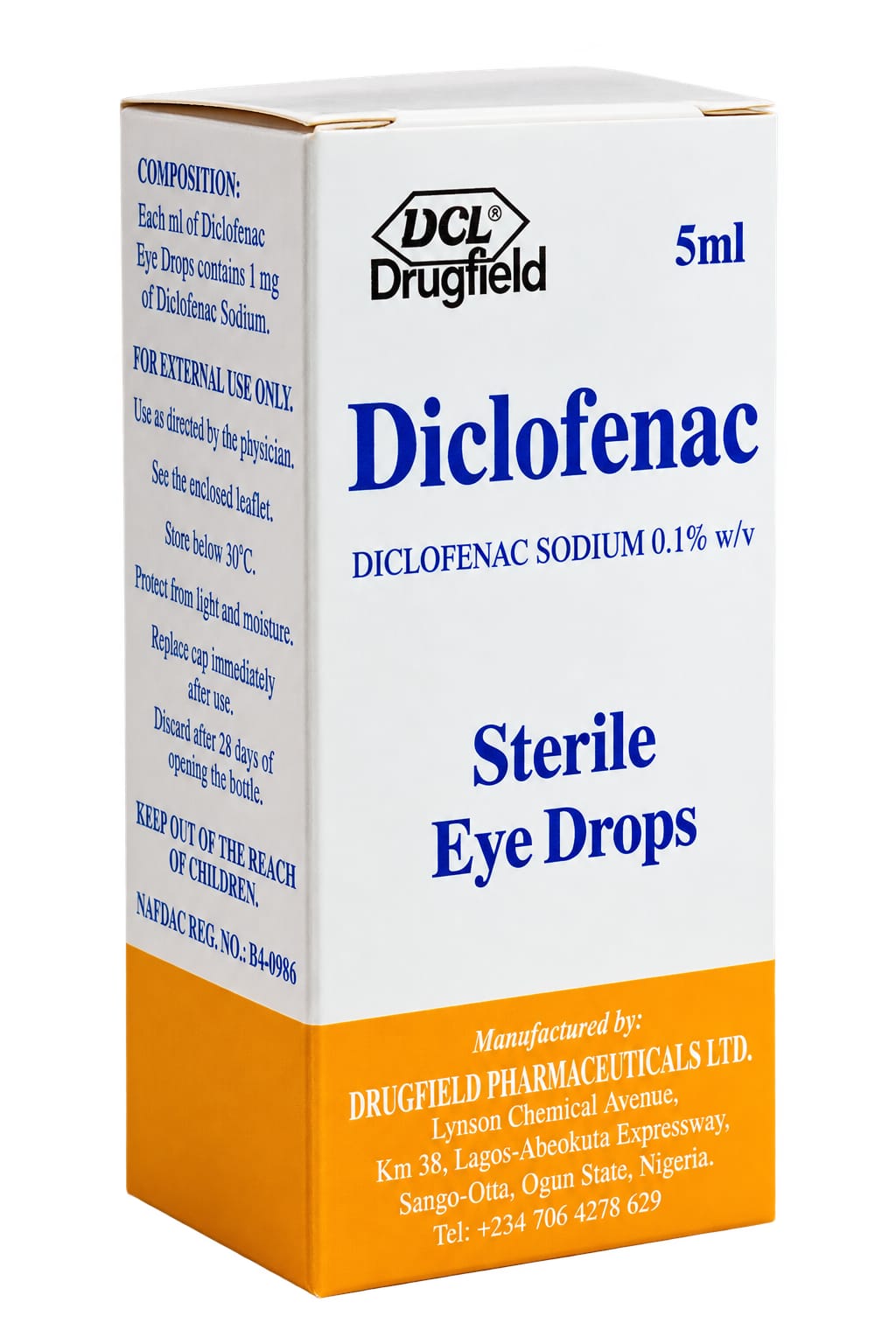
| Forms | Ophthalmic solution (eye drops), Single-dose units |
Quick overview
Diclofenac Eye Drops (diclofenac sodium) are a prescription NSAID used in the eye to reduce inflammation, pain, and light sensitivity after certain eye surgeries. They are commonly used after cataract surgery and corneal refractive surgery such as RK or PRK. The drops work by blocking the body's production of chemicals that cause swelling and pain in the eye.
What is Diclofenac Eye Drops
Diclofenac eye drops are a prescription anti-inflammatory medicine used in the eye. They belong to a group of medicines called NSAIDs, which reduce swelling, pain, and sensitivity to light.
Diclofenac Eye Drops uses
- Treating inflammation after cataract surgery
- Relieving pain and light sensitivity (photophobia) after corneal refractive surgery (such as RK or PRK)
- Treats inflammation after cataract surgery
- Relieves eye pain after corneal refractive surgery
- Reduces photophobia
Benefits of Diclofenac Eye Drops
- Reduces swelling, redness, and discomfort after eye surgery
- Lessens pain and sensitivity to light following corneal surgery
- Provides localized anti-inflammatory action
- Helps reduce postoperative eye discomfort
- Reduces inflammation without using an ophthalmic corticosteroid
- Can relieve pain and light sensitivity after refractive procedures
How Diclofenac Eye Drops works
After eye surgery or injury, the body makes chemicals called prostaglandins that cause swelling and pain. Diclofenac blocks an enzyme the body needs to make these chemicals, which lowers inflammation.
Diclofenac Eye Drops dosage
Wash your hands before using the eye drops. Pull down the lower eyelid to form a small pocket and place the drop inside, without letting the dropper tip touch your eye or any other surface. Close your eyes gently for one to two minutes after each drop so the medicine can be absorbed.
If you use other eye drops too, wait at least 5 minutes between different drops so they don't wash each other out. Remove soft contact lenses before using the drops; wait about 15 minutes before putting lenses back in, unless your doctor has placed a special bandage contact lens after surgery.
Keep using the drops for as long as your doctor tells you, do not stop early or use for longer than prescribed. If you miss a dose, use it as soon as you remember, but skip it if it's almost time for the next one; do not double up.
| Age group | Dose |
|---|---|
| Under 18 years | No standard age-based pediatric dose is established |
| 18–39 years | After cataract surgery: 1 drop in the affected eye 4 times daily, starting 24 hours after surgery and continuing for 2 weeks |
| 40–64 years | Same adult regimen: 1 drop 4 times daily for 2 weeks after cataract surgery |
Available forms and strengths
- Ophthalmic solution (eye drops)
- Single-dose units
Side effects of Diclofenac Eye Drops
Common
- Burning or stinging in the eye right after using the drops
- Watery eyes
- Blurred or temporary changes in vision
- Eye redness, irritation, pain, or itching
- A feeling of something in the eye
- Increased sensitivity to light
- Increased eye pressure after cataract surgery
Serious
- Severe burning, stinging, or itching of the eyes
- Worsening eye pain, redness, or excessive watering
- Swollen or puffy eyelids
- White discoloration over the pupil or iris
- Crusting or discharge from the eyes
- Signs of infection such as crusty or irritated eyelids
- Changes in vision other than brief blurring
- Signs of a serious allergic reaction, such as hives, trouble breathing, or swelling of the face, lips, tongue, or throat
- Headache, dizziness, stomach pain, vomiting, weakness, fever, chills, or cold/flu-like symptoms (possible if the medicine is absorbed into the blood)
Warnings and precautions
- Do not use this medicine if you are allergic to diclofenac, aspirin, or other NSAIDs, since you could have an allergic reaction.
- This medicine can slow down healing of the eye after surgery, especially if used together with steroid eye drops.
- Continued use can damage the clear front surface of the eye (cornea), which in rare cases can threaten your eyesight. Stop using the drops and contact your doctor right away if your eye surface looks damaged.
- People with complicated eye surgeries, nerve problems in the cornea, dry eye, diabetes, rheumatoid arthritis, or repeated eye surgeries in a short time may have a higher risk of serious eye problems with this medicine.
- Using this medicine more than a day before surgery or for more than about two weeks after surgery may raise the risk of serious eye problems.
- This medicine should be used carefully if you bruise or bleed easily, or take medicines that thin the blood, since it may increase bleeding in the eye during surgery.
- Do not wear soft contact lenses while using this medicine, except for a special bandage lens your doctor may place after certain surgeries.
- Safety and effectiveness have not been established in children.
- This medicine is not recommended during pregnancy, especially late pregnancy, because it may affect the baby.
- Use only if your doctor decides the benefits outweigh the risks, and tell your doctor right away if you become pregnant.
- It isn't known whether this medicine passes into breast milk in amounts that could affect a baby.
- Talk to your doctor about whether to continue breastfeeding while using it.
- Systemic absorption from eye drops is low, so routine kidney-dose adjustment is generally not required.
- No routine liver-specific dose adjustment is established for ophthalmic use. No major direct interaction is expected with ophthalmic diclofenac and alcohol.
- This medicine can cause blurred vision in some people. Do not drive or use machinery until you know how it affects you, or until any blurred vision clears up.
Storage
- Store at room temperature, protected from light
- Keep tightly closed
- Do not freeze
- Keep out of reach of children
- Do not store in the bathroom or near a sink
- Do not dispose of medications in wastewater or household garbage; ask your pharmacist how to dispose of unused or expired medicine
When to see a doctor
- Get emergency help right away if you have signs of a serious allergic reaction, such as hives, trouble breathing, or swelling of your face, lips, tongue, or throat.
- Call your doctor right away if you have worsening eye pain, redness, excessive watering, swollen eyelids, white discoloration over the pupil or iris, or crusting/discharge from the eyes.
- Tell your doctor if you notice any crusty discharge from your eyes, as this could mean infection and may need more treatment.
- Stop using the drops and contact your eye doctor right away if you notice blurred vision, vision changes, or eye redness, irritation, or pain.
- If you accidentally get too much in your eye, rinse with warm water and contact your doctor or poison control right away, even if you feel fine.
Alternatives
- Ketorolac eye drops
- Bromfenac eye drops
- Nepafenac eye drops
Watch the video
FAQs
What is Diclofenac Eye Drops used for?
It treats inflammation after cataract surgery and relieves pain, light sensitivity, and photophobia after corneal refractive surgery such as RK or PRK.
How does Diclofenac Eye Drops work?
It blocks an enzyme the body needs to make prostaglandins, chemicals that cause swelling and pain after eye surgery or injury, which lowers inflammation.
What is the dosage of Diclofenac Eye Drops after cataract surgery?
For adults, the typical dose is 1 drop in the affected eye 4 times daily, starting 24 hours after surgery and continuing for 2 weeks.
Can I wear contact lenses while using Diclofenac Eye Drops?
You should remove soft contact lenses before using the drops and wait about 15 minutes before putting them back in, unless your doctor has placed a special bandage contact lens after surgery.
What are the serious side effects of Diclofenac Eye Drops?
Serious effects include worsening eye pain, redness, excessive watering, swollen eyelids, white discoloration over the pupil or iris, crusting or discharge, vision changes, and signs of a serious allergic reaction.
General information, not medical advice
Your prescriber and the leaflet in your pack know your situation. This page does not.
- Follow your prescriber and the leaflet
- Don't start, stop, or change a dose on your own
- Doses and warnings differ by country and product
Sources
Video
Related medicines

Injectafer Injection: Uses, Dosage, Side Effects, Precautions and Alternates
Iron products
Injectafer (ferric carboxymaltose) treats iron deficiency anemia and heart failure-related iron deficiency via IV. Learn uses, dosage, side effects, and

Gliclazide Tablet: Uses, Dosage, Side Effects, Precautions and Alternates
Sulfonylurea (hypoglycemic/antidiabetic agent)
Gliclazide Tablet is a sulfonylurea for type 2 diabetes that boosts insulin release. Learn about dosage, side effects, warnings, and precautions.