
Safety
General information, not medical advice
Your prescriber and the leaflet in your pack know your situation. This page does not.
- Follow your prescriber and the leaflet
- Don't start, stop, or change a dose on your own
- Doses and warnings differ by country and product
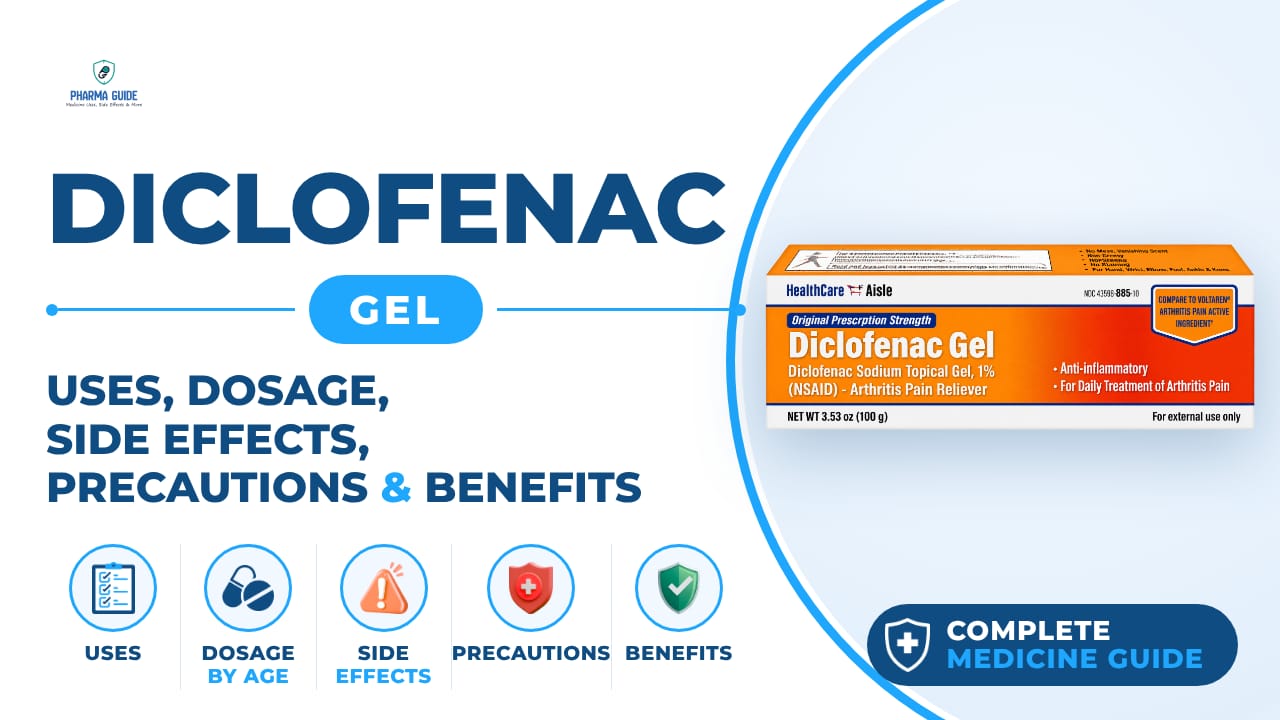
Diclofenac Gel: Uses, Dosage, Side Effects, Precautions and Alternates
| Generic name | diclofenac sodium |
|---|---|
| Drug class | nonsteroidal anti-inflammatory drug (NSAID) |
| Forms | Topical gel |
Quick overview
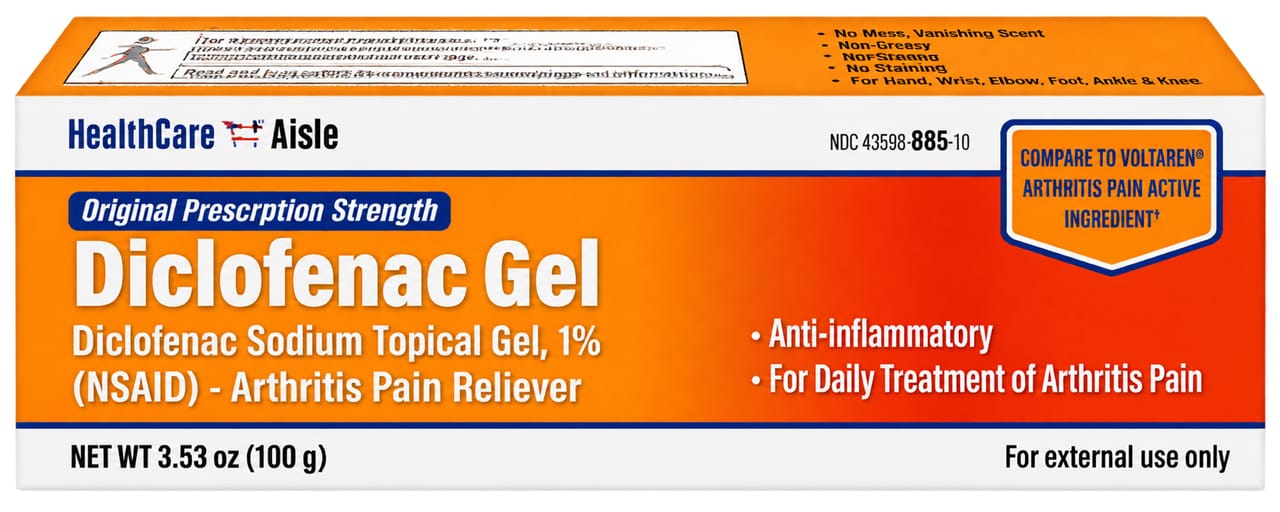
Diclofenac Gel contains diclofenac sodium, an NSAID applied to the skin to relieve muscle and joint pain, such as from sprains, strains, or arthritis. Some versions also treat actinic keratosis, a skin condition caused by sun damage. It causes much lower absorption into the bloodstream than tablets, making it less likely to cause whole-body side effects. It should be used exactly as directed, with care taken to avoid broken skin, eyes, and mucous membranes.
What is Diclofenac Gel
Diclofenac gel is a medicine you rub onto your skin to relieve pain in muscles and joints, such as from sprains, strains, or arthritis. Some versions are also used to treat actinic keratosis, a skin condition caused by sun damage. It belongs to a group of medicines called NSAIDs.
Diclofenac Gel uses
- Relief of pain from recent muscle or joint injuries such as sprains, strains, or sports injuries
- Relief of arthritis pain in joints such as the knees, ankles, feet, elbows, wrists, and hands
- Treatment of mild to moderate muscle pain, bruises, and pain after injury
- Treatment of actinic keratosis (rough, scaly skin patches caused by too much sun exposure)
Benefits of Diclofenac Gel
- Eases pain and swelling from muscle and joint injuries
- Relieves arthritis pain when applied to affected joints
- May clear actinic keratosis skin lesions over several weeks of use
- Causes much lower absorption into the bloodstream than tablets, so it is less likely to cause the whole-body side effects seen with oral NSAIDs
How Diclofenac Gel works
The gel works by blocking the body's production of certain substances called prostaglandins, which cause pain and inflammation. When applied to the skin, it acts mainly in the tissue underneath, with only a small amount entering the bloodstream.
Diclofenac Gel dosage
Apply only to clean, dry, healthy skin — do not use on cuts, open wounds, infections, rashes, or peeling skin. Avoid getting the gel in your eyes, nose, or mouth; if this happens, rinse with water or saline and see a doctor if irritation lasts more than an hour. Do not cover the treated area with an airtight bandage or dressing. Wash your hands after applying, unless you are treating your hands. Wait until the gel has dried before showering or bathing.
Avoid sun exposure, tanning beds, and sunlamps on treated skin, since the gel can make skin more sensitive to light. Do not use other creams, lotions, sunscreens, or cosmetics on the treated area. Apply at the same times each day to help remember your doses. If you miss a dose, apply it as soon as you remember, but skip it if it's almost time for your next dose — do not apply a double amount. This gel is not meant for use by children.
| Age group | Dose |
|---|---|
| Under 12 Years | Use only if prescribed by a doctor |
| 12–17 Years | Apply a thin layer to affected area as directed |
| Adults (18–64 Years) | Apply 2–4 g gel to affected area 2–4 times daily (depending on strength) |
| Older Adults (65+ years) | Apply as directed; use with caution due to increased sensitivity |
Available forms and strengths
- Topical gel
Side effects of Diclofenac Gel
Common
- Skin redness, itching, dryness, scaling, or peeling where applied
- Dry skin
- Rash
- Acne at the application site
- Stomach pain, gas, constipation, diarrhea, or upset stomach
- Headache
- Dizziness
- Drowsiness
- Stuffy or runny nose
Serious
- Signs of a heart attack or stroke, such as chest pain, shortness of breath, weakness on one side of the body, or slurred speech
- Stomach bleeding or ulcers, shown by vomiting blood or material that looks like coffee grounds, or black, bloody, or tarry stools
- Liver problems, shown by nausea, tiredness, itching, yellowing of skin or eyes, dark urine, or pain in the upper right side of the stomach
- Kidney problems, including reduced urination or unusual swelling
- New or worsening high blood pressure
- Heart failure, shown by shortness of breath, unusual tiredness, or swelling of the arms, legs, hands, or feet
- Serious allergic reactions, including swelling of the face, lips, tongue, or throat, or trouble breathing
- Severe skin reactions, such as blistering, peeling rash with fever
- Low red blood cell counts (anemia)
- Worsening of asthma
Warnings and precautions
- NSAIDs, including this gel, can increase the risk of a heart attack or stroke, which can be fatal. This risk can occur early in treatment and may increase with longer use.
- This medicine should never be used right before or after heart bypass surgery (CABG).
- NSAIDs can cause serious stomach or intestinal bleeding, ulcers, or holes, which can happen without warning and may be fatal, especially in older adults.
- Do not use this gel if you have ever had asthma, hives, or an allergic reaction after taking aspirin or other NSAIDs, as it can cause a severe, sometimes fatal allergic reaction.
- Stop using the gel and contact your doctor right away if you develop a skin rash or any other signs of an allergic reaction, as this can turn into a serious skin reaction.
- Do not apply the gel to damaged skin, including wounds, burns, infections, or eczema.
- Avoid getting this gel in your eyes or on mucous membranes such as inside the nose or mouth.
- Using this gel with another NSAID taken by mouth is not recommended, as it can increase the risk of bleeding and kidney problems.
- This gel can make your skin more sensitive to sunlight. Avoid sun and tanning beds while using it, and stop use if you notice sunburn.
- This medicine should not be used in the last three months of pregnancy because it can harm the unborn baby or cause problems during delivery. If needed earlier in pregnancy, it should be used at the lowest dose for the shortest time under a doctor's guidance.
- Small amounts of diclofenac can pass into breast milk. Talk to your doctor about the risks and benefits before using this gel while breastfeeding, especially if it needs to be applied to or near the breast area.
- People with kidney problems should be cautious using this gel, as NSAIDs can worsen kidney function, especially with long-term or large-area use.
- Tell your doctor if you have liver problems, since this medicine can rarely cause liver injury, including liver failure.
- Drinking alcohol while using NSAIDs, including this gel, may raise the risk of stomach bleeding and ulcers, especially with long-term use over large skin areas.
- This gel does not affect your ability to drive or use machines.
Storage
- Store at room temperature, between 68°F and 77°F (20°C to 25°C)
- Keep away from heat and do not freeze
- Keep the container tightly closed
- Keep out of the sight and reach of children and pets
- Do not flush unused medicine down the toilet or drain; ask your pharmacist about a medicine take-back program
When to see a doctor
- Get emergency help right away if you have shortness of breath or trouble breathing, chest pain, weakness on one side of your body, slurred speech, or swelling of the face or throat.
- Stop using the gel and call your doctor right away if you vomit blood, notice blood in your bowel movement or black, tarry stools, feel unusually tired or weak, or have ongoing nausea or stomach pain.
- Call your doctor if your skin or eyes look yellow, you have unusual weight gain, or you notice swelling of the arms, legs, hands, or feet.
- Seek immediate emergency help if you develop signs of a severe allergic reaction such as hives, swelling of the face or throat, or wheezing and difficulty breathing.
- Discontinue the gel and contact your doctor immediately if you develop a skin rash, blisters, fever, or other signs of a serious drug reaction.
Alternatives
- Ibuprofen Gel
- Ketoprofen Gel
- Piroxicam Gel
Watch the video
FAQs
What is Diclofenac Gel used for?
It is used to relieve pain from muscle and joint injuries such as sprains and strains, arthritis pain in joints, mild to moderate muscle pain and bruises, and to treat actinic keratosis, a skin condition caused by sun damage.
How is Diclofenac Gel different from diclofenac tablets?
The gel causes much lower absorption into the bloodstream than tablets, making it less likely to cause the whole-body side effects seen with oral NSAIDs.
How should Diclofenac Gel be applied?
Apply only to clean, dry, healthy skin, avoiding cuts, wounds, infections, or rashes. Avoid the eyes, nose, and mouth, do not cover with an airtight bandage, wash your hands after applying (unless treating your hands), and let the gel dry before showering or bathing.
Can Diclofenac Gel be used during pregnancy?
It should not be used in the last three months of pregnancy because it can harm the unborn baby or cause problems during delivery. If needed earlier in pregnancy, it should be used at the lowest dose for the shortest time under a doctor's guidance.
What are serious side effects of Diclofenac Gel to watch for?
Serious side effects include signs of heart attack or stroke, stomach bleeding or ulcers, liver problems, kidney problems, heart failure, serious allergic reactions, and severe skin reactions with blistering and fever.
General information, not medical advice
Your prescriber and the leaflet in your pack know your situation. This page does not.
- Follow your prescriber and the leaflet
- Don't start, stop, or change a dose on your own
- Doses and warnings differ by country and product
Sources
- https://www.medicalnewstoday.com/articles/drugs-diclofenac-tablets
- https://medlineplus.gov/druginfo/meds/a611002.html
- https://www.rxlist.com/joint_stiffness_treatment_arthritis_pain_causes/article.htm
- DICLOFENAC SODIUM diclofenac sodium topical gel - Advanced Rx Pharmacy of Tennessee, LLC prescribing information
- Diclofenac Diethylamine Gel Extra Strength Product Monograph, Taro Pharmaceuticals Inc.
- Diclofenac 1% Gel Package Leaflet, Amdeepcha Limited
Video
Related medicines
Relaxyl Capsule: Uses, Dosage, Side Effects, Precautions and Alternates
Nonsteroidal Anti-Inflammatory Drug (NSAID)
Relaxyl Capsule contains diclofenac, an NSAID used to relieve joint and muscle pain, swelling, and inflammation. Learn uses, dosage, and side effects.
Nabumetone Tablet: Uses, Dosage, Side Effects, Precautions and Alternates
Nonsteroidal anti-inflammatory drug (NSAID)
Nabumetone Tablet is an NSAID for osteoarthritis and rheumatoid arthritis pain relief. Learn its dosage, uses, side effects, and safety warnings.