
Safety
General information, not medical advice
Your prescriber and the leaflet in your pack know your situation. This page does not.
- Follow your prescriber and the leaflet
- Don't start, stop, or change a dose on your own
- Doses and warnings differ by country and product
Diclofenac + Paracetamol Tablet: Uses, Dosage, Side Effects, Precautions and Alternates
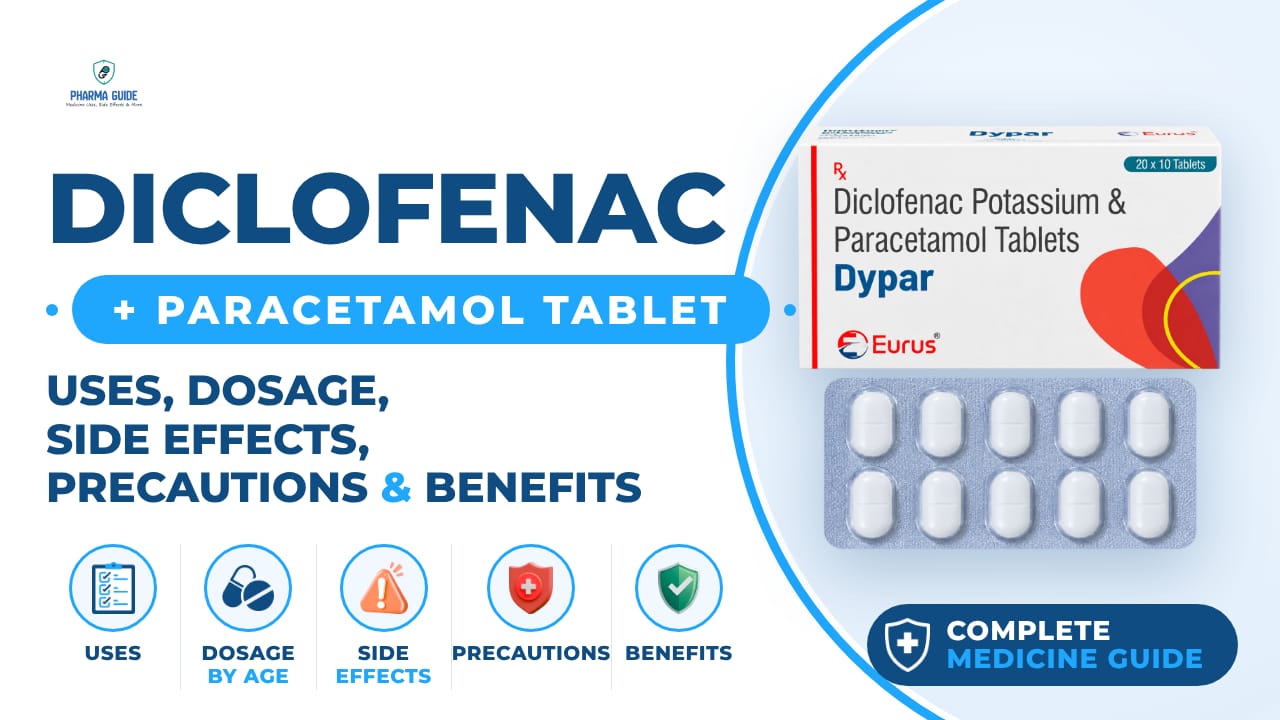
| Generic name | Diclofenac Sodium + Paracetamol |
|---|---|
| Drug class | Anti-inflammatory (NSAID) and Analgesic combination |
| Forms | Tablet, Film-coated tablet, Injection, Gel |
Quick overview
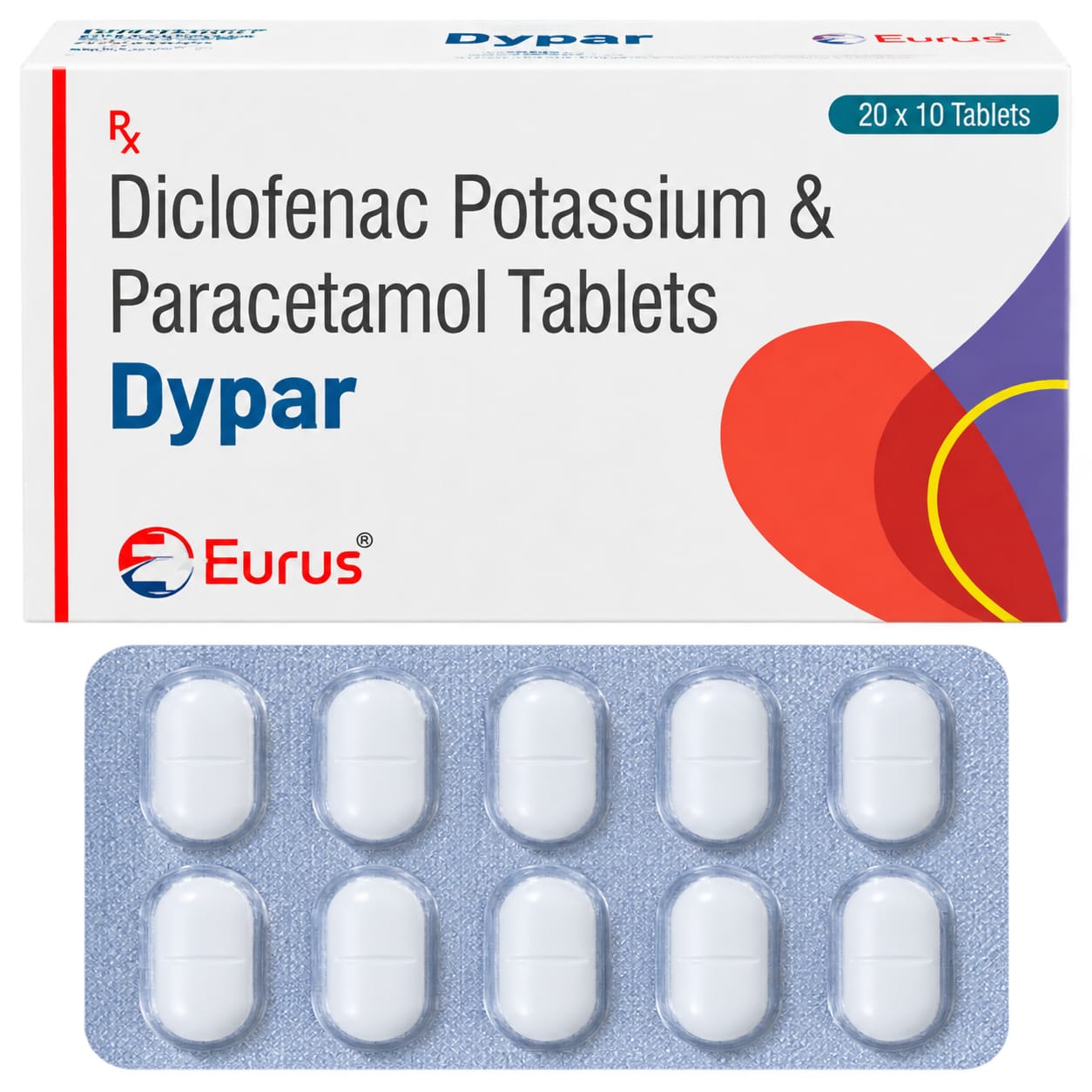
Diclofenac + Paracetamol Tablet is a combination medicine containing Diclofenac Sodium, a non-steroidal anti-inflammatory drug (NSAID), and Paracetamol, a pain reliever and fever reducer. It is used to relieve mild to moderate pain and reduce inflammation from various causes. Because the two drugs work in different ways, the combination provides more effective relief for musculoskeletal pain than either drug alone.
What is Diclofenac + Paracetamol Tablet
Diclofenac + Paracetamol is a combination medicine that relieves pain and inflammation. Diclofenac is a non-steroidal anti-inflammatory drug (NSAID) that reduces pain, swelling, and inflammation, while Paracetamol works as a pain reliever and fever reducer. Because the two drugs work in different ways, the combination is more effective at relieving musculoskeletal pain.
Diclofenac + Paracetamol Tablet uses
- Relief of mild to moderate pain
- Headaches and migraines
- Muscle aches, back pain, and shoulder pain
- Toothaches and dental pain
- Osteoarthritis, rheumatoid arthritis, and ankylosing spondylitis
- Menstrual pain (dysmenorrhea)
- Post-operative pain
- Fever and body aches
Benefits of Diclofenac + Paracetamol Tablet
- Dual action that combines pain relief and inflammation control
- Reduces fever effectively
- Provides faster relief compared to single drugs
- Can be used for many types of pain
How Diclofenac + Paracetamol Tablet works
This medicine works by blocking certain body chemicals called prostaglandins that cause pain, fever, and inflammation. Diclofenac reduces inflammation and swelling by inhibiting COX enzymes, while Paracetamol acts on the brain to reduce pain and fever.
Diclofenac + Paracetamol Tablet dosage
Take this medicine by mouth. It may be taken with or without food, but taking it with food may reduce stomach side effects. It is best taken after meals to minimize gastrointestinal irritation. Children should be given this medicine only under medical supervision. Do not use for long-term pain management without medical advice.
| Age group | Dose |
|---|---|
| Under 12 years | Generally not recommended unless specifically prescribed |
| 12–17 years | Use only when prescribed; dosing should be determined according to the product and body weight |
| 18–64 years | Commonly 1 tablet 2–3 times daily, depending on the product and condition |
| 65+ years | Use the lowest effective dose for the shortest duration, under medical supervision |
Available forms and strengths
- Tablet
- Film-coated tablet
- Injection
- Gel
Side effects of Diclofenac + Paracetamol Tablet
Common
- Sleepiness
- Dizziness
- Nausea or vomiting
- Headache
- Mild rash or itching
- Gas
- Stomach pain or acidity
Serious
- Dark urine, clay-colored stools, or jaundice
- Signs of an allergic reaction
- Liver or kidney problems with long-term use
Warnings and precautions
- Pregnant women should use this medicine only under a doctor's guidance. Breastfeeding women should use this medicine only under a doctor's guidance.
- Do not use if you have severe kidney problems; people with kidney issues should consult a doctor before use.
- Do not use if you have liver disease or a history of alcoholism. Avoid alcohol, as it may increase the chance of liver damage when combined with paracetamol.
- Do not use if you are allergic to any of the ingredients.
- Not recommended for people with a history of stomach ulcers, kidney issues, or liver diseases.
- Do not exceed the prescribed dose, as overuse may cause side effects or liver damage from paracetamol overdose.
- Avoid taking with other painkillers unless prescribed by your doctor. This medicine may interact with blood thinners such as warfarin (increasing bleeding risk), other NSAIDs, and certain antibiotics and anti-fungal drugs.
- Before treatment, tell your doctor about any medicines you are taking to avoid possible drug interactions.
Storage
- Store in a cool, dry place away from direct sunlight and moisture.
- Keep out of reach of children.
- Do not use expired tablets.
When to see a doctor
If any symptoms persist or worsen, or you notice any other symptoms, contact your doctor immediately. If you experience any severe or persistent symptoms, stop taking the medicine and contact your doctor immediately.
Alternatives
- Ibuprofen
- Naproxen
- Aceclofenac
- Meloxicam
- Celecoxib
- Etoricoxib
- Ketoprofen
Watch the video
FAQs
What is Diclofenac + Paracetamol Tablet used for?
It is used to relieve mild to moderate pain and inflammation, including headaches, migraines, muscle and back pain, toothaches, arthritis, menstrual pain, post-operative pain, and fever.
How does Diclofenac + Paracetamol Tablet work?
It works by blocking prostaglandins that cause pain, fever, and inflammation. Diclofenac inhibits COX enzymes to reduce inflammation and swelling, while Paracetamol acts on the brain to reduce pain and fever.
What is the common dosage for adults?
Adults aged 18-64 commonly take 1 tablet 2-3 times daily, depending on the product and condition, taken with or after food to reduce stomach side effects.
What are the common side effects of this medicine?
Common side effects include sleepiness, dizziness, nausea or vomiting, headache, mild rash or itching, gas, and stomach pain or acidity.
Can I drink alcohol while taking this medicine?
No, alcohol should be avoided as it may increase the chance of liver damage when combined with paracetamol.
General information, not medical advice
Your prescriber and the leaflet in your pack know your situation. This page does not.
- Follow your prescriber and the leaflet
- Don't start, stop, or change a dose on your own
- Doses and warnings differ by country and product
Sources
- https://www.advacarepharma.com/en/pharmaceuticals/paracetamol-diclofenac-sodium-tablets
- https://5.imimg.com/data5/SELLER/Doc/2025/2/489133894/HX/YN/SU/1715402/diclofenac-sodium-and-paracetamol-tablets.pdf
- https://www.dawaadost.com/blog/diclofenac-sodium-and-paracetamol-uses-benefits-dosage-and-side-effects
Video
Related medicines

Injectafer Injection: Uses, Dosage, Side Effects, Precautions and Alternates
Iron products
Injectafer (ferric carboxymaltose) treats iron deficiency anemia and heart failure-related iron deficiency via IV. Learn uses, dosage, side effects, and

Gliclazide Tablet: Uses, Dosage, Side Effects, Precautions and Alternates
Sulfonylurea (hypoglycemic/antidiabetic agent)
Gliclazide Tablet is a sulfonylurea for type 2 diabetes that boosts insulin release. Learn about dosage, side effects, warnings, and precautions.