
Safety
General information, not medical advice
Your prescriber and the leaflet in your pack know your situation. This page does not.
- Follow your prescriber and the leaflet
- Don't start, stop, or change a dose on your own
- Doses and warnings differ by country and product
Diclofenac Sodium Gel: Uses, Dosage, Side Effects, Precautions and Alternates
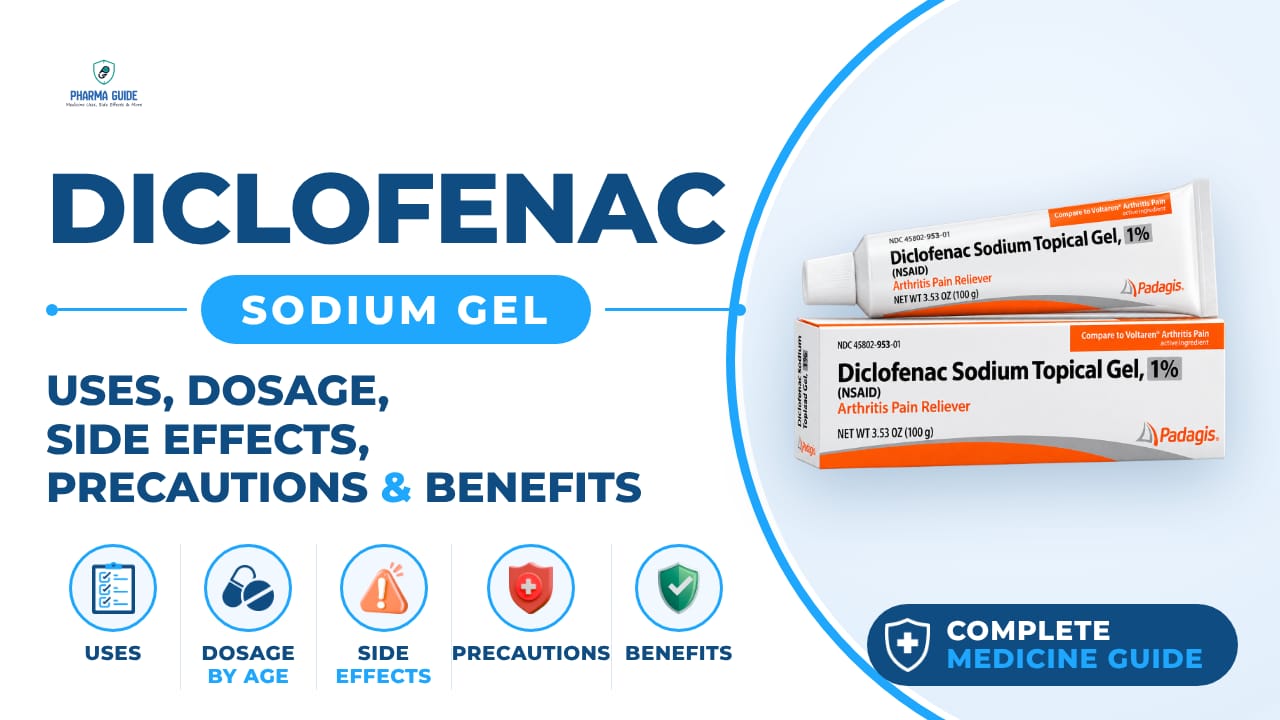
| Generic name | diclofenac sodium |
|---|---|
| Drug class | Nonsteroidal anti-inflammatory drug (NSAID) |
| Forms | Cutaneous gel (50 g tube) |
Quick overview
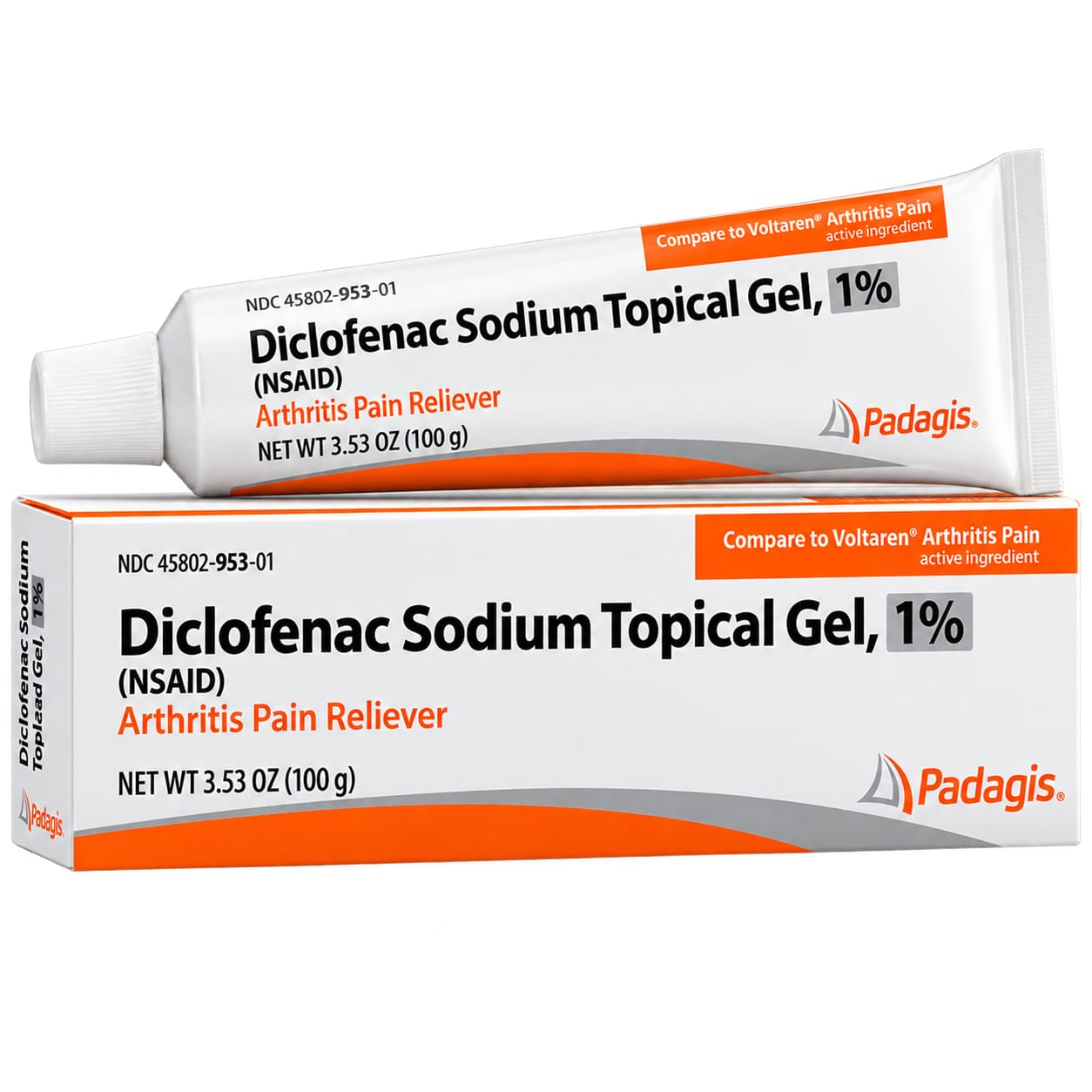
Diclofenac Sodium Gel is a topical nonsteroidal anti-inflammatory drug (NSAID) applied to the skin to relieve pain and inflammation in joints and soft tissues. It is used for conditions such as osteoarthritis of superficial joints, soft tissue rheumatism, and trauma to tendons, ligaments, muscles and joints. The gel works mainly in the tissue where it is applied, though some of it can be absorbed into the body. It should be applied only to clean, intact skin and used exactly as directed.
What is Diclofenac Sodium Gel
Diclofenac sodium topical gel is an NSAID medicine that you apply to your skin to help relieve pain and inflammation in joints and soft tissues. It works mainly in the tissues near where you apply it, though some of the medicine can still be absorbed into the body.
Diclofenac Sodium Gel uses
- Osteoarthritis of superficial joints such as the knee
- Localised forms of soft tissue rheumatism
- Trauma of tendons, ligaments, muscle and joints, such as sprains, strains and bruises
- Localized joint pain, especially in the hands, wrists, elbows, knees, ankles, and feet
Benefits of Diclofenac Sodium Gel
- Reduces pain, tenderness and inflammation in treated joints
- May improve comfort with movement and reduce stiffness over time
- May cause fewer whole-body side effects than oral NSAIDs because it is applied to the skin
- Can be a useful option for people who want to avoid or reduce oral NSAID use
How Diclofenac Sodium Gel works
Diclofenac works by lowering the body's production of substances called prostaglandins, which drive pain, inflammation and swelling. By reducing prostaglandin activity in the treated area, the gel can decrease tenderness, improve comfort with movement, and reduce stiffness.
Diclofenac Sodium Gel dosage
This medicine is for external use only. Do not take by mouth. Wash your hands before and after use, unless the hands are the area being treated. Do not get it in your eyes. If you do, rinse your eyes with plenty of clean, cool water and tell your doctor.
Rub the gel gently into clean, dry, intact skin around the painful or swollen area. Do not apply to open wounds, cuts, broken, infected, peeling or irritated skin, or any area where the skin is abnormal. Do not cover the treated area with bandages, sticking plaster or tight or occlusive dressings unless your doctor advises it, as this may increase absorption. Avoid heat sources such as heating pads on treated skin. Allow the product to dry before putting on clothing.
Do not apply cosmetics, sunscreens, insect repellents or other topical medicines to the same area unless you have checked this is appropriate. Use it at the same time every day and do not use it more often than directed. Review treatment after 14 days. Use the lowest dose that controls your pain for the shortest possible time.
Avoid contact with the eyes, mouth and other mucous membranes. If the symptoms worsen in adolescents, the patient or parents should consult the doctor. Protect treated skin from unnecessary sun exposure, as sun sensitivity can occur with some topical products.
| Age group | Dose |
|---|---|
| Under 12 years | Generally not recommended unless prescribed |
| 12–17 years | Use only if specifically recommended by a doctor; dosing depends on the product |
| 18–64 years | Apply a measured amount to the affected area 3–4 times daily, depending on the product strength |
| 65+ years | Usually the same topical dose, but use the lowest effective amount and seek medical advice if used regularly |
Available forms and strengths
- Cutaneous gel (50 g tube)
Side effects of Diclofenac Sodium Gel
Common
- Irritation at the application site
- Redness
- Itching
- Dryness
- Scaling or flaking skin
- Burning sensation at the application site
- Mild rash
Serious
- Allergic reaction with swelling of the face, lips, mouth, tongue or throat, rash and itching, difficulty swallowing, low blood pressure, fainting, wheezing or tightness in the chest
- Red or purple skin, skin rash with blisters, blistering of the lips, eyes and mouth, or skin inflammation with flaking or peeling
- Stomach bleeding, ulcers or tears (stomach pain, bloody or black tar-like stools, vomiting blood or material that looks like coffee grounds)
- Heart attack (chest pain, nausea, shortness of breath, cold or clammy skin, feeling faint)
- Stroke (sudden numbness or weakness, trouble speaking, confusion, trouble walking, vision changes)
- Heart failure (shortness of breath, swelling of ankles, feet or hands, sudden weight gain, unusual weakness)
- Increase in blood pressure
- Kidney injury (decrease in amount of urine, swelling of ankles, hands or feet)
- Liver injury (right upper belly pain, loss of appetite, nausea, light-colored stool, dark urine, yellowing skin or eyes)
- Rash, fever and swollen lymph nodes
- If absorbed with long-term or large-area use: stomach discomfort, nausea, vomiting, diarrhoea
Warnings and precautions
- This medicine can cause serious bleeding, ulcers or tears in the stomach, which can happen at any time with no warning signs and are more common with long-term use. This medicine increases the risk of blood clots, heart attack and stroke, which are more common with long-term use and in people with heart disease. This medicine may cause serious skin reactions weeks to months after starting it. Tell your care team right away if you have fever or flu-like symptoms with a rash that may become blisters or peeling skin.
- Do not take aspirin or other NSAIDs such as ibuprofen or naproxen while using this medicine, as side effects like upset stomach, nausea and ulcers may be more likely. This medicine must be applied to intact skin only and should not be used on broken or denuded skin. Do not use if you are an asthmatic and are allergic to aspirin or other non-steroidal agents, or if you have ever had an allergic reaction after taking medicines to treat inflammation or pain. This medicine must not be used in children and adolescents below 14 years. This medicine may cause infertility, which is usually temporary. Talk to your care team if you are concerned about your fertility.
- Do not use during the last 3 months of pregnancy as it could harm your unborn child or cause problems at delivery. During the first 6 months it should only be used under medical advice, at the lowest dose for the shortest time. Ask your doctor before use if you are pregnant, think you may be, or are planning a baby.
- Use only under medical advice during breastfeeding, as diclofenac passes into breast milk in small amounts. Do not apply on the breasts of nursing mothers, or elsewhere on large areas of skin, or for a prolonged period.
- Tell your doctor before using this medicine if you have kidney problems or kidney disease, or if you have liver problems or liver disease. Tell your care team if you frequently drink alcohol, as it may interact with this medicine.
- Usually diclofenac does not affect your ability to drive or use machines. However, it may cause side effects such as blurred vision, dizziness or drowsiness. If any of these affect you, do not drive or use machines and contact your doctor immediately.
Storage
- Keep out of the reach of children and pets.
- Do not store above 25°C (store at room temperature between 20 and 25 degrees C, 68 and 77 degrees F).
- Keep the tube tightly closed.
- Do not use after the expiry date stated on the tube and carton.
- Do not throw away any medicines via wastewater or household waste. Ask your pharmacist how to throw away medicines you no longer use.
- You can take unused or expired medication to a medication take-back program.
- If it is safe to put it in the trash, mix the medication with cat litter, dirt, coffee grounds or another unwanted substance, seal it in a bag or container, and put it in the trash.
When to see a doctor
- Stop using the gel and tell your doctor straight away or go to the nearest hospital emergency department if you have an allergic reaction with swelling of the face, lips, mouth, tongue or throat, rash, itching, difficulty swallowing, low blood pressure, fainting, wheezing or tightness in the chest.
- Stop using the gel and seek urgent help if you develop red or purple skin, a skin rash with blisters, blistering of the lips, eyes and mouth, or skin inflammation with flaking or peeling. Talk to your care team right away if you have stomach pain, bloody or black tar-like stools, or vomit blood that is red or looks like coffee grounds.
- Get urgent care for symptoms that could signal a serious reaction, such as trouble breathing, swelling of the lips or face, widespread rash, fainting, chest pain, sudden one-sided weakness, severe stomach pain, black or bloody stools, or vomiting blood.
- If you think you have taken too much of this medicine or accidentally swallowed it, contact your local poison control center or emergency room at once. If possible, take the gel with you.
Alternatives
- Ibuprofen Gel
- Ketoprofen Gel
- Piroxicam Gel
- Naproxen Gel
- Indomethacin Gel
- Capsaicin Cream
Watch the video
FAQs
What is Diclofenac Sodium Gel used for?
It is used for osteoarthritis of superficial joints such as the knee, localised soft tissue rheumatism, trauma to tendons, ligaments, muscles and joints like sprains and strains, and localized joint pain in the hands, wrists, elbows, knees, ankles and feet.
How should I apply Diclofenac Sodium Gel?
Rub the gel gently into clean, dry, intact skin around the painful or swollen area, avoiding open wounds or irritated skin. Do not cover with bandages or tight dressings, avoid heat sources, and let it dry before dressing. Use it at the same time daily and review treatment after 14 days.
Can children use Diclofenac Sodium Gel?
It must not be used in children and adolescents below 14 years, and use under 12 years is generally not recommended unless prescribed. For ages 12–17, it should only be used if specifically recommended by a doctor.
Is Diclofenac Sodium Gel safe during pregnancy or breastfeeding?
It should not be used during the last 3 months of pregnancy, and during the first 6 months should only be used under medical advice at the lowest dose for the shortest time. During breastfeeding, it should only be used under medical advice and not applied to the breasts or large areas of skin.
What are the serious side effects of Diclofenac Sodium Gel?
Serious side effects include allergic reactions, severe skin reactions with blistering or peeling, stomach bleeding or ulcers, heart attack, stroke, heart failure, increased blood pressure, kidney injury, and liver injury.
General information, not medical advice
Your prescriber and the leaflet in your pack know your situation. This page does not.
- Follow your prescriber and the leaflet
- Don't start, stop, or change a dose on your own
- Doses and warnings differ by country and product
Sources
- Cleveland Clinic (my.clevelandclinic.org)
- Acibadem International Health Library (acibademinternational.com)
- Health Products Regulatory Authority (HPRA) — Diclac 1% w/w Gel Package Leaflet
- U.S. Food and Drug Administration
- National Institute for Health and Care Excellence
- American College of Rheumatology
- Arthritis Foundation
- MedlinePlus
Video
Related medicines
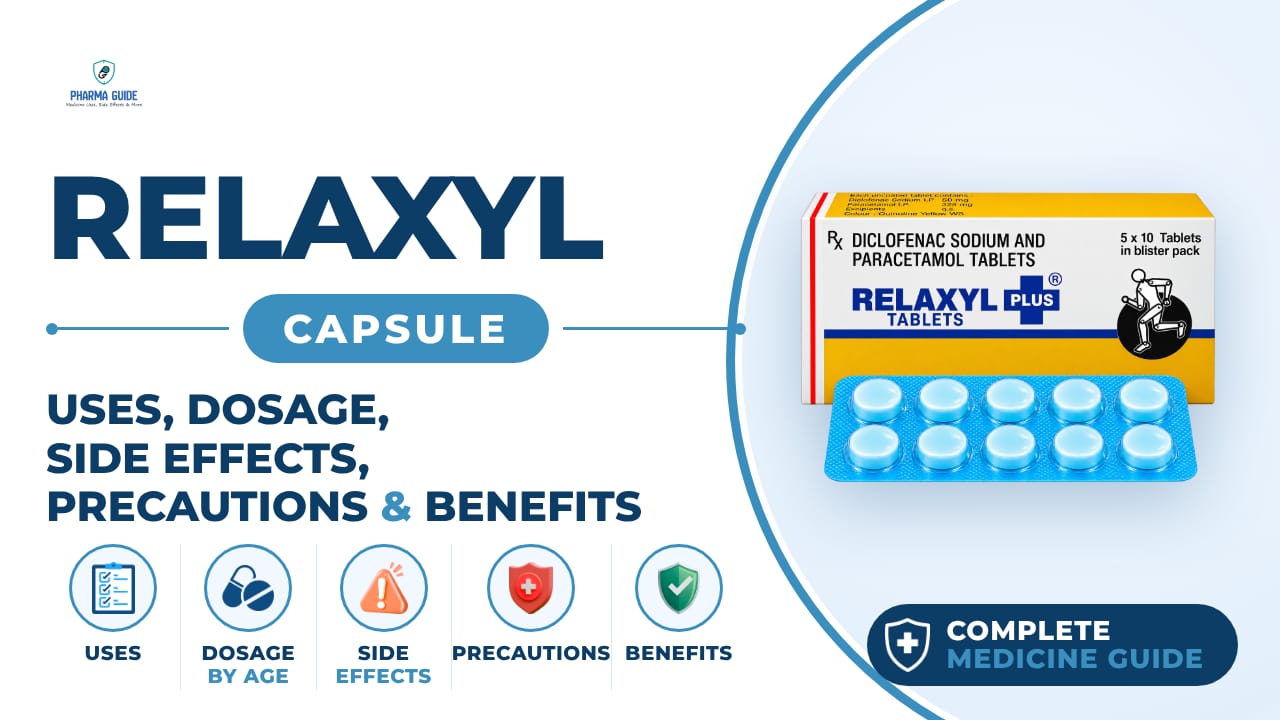
Relaxyl Capsule: Uses, Dosage, Side Effects, Precautions and Alternates
Nonsteroidal Anti-Inflammatory Drug (NSAID)
Relaxyl Capsule contains diclofenac, an NSAID used to relieve joint and muscle pain, swelling, and inflammation. Learn uses, dosage, and side effects.
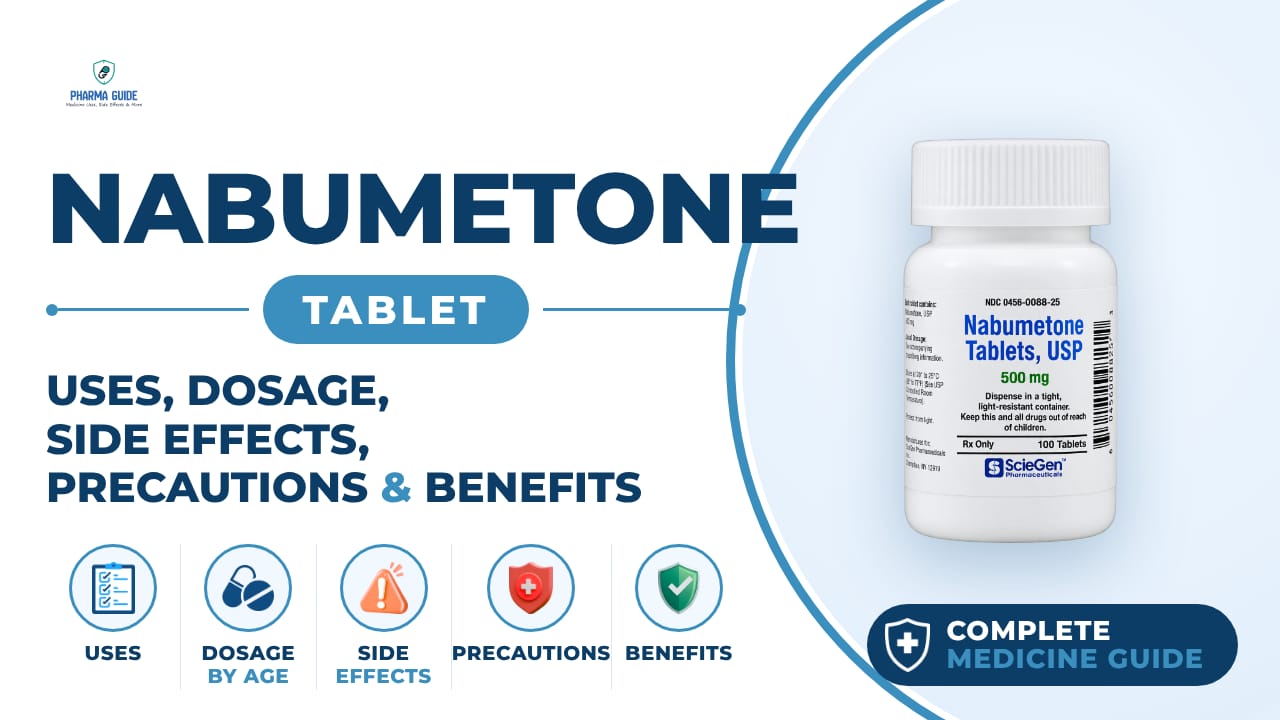
Nabumetone Tablet: Uses, Dosage, Side Effects, Precautions and Alternates
Nonsteroidal anti-inflammatory drug (NSAID)
Nabumetone Tablet is an NSAID for osteoarthritis and rheumatoid arthritis pain relief. Learn its dosage, uses, side effects, and safety warnings.