
Safety
General information, not medical advice
Your prescriber and the leaflet in your pack know your situation. This page does not.
- Follow your prescriber and the leaflet
- Don't start, stop, or change a dose on your own
- Doses and warnings differ by country and product
Dicyclomine Tablet: Uses, Dosage, Side Effects, Precautions and Alternates
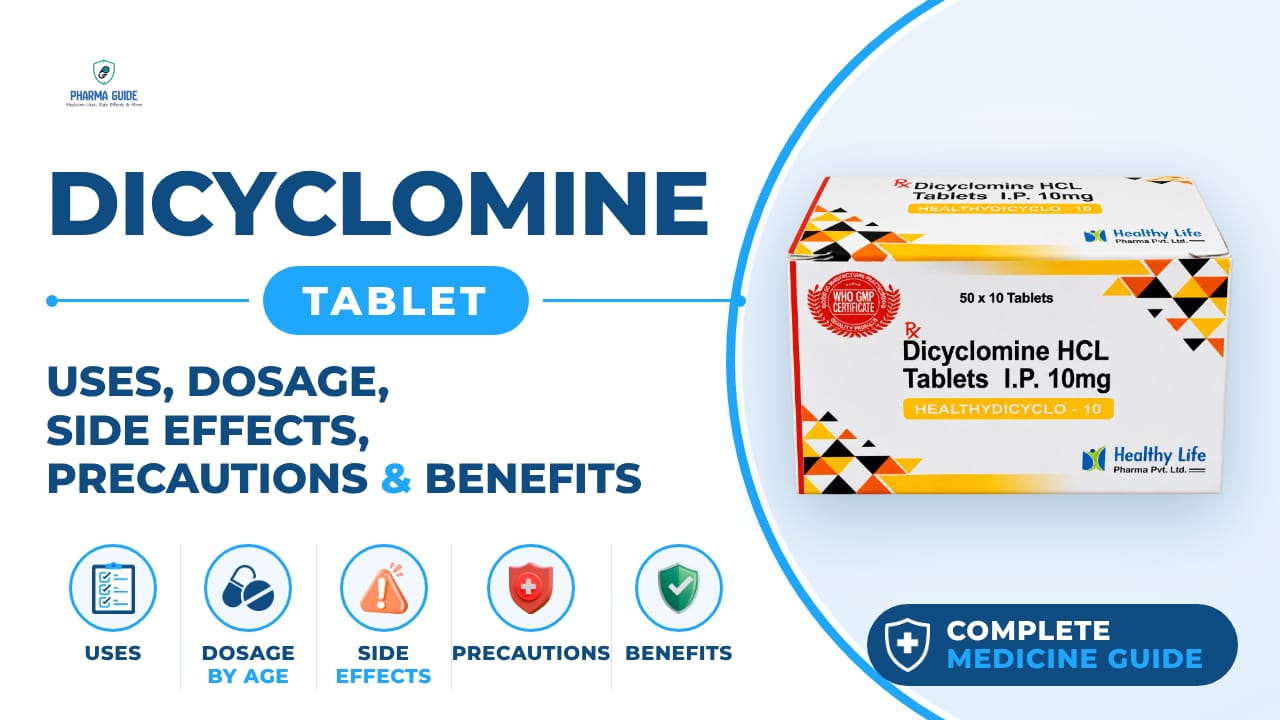
| Generic name | Dicyclomine (Dicyclomine Hydrochloride) |
|---|---|
| Drug class | Anticholinergic / Antispasmodic |
| Forms | Capsules, Tablets, Syrup (oral solution), Injection |
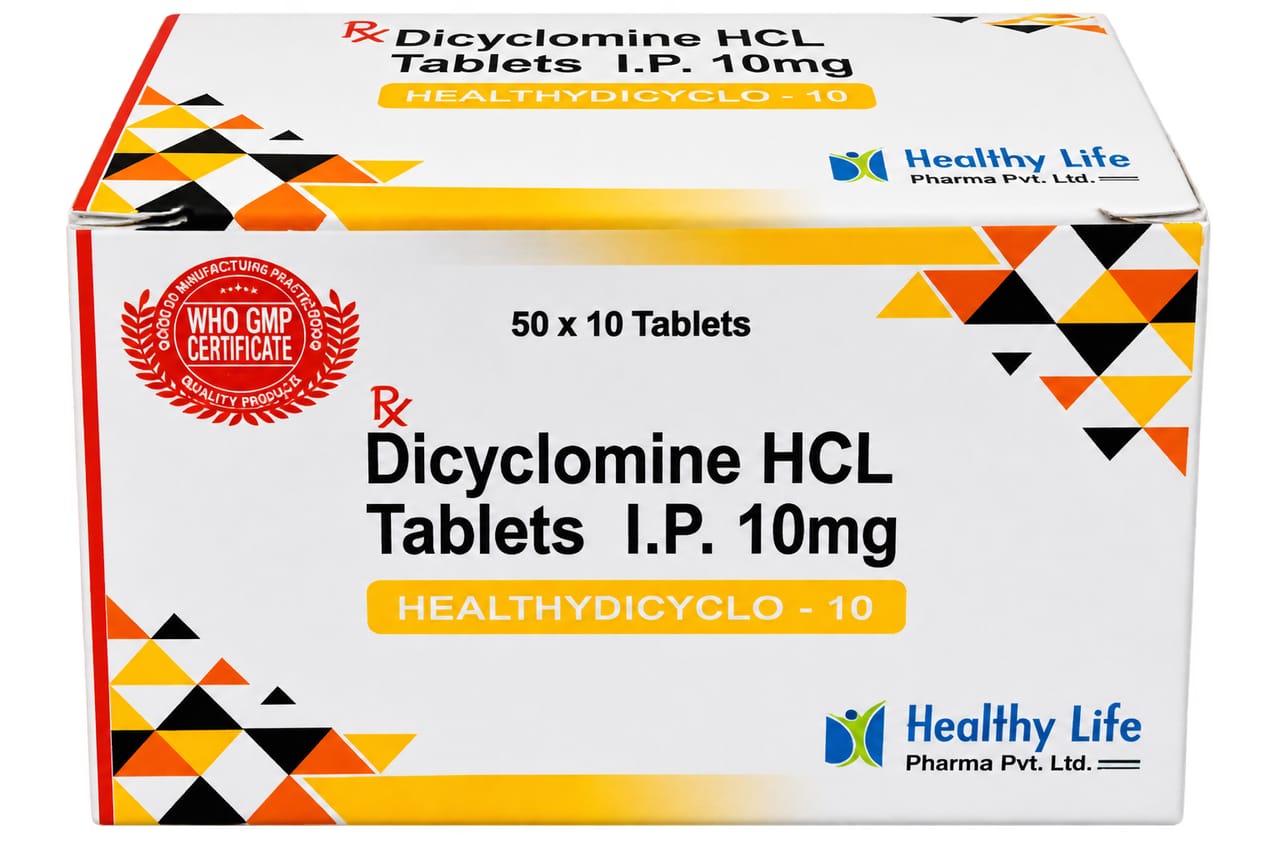
Quick overview
Dicyclomine is a prescription anticholinergic/antispasmodic medicine used to treat irritable bowel syndrome (IBS) and gastrointestinal spasms. It works by relaxing the smooth muscles of the stomach and intestines to reduce painful cramps and spasms. It is available in capsule, tablet, syrup, and injection forms. It should be used exactly as prescribed, with specific dosing guidance based on age.
What is Dicyclomine Tablet
Dicyclomine (Dicyclomine Hydrochloride) is a prescription medicine belonging to the anticholinergic/antispasmodic drug class. It is used to treat irritable bowel syndrome (IBS) and gastrointestinal spasms. It relaxes the smooth muscles of the stomach and intestines to reduce painful cramps and spasms.
Dicyclomine Tablet uses
- Irritable bowel syndrome (IBS)
- GI (gastrointestinal) spasms
- Abdominal pain and discomfort
- Colicky spasms in the digestive tract
- Bloating and intestinal distress
Benefits of Dicyclomine Tablet
- Relieves colicky-type pain due to muscle spasms associated with IBS
- Decreases gastric secretions and movement of the gastrointestinal tract
- Reduces both the strength and frequency of intestinal spasms
How Dicyclomine Tablet works
Dicyclomine blocks a nerve chemical called acetylcholine, which normally causes muscles to contract. By blocking this chemical and acting directly on the muscle, it relaxes the smooth muscles of the stomach and intestines, easing spasms and cramping.
Dicyclomine Tablet dosage
Take with or without food. Swallow the tablet whole with water; do not break, chew, or crush it. Take at consistent times each day to maintain steady relief. Do not take antacids at the same time as this drug; talk with your doctor about timing. Older adults may need to use this drug with more care because they could have more side effects.
| Age group | Dose |
|---|---|
| Under 6 months | Do not use |
| 6 months–11 years | Doctor's advice required; tablets are generally not preferred |
| 12 years & older | 10–20 mg, 3–4 times daily |
| Adults | 20 mg, 4 times daily initially; may be adjusted by doctor |
Available forms and strengths
- Capsules
- Tablets
- Syrup (oral solution)
- Injection
Side effects of Dicyclomine Tablet
Common
- Dry mouth
- Blurred vision
- Dizziness
- Increased sensitivity to heat / inability to sweat
- Nausea
- Light-headedness
- Drowsiness
- Weakness
- Nervousness
- Constipation
- Urinary retention
- Increased heart rate
- Flushing
- Trouble sleeping
- Dry skin
Serious
- Signs of an allergic reaction, like rash, hives, itching, red/swollen/blistered/peeling skin with or without fever, wheezing, tightness in the chest or throat, trouble breathing, swallowing, or talking, unusual hoarseness, or swelling of the mouth, face, lips, tongue, or throat
- Fever
- Not sweating during activities or in warm temperatures (risk of heat exhaustion/heatstroke)
- Very bad dizziness or passing out
- Feeling confused
- Trouble swallowing or speaking
- Change in balance
- Change in eyesight or larger pupils
- Trouble passing urine
- Diarrhea
- Fast, slow, or abnormal heartbeat
- Hallucinations (seeing or hearing things that are not there)
- Memory problems or loss
- Mood changes
- Seizures
- Difficulty breathing
Warnings and precautions
- Do not give this medicine to infants younger than 6 months old.
- This medicine may not be suitable for people with certain gastrointestinal conditions (such as severe ulcerative colitis, reflux esophagitis, or a bowel obstruction), glaucoma, myasthenia gravis, liver or kidney disease, heart disease, or prostate or urinary problems.
- This medicine can reduce your ability to sweat, which may cause heat exhaustion or heatstroke, especially in hot weather. Drink plenty of fluids and avoid extreme heat.
- In rare cases, this medicine may cause psychosis with symptoms such as confusion, disorientation, short-term memory loss, hallucinations, insomnia, and agitation. These symptoms usually go away within 12-24 hours after stopping the drug.
- In infants, this medicine may cause breathing difficulties or other serious effects such as seizures or changes in pulse.
- There are no adequate studies of dicyclomine's effects in pregnant women at recommended doses. Studies of women who took dicyclomine-containing products during the first trimester did not show increased risk of harm to the fetus. Talk to your doctor about the benefits and risks of using this drug while pregnant.
- Dicyclomine passes into breast milk. Because of reports of breathing pauses in children exposed to dicyclomine, it should not be used by breastfeeding mothers.
- Patients with kidney disease need careful monitoring while using this medicine, and caution is advised.
- Patients with liver disease need careful monitoring while using this medicine, and caution is advised.
- Avoid alcohol while taking this medicine, as it can increase side effects like dizziness and drowsiness.
- This medicine may cause drowsiness or blurred vision that can affect your ability to drive or operate machinery. Avoid these tasks until you know how the medicine affects you.
Storage
- Store at room temperature in a dry place.
- Do not store in a bathroom.
- Protect from heat.
- Keep tablets and capsules out of direct sunlight.
- Keep all drugs in a safe place, out of the reach of children and pets.
- Throw away unused or expired drugs; do not flush down a toilet or pour down a drain unless told to do so. Check with your pharmacist about drug take-back programs in your area.
When to see a doctor
- Get medical help right away for signs of an allergic reaction, such as rash, hives, itching, swollen or blistered skin, wheezing, tightness in the chest or throat, or trouble breathing or swallowing.
- Call your doctor or get medical help right away for fever, not sweating during activity or in warm temperatures, very bad dizziness or passing out, confusion, trouble swallowing or speaking, changes in balance or eyesight, larger pupils, trouble passing urine, diarrhea, an abnormal heartbeat, hallucinations, memory problems, or mood changes.
- If you think there has been an overdose, contact your local poison control resource or get medical care right away, and be ready to describe what was taken, how much, and when it happened.
- If overdose symptoms occur, such as headache, nausea, blurred vision, dilated pupils, hot or dry skin, dizziness, or seizures, get emergency medical help immediately.
Alternatives
- Bentyl
- Hyoscine butylbromide
Watch the video
FAQs
What is Dicyclomine Tablet used for?
It is used to treat irritable bowel syndrome (IBS) and gastrointestinal spasms, including abdominal pain, colicky spasms, and bloating.
How does Dicyclomine Tablet work?
It blocks acetylcholine, a nerve chemical that causes muscle contraction, which relaxes the smooth muscles of the stomach and intestines to ease spasms and cramping.
What is the dosage of Dicyclomine Tablet for adults?
Adults typically start at 20 mg, 4 times daily, which may be adjusted by a doctor. For those 12 years and older, the dose is 10–20 mg, 3–4 times daily.
Can Dicyclomine Tablet be given to infants?
No, it should not be given to infants younger than 6 months old, as it may cause breathing difficulties, seizures, or changes in pulse.
What are the common side effects of Dicyclomine Tablet?
Common side effects include dry mouth, blurred vision, dizziness, nausea, drowsiness, constipation, urinary retention, and increased heart rate.
General information, not medical advice
Your prescriber and the leaflet in your pack know your situation. This page does not.
- Follow your prescriber and the leaflet
- Don't start, stop, or change a dose on your own
- Doses and warnings differ by country and product
Sources
Video
Related medicines
Anaspaz Tablet: Uses, Dosage, Side Effects, Precautions and Alternates
Anticholinergic/antispasmodic
Anaspaz Tablet contains hyoscyamine sulfate, used for IBS, stomach cramps, and gut spasms. Learn its uses, dosage, side effects, and precautions.
Levsin Sublingual Tablet: Uses, Dosage, Side Effects, Precautions and Alternates
Anticholinergic/antispasmodic
Levsin Sublingual Tablet contains hyoscyamine sulfate, used to relieve GI spasms, cramping, and excess secretions. Learn dosage, side effects, and precautions.