
Safety
General information, not medical advice
Your prescriber and the leaflet in your pack know your situation. This page does not.
- Follow your prescriber and the leaflet
- Don't start, stop, or change a dose on your own
- Doses and warnings differ by country and product
Diflucan One Capsule: Uses, Dosage, Side Effects, Precautions and Alternates

| Generic name | fluconazole |
|---|---|
| Drug class | Oral Antifungal Agent |
| Forms | Capsule, 150 mg |
Quick overview
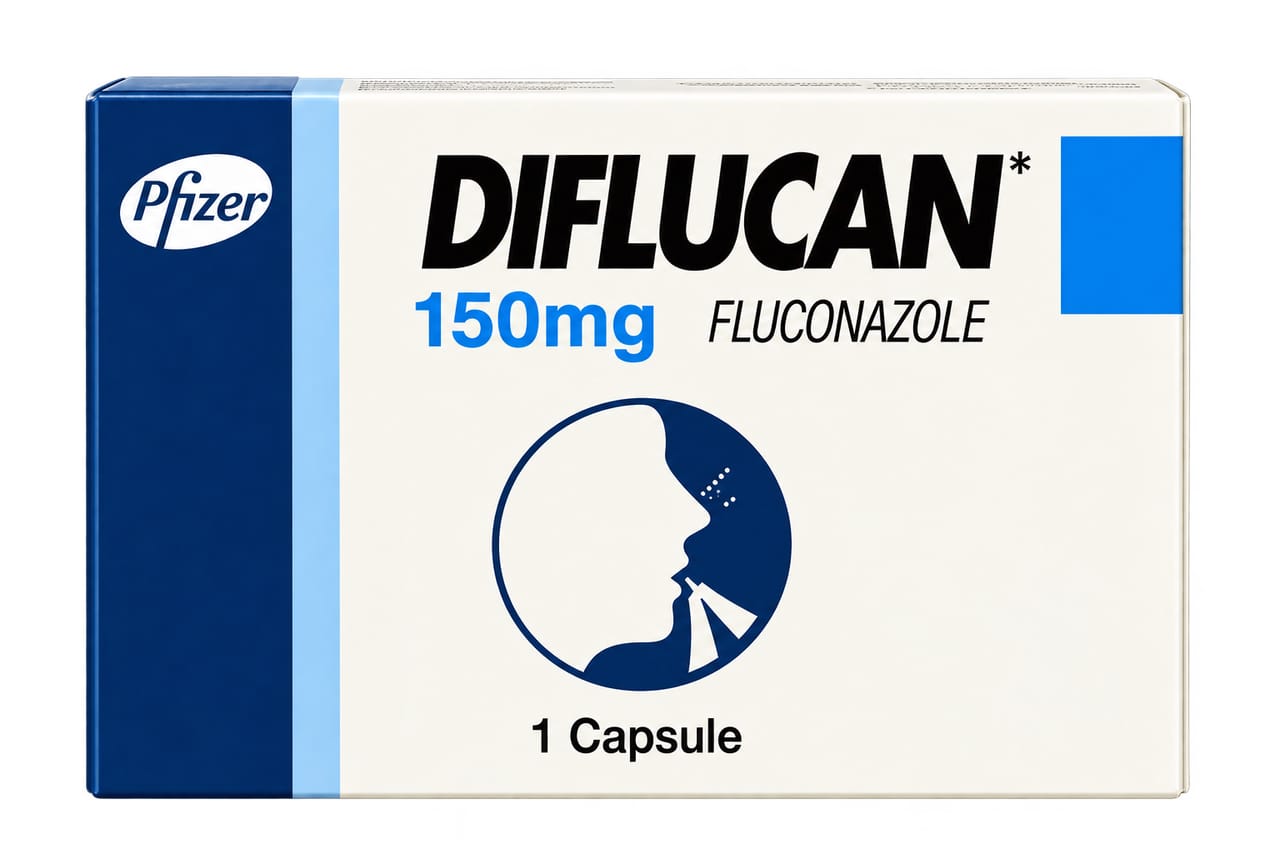
Diflucan One Capsule contains 150 mg of fluconazole, an oral antifungal agent taken as a single dose to treat vaginal yeast infections. It works by stopping the growth of the fungi that cause these infections, often relieving itching, burning and discharge within 24 hours. It is also used for vaginal thrush and, in appropriate patients, candidal balanitis.
What is Diflucan One Capsule
Diflucan One is a single-dose capsule containing 150 mg of fluconazole, an antifungal medicine used to treat vaginal yeast infections.
Diflucan One Capsule uses
- Single-dose treatment of vaginal candidiasis (yeast infections due to Candida)
- Treats vaginal candidiasis (thrush)
- Treats candidal balanitis in appropriate patients
Benefits of Diflucan One Capsule
- Clinically proven to cure most vaginal yeast infections
- Can be taken anytime, anywhere to relieve itching, burning and discharge
- Symptom relief often begins within 24 hours after taking the capsule
- Provides single-dose oral treatment
- Works systemically against susceptible Candida
- Avoids the need for multiple daily oral doses for uncomplicated thrush
How Diflucan One Capsule works
The active ingredient fluconazole works by stopping the growth of the fungi that cause vaginal yeast infections.
Diflucan One Capsule dosage
Take by mouth as a one-time only dose, with or without food, or as directed by your doctor. Do not take more than one dose for this infection. If your symptoms have not improved within 3 days and disappeared in 7 days, contact your doctor.
Although taken only once, the medication remains active in your body for several days, so clearing the infection takes time. Consult your doctor if this is your first yeast infection, or if you have a second yeast infection in less than 2 months after treating a prior infection.
| Age group | Dose |
|---|---|
| Under 16 years | Not recommended for self-treatment |
| 16–17 years | 150 mg as a single oral dose when specifically considered appropriate for genital candidiasis |
| 18–60 years | 150 mg as a single oral dose |
Available forms and strengths
- Capsule, 150 mg
Side effects of Diflucan One Capsule
Common
- Headache
- Abdominal pain
- Diarrhea
- Nausea
- Vomiting
- Dizziness
- Taste perversion (changes in taste)
Serious
- Skin disorders: skin eruptions, new rash or irritations or allergy symptoms such as hives
- Liver problems: abdominal pain, dark urine, fever, light-colored stool, yellowing of the skin and eyes
- Heart problems: unstable or irregular heartbeat, chest pain, shortness of breath, dizziness, fainting
- Severe allergic reactions (swelling of face, eyes, mouth, hands and feet)
- Seizures
Warnings and precautions
- Do not take Diflucan One if you are allergic to fluconazole or related azole antifungals, or if you are taking certain medicines like astemizole, terfenadine, cisapride, quinidine, erythromycin, pimozide, or amiodarone, due to risk of serious heart rhythm problems.
- Yeast infections do not normally cause fever, chills, abdominal pain, nausea, vomiting, diarrhea, pain on urination, unexplained back or shoulder pain, or foul-smelling discharge — if you have these, see a doctor right away as they could signal a more serious condition.
- This medicine can interact with many other drugs, including blood thinners, certain antibiotics, diabetes medicines, and drugs for heart rhythm, so tell your healthcare professional about everything you take.
- Diflucan One should not be used if you are pregnant or trying to become pregnant, due to reports of spontaneous abortion or birth defects.
- Diflucan One should not be used while breastfeeding, since it passes into breast milk.
- There is no need to adjust the single dose for vaginal candidiasis because of impaired kidney function.
- Fluconazole has been linked to rare but serious liver problems, so tell your doctor if you have liver disease.
- No major direct interaction is established with alcohol, but avoiding alcohol may be sensible if dizziness or stomach upset occurs.
- This medicine can cause dizziness and seizures, so do not drive or operate machinery until you know how it affects you.
Storage
- Store at room temperature (15-30°C)
- Do not freeze
- Keep out of reach and sight of children
When to see a doctor
- Get immediate medical help for signs of a severe allergic reaction such as swelling of the face, eyes, mouth, hands and feet.
- Stop taking the drug and get immediate medical help for signs of heart problems such as irregular heartbeat, chest pain, shortness of breath, dizziness, or fainting.
- Talk to your healthcare professional about liver problems such as abdominal pain, dark urine, fever, light-colored stool, or yellowing of the skin and eyes.
- Contact a healthcare professional, hospital emergency department, or regional poison control center immediately if you think too much of this medicine has been taken, even without symptoms.
Alternatives
- Clotrimazole
- Miconazole
- Econazole
- Terconazole
Watch the video
FAQs
What is Diflucan One Capsule used for?
It is used as a single-dose treatment for vaginal yeast infections (candidiasis), vaginal thrush, and candidal balanitis in appropriate patients.
How quickly does Diflucan One Capsule work?
Symptom relief such as reduced itching, burning and discharge often begins within 24 hours after taking the capsule.
How is Diflucan One Capsule taken?
It is taken by mouth as a one-time only dose, with or without food, and you should not take more than one dose for the infection.
What if symptoms don't improve after taking Diflucan One Capsule?
If symptoms have not improved within 3 days and disappeared in 7 days, you should contact your doctor.
Can pregnant or breastfeeding women take Diflucan One Capsule?
No, it should not be used during pregnancy due to risks of spontaneous abortion or birth defects, or while breastfeeding since it passes into breast milk.
General information, not medical advice
Your prescriber and the leaflet in your pack know your situation. This page does not.
- Follow your prescriber and the leaflet
- Don't start, stop, or change a dose on your own
- Doses and warnings differ by country and product
Sources
Video
Related medicines

Injectafer Injection: Uses, Dosage, Side Effects, Precautions and Alternates
Iron products
Injectafer (ferric carboxymaltose) treats iron deficiency anemia and heart failure-related iron deficiency via IV. Learn uses, dosage, side effects, and

Gliclazide Tablet: Uses, Dosage, Side Effects, Precautions and Alternates
Sulfonylurea (hypoglycemic/antidiabetic agent)
Gliclazide Tablet is a sulfonylurea for type 2 diabetes that boosts insulin release. Learn about dosage, side effects, warnings, and precautions.