
Safety
General information, not medical advice
Your prescriber and the leaflet in your pack know your situation. This page does not.
- Follow your prescriber and the leaflet
- Don't start, stop, or change a dose on your own
- Doses and warnings differ by country and product
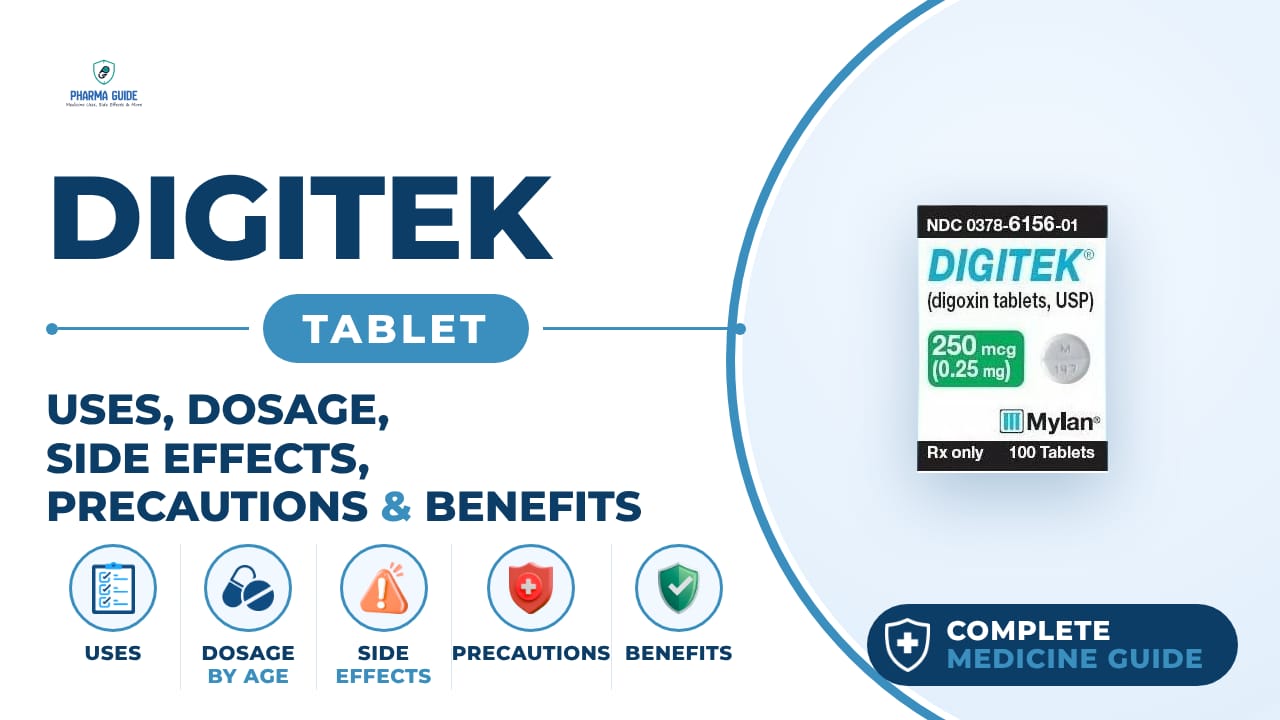
Digitek Tablet: Uses, Dosage, Side Effects, Precautions and Alternates
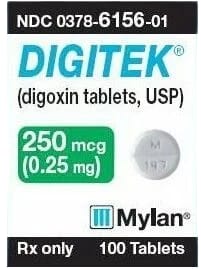
| Generic name | digoxin |
|---|---|
| Drug class | cardiac (digitalis) glycoside; group V antiarrhythmic |
| Forms | tablet |
Quick overview
Digitek Tablet contains digoxin, a cardiac (digitalis) glycoside and group V antiarrhythmic medicine. It is used to treat mild to moderate heart failure and to help control heart rate in certain abnormal heart rhythms, including chronic atrial fibrillation. It works by changing the levels of calcium and potassium in heart cells, which strengthens the heart's contractions and slows the heart rate. It is available as a tablet and is typically taken once daily as directed by a doctor.
What is Digitek Tablet
Digitek is a cardiac (digitalis) glycoside tablet containing digoxin. It is used to treat heart failure and certain abnormal heart rhythms.
Digitek Tablet uses
- Treatment of mild to moderate heart failure in adults
- Increasing myocardial contractility in pediatric patients with heart failure
- Control of ventricular response rate in adults with chronic atrial fibrillation
Benefits of Digitek Tablet
- Can improve heart failure symptoms such as exercise capacity
- May lower the chance of hospital visits related to heart failure
- Helps control fast heart rate caused by atrial fibrillation
- Helps control heart rate in selected patients with atrial fibrillation
- May improve symptoms of heart failure
- Increases the strength of heart contractions
- Can help reduce certain heart-failure symptoms
- Provides once-daily maintenance treatment in many adults
How Digitek Tablet works
Digoxin blocks a pump in heart cells called the sodium-potassium pump. This changes the levels of calcium and potassium in heart cells, which makes the heart beat with more force, slows the heart rate, and slows electrical signals moving through part of the heart.
Digitek Tablet dosage
Digoxin tablets can be taken with or without food, but taking them after a meal may slow how fast the drug is absorbed, though the total amount absorbed usually stays the same. Meals high in bran fiber may reduce how much digoxin the body absorbs. Do not stop taking this medicine suddenly without checking with your doctor, since stopping it abruptly can cause a serious change in heart function. Children and infants often need the medicine given in divided doses during the day rather than once daily. Your doctor may want you to check and record your heart rate and blood pressure every day.
| Age group | Dose |
|---|---|
| Under 18 years | Not recommended |
| 18–64 years | 0.125 mg, once/day |
| 65+ years | 0.125 mg, once/day |
Available forms and strengths
- Tablet
Side effects of Digitek Tablet
Common
- Nausea
- Vomiting
- Headache
- Loss of appetite
- Diarrhea
- Feeling weak
- Dizziness
- Anxiety
- Depression
- Enlarged breasts in men
- Skin rash
- Drowsiness
- Blurred vision or visual disturbances
Serious
- Fast, slow, or uneven heart rate
- Bloody or black, tarry stools
- Blurred vision, yellowed vision
- Confusion, hallucinations, or unusual thoughts or behavior
- Fainting
- Bleeding gums
- Blood in the urine or stools
- Bloody vomit
- Pinpoint red spots on the skin
- Rash with flat or small raised lesions on the skin
- Severe stomach pain
- Unusual bleeding or bruising
Warnings and precautions
- People with Wolff-Parkinson-White syndrome who develop atrial fibrillation have a high risk of a dangerous heart rhythm called ventricular fibrillation if they take this medicine.
- This medicine can cause a very slow heartbeat or heart block, especially in people who already have certain heart rhythm problems.
- This medicine is not recommended for people who have just had a heart attack, because it can increase the heart's oxygen demand and cause further damage.
- This medicine should be avoided in people with myocarditis (inflammation of the heart muscle) because it can cause blood vessels to tighten.
- This medicine should not be used by people with a known allergy to digoxin or other digitalis medicines, or by people with the dangerous heart rhythm called ventricular fibrillation.
- The dose needed for benefit is very close to the dose that can cause serious harm, so overdose symptoms must be watched for closely.
- Tell your doctor if you are pregnant before using Digitek. Digoxin should only be given during pregnancy if it is clearly needed, since it is not known if it can harm the baby.
- Digoxin passes into breast milk, but the amount a nursing baby would get is expected to be much lower than a baby's usual dose and is unlikely to cause problems. Still, talk to your doctor before breastfeeding while taking this medicine.
- People with reduced kidney function clear digoxin more slowly from the body and need smaller doses, since digoxin is removed from the body mainly by the kidneys.
- Liver problems are not expected to change how the body handles digoxin much, since only a small part of the dose is processed by the liver.
- Alcohol may worsen dizziness and can affect heart rhythm.
- Dizziness, confusion, weakness, or visual changes can make driving unsafe.
Storage
- Store at 20° to 25°C (68° to 77°F)
- Store in a dry place
- Protect from light
- Keep out of reach of children
- Dispense in a tight, light-resistant container using a child-resistant closure
When to see a doctor
- Call your doctor right away if you have nausea, vomiting, ongoing diarrhea, confusion, weakness, or vision changes such as blurred vision, green-yellow color changes, or seeing halos, since these can mean your dose is too high.
- Get medical help immediately if you notice a fast, pounding, or irregular heartbeat, a very slow heartbeat, dizziness, or fainting.
- Seek medical care right away if you notice black or tarry stools, bleeding gums, blood in urine or stool, bloody vomit, small red spots on the skin, a new rash, or unusual bleeding or bruising.
- In babies and young children, watch closely for changes in heart rate or rhythm, since these can be the earliest signs of too much medicine, and other overdose symptoms may be harder to spot in this age group.
Alternatives
- Metoprolol
- Bisoprolol
- Carvedilol
Watch the video
FAQs
What is Digitek Tablet used for?
Digitek Tablet is used to treat mild to moderate heart failure, increase myocardial contractility in pediatric heart failure patients, and control ventricular response rate in adults with chronic atrial fibrillation.
How does Digitek Tablet work?
Digoxin blocks the sodium-potassium pump in heart cells, changing calcium and potassium levels, which makes the heart beat with more force, slows the heart rate, and slows electrical signals through part of the heart.
What is the usual dose of Digitek Tablet for adults?
For adults aged 18-64 and those 65 and older, the typical dose is 0.125 mg once daily. It is not recommended for those under 18 years.
What are the common side effects of Digitek Tablet?
Common side effects include nausea, vomiting, headache, loss of appetite, diarrhea, weakness, dizziness, anxiety, depression, enlarged breasts in men, skin rash, drowsiness, and blurred vision.
Can Digitek Tablet be taken during pregnancy or breastfeeding?
Digoxin should only be used during pregnancy if clearly needed, as its safety is not fully known. It does pass into breast milk, but the amount a nursing baby would receive is expected to be much lower than a baby's usual dose; consult your doctor before breastfeeding.
General information, not medical advice
Your prescriber and the leaflet in your pack know your situation. This page does not.
- Follow your prescriber and the leaflet
- Don't start, stop, or change a dose on your own
- Doses and warnings differ by country and product
Sources
Video
Related medicines

Injectafer Injection: Uses, Dosage, Side Effects, Precautions and Alternates
Iron products
Injectafer (ferric carboxymaltose) treats iron deficiency anemia and heart failure-related iron deficiency via IV. Learn uses, dosage, side effects, and

Gliclazide Tablet: Uses, Dosage, Side Effects, Precautions and Alternates
Sulfonylurea (hypoglycemic/antidiabetic agent)
Gliclazide Tablet is a sulfonylurea for type 2 diabetes that boosts insulin release. Learn about dosage, side effects, warnings, and precautions.