
Safety
General information, not medical advice
Your prescriber and the leaflet in your pack know your situation. This page does not.
- Follow your prescriber and the leaflet
- Don't start, stop, or change a dose on your own
- Doses and warnings differ by country and product
Digoxin Tablet: Uses, Dosage, Side Effects, Precautions and Alternates
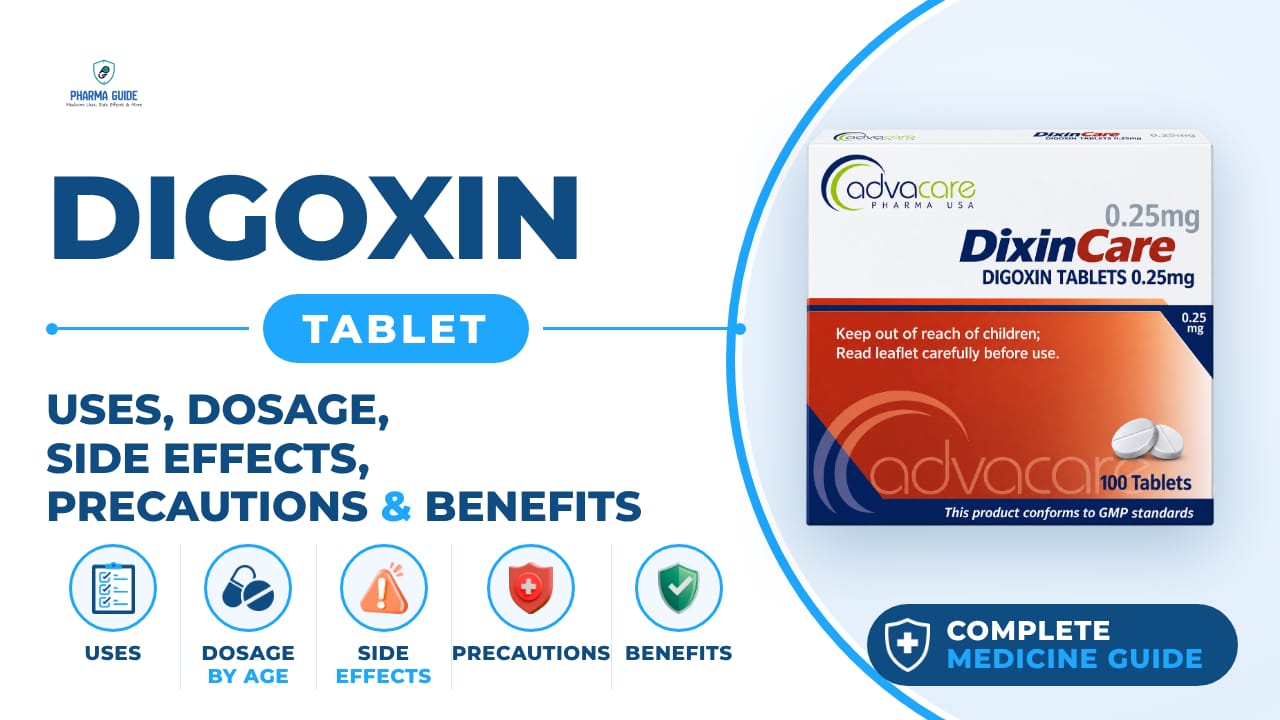
| Generic name | digoxin |
|---|---|
| Drug class | Cardiac glycoside / antiarrhythmic / inotropic agent |
| Forms | Oral tablet, Oral solution/elixir, Injectable solution |
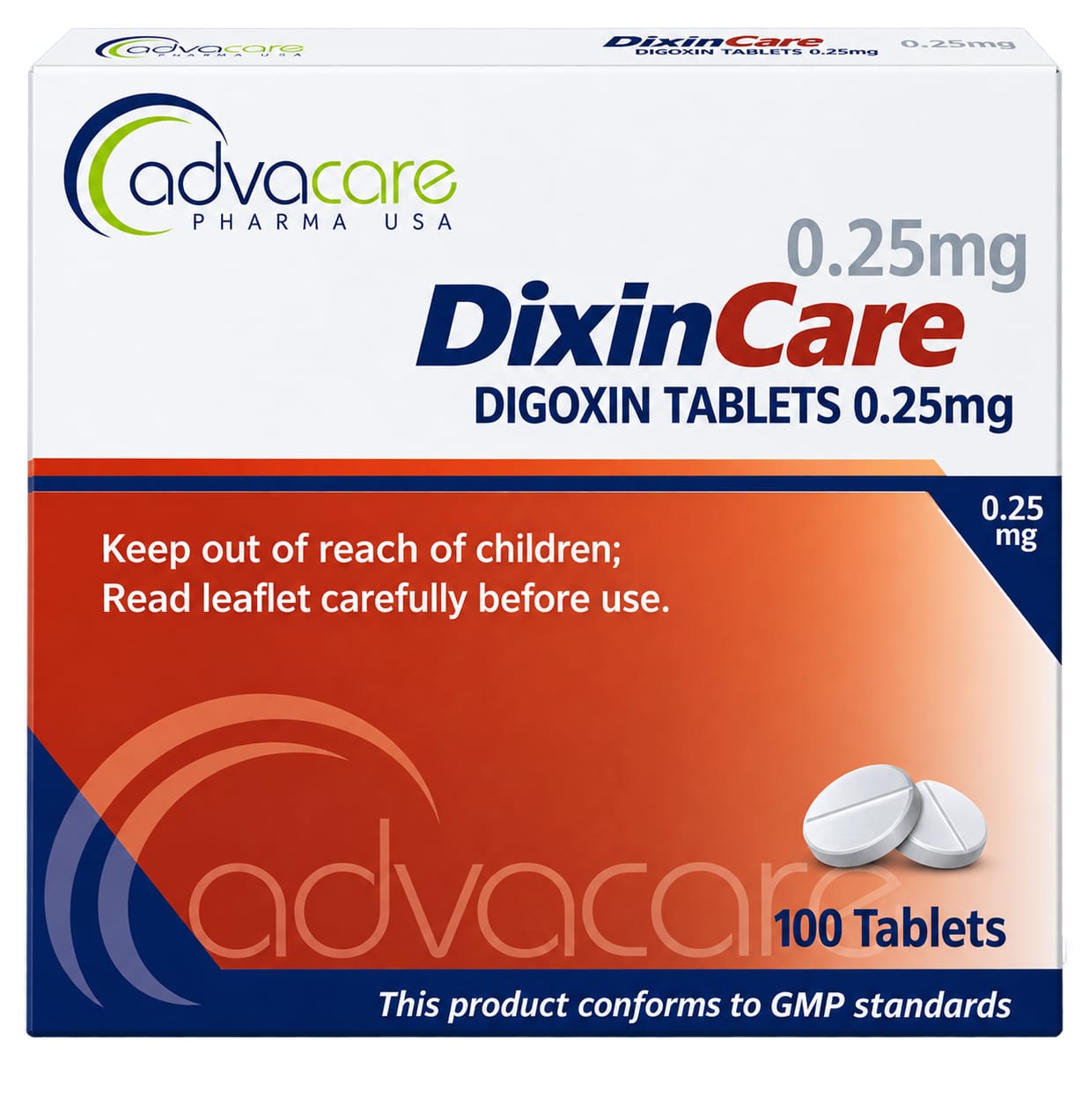
Quick overview
Digoxin Tablet (generic name: digoxin) is a cardiac glycoside medicine used for heart failure and chronic atrial fibrillation, helping the heart pump more effectively and controlling heart rate. It is available only with a prescription, though generic versions exist. It has a narrow safety margin, so regular blood tests and careful dosing are needed to avoid toxicity.
What is Digoxin Tablet
Digoxin is a cardiac glycoside medicine that comes from the leaves of the Digitalis lanata (foxglove) plant. It is used for certain heart conditions and is available only with a prescription, though generic versions exist.
Digoxin Tablet uses
- Heart failure (used with other medicines to help the heart pump better)
- Chronic atrial fibrillation (used with other medicines to control heart rate)
- Increasing the strength of heart muscle contractions in children with heart failure
Benefits of Digoxin Tablet
- Helps improve symptoms of heart failure in selected patients.
- Increases the strength of heart contractions, helping the heart pump more effectively.
- Can help reduce shortness of breath and fatigue related to heart failure.
- Helps control a rapid heart rate in atrial fibrillation.
- Slows electrical conduction through the heart, helping improve heart-rate control.
- May help reduce some heart-failure-related hospitalizations when appropriately prescribed.
How Digoxin Tablet works
Digoxin blocks a pump in heart muscle cells called the sodium pump. This causes more calcium to build up inside the cells, making the heart squeeze harder with each beat. It also slows the electrical signal through a part of the heart called the AV node, which slows the heart rate.
Digoxin Tablet dosage
Take it at the same time every day. Keep taking it even if you feel well, and refill your prescription before you run out. If using the oral solution, measure the dose with the dosing syringe provided, not a kitchen spoon. Meals high in bran fiber can reduce how much is absorbed, so try to keep your diet routine consistent. Monitor and record your heart rate and blood pressure daily as advised by your doctor. Expect regular blood tests to check drug levels, kidney function, and electrolytes. Do not stop taking this medicine suddenly, as your condition may get worse. Do not take larger amounts than advised, and do not stop without consulting your doctor.
| Age group | Dose |
|---|---|
| Under 5 years | Weight-based specialist dosing; tablets generally unsuitable |
| 5–10 years | About 3.2–6.4 mcg/kg twice daily |
| >10–17 years | About 2.4–3.6 mcg/kg once daily |
| 18–64 years | Commonly 0.125–0.25 mg once daily |
| 65+ years | Often 0.125 mg once daily or less, especially with reduced kidney function |
Available forms and strengths
- Oral tablet
- Oral solution/elixir
- Injectable solution
Side effects of Digoxin Tablet
Common
- Loss of appetite
- Nausea, vomiting, or diarrhea
- Stomach/abdominal pain or intestine problems
- Blurry vision or yellow/green tinted vision
- Headache
- Weakness or feeling tired
- Dizziness
- Confusion
- Anxiety, depression, or hallucinations
- Enlarged or tender breasts in men
- Rash or other skin reactions
Serious
- Severe allergic reaction (breathing problems, wheezing, swelling of face/lips/mouth/tongue/throat, hives, trouble swallowing)
- Heart rate or rhythm changes, including a slower than normal heartbeat (bradycardia), irregular heartbeat, or fainting
- In rare cases, the heart suddenly stopping (cardiac arrest)
- Digoxin toxicity (loss of appetite, nausea or vomiting, persistent diarrhea, confusion, weakness, vision changes, abnormal heart rhythm, fast or slow heartbeat)
- Bloody or black, tarry stools, or severe stomach pain
- Unusual bruising or bleeding
- Low platelet counts (reported rarely)
Warnings and precautions
- Do not use this medicine if you are allergic to digoxin or any digitalis medicine, or if you have a dangerous heart rhythm called ventricular fibrillation.
- This medicine has a narrow safety margin — the helpful dose and the harmful dose are close together, so your dose is carefully calculated and monitored with blood tests.
- Do not stop taking this medicine suddenly without talking to your doctor, as your condition could get worse.
- Tell your doctor before starting if you have Wolff-Parkinson-White syndrome, sick sinus syndrome, AV block without a pacemaker, a recent heart attack, myocarditis, amyloid heart disease, or a certain type of heart failure.
- Low potassium or magnesium levels, or high calcium levels, can make toxicity more likely, while low calcium can stop the medicine from working properly.
- Avoid becoming overheated or dehydrated, since this can affect your kidney function and electrolyte levels, both of which influence how much of this medicine builds up in your body.
- It is not fully known how digoxin affects pregnancy, but long experience with it has not shown an increased risk of birth defects or miscarriage.
- Untreated heart failure or atrial fibrillation in pregnancy carries its own risks. Your doctor will decide if you should take it, and your dose may need adjusting during and after pregnancy.
- Digoxin passes into breast milk, but the amount a breastfed baby receives is small and unlikely to cause problems. Talk with your doctor about breastfeeding while taking this medicine.
- This medicine is cleared from the body by the kidneys, so kidney problems can cause it to build up and increase the risk of toxicity. Your kidney function will be checked regularly and your dose adjusted accordingly.
- It is not known exactly how alcohol affects this medicine, but drinking alcohol may increase the risk of dizziness, blurred vision, and confusion while taking it. Ask your doctor before drinking alcohol.
- This medicine can affect your alertness or coordination.
- Do not drive or do activities that require alertness until you know how it affects you.
Storage
- Store at 20–25°C (68–77°F).
- Protect from light and moisture.
- Keep in a cool, dry place.
- Keep in the original, tightly closed container.
- Keep out of reach of children.
When to see a doctor
- Get emergency help right away if you have signs of a severe allergic reaction, such as an unexplained rash, difficulty breathing, or swelling of the mouth, lips, or throat.
- Call your doctor right away if you notice early signs of too much medicine in your body, such as nausea, vomiting, loss of appetite, or diarrhea that will not go away, since these are often the first signs of toxicity.
- Call your doctor right away if you have blurred vision, or objects looking yellow or green, or see halos around lights.
- Call your doctor right away if you notice a fast, slow, or uneven heartbeat, or feel light-headed as though you might pass out.
- Call your doctor right away if you have confusion, weakness, unusual tiredness, hallucinations, or changes in thinking or behavior.
- Call your doctor right away if you have black or bloody stools, severe stomach pain, breast swelling or tenderness, a rash, or unusual bruising or bleeding.
- If you or someone else takes too much of this medicine, get emergency medical help right away or contact a poison control center, as an overdose can be fatal.
Alternatives
- Amiodarone
- Diltiazem
- Carvedilol
- Metoprolol
- Bisoprolol
Watch the video
FAQs
What is Digoxin Tablet used for?
It is used for heart failure, to help the heart pump more effectively, and for chronic atrial fibrillation, to control heart rate, usually alongside other medicines.
How does Digoxin Tablet work?
Digoxin blocks the sodium pump in heart muscle cells, causing calcium to build up inside the cells so the heart squeezes harder. It also slows electrical signals through the AV node, slowing the heart rate.
What are the signs of digoxin toxicity?
Signs include loss of appetite, nausea or vomiting, persistent diarrhea, confusion, weakness, vision changes such as blurry or yellow/green tinted vision, and abnormal heart rhythm.
Can I stop taking Digoxin Tablet suddenly?
No, you should not stop taking it suddenly without consulting your doctor, as your condition may get worse.
Is Digoxin Tablet safe during pregnancy and breastfeeding?
Long experience has not shown an increased risk of birth defects or miscarriage, and only a small amount passes into breast milk, but you should discuss use with your doctor, who will adjust your dose as needed.
General information, not medical advice
Your prescriber and the leaflet in your pack know your situation. This page does not.
- Follow your prescriber and the leaflet
- Don't start, stop, or change a dose on your own
- Doses and warnings differ by country and product
Sources
Video
Related medicines

Injectafer Injection: Uses, Dosage, Side Effects, Precautions and Alternates
Iron products
Injectafer (ferric carboxymaltose) treats iron deficiency anemia and heart failure-related iron deficiency via IV. Learn uses, dosage, side effects, and

Gliclazide Tablet: Uses, Dosage, Side Effects, Precautions and Alternates
Sulfonylurea (hypoglycemic/antidiabetic agent)
Gliclazide Tablet is a sulfonylurea for type 2 diabetes that boosts insulin release. Learn about dosage, side effects, warnings, and precautions.