
Safety
General information, not medical advice
Your prescriber and the leaflet in your pack know your situation. This page does not.
- Follow your prescriber and the leaflet
- Don't start, stop, or change a dose on your own
- Doses and warnings differ by country and product
Dilantin Capsule: Uses, Dosage, Side Effects, Precautions and Alternates
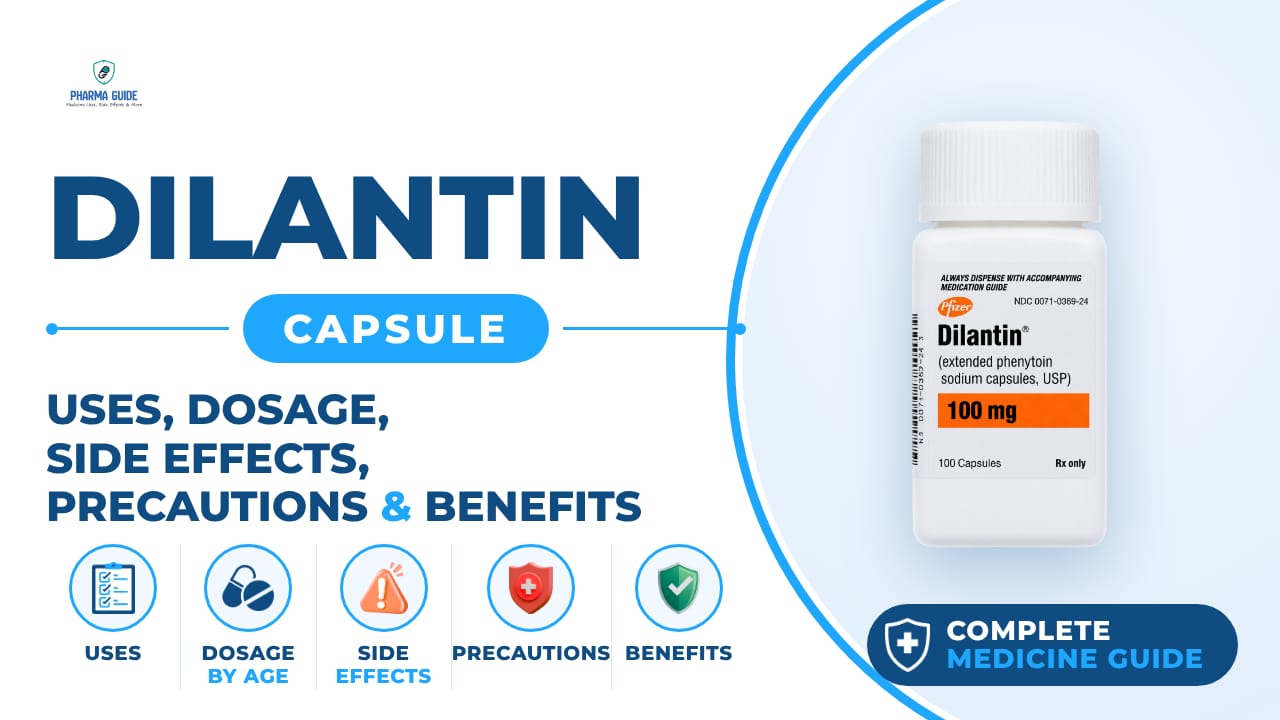
| Generic name | Phenytoin |
|---|---|
| Drug class | Antiepileptic (hydantoin anticonvulsant) |
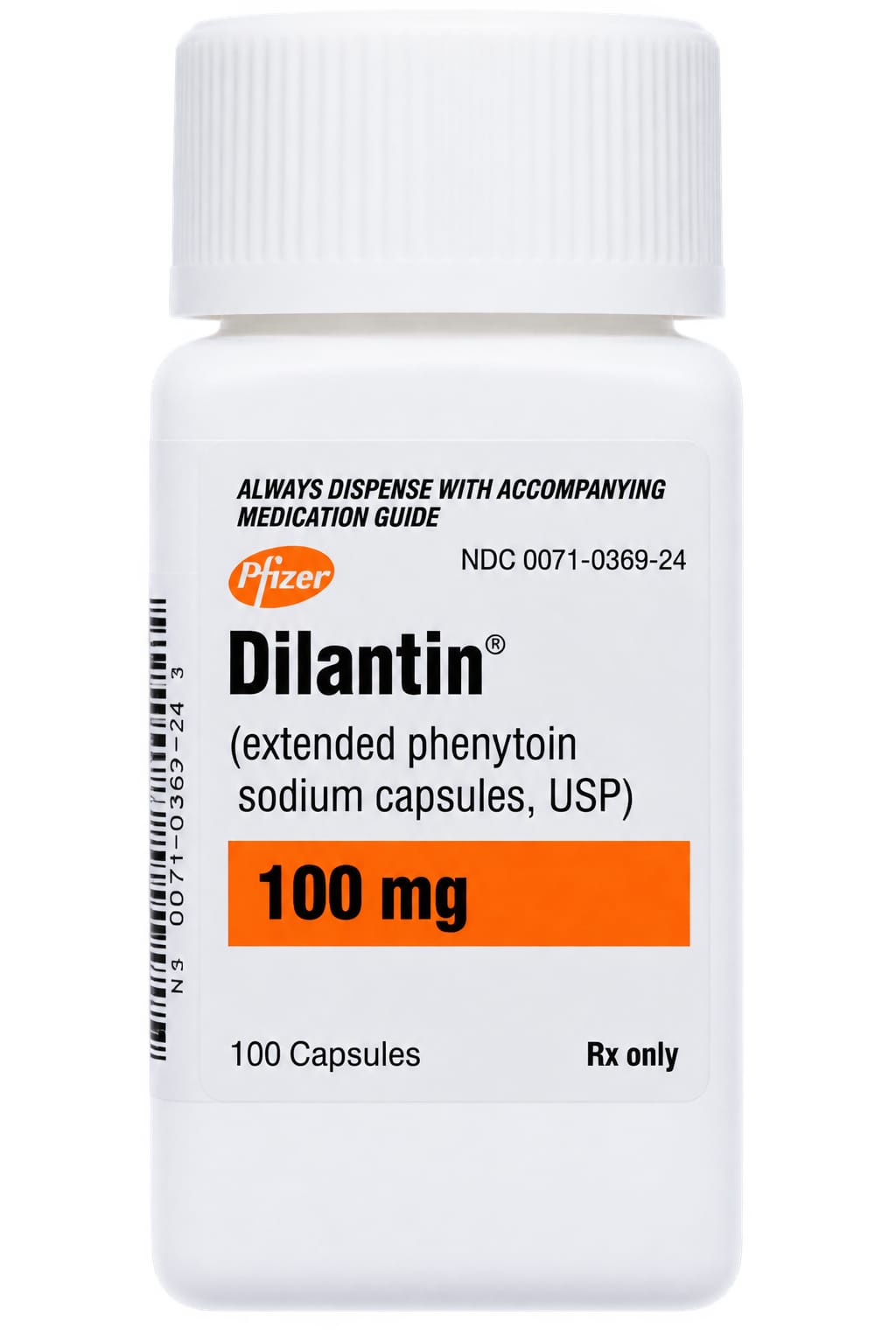
| Forms | Extended-release oral capsule, Chewable tablet, Oral liquid suspension |
Quick overview
Dilantin Capsule contains phenytoin, an antiepileptic medicine in the hydantoin class. It is used to control tonic-clonic (grand mal) seizures, complex partial seizures, and seizures that occur during or after brain surgery. It works by calming overactive electrical activity in the brain. Dilantin must be taken exactly as prescribed, and it comes in extended-release capsule, chewable tablet, and oral liquid forms.
What is Dilantin Capsule
Dilantin is a brand-name prescription medicine that contains the active ingredient phenytoin. It belongs to the antiepileptic drug class and is used to control seizures.
Dilantin Capsule uses
- Treating tonic-clonic (grand mal) seizures
- Treating complex partial (psychomotor or temporal lobe) seizures
- Preventing and treating seizures that happen during or after brain surgery
Benefits of Dilantin Capsule
- Helps control and reduce the number of seizures
- Can help prevent seizures around the time of brain surgery
How Dilantin Capsule works
Phenytoin works by calming down overactive electrical activity in the brain, which helps stop the spread of seizures.
Dilantin Capsule dosage
Take Dilantin exactly as your doctor tells you, usually once, twice, or three times a day depending on the form prescribed. Try to take your doses at the same times every day to keep a steady level of medicine in your body. Avoid eating for about an hour before and after taking a dose, since food can lower how much of the drug your body absorbs.
Swallow capsules whole; do not chew them. Chewable tablets can be chewed before swallowing or swallowed whole. If using the liquid form, shake the bottle well and measure the dose with an oral syringe or medicine cup rather than a household spoon.
If you miss a dose, take it as soon as you remember, but if it is almost time for your next dose, skip the missed one and go back to your normal schedule. Do not double up.
Do not stop taking this medicine suddenly without talking to your doctor, since stopping abruptly can cause serious problems including seizures that will not stop. It may take a couple of weeks before your seizures are well controlled.
Practice good dental hygiene, including regular brushing, flossing, and dentist visits, to help prevent gum swelling that this medicine can cause.
| Age group | Dose |
|---|---|
| Under 6 Months | Use only if prescribed by a specialist |
| 6 Months–17 Years | 5 mg/kg/day, divided into 2–3 doses (adjusted by doctor) |
| Adults (18–64 Years) | 100 mg three times daily (usual maintenance: 300–400 mg/day) |
| Older Adults (65+ years) | Lower starting dose; adjusted based on blood levels and response |
Available forms and strengths
- Extended-release oral capsule
- Chewable tablet
- Oral liquid suspension
Side effects of Dilantin Capsule
Common
- Uncontrolled eye movements (nystagmus)
- Problems with coordination, such as walking
- Slurred speech
- Drowsiness
- Confusion
- Dizziness
- Trouble sleeping
- Nervousness
- Tremor
- Headache
- Nausea
- Vomiting
- Constipation
- Skin rash
- More hair growth on the face, chest, and back
- Swollen or bleeding gums
Serious
- Heart problems, including low heart rate and heart attack
- Liver problems, including sudden liver failure
- Severe skin reactions, such as blistering or peeling skin
- Blood disorders, such as anemia, low platelets, or low white blood cells
- New or worsening depression, unusual mood or behavior changes, or suicidal thoughts
- High blood sugar
- Severe allergic reaction, including swelling of the face, lips, tongue, or throat and trouble breathing
- Softening of the bones (osteomalacia), which can lead to broken bones
- Swollen lymph nodes
Warnings and precautions
- Stopping this medicine suddenly can cause serious problems, including seizures that will not stop. Never stop taking it without talking to your doctor first. Like other antiepileptic medicines, this drug may cause suicidal thoughts or actions in a small number of people.
- This medicine may cause rare but serious skin reactions, including Stevens-Johnson syndrome and toxic epidermal necrolysis, which can be fatal. It can also cause swollen lymph nodes, which may sometimes be linked to more serious lymph node conditions, and may cause a rare, potentially fatal condition affecting multiple organs, with symptoms like fever, rash, and swollen lymph nodes, usually appearing 2 to 4 weeks after starting treatment.
- Long-term use of this medicine can weaken bones, increasing the risk of fractures, osteoporosis, and low vitamin D or calcium levels.
- Taking Dilantin during pregnancy carries risks to the baby, including birth defects and bleeding problems after birth, but untreated seizures during pregnancy also carry risks. Talk with your doctor about the risks and benefits before deciding whether to take Dilantin while pregnant.
- It is not fully known if Dilantin is safe during breastfeeding, since it passes into breast milk in small amounts. Talk with your doctor before breastfeeding while taking this medicine.
- People with kidney problems should use this medicine with caution, as it may increase the risk of severe side effects, and kidney function should be monitored. People with liver problems should use this medicine with caution, since the liver is the main way the body breaks down phenytoin, and liver problems can lead to early signs of toxicity.
- It is not safe to drink alcohol while taking this medicine without talking to your doctor first, since alcohol can change the levels of the drug in your blood and cause serious problems.
- This medicine can slow your thinking and affect your coordination, so avoid driving, operating heavy machinery, or doing other dangerous activities until you know how it affects you.
Storage
- Store Dilantin Capsules at room temperature between 68°F to 77°F (20°C to 25°C) in tight, light-resistant containers.
- Protect from moisture.
- Keep this and all medicines out of the reach of children.
- Do not use capsules which are discolored.
When to see a doctor
- Get medical help right away if you have thoughts of suicide or self-harm, new or worsening depression, anxiety, agitation, trouble sleeping, irritability, aggression, or other unusual changes in mood or behavior.
- Call your doctor right away if you notice swelling of your face, eyes, lips, or tongue, trouble swallowing or breathing, a skin rash, hives, ongoing fever, swollen glands or sore throat, painful mouth sores, yellowing of skin or eyes, unusual bruising or bleeding, severe tiredness or weakness, severe muscle pain, or frequent infections.
- Get emergency help immediately if you notice signs of a severe allergic reaction, such as itchy skin and rash, swollen lips or tongue, or trouble breathing like a tight chest or shortness of breath.
- Tell your doctor right away if you develop a skin rash, since treatment may need to be stopped.
- If you think you have taken too much of this medicine, contact your doctor or a poison control center right away, or go to the nearest emergency room if symptoms are severe.
Alternatives
- Carbamazepine
- Levetiracetam
- Oxcarbazepine
Watch the video
FAQs
What is Dilantin Capsule used for?
Dilantin is used to treat tonic-clonic (grand mal) seizures, complex partial (psychomotor or temporal lobe) seizures, and to prevent or treat seizures during or after brain surgery.
How does Dilantin Capsule work?
Its active ingredient, phenytoin, works by calming down overactive electrical activity in the brain, which helps stop the spread of seizures.
Can I stop taking Dilantin suddenly?
No, you should not stop taking Dilantin suddenly without talking to your doctor, since stopping abruptly can cause serious problems including seizures that will not stop.
Should I take Dilantin Capsule with food?
You should avoid eating for about an hour before and after taking a dose, since food can lower how much of the drug your body absorbs.
What are common side effects of Dilantin Capsule?
Common side effects include uncontrolled eye movements, coordination problems, slurred speech, drowsiness, confusion, dizziness, trouble sleeping, nervousness, tremor, headache, nausea, vomiting, constipation, skin rash, increased hair growth, and swollen or bleeding gums.
General information, not medical advice
Your prescriber and the leaflet in your pack know your situation. This page does not.
- Follow your prescriber and the leaflet
- Don't start, stop, or change a dose on your own
- Doses and warnings differ by country and product
Sources
Video
Related medicines

Injectafer Injection: Uses, Dosage, Side Effects, Precautions and Alternates
Iron products
Injectafer (ferric carboxymaltose) treats iron deficiency anemia and heart failure-related iron deficiency via IV. Learn uses, dosage, side effects, and

Gliclazide Tablet: Uses, Dosage, Side Effects, Precautions and Alternates
Sulfonylurea (hypoglycemic/antidiabetic agent)
Gliclazide Tablet is a sulfonylurea for type 2 diabetes that boosts insulin release. Learn about dosage, side effects, warnings, and precautions.