
Safety
General information, not medical advice
Your prescriber and the leaflet in your pack know your situation. This page does not.
- Follow your prescriber and the leaflet
- Don't start, stop, or change a dose on your own
- Doses and warnings differ by country and product
Dilaudid Tablet: Uses, Dosage, Side Effects, Precautions and Alternates
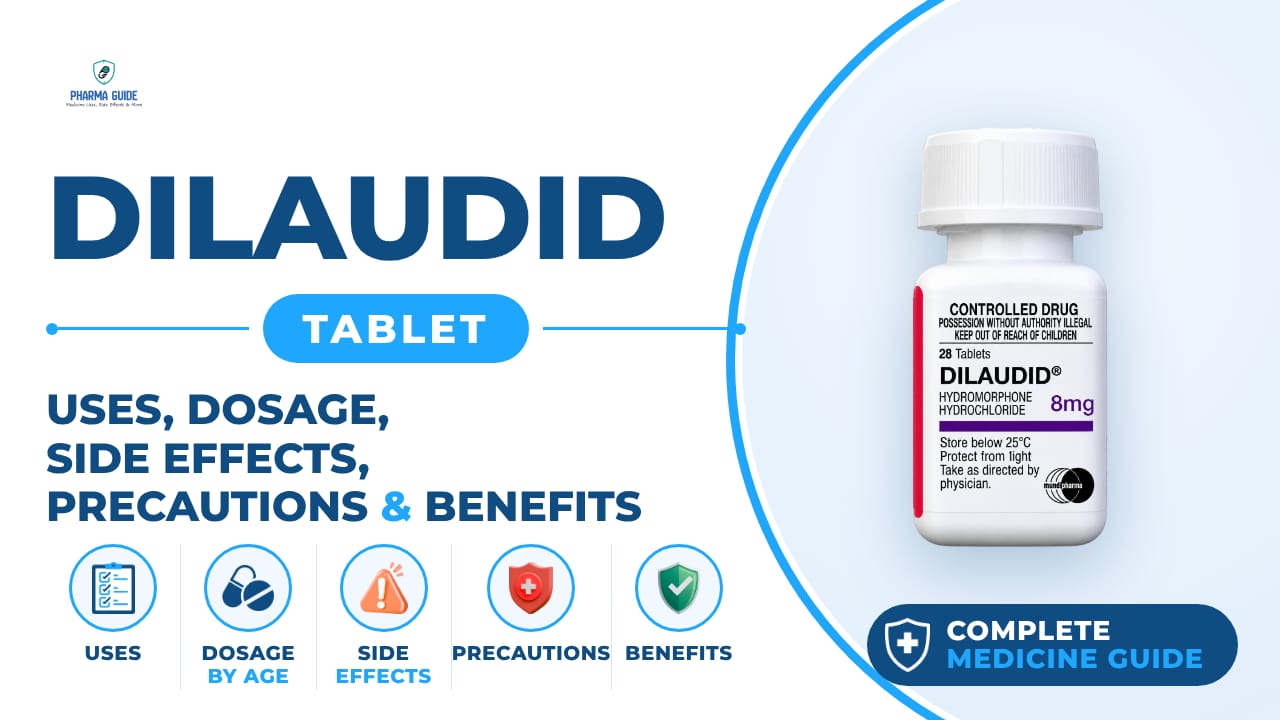
| Generic name | hydromorphone hydrochloride |
|---|---|
| Drug class | Opioid analgesic |
| Forms | Oral tablets (2 mg, 4 mg, 8 mg), Oral solution (5 mg/5 mL), Injection |
Quick overview
Dilaudid Tablet (hydromorphone hydrochloride) is a strong prescription opioid analgesic used to manage pain severe enough to require an opioid medicine, particularly when other pain treatments have not worked well enough or cannot be tolerated. It provides effective and prompt relief of moderate to severe pain, usually with minimal nausea and vomiting. It carries serious risks, including addiction, breathing problems, and interactions with other substances, so it must be taken exactly as prescribed.
What is Dilaudid Tablet
Dilaudid is a strong prescription opioid (narcotic) pain medicine. It comes as tablets and an oral solution, and is also available as an injection. It is used when other pain medicines have not worked well enough or cannot be tolerated.
Dilaudid Tablet uses
- Management of pain severe enough to require an opioid pain medicine, when other pain treatments do not work well enough or cannot be tolerated
- Short-term relief of severe pain when other treatment options have failed or are not suitable
Benefits of Dilaudid Tablet
- Provides effective and prompt relief of moderate to severe pain, usually with minimal nausea and vomiting
How Dilaudid Tablet works
Dilaudid contains hydromorphone, an opioid that acts on specific nerve cells in the spinal cord and brain to raise the threshold for feeling pain and reduce how much the pain bothers you.
Dilaudid Tablet dosage
Take Dilaudid exactly as prescribed by your healthcare provider; use the lowest dose possible for the shortest time needed. Do not change your dose without talking to your doctor first. Take at about the same times each day. It can be taken with or without food, but try to take it the same way every time, and take it with a full glass of water.
If you are taking extended-release tablets, swallow them whole; do not cut, break, chew, crush, or dissolve them. If you miss a dose, take your next dose at your usual time; do not take a double dose to make up for a missed one. If you have been taking it regularly, do not stop suddenly without talking to your healthcare provider first. If using the oral liquid, measure it carefully with the measuring device provided, not a kitchen spoon.
| Age group | Dose |
|---|---|
| Under 18 years | Not established/recommended |
| 18–64 years | 2–4 mg every 4–6 hours as needed; individualized by a doctor |
| 65 years and older | Start at the lowest appropriate dose and increase cautiously |
Available forms and strengths
- Oral tablets (2 mg, 4 mg, 8 mg)
- Oral solution (5 mg/5 mL)
- Injection
Side effects of Dilaudid Tablet
Common
- Lightheadedness
- Dizziness
- Sedation/drowsiness
- Nausea and vomiting
- Sweating
- Flushing
- Dysphoria (a profound state of unhappiness, anxiety, or unease)
- Euphoria (a state of intense happiness or elation)
- Dry mouth
- Itching (pruritus)
- Constipation
- Headache
- Abdominal pain
Serious
- Trouble breathing or shortness of breath
- Fast heartbeat
- Chest pain
- Swelling of the face, tongue, or throat
- Extreme drowsiness
- Light-headedness when changing positions or fainting
- Agitation
- High body temperature
- Trouble walking, stiff muscles
- Mental changes such as confusion
- Slow or shallow breathing
- Severe stomach pain with nausea or vomiting
- Signs of low cortisol (adrenal insufficiency): nausea, vomiting, loss of appetite, fatigue, weakness, dizziness, low blood pressure
- Seizures
Warnings and precautions
- You can become addicted to Dilaudid even if you take it exactly as prescribed. Misuse or abuse can lead to overdose and death.
- Dilaudid can cause serious or life-threatening breathing problems, especially when starting treatment, after a dose increase, or if too much is taken.
- Tablets must be swallowed whole. Cutting, breaking, crushing, chewing, or dissolving them can cause a dangerous overdose and death.
- Never give this medicine to anyone else. Even one accidental dose can be fatal, especially for a child.
- Taking Dilaudid with other opioids, benzodiazepines, alcohol, or other central nervous system depressants can cause severe drowsiness, decreased awareness, breathing problems, coma, and death.
- Long-term use during pregnancy can cause life-threatening withdrawal symptoms in your newborn baby.
- Do not stop taking Dilaudid suddenly if you have been using it regularly; this can cause withdrawal symptoms and worsening pain. Your doctor will guide you on tapering the dose gradually.
- Dilaudid can cause a serious condition called serotonin syndrome, especially when combined with certain antidepressants or migraine medicines.
- Taking Dilaudid for a long time during pregnancy can cause withdrawal symptoms in your newborn baby that could be life-threatening if not recognized and treated. Tell your doctor right away if you are pregnant or planning to become pregnant.
- Dilaudid passes into breast milk and may harm your baby. Watch infants closely for increased sleepiness, breathing difficulties, or limpness, and get medical care right away if you notice these signs.
- Tell your doctor if you have kidney problems, as your dose may need to be lower and you may need closer monitoring.
- Tell your doctor if you have liver problems, as your dose may need to be lower and you may need closer monitoring.
- Do not drink alcohol while taking Dilaudid. Combining alcohol with this medicine can cause severe drowsiness, slow or stopped breathing, coma, and death.
- Do not drive or operate machinery until you know how Dilaudid affects you, since it can cause drowsiness, dizziness, or light-headedness.
Storage
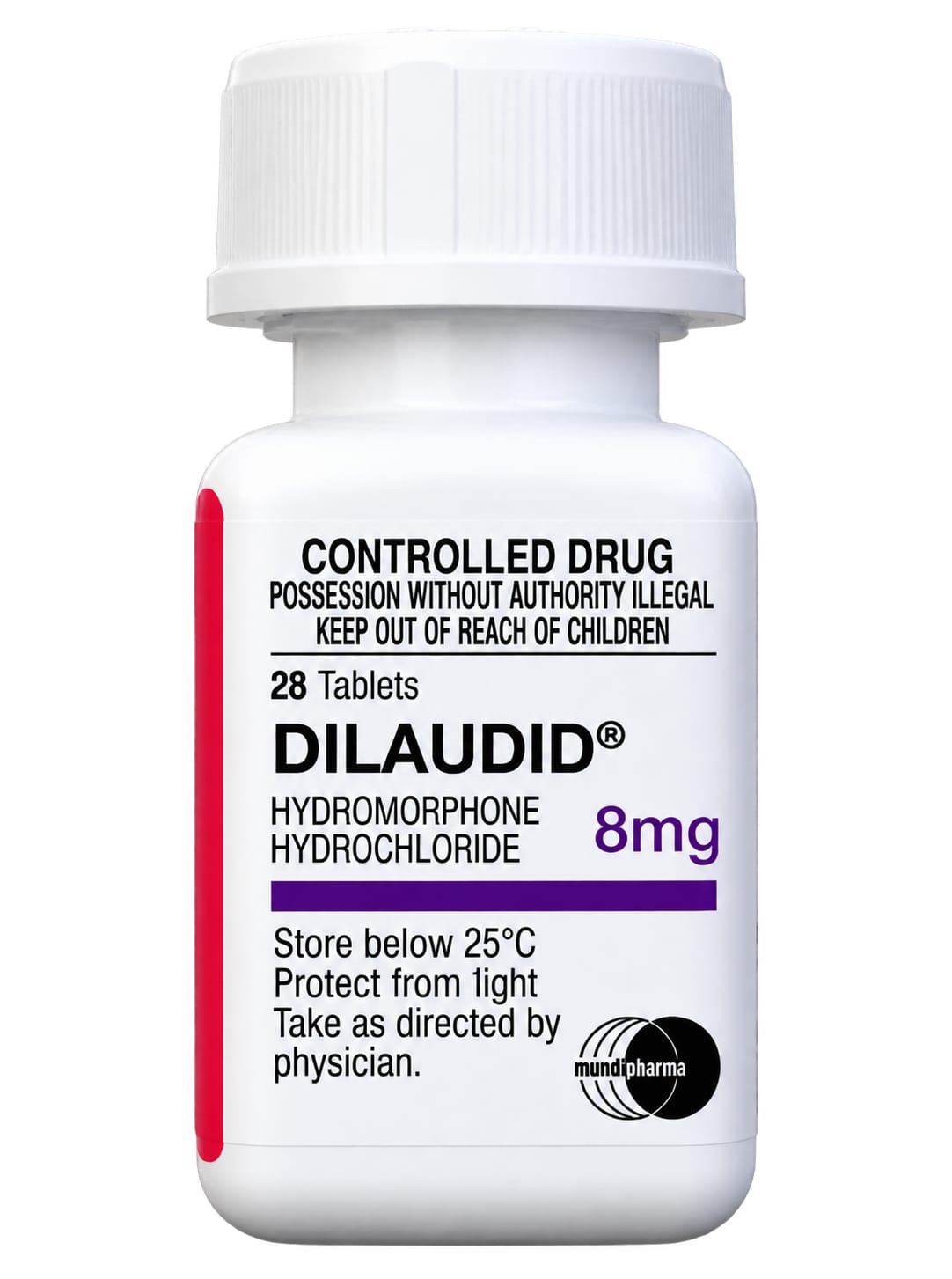
- Store below 25°C and protect from light
- Store in a cool, dry place away from moisture, heat, or sunlight; do not store in the bathroom, near a sink, in the car, or on windowsills
- Keep tablets in a dry place
- Store securely, out of sight and reach of children and out of reach of others, including visitors to the home
- Dispose of expired, unwanted, or unused medicine by taking it to a pharmacy for safe disposal, or by flushing down the toilet if a take-back option is not available
When to see a doctor
- Get emergency help right away if you take too much medicine (overdose) — this can cause serious or life-threatening breathing problems.
- Get emergency medical help right away if you have trouble breathing or shortness of breath, fast heartbeat, chest pain, swelling of the face/tongue/throat, extreme drowsiness, feeling faint, agitation, high body temperature, trouble walking, stiff muscles, or confusion.
- Call your doctor straight away, or go straight to the Emergency Department, if you notice difficulty breathing, fainting or dizziness on standing, mood changes, extreme sedation, disorientation, nightmares, slow or noticeable heartbeats, severe stomach pain with vomiting, difficulty urinating, pancreas inflammation, or an allergic reaction (swelling of the face, lips, tongue, or shortness of breath).
- If you or someone else may have taken too much Dilaudid, seek immediate medical help even if there are no symptoms yet.
- Seek immediate medical care for your baby if they show changes in breathing, are unusually hard to comfort, have tremors, or have increased stools, sneezing, yawning, vomiting, or fever.
Alternatives
- Morphine
- Oxycodone
- Tapentadol
Watch the video
FAQs
What is Dilaudid Tablet used for?
Dilaudid is used to manage pain severe enough to require an opioid pain medicine, particularly when other pain treatments have not worked well enough or cannot be tolerated.
How should I take Dilaudid Tablet?
Take it exactly as prescribed, using the lowest dose for the shortest time needed, at about the same times each day, with a full glass of water. Extended-release tablets must be swallowed whole and never cut, broken, chewed, crushed, or dissolved.
What are the common side effects of Dilaudid Tablet?
Common side effects include lightheadedness, dizziness, sedation, nausea and vomiting, sweating, flushing, dry mouth, itching, constipation, headache, and abdominal pain.
Can I drink alcohol while taking Dilaudid Tablet?
No, alcohol should be avoided while taking Dilaudid because combining it with the medicine can cause severe drowsiness, slow or stopped breathing, coma, and death.
What should I do if I miss a dose of Dilaudid Tablet?
If you miss a dose, take your next dose at your usual time; do not take a double dose to make up for the missed one.
General information, not medical advice
Your prescriber and the leaflet in your pack know your situation. This page does not.
- Follow your prescriber and the leaflet
- Don't start, stop, or change a dose on your own
- Doses and warnings differ by country and product
Sources
Video
Related medicines

Butorphanol Nasal Spray: Uses, Dosage, Side Effects, Precautions and Alternates
Opioid analgesic
Butorphanol Nasal Spray is a prescription opioid for short-term moderate to severe pain in adults, used for up to 3 days with careful dosing.
Methadone Tablet: Uses, Dosage, Side Effects, Precautions and Alternates
Opioid analgesic
Methadone Tablet is an opioid used for severe pain and opioid addiction treatment. Learn about its uses, dosage, side effects, and safety warnings.