
Safety
General information, not medical advice
Your prescriber and the leaflet in your pack know your situation. This page does not.
- Follow your prescriber and the leaflet
- Don't start, stop, or change a dose on your own
- Doses and warnings differ by country and product
Dioralyte Sachet: Uses, Dosage, Side Effects, Precautions and Alternates
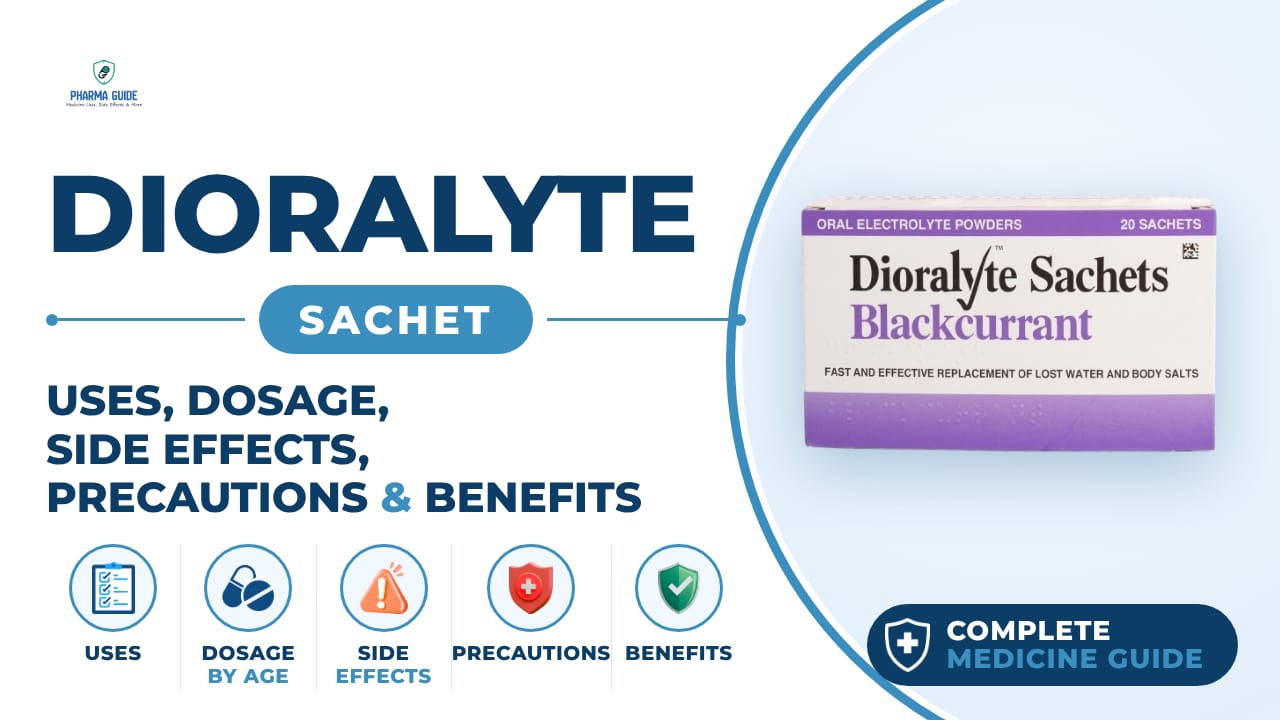
| Generic name | Oral Rehydration Salts (ORS) |
|---|---|
| Drug class | Oral electrolyte replacement / rehydration solution |
| Forms | Sachet (powder for oral solution) |
Quick overview
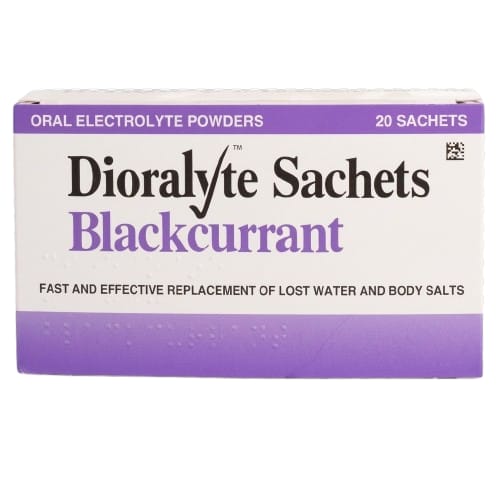
Dioralyte Sachet is an oral rehydration salt (ORS) product used to treat dehydration caused by diarrhoea, and to replace fluids and body salts lost through vomiting or exercise. The powder, which contains sodium chloride, potassium chloride, disodium hydrogen citrate, and a small amount of glucose, is mixed with water before drinking. It is available over the counter without a prescription.
What is Dioralyte Sachet
Dioralyte Sachets are an oral rehydration treatment that you mix with water and then drink. They are available over the counter without a prescription. The powder contains essential body salts such as sodium chloride, potassium chloride, disodium hydrogen citrate, and a small amount of glucose (sugar).
Dioralyte Sachet uses
- Treating dehydration caused by diarrhoea
- Replacing fluids and body salts lost through vomiting or exercise
Benefits of Dioralyte Sachet
- Replaces fluids and salts faster and more effectively than water alone
- Fast and effective rehydration once the solution is absorbed
- Helps you feel better quicker than water alone
How Dioralyte Sachet works
Dioralyte contains a balanced mix of salts and glucose. The glucose helps your body absorb the salts and water more efficiently through the gut, moving fluid back into your bloodstream faster than drinking water alone.
Dioralyte Sachet dosage
Empty the contents of the sachet(s) into a glass, add water, and stir until the powder dissolves. Use a sachet as soon as diarrhoea symptoms start and after each loose, watery stool. Make the drink fresh just before you plan to drink it. For babies up to 2 years old, seek guidance from a pharmacist or doctor before use. Adults, including elderly people, and children can use this product, but children under 2 years should only use it under medical guidance.
| Age group | Dose |
|---|---|
| Under 1 year | 1 sachet/day |
| 1–17 years | 1 sachet/day |
| 18–60 years | 2 sachets/day |
| 60+ years | 2 sachets/day |
Available forms and strengths
- Sachet (powder for oral solution)
Side effects of Dioralyte Sachet
Common
- Diarrhea-related dehydration
- Thirst
- Dry mouth
- Reduced urination
Serious
- Nausea
- Vomiting
- Mild stomach discomfort
- Bloating
- High sodium levels if mixed incorrectly or taken excessively
Warnings and precautions
- Do not use this product if you are allergic to any of its ingredients, or if your bowel is partially or fully blocked.
- Check with a doctor or pharmacist first if the person taking it is a child under 2 years old, if diarrhoea has lasted 24-48 hours, if you have ongoing or persistent diarrhoea, if you're on a low potassium or low sodium diet, if you have liver or kidney disease, or if you have diabetes.
- If you have the condition phenylketonuria, speak to your doctor before taking this product.
- If you take water tablets (diuretics such as furosemide, spironolactone, or indapamide) and are dehydrated, speak to your doctor for advice on managing your medication.
- Dioralyte can generally be used during pregnancy, but you should speak to a doctor or pharmacist first.
- If breastfeeding, mix with the exact amount of water stated on the packet.
- If you have kidney disease, tell your doctor or pharmacist before using this product so they can make sure it's safe for you.
- If you have liver disease, tell your doctor or pharmacist before using this product so they can make sure it's safe for you.
- Do not mix with juice, milk, or soft drinks.
- Store prepared solution according to packet instructions.
Storage
- The drink should be made just before it's going to be taken
- Throw away any remaining drink after one hour, or after 24 hours if it has been stored in a refrigerator
When to see a doctor
- Stop taking this product and get emergency medical help if you have signs of an allergic reaction, such as a rash, trouble swallowing, trouble breathing, or swelling of the lips, face, throat, or tongue.
- If you or someone else takes a lot more than the recommended amount, seek medical attention straight away.
Alternatives
- Electrolade
- Pedialyte
- ORS Sachet
Watch the video
FAQs
What is Dioralyte Sachet used for?
It is used to treat dehydration caused by diarrhoea, and to replace fluids and body salts lost through vomiting or exercise.
What does Dioralyte Sachet contain?
It contains sodium chloride, potassium chloride, disodium hydrogen citrate, and a small amount of glucose, which is mixed with water before drinking.
How do I use Dioralyte Sachet?
Empty the contents of the sachet into a glass, add water, and stir until dissolved. Use as soon as diarrhoea symptoms start and after each loose, watery stool, making the drink fresh just before drinking it.
Can children use Dioralyte Sachet?
Adults and children can use this product, but for babies up to 2 years old, you should seek guidance from a pharmacist or doctor before use, and children under 2 should only use it under medical guidance.
How long can prepared Dioralyte solution be stored?
The drink should be made just before taking it, and any remaining drink should be thrown away after one hour, or after 24 hours if stored in a refrigerator.
General information, not medical advice
Your prescriber and the leaflet in your pack know your situation. This page does not.
- Follow your prescriber and the leaflet
- Don't start, stop, or change a dose on your own
- Doses and warnings differ by country and product
Sources
Video
Related medicines

Injectafer Injection: Uses, Dosage, Side Effects, Precautions and Alternates
Iron products
Injectafer (ferric carboxymaltose) treats iron deficiency anemia and heart failure-related iron deficiency via IV. Learn uses, dosage, side effects, and

Gliclazide Tablet: Uses, Dosage, Side Effects, Precautions and Alternates
Sulfonylurea (hypoglycemic/antidiabetic agent)
Gliclazide Tablet is a sulfonylurea for type 2 diabetes that boosts insulin release. Learn about dosage, side effects, warnings, and precautions.