
Safety
General information, not medical advice
Your prescriber and the leaflet in your pack know your situation. This page does not.
- Follow your prescriber and the leaflet
- Don't start, stop, or change a dose on your own
- Doses and warnings differ by country and product
Diphenhydramine Capsule: Uses, Dosage, Side Effects, Precautions and Alternates

| Generic name | diphenhydramine |
|---|---|
| Drug class | Antihistamine (anticholinergic antiemetics, anticholinergic antiparkinson agents, antihistamines, miscellaneous anxiolytics, sedatives and hypnotics) |
| Forms | Tablet, Chewable tablet, Capsule, Liquid, Injection, Oral solution |
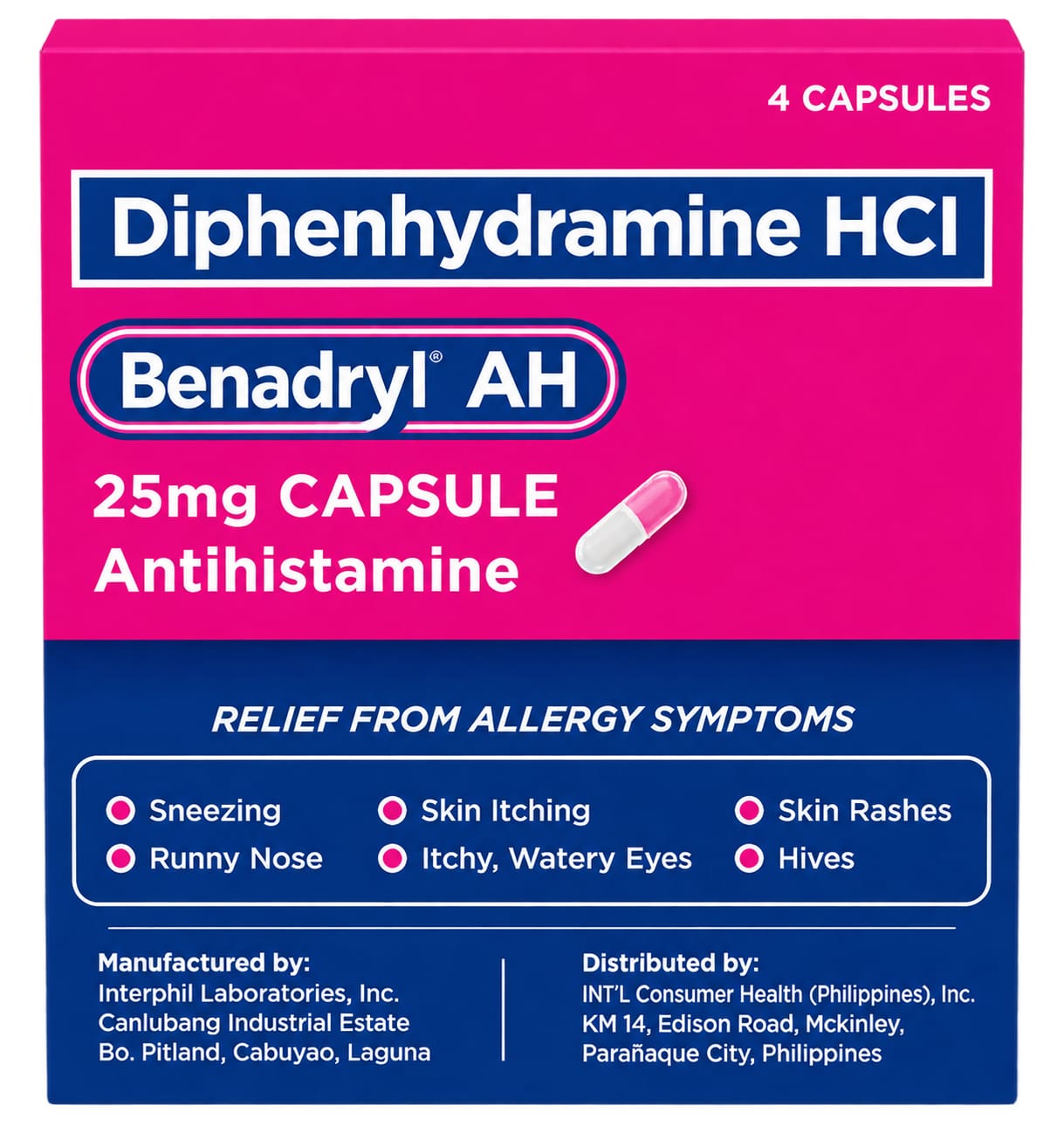
Quick overview
Diphenhydramine Capsule contains the antihistamine diphenhydramine, which reduces the effects of histamine in the body. It is used for allergy and cold symptoms, motion sickness, occasional sleep problems, certain Parkinson's disease symptoms, and itchy nose or throat. It can cause drowsiness because it reaches the brain, so caution is needed with activities like driving. It is available in several forms, with dosing that varies by age.
What is Diphenhydramine Capsule
Diphenhydramine is an antihistamine that reduces the effects of a natural chemical called histamine in the body. Histamine can cause sneezing, itching, watery eyes, and a runny nose.
Diphenhydramine Capsule uses
- Sneezing, runny nose, watery eyes, hives, skin rash, itching, and other cold or allergy symptoms
- Motion sickness
- Helping induce sleep
- Certain symptoms of Parkinson's disease
- Itchy nose or throat
Benefits of Diphenhydramine Capsule
- Reduces sneezing, runny nose, and itchy, watery eyes caused by allergies or colds
- Relieves itching and hives from mild allergic reactions
- Can provide short-term relief of nighttime symptoms and support occasional sleep problems
- May help prevent and treat motion sickness
How Diphenhydramine Capsule works
Diphenhydramine works by blocking histamine, a substance in the body that causes allergic symptoms. Because it also reaches the brain, it often causes drowsiness.
Diphenhydramine Capsule dosage
Use exactly as directed on the label or as prescribed by your doctor; do not use in larger or smaller amounts or for longer than recommended. Cold or allergy medicine is usually taken only for a short time until symptoms clear up. Do not give this medicine to a child younger than 2 years old, and always ask a doctor before giving a cough or cold medicine to a child. Do not use this medicine to make a child sleepy.
If taking a liquid form, measure the dose with a special dose-measuring spoon or medicine cup, not a household spoon. For motion sickness, take it before you will be in a situation that causes motion sickness, and continue taking it with meals and at bedtime for as long as needed. As a sleep aid, take it shortly before bedtime.
Call your doctor if symptoms do not improve after several days of treatment, or if you have a fever along with a headache, cough, or skin rash. Take doses spaced a few hours apart, and do not take more often than directed.
Do not use this medicine together with any other product that also contains diphenhydramine, even one used on the skin. Ask a doctor or pharmacist before using any other cold, cough, allergy, or sleep medicine, since many combination products already contain an antihistamine.
Diphenhydramine generally should not be used in older adults except to manage serious allergic reactions, because it may not be as safe as other options; talk to your doctor about risks and benefits if you are older.
If you miss a scheduled dose, take it as soon as you remember, but skip it if it is almost time for your next dose; do not double up.
| Age group | Dose |
|---|---|
| Under 2 years | Do not use unless specifically directed by a doctor |
| 2–5 years | Doctor's advice required; liquid formulation is generally preferred |
| 6–11 years | 12.5–25 mg every 4–6 hours as needed |
| 12 years & older | 25–50 mg every 4–6 hours as needed |
| Adults | 25–50 mg every 4–6 hours as needed |
Available forms and strengths
- Tablet
- Chewable tablet
- Capsule
- Liquid
- Injection
- Oral solution
Side effects of Diphenhydramine Capsule
Common
- Dizziness, drowsiness, loss of coordination
- Dry mouth, nose, or throat
- Constipation, upset stomach
- Dry eyes, blurred vision
- Day-time drowsiness or a 'hangover' feeling after night-time use
- Feeling excited or restless, especially in children
- Muscle weakness
Serious
- Signs of an allergic reaction: hives, difficulty breathing, swelling of face, lips, tongue, or throat
- Pounding heartbeats or fluttering in your chest
- Painful or difficult urination
- Little or no urinating
- Confusion, feeling like you might pass out
- Tightness in the neck or jaw, uncontrollable movements of the tongue
- Vision problems
Warnings and precautions
- Do not give this medication to a child younger than 2 years old. Always ask a doctor before giving a cough or cold medicine to a child, because death can occur from misuse of these medicines in very young children.
- Do not use diphenhydramine to make a child sleepy.
- Do not use this medicine with any other product containing diphenhydramine, even one used on the skin.
- Diphenhydramine may cause blurred vision and may impair your thinking or reactions; be careful if you drive or do anything that requires alertness and clear vision.
- Ask a doctor or pharmacist before using any other cold, cough, allergy, or sleep medicine, since antihistamines are contained in many combination medicines and taking certain products together can cause you to get too much of this type of medicine.
- Generally, diphenhydramine should not be used in older adults, except to manage serious allergic reactions, because it is not as safe or effective as other treatment options.
- Taking this medicine with other drugs that make you sleepy or slow your breathing, such as sleeping pills, narcotic pain medicine, muscle relaxers, or medicine for anxiety, depression, or seizures, can worsen these effects.
- It is not known whether diphenhydramine will harm an unborn baby. Ask a doctor before using this medicine if you are pregnant.
- Diphenhydramine can pass into breast milk and may harm a nursing baby. It may also slow breast milk production. Ask a doctor before using this medicine if you are breastfeeding.
- Ask a doctor or pharmacist if it is safe for you to take diphenhydramine if you have liver or kidney disease.
- Use alcohol cautiously, since it may increase drowsiness and dizziness while taking diphenhydramine.
- Use caution driving, operating machinery, or performing other hazardous activities, since diphenhydramine may cause dizziness or drowsiness.
Storage
- Store at room temperature away from moisture and heat
- Keep this medication in the container it came in, tightly closed, and out of reach of children
- Store it at room temperature and away from excess heat and moisture (not in the bathroom)
- Dispose of unneeded medications in a way so that pets, children, and other people cannot take them
- Do not flush this medication down the toilet; use a medicine take-back program
When to see a doctor
- Get emergency medical help if you have signs of an allergic reaction: hives, difficulty breathing, or swelling of your face, lips, tongue, or throat.
- Stop using diphenhydramine and call your doctor at once if you have pounding heartbeats or fluttering in your chest, painful or difficult urination, little or no urinating, confusion or feeling like you might pass out, or tightness in your neck or jaw with uncontrollable tongue movements.
- If an overdose is suspected, seek emergency medical attention or contact your local poison control center right away.
- Urgent medical care is needed for trouble breathing, swelling of the lips or tongue, fainting, severe weakness, chest tightness, confusion, seizures, or suspected overdose.
- If the person has collapsed, had a seizure, has trouble breathing, or cannot be awakened, call emergency services immediately.
- Call your doctor if symptoms do not improve after several days of treatment, or if you have a fever along with a headache, cough, or skin rash.
Alternatives
- Cetirizine
- Loratadine
- Fexofenadine
- Levocetirizine
Watch the video
FAQs
What is Diphenhydramine Capsule used for?
It is used for sneezing, runny nose, watery eyes, hives, skin rash, itching, motion sickness, occasional sleep problems, certain Parkinson's disease symptoms, and itchy nose or throat.
What is the dosage of Diphenhydramine Capsule for adults?
Adults and children 12 years and older typically take 25–50 mg every 4–6 hours as needed.
Can children use Diphenhydramine Capsule?
Do not give it to a child younger than 2 years old. For children 6–11 years, the dose is 12.5–25 mg every 4–6 hours as needed, and a doctor's advice is required for ages 2–5. Always ask a doctor before giving cold or cough medicine to a child, and do not use it to make a child sleepy.
What are the common side effects of Diphenhydramine Capsule?
Common side effects include dizziness, drowsiness, loss of coordination, dry mouth, nose, or throat, constipation, upset stomach, dry eyes, blurred vision, daytime drowsiness, restlessness, and muscle weakness.
Is Diphenhydramine Capsule safe for older adults?
Generally, it should not be used in older adults except to manage serious allergic reactions, because it may not be as safe or effective as other treatment options; talk to your doctor about risks and benefits.
General information, not medical advice
Your prescriber and the leaflet in your pack know your situation. This page does not.
- Follow your prescriber and the leaflet
- Don't start, stop, or change a dose on your own
- Doses and warnings differ by country and product
Sources
Video
Related medicines

Injectafer Injection: Uses, Dosage, Side Effects, Precautions and Alternates
Iron products
Injectafer (ferric carboxymaltose) treats iron deficiency anemia and heart failure-related iron deficiency via IV. Learn uses, dosage, side effects, and

Gliclazide Tablet: Uses, Dosage, Side Effects, Precautions and Alternates
Sulfonylurea (hypoglycemic/antidiabetic agent)
Gliclazide Tablet is a sulfonylurea for type 2 diabetes that boosts insulin release. Learn about dosage, side effects, warnings, and precautions.