
Safety
General information, not medical advice
Your prescriber and the leaflet in your pack know your situation. This page does not.
- Follow your prescriber and the leaflet
- Don't start, stop, or change a dose on your own
- Doses and warnings differ by country and product
Diprobase Cream: Uses, Dosage, Side Effects, Precautions and Alternates

| Generic name | Emollient (soft paraffin and liquid paraffin) |
|---|---|
| Drug class | Emollient / moisturising cream |
| Forms | Cream, Ointment |
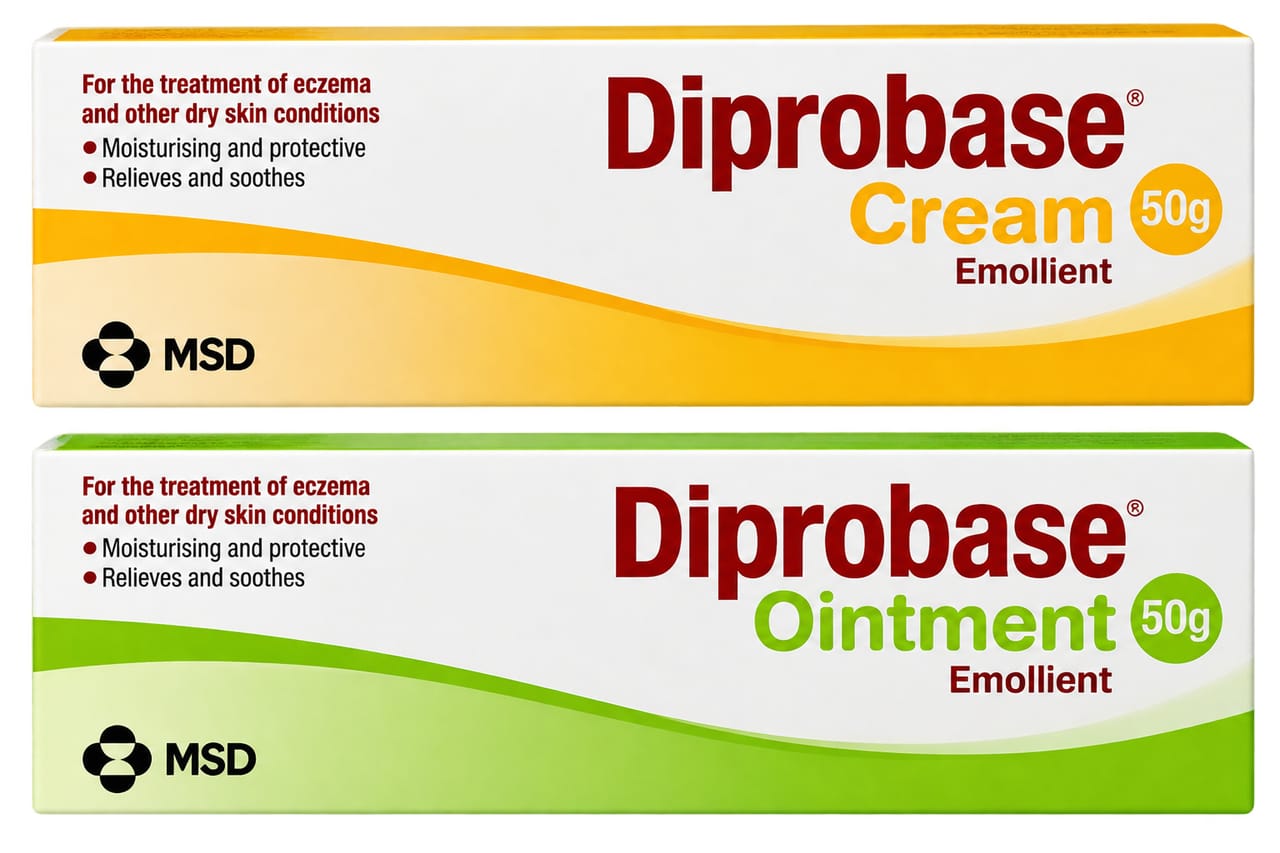
Quick overview
Diprobase Cream is a non-steroid emollient containing soft paraffin and liquid paraffin, used to moisturise and protect dry, itchy, and eczema-prone skin. It provides long-lasting hydration and helps strengthen the skin barrier. Diprobase can be used daily by adults and children, including babies, and is suitable alongside other prescribed eczema treatments such as topical corticosteroids.
What is Diprobase Cream
Diprobase is a non-steroid emollient cream that moisturises and protects dry, itchy, and eczema-prone skin. It provides long-lasting hydration and helps strengthen the skin barrier.
Diprobase Cream uses
- Treatment of eczema and other dry skin conditions
- Relief of dry skin caused by dermatitis, psoriasis, and ichthyosis (very dry, scaly skin)
- Daily protection and hydration of dry, sensitive, or eczema-prone skin
- Protection of raw skin
- Protection against irritants such as soaps and detergents
Benefits of Diprobase Cream
- Provides long-lasting hydration and protection for dry, itchy, and eczema-prone skin
- Strengthens the skin barrier and helps reduce flare-ups
- Suitable for daily use in adults and children, including babies
- Fragrance-free and designed for sensitive skin
- Can be used alongside topical corticosteroids or other prescribed eczema treatments
- Safe for long-term, continuous use
How Diprobase Cream works
Diprobase covers the skin with an oily layer that helps stop water from evaporating, which helps soothe and rehydrate dry, irritated skin.
Diprobase Cream dosage
Apply to the affected area of the skin as often as required, for both adults and children. Use daily to maintain skin hydration; apply more often during flare-ups. For external use only - apply a thin layer and gently smooth into the skin. Avoid contact with the eyes and mucous membranes. Massage the cream gently into the skin in the direction the hair lies. Can be applied before bathing to help prevent the skin from drying out further. Safe for use on the face, but avoid direct contact with the eyes and mouth. When used with a steroid cream, it is usually applied after the steroid has been absorbed into the skin.
| Age group | Dose |
|---|---|
| Under 1 year | Apply generously 2–3 times daily or as needed |
| 1–17 years | Apply 2–3 times daily or as needed |
| 18 years & older | Apply 2–3 times daily or as needed |
| Older adults | Apply 2–3 times daily or as needed |
Available forms and strengths
- Cream
- Ointment
Side effects of Diprobase Cream
Common
- Mild skin irritation, stinging, or redness
- Itching
- Rashes
- Redness
- Peeling
- Burning
- Pain
- Dryness
- Skin inflammation (dermatitis)
Serious
- Signs of a severe allergic reaction, including swelling of the face and throat, skin rash, breathing difficulties, or loss of consciousness
Warnings and precautions
- Do not use Diprobase if you are allergic to any of its ingredients.
- Diprobase contains chlorocresol and cetostearyl alcohol, which can cause local skin reactions such as contact dermatitis or other allergic reactions.
- Because this product is an emollient, it can soak into clothing, bedding, and dressings, making them more likely to catch fire. Wash fabrics regularly at a high temperature to reduce this risk, and stay away from fire or flames when using the cream.
- This product is for external use on the skin only.
- Take extra care when using the cream before showering or bathing, as it can make surfaces slippery.
- Diprobase can be used during pregnancy, but it is recommended to discuss treatment of eczema with a doctor or pharmacist first.
- Diprobase can be used while breastfeeding. Apply to the breasts after feeding and clean thoroughly before the next feed.
- There are no known issues using Diprobase with alcohol.
- Diprobase has no known effects on driving or using machines.
Storage
- Store below 25°C
- Keep the tube tightly closed when not in use
- Keep out of sight and reach of children
- Do not use after the expiry date, referring to the last day of the month stated on the packaging
- Do not throw away any medicines via wastewater or household waste
When to see a doctor
- See a pharmacist or doctor if your symptoms do not improve after two weeks of regular use.
- Get medical advice if your skin becomes infected, cracked, or severely inflamed.
- Seek advice if you notice signs of an allergic reaction, such as rash, swelling, or worsening irritation.
- Get emergency medical help right away if you notice signs of a severe allergic reaction, such as swelling of the face and throat, skin rash, breathing difficulties, or loss of consciousness.
Alternatives
- Epaderm Cream
- Oilatum Cream
- Aveeno Cream
- Balneum Cream
Watch the video
FAQs
What is Diprobase Cream used for?
Diprobase Cream is used to treat eczema and other dry skin conditions, relieve dryness caused by dermatitis, psoriasis, and ichthyosis, protect raw skin, and guard against irritants such as soaps and detergents.
How does Diprobase Cream work?
Diprobase covers the skin with an oily layer that helps stop water from evaporating, which helps soothe and rehydrate dry, irritated skin.
How often should I apply Diprobase Cream?
Diprobase Cream can be applied as often as required for both adults and children, typically 2–3 times daily or as needed, with more frequent application during flare-ups.
Can Diprobase Cream be used with a steroid cream?
Yes, Diprobase can be used alongside topical corticosteroids or other prescribed eczema treatments. When used with a steroid cream, it is usually applied after the steroid has been absorbed into the skin.
Can Diprobase Cream be used during pregnancy or breastfeeding?
Diprobase can be used during pregnancy, though it's recommended to discuss eczema treatment with a doctor or pharmacist first. It can also be used while breastfeeding, applying to the breasts after feeding and cleaning thoroughly before the next feed.
General information, not medical advice
Your prescriber and the leaflet in your pack know your situation. This page does not.
- Follow your prescriber and the leaflet
- Don't start, stop, or change a dose on your own
- Doses and warnings differ by country and product
Sources
Video
Related medicines

Injectafer Injection: Uses, Dosage, Side Effects, Precautions and Alternates
Iron products
Injectafer (ferric carboxymaltose) treats iron deficiency anemia and heart failure-related iron deficiency via IV. Learn uses, dosage, side effects, and

Gliclazide Tablet: Uses, Dosage, Side Effects, Precautions and Alternates
Sulfonylurea (hypoglycemic/antidiabetic agent)
Gliclazide Tablet is a sulfonylurea for type 2 diabetes that boosts insulin release. Learn about dosage, side effects, warnings, and precautions.