
Safety
General information, not medical advice
Your prescriber and the leaflet in your pack know your situation. This page does not.
- Follow your prescriber and the leaflet
- Don't start, stop, or change a dose on your own
- Doses and warnings differ by country and product
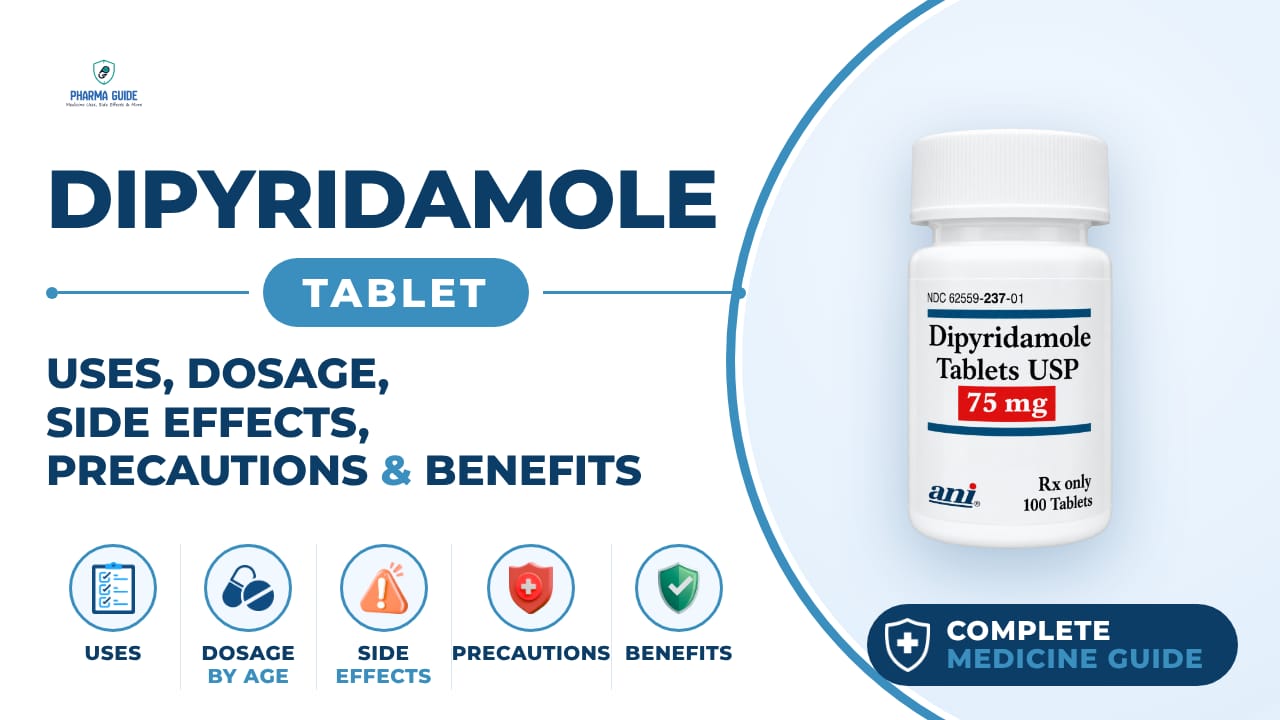
Dipyridamole Tablet: Uses, Dosage, Side Effects, Precautions and Alternates
| Generic name | Dipyridamole |
|---|---|
| Drug class | Coronary Vasodilator / Inhibitor of Platelet Adhesion and Aggregation (antiplatelet agent) |
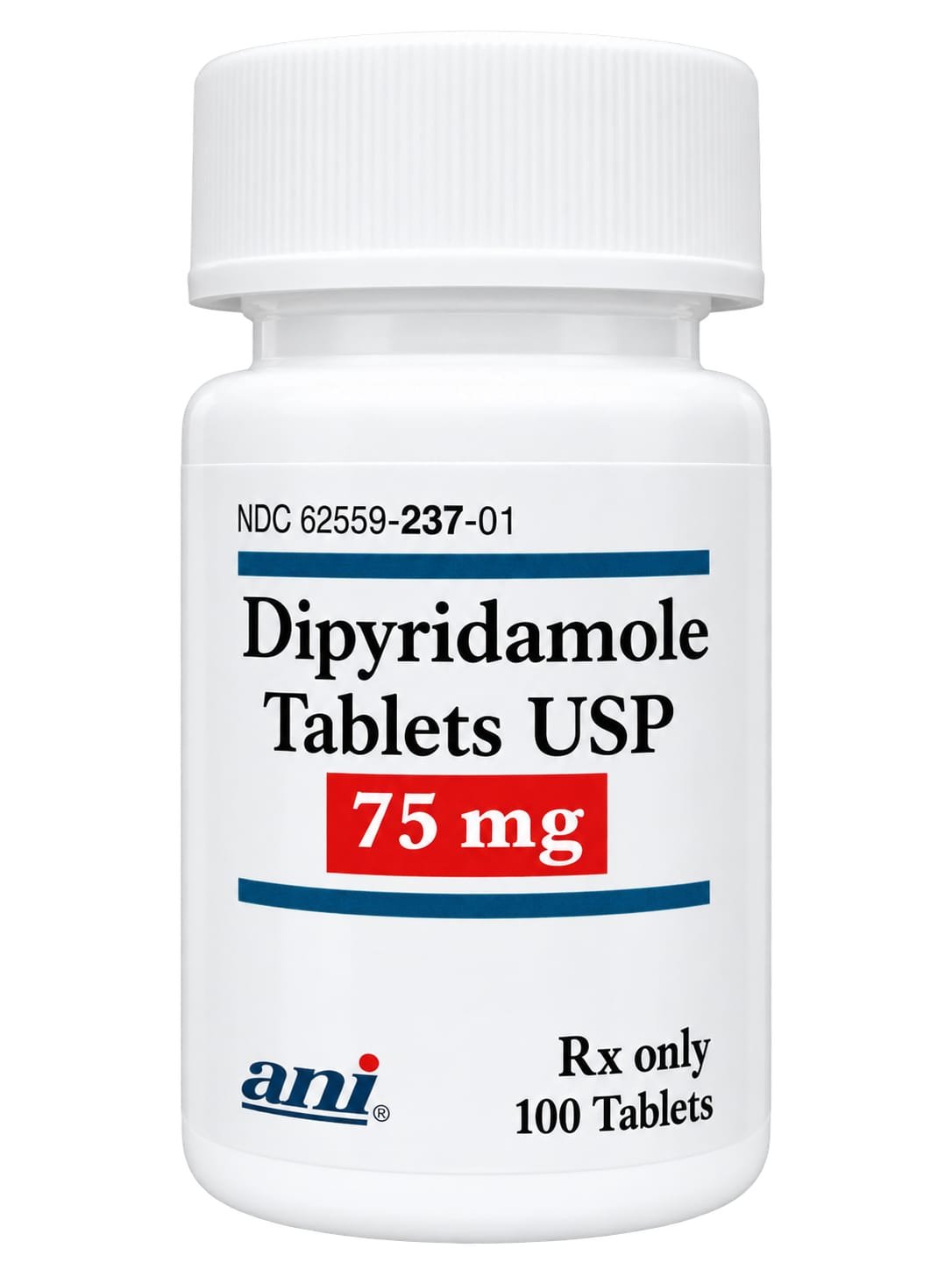
| Forms | Tablets (25 mg, 50 mg, 75 mg, and 100 mg), Sugar-coated tablets (25 mg, 50 mg, and 75 mg) |
Quick overview
Dipyridamole Tablet is a prescription medicine belonging to the coronary vasodilator and antiplatelet drug class. It helps prevent blood clot complications, particularly after prosthetic heart valve surgery, and is often used together with coumarin anticoagulants such as warfarin. It works by widening blood vessels and keeping platelets from clumping together.
What is Dipyridamole Tablet
Dipyridamole is a prescription tablet that helps prevent blood clots. It is often used together with other medicines after certain types of heart surgery.
Dipyridamole Tablet uses
- Prevention of blood clot complications that can occur after prosthetic heart valve surgery
- Used as an add-on to coumarin anticoagulants (like warfarin) to prevent blood clot complications after cardiac valve replacement
Benefits of Dipyridamole Tablet
- Helps reduce platelet aggregation
- Helps prevent certain blood clots
- May be used with other medicines after certain heart-valve procedures
- Can support stroke-prevention strategies in selected patients
- Improves blood flow by causing some blood-vessel dilation
How Dipyridamole Tablet works
Dipyridamole widens blood vessels in the heart and keeps platelets from clumping together, which helps stop blood clots from forming.
Dipyridamole Tablet dosage
Take the tablets about one hour before meals. Mild occasional stomach upset can be avoided by taking the tablets with a glass of milk. If you are also having a stress test for your heart that requires dipyridamole given by injection, you should stop taking oral dipyridamole for a day beforehand, as your doctor directs.
If you miss a dose, take it as soon as you remember; if it is almost time for your next dose, skip the missed dose and continue your regular schedule—do not take a double dose. Follow the directions given by your doctor carefully, and ask your doctor or pharmacist if you have questions. Safety and effectiveness have not been established in children.
| Age group | Dose |
|---|---|
| Under 12 years | No established routine pediatric dose |
| 18–39 years | 75–100 mg four times daily for labeled antiplatelet use |
| 40–64 years | 75–100 mg four times daily |
Available forms and strengths
- Tablets (25 mg, 50 mg, 75 mg, and 100 mg)
- Sugar-coated tablets (25 mg, 50 mg, and 75 mg)
Side effects of Dipyridamole Tablet
Common
- Dizziness
- Stomach pain/abdominal distress
- Headache
- Rash
- Diarrhea
- Vomiting
- Feeling of warmth or flushing
- Weakness
Serious
- Unusual bleeding or bruising
- Chest pain
- Increased heart rate (tachycardia)
- Low blood pressure
- Allergic reactions: difficulty breathing, severe bronchospasm, or swelling (angioedema)
- Liver damage (nausea, stomach pain, fever, unusual tiredness, itching, loss of appetite, light-colored stools, dark urine, yellowing of skin or eyes)
- Signs of a heart attack: chest pain or pressure, fast or abnormal heartbeat, trouble breathing, pain in back/jaw/throat/arm, sweating, upset stomach
Warnings and precautions
- Use this medicine carefully if you have low blood pressure, coronary artery disease (including worsening angina), a heart valve outflow blockage, or unstable blood circulation, since high doses can cause excessive widening of blood vessels and, rarely, heart problems.
- If you take oral dipyridamole and need a heart stress test using the IV form of this drug, you may need to stop the oral tablets about a day before the test so the test results are accurate.
- Rarely, long-term use of dipyridamole has been linked to the drug being found in gallstones, mostly in elderly patients who had been on the medicine for years and had bile duct inflammation.
- This medicine can worsen chest pain (angina) in people who already have heart disease, especially unstable angina or a recent heart attack.
- Tell your doctor or dentist that you are taking this medicine if you are having any surgery, including dental surgery, because of the risk of increased bleeding.
- There is not enough research in pregnant women to know if dipyridamole is completely safe during pregnancy. It should be used only if your doctor decides the benefits outweigh the risks.
- Dipyridamole passes into breast milk, so caution is needed if you are breastfeeding while taking this medicine.
- No routine renal dose adjustment is generally required, but overall bleeding risk should be assessed.
- Dipyridamole has been linked to liver enzyme increases and, rarely, liver failure, so it should be used carefully if you have liver problems.
- It isn't known exactly how alcohol affects dipyridamole, but drinking alcohol may increase the chance of feeling dizzy while taking this medicine.
- Can cause headache or dizziness; avoid driving if affected.
Storage
- Store at room temperature, 15°C to 30°C.
- Keep out of the reach and sight of children.
When to see a doctor
- Get emergency help right away if you have signs of a serious allergic reaction, such as trouble breathing, swelling of the face/lips/mouth/tongue/throat, hives, or a racing heart.
- Call for emergency help if you have symptoms of a heart attack, such as chest pain or pressure, a fast or abnormal heartbeat, trouble breathing, or pain spreading to your back, jaw, throat, or arm.
- Call your doctor right away if you notice signs of liver problems, like yellowing skin or eyes, dark urine, pale stools, nausea, or unusual tiredness.
- If you experience unusual bleeding or bruising, chest pain, a faster heartbeat, very low blood pressure, or signs of an allergic reaction, call your doctor immediately.
- Seek medical help right away if you think you or someone else has taken too much of this medicine.
Alternatives
- Aspirin
- Clopidogrel
- Prasugrel
Watch the video
FAQs
What is Dipyridamole Tablet used for?
It is used to prevent blood clot complications after prosthetic heart valve surgery, often as an add-on to coumarin anticoagulants like warfarin.
How does Dipyridamole Tablet work?
It widens blood vessels in the heart and keeps platelets from clumping together, which helps stop blood clots from forming.
How should Dipyridamole Tablet be taken?
Take the tablets about one hour before meals. Mild stomach upset can be avoided by taking the tablets with a glass of milk.
What are the common side effects of Dipyridamole Tablet?
Common side effects include dizziness, stomach pain, headache, rash, diarrhea, vomiting, flushing, and weakness.
Is it safe to drink alcohol while taking Dipyridamole Tablet?
It isn't known exactly how alcohol affects dipyridamole, but drinking alcohol may increase the chance of feeling dizzy while taking this medicine.
General information, not medical advice
Your prescriber and the leaflet in your pack know your situation. This page does not.
- Follow your prescriber and the leaflet
- Don't start, stop, or change a dose on your own
- Doses and warnings differ by country and product
Sources
Video
Related medicines

Injectafer Injection: Uses, Dosage, Side Effects, Precautions and Alternates
Iron products
Injectafer (ferric carboxymaltose) treats iron deficiency anemia and heart failure-related iron deficiency via IV. Learn uses, dosage, side effects, and

Gliclazide Tablet: Uses, Dosage, Side Effects, Precautions and Alternates
Sulfonylurea (hypoglycemic/antidiabetic agent)
Gliclazide Tablet is a sulfonylurea for type 2 diabetes that boosts insulin release. Learn about dosage, side effects, warnings, and precautions.