
Safety
General information, not medical advice
Your prescriber and the leaflet in your pack know your situation. This page does not.
- Follow your prescriber and the leaflet
- Don't start, stop, or change a dose on your own
- Doses and warnings differ by country and product
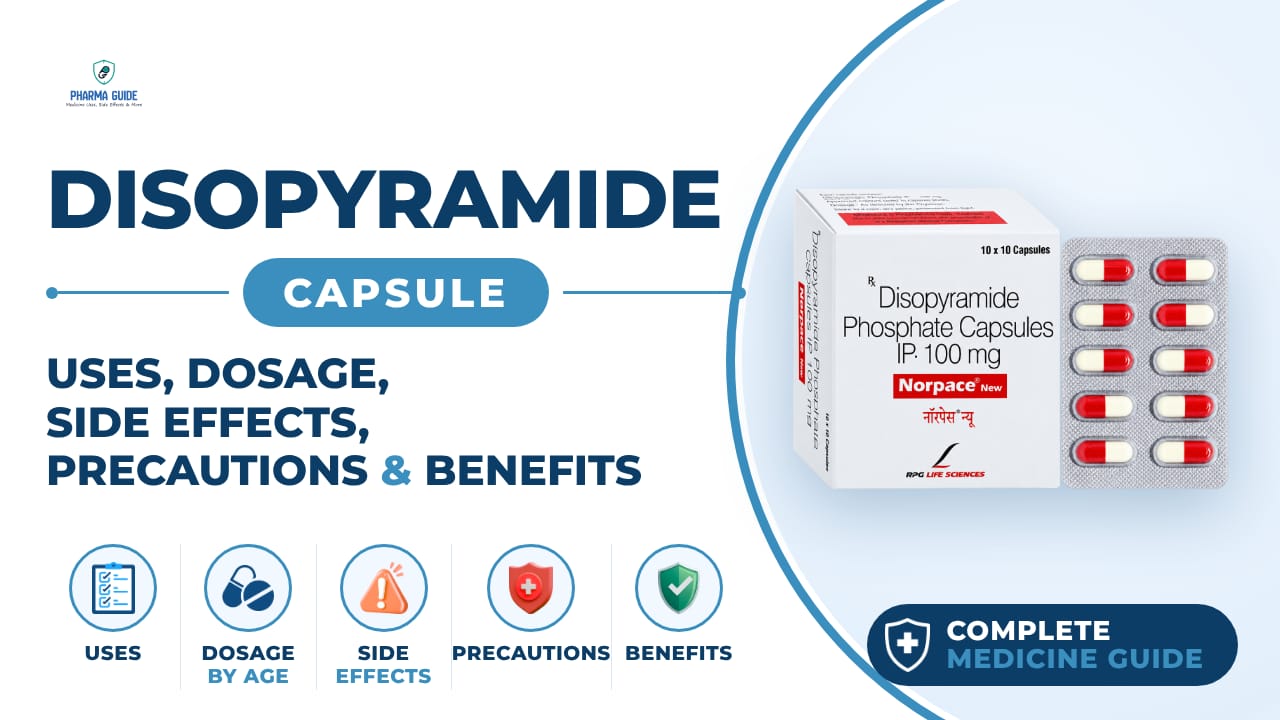
Disopyramide Capsule: Uses, Dosage, Side Effects, Precautions and Alternates
| Generic name | disopyramide |
|---|---|
| Drug class | Group I antiarrhythmics |
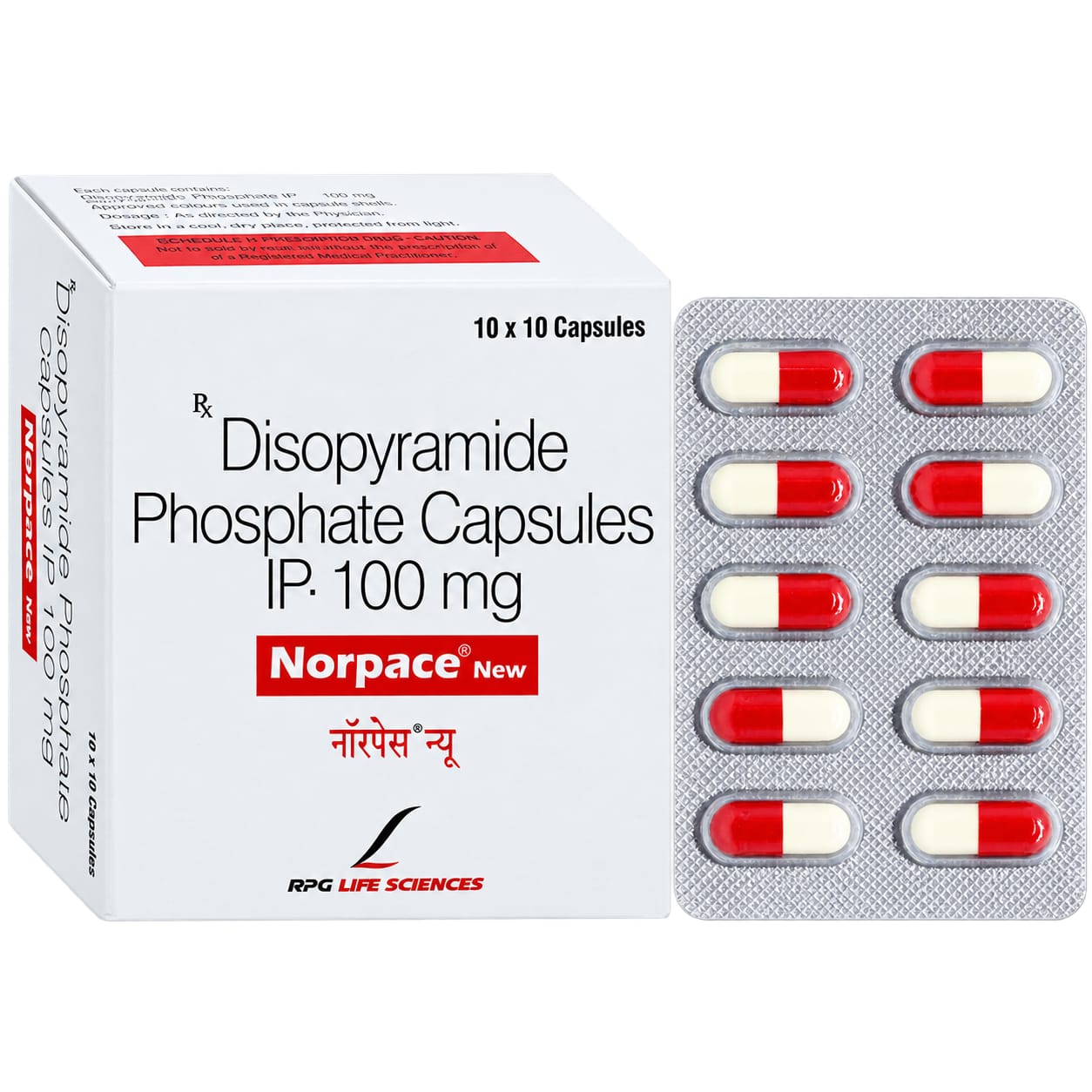
| Forms | oral capsule, oral capsule, extended release |
Quick overview
Disopyramide Capsule (generic name: disopyramide) is a Group I antiarrhythmic medicine that affects the way your heart beats. It is used to treat life-threatening irregular heartbeat patterns, making the heart more resistant to abnormal activity. It is available as a regular capsule and as an extended-release capsule, and it works by helping control the heart's electrical activity rather than curing the underlying condition.
What is Disopyramide Capsule
Disopyramide affects the way that your heart beats. It is used to treat life-threatening irregular heartbeat patterns, making your heart more resistant to abnormal activity.
Disopyramide Capsule uses
- Treats certain types of life-threatening irregular heartbeats (ventricular arrhythmias)
- May be used off-label for other heart rhythm problems as decided by your doctor
Benefits of Disopyramide Capsule
- Helps control irregular heartbeat patterns so the heart beats more normally
- Helps control the condition, though it does not cure it
- Helps treat certain serious abnormal heart rhythms
- Can suppress selected ventricular arrhythmias
- Helps stabilize abnormal cardiac electrical activity
- May reduce palpitations related to certain arrhythmias
How Disopyramide Capsule works
Disopyramide works by blocking sodium channels in heart muscle cells, which makes the heart tissue less excitable and slows down how fast electrical signals travel through it. This helps steady an irregular heartbeat.
Disopyramide Capsule dosage
Follow all directions on your prescription label and do not take more or less than prescribed or for longer than recommended. Your doctor may give your first dose in a hospital or clinic so they can treat any serious side effects right away. Do not crush, chew, break, or open extended-release capsules; swallow them whole. Your heart function may need to be checked with an ECG (EKG) while you take this medicine.
Do not skip doses or change how you take this medicine without talking to your doctor first, since sudden changes can make your condition worse. Keep taking this medicine even if you feel well; do not stop without talking to your doctor. The regular capsule may be taken every 6 to 8 hours, and the extended-release capsule is usually taken every 12 hours.
If you miss a dose, take it as soon as you remember, but skip it if it is almost time for your next dose; do not take a double dose.
| Age group | Dose |
|---|---|
| 18–39 years | Common immediate-release regimen: 150 mg every 6 hours |
| 40–64 years | Common immediate-release regimen: 150 mg every 6 hours |
Available forms and strengths
- Oral capsule
- Oral capsule, extended release
Side effects of Disopyramide Capsule
Common
- Dry mouth, nose, or throat
- Nausea, stomach pain, bloating
- Constipation
- Dry eyes, blurred vision
- Headache, tiredness, general ill feeling
- Muscle pain or weakness
Serious
- A new or worsening irregular heartbeat pattern
- Little or no urinating, painful or difficult urination
- A light-headed feeling, like you might pass out
- Shortness of breath (even with mild exertion), swelling, rapid weight gain
- Low blood sugar (headache, hunger, weakness, sweating, confusion, irritability, dizziness, fast heart rate, or feeling jittery)
- Chest pain
- Swelling of the feet or hands
- Unusual weight gain
- Sudden changes in mental status
- Signs of an allergic reaction: hives, difficult breathing, swelling of face, lips, tongue, or throat
Warnings and precautions
- Taking medicines like this one for irregular heartbeat may increase the risk of death. Tell your doctor if you have heart disease, a valve problem, or heart failure. Call your doctor right away if you have an irregular heartbeat or chest pain.
- This medicine may actually increase the chance of having irregular heartbeats and has not been shown to help people without life-threatening arrhythmias live longer.
- You should not use this medicine if you have long QT syndrome or a serious heart condition such as certain types of heart block, unless you have a pacemaker. Do not use this medicine to treat any heart rhythm problem that your doctor has not already checked and diagnosed.
- Older adults usually should not take this medicine because it is not as safe or effective as other medicines used for the same condition, and serious side effects like heart failure or kidney problems may be more likely.
- It is not known whether disopyramide will harm an unborn baby. Disopyramide has been found in the baby's blood circulation and may cause uterine contractions. Tell your doctor if you are pregnant or planning to become pregnant.
- Disopyramide can pass into breast milk and may harm a nursing baby. You should not breastfeed while using this medicine unless your doctor decides it is necessary.
- Tell your doctor if you have kidney disease. Your dose may need to be adjusted, and the drug can stay in your body longer if your kidneys are not working well.
- Tell your doctor if you have liver disease. The drug may stay in your body longer and may need a lower dose if your liver is not working well.
- Ask your doctor about drinking alcohol while taking this medicine, since alcohol can make side effects worse.
- This medicine may cause blurred vision and may affect your thinking or reactions. Be careful if you drive or do anything that requires you to be alert and see clearly.
Storage
- Store at room temperature away from moisture and heat
- Keep this medication in the container it came in, tightly closed, and out of reach of children
- Store it at room temperature and away from excess heat and moisture (not in the bathroom)
- Dispose of unneeded medications in a way so that pets, children, and other people cannot take them; do not flush this medication down the toilet; use a medicine take-back program
When to see a doctor
Get emergency medical help right away if you have signs of an allergic reaction, such as hives, trouble breathing, or swelling of your face, lips, tongue, or throat.
Call your doctor right away if you notice a new or worsening irregular heartbeat, trouble urinating or no urine, feeling faint, shortness of breath, swelling, rapid weight gain, or signs of low blood sugar.
Call your doctor immediately if you have chest pain, swelling of the feet or hands, unusual weight gain, irregular heartbeat, shortness of breath, or sudden changes in mental status.
If someone has taken too much of this medicine and has collapsed, had a seizure, has trouble breathing, or cannot be woken up, call emergency services right away, as an overdose can be fatal and may cause trouble breathing, irregular heartbeat, and loss of consciousness.
Alternatives
- Flecainide
- Propafenone
- Sotalol
Watch the video
FAQs
What is Disopyramide Capsule used for?
It is used to treat certain types of life-threatening irregular heartbeats (ventricular arrhythmias), making the heart more resistant to abnormal activity.
How does Disopyramide Capsule work?
It works by blocking sodium channels in heart muscle cells, making heart tissue less excitable and slowing how fast electrical signals travel through it, which helps steady an irregular heartbeat.
How should I take Disopyramide Capsule?
Follow your prescription label exactly. Do not crush, chew, break, or open extended-release capsules; swallow them whole. The regular capsule may be taken every 6 to 8 hours, and the extended-release capsule is usually taken every 12 hours.
What are the serious side effects of Disopyramide Capsule?
Serious side effects include a new or worsening irregular heartbeat, little or no urination, light-headedness, shortness of breath, swelling, rapid weight gain, low blood sugar, chest pain, and signs of an allergic reaction.
Can older adults take Disopyramide Capsule?
Older adults usually should not take this medicine because it is not as safe or effective as other medicines for the same condition, and serious side effects like heart failure or kidney problems may be more likely.
General information, not medical advice
Your prescriber and the leaflet in your pack know your situation. This page does not.
- Follow your prescriber and the leaflet
- Don't start, stop, or change a dose on your own
- Doses and warnings differ by country and product
Sources
Video
Related medicines

Injectafer Injection: Uses, Dosage, Side Effects, Precautions and Alternates
Iron products
Injectafer (ferric carboxymaltose) treats iron deficiency anemia and heart failure-related iron deficiency via IV. Learn uses, dosage, side effects, and

Gliclazide Tablet: Uses, Dosage, Side Effects, Precautions and Alternates
Sulfonylurea (hypoglycemic/antidiabetic agent)
Gliclazide Tablet is a sulfonylurea for type 2 diabetes that boosts insulin release. Learn about dosage, side effects, warnings, and precautions.