
Safety
General information, not medical advice
Your prescriber and the leaflet in your pack know your situation. This page does not.
- Follow your prescriber and the leaflet
- Don't start, stop, or change a dose on your own
- Doses and warnings differ by country and product
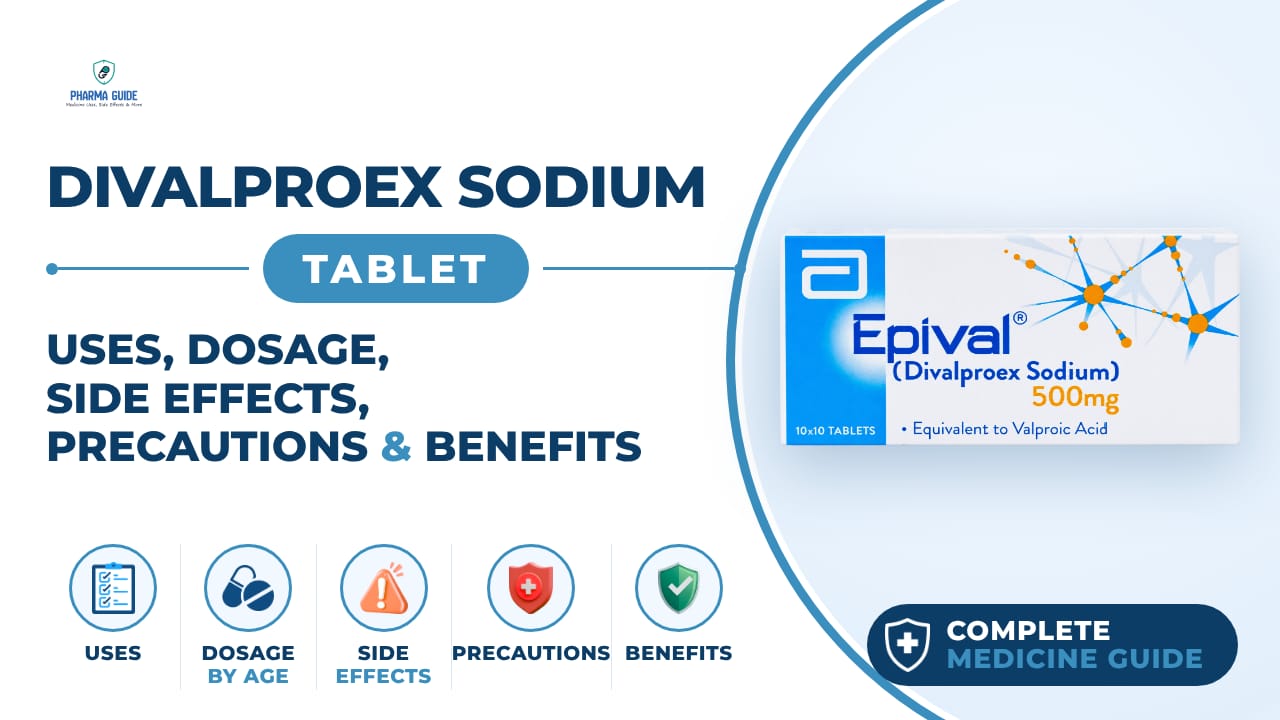
Divalproex Sodium Tablet: Uses, Dosage, Side Effects, Precautions and Alternates
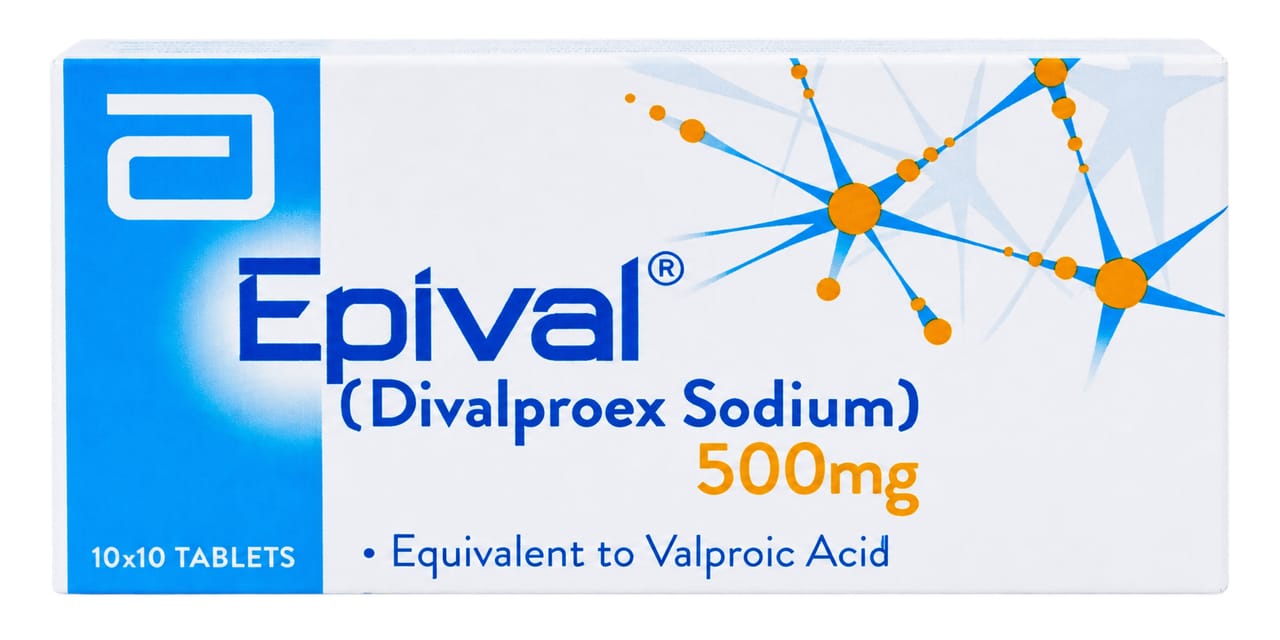
| Generic name | Divalproex sodium |
|---|---|
| Drug class | Antiepileptic (fatty acid derivative anticonvulsant) |
| Forms | Delayed-release tablets (125 mg, 250 mg, 500 mg), Extended-release tablets (250 mg, 500 mg), Delayed-release capsules (sprinkle capsules) |
Quick overview
Divalproex Sodium Tablet (divalproex sodium) is a prescription antiepileptic medicine from the fatty acid derivative anticonvulsant class, available as delayed-release or extended-release tablets. It is used to treat manic or mixed episodes of bipolar disorder, certain seizure types, and to help prevent migraine headaches. It carries important warnings about liver damage, pancreatitis, and birth defects, and should be used exactly as prescribed.
What is Divalproex Sodium Tablet
Divalproex sodium is a prescription medicine that comes as delayed-release or extended-release tablets. It is used to treat certain seizure conditions, manic episodes linked to bipolar disorder, and to help prevent migraine headaches.
Divalproex Sodium Tablet uses
- Treat manic or mixed episodes related to bipolar disorder in adults
- Treat complex partial seizures, alone or with other seizure medicines, in adults and children 10 years and older
- Treat simple and complex absence seizures, alone or with other seizure medicines
- Help prevent migraine headaches in adults
Benefits of Divalproex Sodium Tablet
- Can reduce the number and severity of manic episodes in bipolar disorder
- Can reduce the frequency of complex partial and absence seizures
- Can lower how often migraine headaches happen when used to prevent them
How Divalproex Sodium Tablet works
Doctors are not completely sure how this medicine works, but it is thought to raise the level of a brain chemical called GABA, which may help calm overactive nerve signals, ease seizures, manic symptoms, and help prevent migraines.
Divalproex Sodium Tablet dosage
Swallow the tablet whole; do not crush, split, or chew it. It can be taken with or without food, but taking it with food may help if it upsets your stomach. Try to take doses at the same time each day to keep a steady amount of medicine in your body. Delayed-release tablets are usually taken two or three times a day; extended-release tablets are usually taken once a day. Drink plenty of water while taking this medicine.
Do not stop taking this medicine suddenly without talking to your doctor, since stopping suddenly can cause serious, life-threatening seizures. If you miss a dose, take it as soon as you remember, but if it is almost time for your next dose, skip the missed one — do not take two doses at once.
| Age group | Dose |
|---|---|
| Children (2+ Years) | Dose based on body weight and medical condition; adjusted by a healthcare professional |
| Adolescents (12–17 Years) | Dose individualized according to condition and response |
| Adults (18–64 Years) | Usually 500–750 mg daily initially, adjusted as needed |
| Older Adults (65+ Years) | Lower starting dose may be required; adjusted based on response |
Available forms and strengths
- Delayed-release tablets (125 mg, 250 mg, 500 mg)
- Extended-release tablets (250 mg, 500 mg)
- Delayed-release capsules (sprinkle capsules)
Side effects of Divalproex Sodium Tablet
Common
- Stomach pain or upset stomach
- Back pain
- Increased or decreased appetite
- Dizziness
- Headache
- Nausea, vomiting, or diarrhea
- Sleep problems, such as feeling sleepy or trouble sleeping
- Tremor (shaking)
- Weakness
- Weight gain
- Hair loss
- Blurred or double vision
- Memory or mood changes
- Bruising or bleeding
- Runny nose, sore throat, cough
Serious
- Serious liver damage, which can include dark urine, yellowing of skin or eyes, loss of appetite, nausea or vomiting, pain on the right side of the belly, and swelling of the face
- Pancreatitis, with sudden belly pain, fever, loss of appetite, nausea, vomiting, or diarrhea
- High ammonia levels in the blood, causing tiredness, vomiting, or changes in mental state
- Very low body temperature (hypothermia), with tiredness, confusion, or coma
- Low platelet count (thrombocytopenia), which can cause easy bruising or bleeding
- Allergic reactions, including rash, swelling of the face, lips, tongue, or throat, and trouble breathing
Warnings and precautions
- This medicine can cause serious, sometimes fatal, liver damage, especially in the first 6 months of treatment. Children under 2 years old and people with mitochondrial disorders are at highest risk.
- This medicine can cause birth defects, especially neural tube defects like spina bifida, if taken during pregnancy. It should only be used in women who could become pregnant if no other treatment works, and effective birth control should be used.
- This medicine can cause life-threatening inflammation of the pancreas (pancreatitis), which can occur suddenly and rapidly progress to death in rare cases.
- This and other antiepileptic medicines can slightly increase the risk of suicidal thoughts or behavior, even in people without a history of depression.
- Do not stop taking this medicine suddenly without your doctor's advice, since this can cause seizures that will not stop, a serious and life-threatening condition.
- This medicine is contraindicated in people with known urea cycle disorders, since it can cause a dangerous buildup of ammonia in the blood.
- It is generally not safe to use this medicine during pregnancy because it can cause serious birth defects, such as spina bifida, and may lower a child's IQ later in life. Women who could become pregnant should use effective birth control while taking this medicine, and should never use it to prevent migraines during pregnancy.
- This medicine passes into breast milk and may affect a nursing baby, so talk with your doctor about the risks and benefits before breastfeeding while taking it.
- People with kidney problems may have higher levels of unbound drug in their blood, so monitoring may be adjusted, though a dosage change is usually not needed for kidney failure.
- This medicine should not be used by people with liver disease or major liver problems, since it can cause serious, sometimes fatal, liver damage.
- It's best to avoid alcohol while taking this medicine, because both alcohol and this drug can cause dizziness and drowsiness, and combining them may make these effects worse.
- This medicine can cause drowsiness or affect coordination, so avoid driving or operating machinery until you know how it affects you.
Storage
- Store at room temperature (77°F or 25°C); brief exposure to 59°F to 86°F (15°C to 30°C) is allowed, such as during travel
- Keep in a tightly sealed container away from light
- Avoid storing in damp places such as bathrooms
- Keep out of reach of children and pets
- Dispose of unused medicine safely; ask your pharmacist how to dispose of it properly
When to see a doctor
- Get medical help right away if you notice signs of liver damage such as dark urine, yellowing skin or eyes, loss of appetite, nausea or vomiting that won't stop, pain on the right side of your belly, or facial swelling.
- Seek prompt medical care if you have sudden, severe stomach pain (possibly spreading to your back), nausea, vomiting, or loss of appetite, as these can be signs of pancreatitis.
- Get emergency help if you have signs of a serious allergic reaction, such as swelling of the face, lips, tongue, or throat, trouble breathing, hives, or a severe skin reaction with fever, blistering, or peeling skin.
- Contact your doctor right away if you have new or worsening depression, anxiety, agitation, panic attacks, trouble sleeping, irritability, aggressive or violent behavior, or thoughts of suicide or self-harm.
- If you think you have taken too much of this medicine, contact your doctor, hospital emergency room, or your local poison control center right away, even if you feel fine.
Alternatives
- Lamotrigine
- Topiramate
- Gabapentin
Watch the video
FAQs
What is Divalproex Sodium Tablet used for?
It is used to treat manic or mixed episodes of bipolar disorder, complex partial and absence seizures, and to help prevent migraine headaches in adults.
How should Divalproex Sodium Tablet be taken?
Swallow the tablet whole without crushing, splitting, or chewing it. It can be taken with or without food, and doses should be taken at the same time each day. Delayed-release tablets are usually taken two or three times daily, while extended-release tablets are usually taken once daily.
Can Divalproex Sodium Tablet be used during pregnancy?
It is generally not safe during pregnancy because it can cause serious birth defects like spina bifida and may lower a child's IQ later in life. Women who could become pregnant should use effective birth control and should never use it to prevent migraines during pregnancy.
What are the serious side effects of Divalproex Sodium Tablet?
Serious side effects include liver damage, pancreatitis, high ammonia levels in the blood, very low body temperature, low platelet count, and allergic reactions.
What happens if I stop taking Divalproex Sodium Tablet suddenly?
Stopping suddenly without your doctor's advice can cause serious, life-threatening seizures that will not stop.
General information, not medical advice
Your prescriber and the leaflet in your pack know your situation. This page does not.
- Follow your prescriber and the leaflet
- Don't start, stop, or change a dose on your own
- Doses and warnings differ by country and product
Sources
Video
Related medicines

Injectafer Injection: Uses, Dosage, Side Effects, Precautions and Alternates
Iron products
Injectafer (ferric carboxymaltose) treats iron deficiency anemia and heart failure-related iron deficiency via IV. Learn uses, dosage, side effects, and

Gliclazide Tablet: Uses, Dosage, Side Effects, Precautions and Alternates
Sulfonylurea (hypoglycemic/antidiabetic agent)
Gliclazide Tablet is a sulfonylurea for type 2 diabetes that boosts insulin release. Learn about dosage, side effects, warnings, and precautions.