
Safety
General information, not medical advice
Your prescriber and the leaflet in your pack know your situation. This page does not.
- Follow your prescriber and the leaflet
- Don't start, stop, or change a dose on your own
- Doses and warnings differ by country and product
Dobutamine Injection: Uses, Dosage, Side Effects, Precautions and Alternates
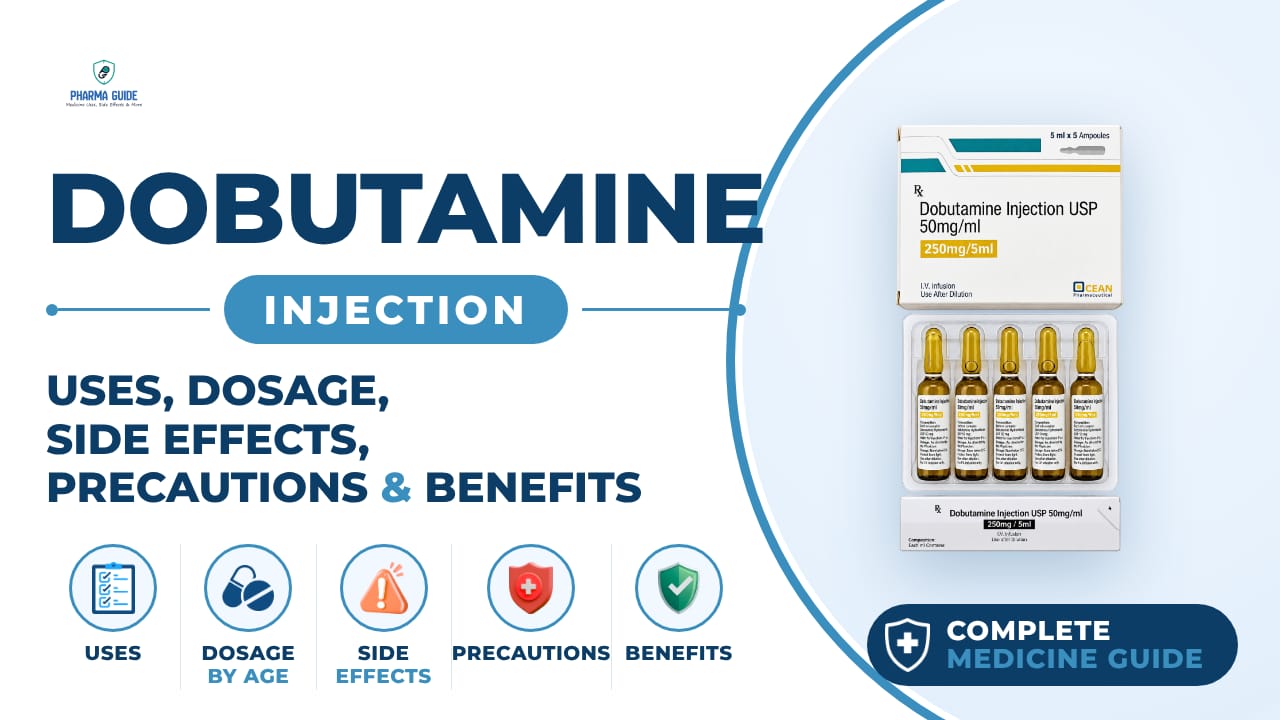
| Generic name | Dobutamine hydrochloride |
|---|---|
| Drug class | Sympathomimetic (direct-acting inotropic agent) |
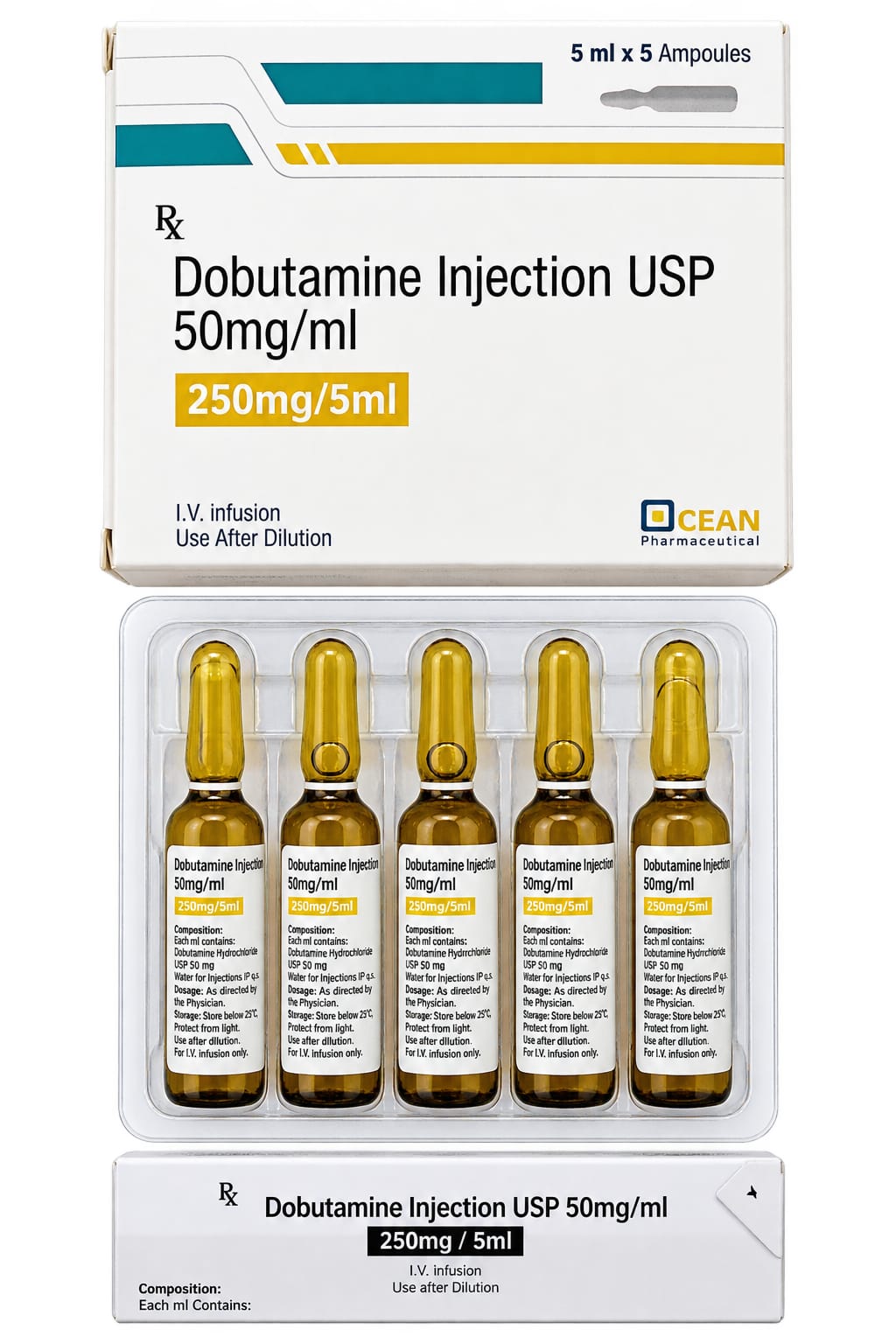
| Forms | Injection (solution for IV infusion) |
Quick overview
Dobutamine Injection (dobutamine hydrochloride) is a prescription sympathomimetic medicine given through a vein in a hospital or clinic setting. It is used for short-term treatment of heart failure caused by a weakened heart muscle and to support heart function after heart surgery. It works by stimulating the heart muscle to contract more strongly, helping the heart pump blood more effectively.
What is Dobutamine Injection
Dobutamine Injection is a prescription medicine given through a vein (IV) in a hospital or clinic. It is used for short-term treatment of heart failure caused by a weakened heart muscle.
Dobutamine Injection uses
- Short-term treatment of heart failure (cardiac decompensation) caused by a weakened heart muscle
- Supporting heart function after heart surgery
Benefits of Dobutamine Injection
- Helps the heart pump blood more effectively during short-term treatment of heart failure
- Improves blood flow by stimulating the heart muscle
How Dobutamine Injection works
Dobutamine works by stimulating receptors in the heart that make the heart muscle contract more strongly, which improves blood flow without causing as much increase in heart rate as some other similar medicines.
Dobutamine Injection dosage
This medicine is given only by a doctor or nurse in a hospital or clinic setting, not taken at home. It is given as a slow drip into a vein (IV infusion), never injected directly. The medicine must be diluted with a special IV fluid before it is given. Your doctor will adjust the infusion rate based on your heart rate, blood pressure, and how your body responds. Your heart rhythm, blood pressure, and blood potassium levels will be closely monitored during treatment. Treatment is usually short-term, lasting only a few hours up to a couple of days.
| Age group | Dose |
|---|---|
| Under 1 year | 5 mcg/kg/min initially; adjust to 2–20 mcg/kg/min |
| 1–17 years | 5 mcg/kg/min initially; adjust to 2–20 mcg/kg/min |
| 18–64 years | 2.5–10 mcg/kg/min, adjusted according to response |
| 65+ years | 2.5–10 mcg/kg/min, adjusted according to response |
Available forms and strengths
- Injection (solution for IV infusion)
Side effects of Dobutamine Injection
Common
- Nausea
- Headache
- Chest pain
- Fever
- Leg cramps
- Pain or swelling at the injection site
- Increased heart rate
- Changes in blood pressure
- Shortness of breath
- Increased urination frequency
- Skin rash
- Anxiety
- Low blood potassium
- Palpitations
Serious
- Irregular heartbeat (arrhythmia), including rapid ventricular response or ventricular tachycardia
- Marked increase in heart rate or blood pressure
- Severe allergic reaction (skin rash, itching or swelling of face/tongue/throat, severe dizziness, breathing difficulty)
- Sudden drop in blood pressure
- Skin tissue damage (necrosis) if the medicine leaks out of the vein
- Low blood platelet count (thrombocytopenia)
Warnings and precautions
- This medicine should not be used if you have a history of allergic reaction to it, a condition called idiopathic hypertrophic subaortic stenosis, or a tumor called pheochromocytoma.
- This medicine can cause a large increase in heart rate or blood pressure, especially in people who already have high blood pressure.
- This medicine should not be used if you have very low blood volume (hypovolemia) until that problem is corrected first.
- People with narrowing or blockage in the heart's blood vessels (obstructive heart disease) may not improve with this medicine and it could worsen their condition.
- This medicine contains a sulfite preservative that can cause serious allergic reactions, including life-threatening asthma attacks, in some people, especially those with asthma.
- This medicine should be used carefully in older adults, since they may be more sensitive to its effects and side effects.
- This medicine can lower blood potassium levels, which your doctor may need to monitor.
- Animal studies suggest this medicine does not harm an unborn baby, but there isn't enough human data to be sure. Talk to your doctor before receiving this medicine if you are pregnant.
- It isn't known if this medicine passes into breast milk, so the risk to your baby isn't known. Talk to your doctor before receiving this medicine if you are breastfeeding.
- It isn't known how this medicine interacts with alcohol. Ask your doctor before drinking alcohol.
Storage
- Store unopened vials between 15 and 30°C
- Protect from light
- Discard any unused portion
- Diluted solution can be stored up to 24 hours at room temperature (15-30°C)
When to see a doctor
- Get emergency medical help right away if you notice signs of a serious allergic reaction, such as skin rash, itching or swelling of the face, tongue, or throat, severe dizziness, or trouble breathing.
- Tell your care team right away if you have chest pain, a very fast or irregular heartbeat, or shortness of breath while receiving this medicine.
Alternatives
- Dopamine Injection
- Norepinephrine Injection
- Epinephrine Injection
Watch the video
FAQs
What is Dobutamine Injection used for?
It is used for short-term treatment of heart failure caused by a weakened heart muscle and to support heart function after heart surgery.
How is Dobutamine Injection given?
It is given only by a doctor or nurse in a hospital or clinic setting as a slow IV infusion, never injected directly, after being diluted with a special IV fluid. Treatment usually lasts a few hours up to a couple of days.
What are the common side effects of Dobutamine Injection?
Common side effects include nausea, headache, chest pain, fever, leg cramps, pain or swelling at the injection site, increased heart rate, changes in blood pressure, shortness of breath, increased urination, skin rash, anxiety, low blood potassium, and palpitations.
Who should not use Dobutamine Injection?
It should not be used by people with a history of allergic reaction to it, idiopathic hypertrophic subaortic stenosis, pheochromocytoma, or very low blood volume until that problem is corrected.
What are alternatives to Dobutamine Injection?
Alternatives mentioned include Dopamine Injection, Norepinephrine Injection, and Epinephrine Injection.
General information, not medical advice
Your prescriber and the leaflet in your pack know your situation. This page does not.
- Follow your prescriber and the leaflet
- Don't start, stop, or change a dose on your own
- Doses and warnings differ by country and product
Sources
Video
Related medicines

Injectafer Injection: Uses, Dosage, Side Effects, Precautions and Alternates
Iron products
Injectafer (ferric carboxymaltose) treats iron deficiency anemia and heart failure-related iron deficiency via IV. Learn uses, dosage, side effects, and

Gliclazide Tablet: Uses, Dosage, Side Effects, Precautions and Alternates
Sulfonylurea (hypoglycemic/antidiabetic agent)
Gliclazide Tablet is a sulfonylurea for type 2 diabetes that boosts insulin release. Learn about dosage, side effects, warnings, and precautions.