
Safety
General information, not medical advice
Your prescriber and the leaflet in your pack know your situation. This page does not.
- Follow your prescriber and the leaflet
- Don't start, stop, or change a dose on your own
- Doses and warnings differ by country and product
Docetaxel Injection: Uses, Dosage, Side Effects, Precautions and Alternates
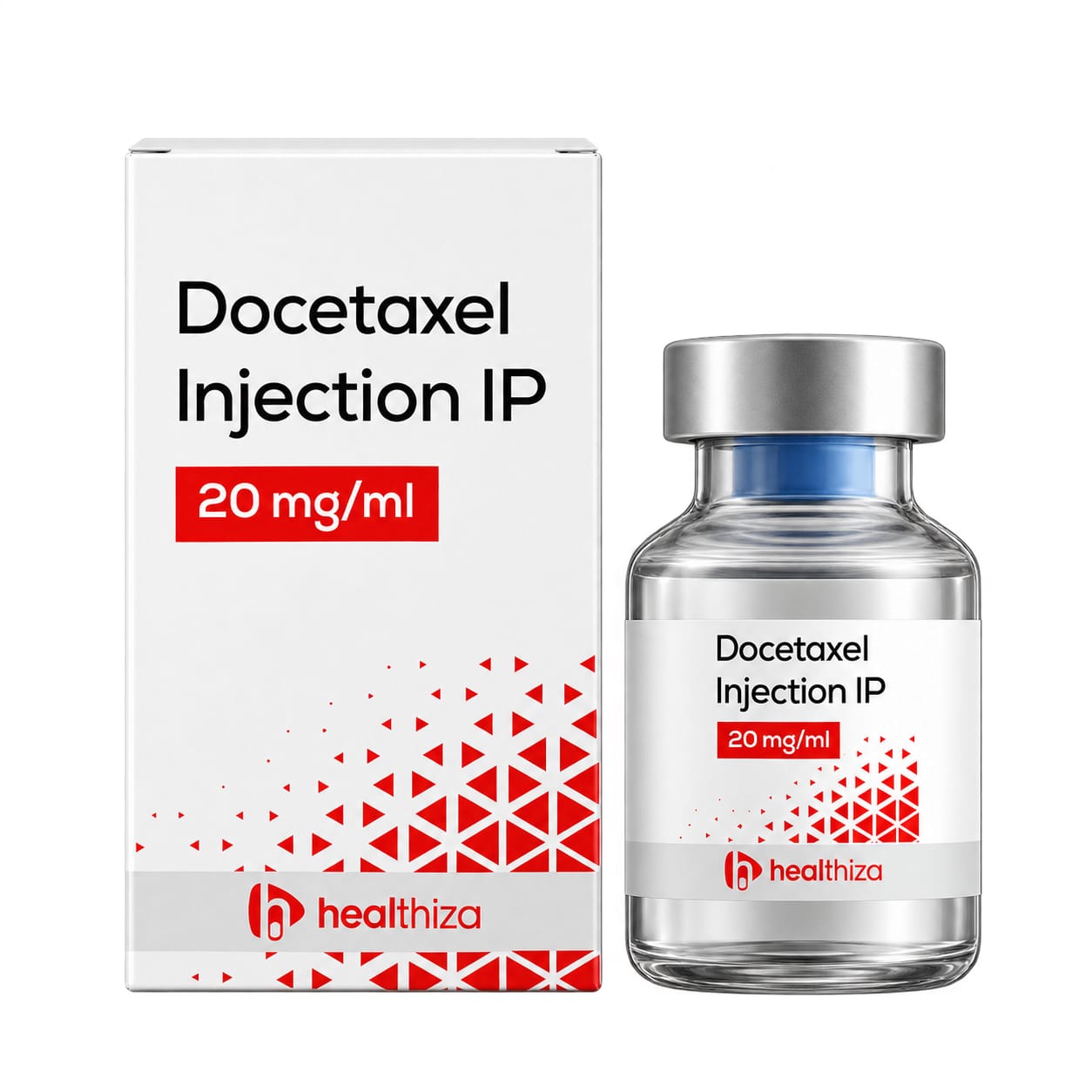
| Generic name | docetaxel |
|---|---|
| Drug class | microtubule inhibitor (taxoid family); antineoplastic/cytotoxic medicine |
| Forms | Multiple dose vial: 20 mg/2 mL, Multiple dose vial: 80 mg/8 mL, Multiple dose vial: 160 mg/16 mL |
Quick overview
Docetaxel Injection (generic name docetaxel) is a prescription anti-cancer medicine from the taxoid family, given as an intravenous infusion to treat several types of cancer, including breast, lung, prostate, stomach, and head and neck cancers. It works by stopping cancer cells from growing and multiplying. It is given in cycles, usually every 3 weeks, and requires monitoring and pre-treatment with a corticosteroid.
What is Docetaxel Injection
Docetaxel Injection is a prescription anti-cancer medicine given as an intravenous infusion. It belongs to a group of medicines called antineoplastic or cytotoxic medicines (chemotherapy), and works by stopping cancer cells from growing and multiplying.
Docetaxel Injection uses
- Breast cancer, including locally advanced or metastatic breast cancer after other chemotherapy has failed, and as adjuvant treatment (with doxorubicin and cyclophosphamide) after surgery for node-positive breast cancer
- Non-small cell lung cancer, alone after platinum-based chemotherapy has failed, or combined with cisplatin in patients who have not had chemotherapy before
- Hormone refractory (androgen independent) metastatic prostate cancer, combined with prednisone
- Advanced stomach (gastric) adenocarcinoma, combined with cisplatin and fluorouracil
- Locally advanced squamous cell carcinoma of the head and neck, combined with cisplatin and fluorouracil
Benefits of Docetaxel Injection
- In breast cancer previously treated with an anthracycline, docetaxel was associated with longer median survival and longer time to disease progression compared to mitomycin/vinblastine
- In adjuvant breast cancer treatment, the docetaxel-containing regimen (TAC) showed longer disease-free survival and longer overall survival than FAC
- In hormone refractory prostate cancer, docetaxel plus prednisone given every 3 weeks showed a statistically significant overall survival advantage compared to mitoxantrone plus prednisone
- In gastric adenocarcinoma, docetaxel combined with cisplatin and fluorouracil showed significantly longer time to disease progression and longer overall survival compared to cisplatin and fluorouracil alone
- In head and neck cancer induction treatment, docetaxel-containing regimens showed significantly longer progression-free survival and overall survival compared to cisplatin and fluorouracil alone
How Docetaxel Injection works
Docetaxel works by attaching to a cell protein called tubulin and making it build into stable microtubule structures that cannot break down normally. Because microtubules are needed for cells to divide, this stops cancer cells from multiplying.
Docetaxel Injection dosage
Docetaxel Injection is given as an intravenous infusion into a vein, usually over about 1 hour. It is usually given every 3 weeks, with each round of treatment called a cycle; the number of cycles depends on the condition being treated. It must be given in a facility able to manage possible complications such as severe allergic reactions.
Patients must take an oral corticosteroid (such as dexamethasone) before each infusion exactly as directed, to help reduce the risk of fluid retention and allergic reactions; for most cancers this is taken for three days (the day before, the day of, and the day after the infusion), while for prostate cancer it is taken on the day of the infusion only, at several timed doses before it.
Blood tests to check white blood cell counts and liver function are done before each treatment cycle, and treatment may be delayed or adjusted based on the results. Elderly patients may need extra caution and closer monitoring because of a higher chance of reduced liver, kidney, or heart function, other illnesses, or other medicines they are taking. This medicine is not established as safe or effective for use in children.
| Age group | Dose |
|---|---|
| 18–64 years | Common regimens use 60–100 mg/m² IV once every 3 weeks, depending on cancer type and combination therapy |
Available forms and strengths
- Multiple dose vial: 20 mg/2 mL
- Multiple dose vial: 80 mg/8 mL
- Multiple dose vial: 160 mg/16 mL
Side effects of Docetaxel Injection
Common
- Changes in sense of taste
- Feeling short of breath
- Constipation
- Decreased appetite
- Changes in fingernails or toenails
- Swelling of hands, face, or feet
- Feeling weak or tired
- Joint and muscle pain
- Nausea and vomiting
- Diarrhea
- Mouth or lip sores
- Hair loss (in some people, permanent hair loss has been reported)
- Rash
- Redness of the eye, excess tearing
- Skin reactions at the injection site such as increased pigmentation, redness, tenderness, swelling, warmth or dryness
- Infections
- Low white blood cells, low red blood cells (anemia), and low platelets
Serious
- Serious allergic (hypersensitivity) reactions, including anaphylaxis, which can be fatal
- Severe fluid retention, which can be life-threatening
- Severe low white blood cell counts leading to life-threatening infection and fever (febrile neutropenia)
- Severe liver problems (hepatotoxicity)
- Acute myeloid leukemia or myelodysplastic syndrome occurring later, especially when combined with doxorubicin and cyclophosphamide
- Severe skin reactions including blistering, peeling, or bleeding of skin, lips, eyes, mouth, nose, genitals, hands, or feet
- Severe neurologic reactions such as significant numbness, tingling, pain, or motor weakness
- Inflammation (swelling) of the small intestine and colon, which can be fatal
- Tumor lysis syndrome
- Vision problems including blurred vision or loss of vision
- Blood clots such as deep vein thrombosis or pulmonary embolism
- Interstitial lung disease or pneumonitis
- Severe asthenia (weakness) that may require stopping treatment
- Tissue damage if the drug leaks out of the vein (extravasation)
Warnings and precautions
- Deaths related to treatment are more common in people with abnormal liver function, those receiving higher doses, and those with non-small cell lung cancer who were previously treated with platinum-based chemotherapy and receive a higher docetaxel dose.
- This medicine should not be given if white blood cell (neutrophil) counts are too low, and frequent blood counts are needed to check for this serious drop in blood cells.
- Severe allergic reactions, including very rare fatal reactions, have occurred even in people who received preventive corticosteroid medicine. Any severe reaction requires stopping the infusion right away and getting treatment.
- This medicine must not be given to people who have had a severe allergic reaction to docetaxel or to medicines containing polysorbate 80. People allergic to paclitaxel may be at higher risk of having a severe allergic reaction to this medicine.
- Severe fluid retention in the body can occur even when preventive corticosteroids are used, and can be life-threatening.
- A type of blood cancer (acute myeloid leukemia) or other blood disorders can develop, sometimes years after treatment, especially when this medicine is combined with certain other chemotherapy drugs. New (second) cancers, including certain blood cancers and kidney cancer, have occurred in people treated with this medicine together with certain other anticancer treatments.
- Skin reactions such as redness and swelling of the arms and legs followed by peeling can occur and may require dose changes. Nerve-related symptoms such as numbness, tingling, burning, or pain can occur and may require dose adjustment or stopping treatment if they do not improve. Severe weakness and fatigue can occur and may require stopping treatment.
- Swelling of the small intestine and colon can happen at any time during treatment and could be life-threatening as early as the first day symptoms start. Tumor lysis syndrome, caused by fast breakdown of cancer cells, can cause kidney failure, heart problems, and may lead to death.
- Pregnancy: This medicine can harm an unborn baby and should not be used during pregnancy. Women who can become pregnant should use effective contraception during treatment and for a period after the last dose, and should tell their doctor right away if they become pregnant.
- Breastfeeding: It is not known whether docetaxel passes into breast milk. Breastfeeding should not be done during treatment and for a period after the last dose, and a decision should be made with the doctor about whether to breastfeed or take this medicine.
- Kidney: People with kidney problems should tell their doctor, as this may need to be considered during treatment.
- Liver: This medicine should not be given to people with certain liver function test abnormalities (bilirubin above the normal limit, or certain combined elevations of liver enzymes), because it increases the risk of severe or life-threatening complications. Liver function tests must be checked before each treatment cycle.
- Alcohol: This medicine contains alcohol. The amount of alcohol in each dose may affect the ability to drive or operate machinery right after the infusion, and should be considered by people with alcohol dependency, epilepsy, or liver disease.
- Driving: Because this medicine contains alcohol and can cause dizziness or tiredness, people should be careful driving or operating machinery until they know how it affects them, especially right after an infusion.
Storage
- Store between 2°C and 25°C (36°F and 77°F)
- Retain in the original package to protect from bright light
- Freezing does not adversely affect the product
- After initial puncture, multiple dose vials are stable for 28 days when stored between 2ºC to 8ºC and at room temperature, with or without protection from light
- Diluted infusion solution, if stored between 2°C and 25°C, is stable for 4 hours in either 0.9% Sodium Chloride or 5% Dextrose solution; use within 4 hours including storage and administration; do not freeze the infusion solution
- Procedures for proper handling and disposal of anticancer drugs should be followed
When to see a doctor
- Get medical help right away for signs of a serious allergic reaction, such as trouble breathing, sudden swelling of the face, lips, tongue, or throat, trouble swallowing, hives, rash, or redness all over the body.
- Call your doctor right away if you have a fever, as this may be the earliest sign of a serious infection caused by low white blood cell counts.
- Tell your doctor right away if you notice swelling in your legs or feet, weight gain, or shortness of breath, which can be signs of dangerous fluid retention.
- Tell your healthcare provider right away if you develop new or worse stomach pain or tenderness or diarrhea, with or without fever, which could be a sign of intestinal inflammation.
- Tell your healthcare provider right away if you have numbness, tingling, or burning in your hands or feet, or weakness of your legs, feet, arms, or hands.
- Tell your healthcare provider right away if you have any vision changes, such as blurred vision or loss of vision.
- Tell your healthcare provider right away if you have symptoms that may indicate tumor lysis syndrome, including nausea, vomiting, confusion, shortness of breath, irregular heartbeat, dark or cloudy urine, reduced urine amount, unusual tiredness, or muscle cramps.
- Tell your healthcare provider right away if you have signs of a severe skin reaction, such as redness and swelling of the arms and legs, blistering, peeling, or bleeding skin, or a widespread red scaly rash with blisters or pus-filled bumps and fever.
- Get medical help right away if you have a fast or irregular heartbeat, severe shortness of breath, dizziness, or fainting during or after your infusion.
Alternatives
- Paclitaxel
- Nab-paclitaxel
- Cabazitaxel
Watch the video
FAQs
What is Docetaxel Injection used for?
It is used to treat breast cancer, non-small cell lung cancer, hormone refractory prostate cancer, advanced gastric adenocarcinoma, and locally advanced squamous cell carcinoma of the head and neck, often combined with other chemotherapy drugs.
How is Docetaxel Injection given?
It is given as an intravenous infusion into a vein, usually over about 1 hour, typically once every 3 weeks as part of a treatment cycle, in a facility able to manage possible complications like severe allergic reactions.
Why is a corticosteroid needed before Docetaxel Injection?
Patients must take an oral corticosteroid such as dexamethasone before each infusion to help reduce the risk of fluid retention and allergic reactions, usually for three days for most cancers or on the day of infusion for prostate cancer.
What are the serious side effects of Docetaxel Injection?
Serious side effects include severe allergic reactions, life-threatening fluid retention, severe low white blood cell counts with infection, liver problems, severe skin reactions, nerve damage, intestinal inflammation, tumor lysis syndrome, blood clots, and lung disease.
Can Docetaxel Injection be used during pregnancy or breastfeeding?
No, it can harm an unborn baby and should not be used during pregnancy, and breastfeeding should not be done during treatment and for a period after the last dose.
General information, not medical advice
Your prescriber and the leaflet in your pack know your situation. This page does not.
- Follow your prescriber and the leaflet
- Don't start, stop, or change a dose on your own
- Doses and warnings differ by country and product
Sources
Video
Related medicines

Injectafer Injection: Uses, Dosage, Side Effects, Precautions and Alternates
Iron products
Injectafer (ferric carboxymaltose) treats iron deficiency anemia and heart failure-related iron deficiency via IV. Learn uses, dosage, side effects, and

Gliclazide Tablet: Uses, Dosage, Side Effects, Precautions and Alternates
Sulfonylurea (hypoglycemic/antidiabetic agent)
Gliclazide Tablet is a sulfonylurea for type 2 diabetes that boosts insulin release. Learn about dosage, side effects, warnings, and precautions.