
Safety
General information, not medical advice
Your prescriber and the leaflet in your pack know your situation. This page does not.
- Follow your prescriber and the leaflet
- Don't start, stop, or change a dose on your own
- Doses and warnings differ by country and product
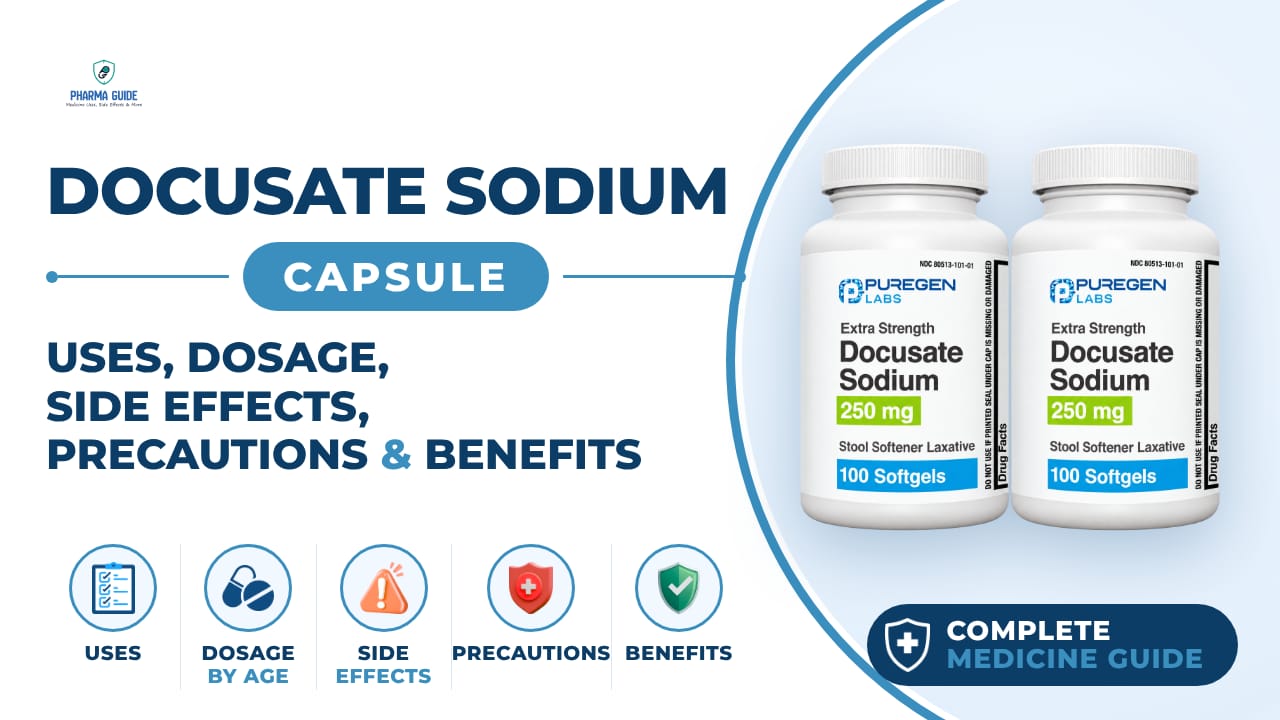
Docusate Sodium Capsule: Uses, Dosage, Side Effects, Precautions and Alternates
| Generic name | Docusate sodium |
|---|---|
| Drug class | Laxative, stool softener, surfactant laxative |
| Forms | Capsule, Tablet, Oral solution (liquid), Suspension |
Quick overview
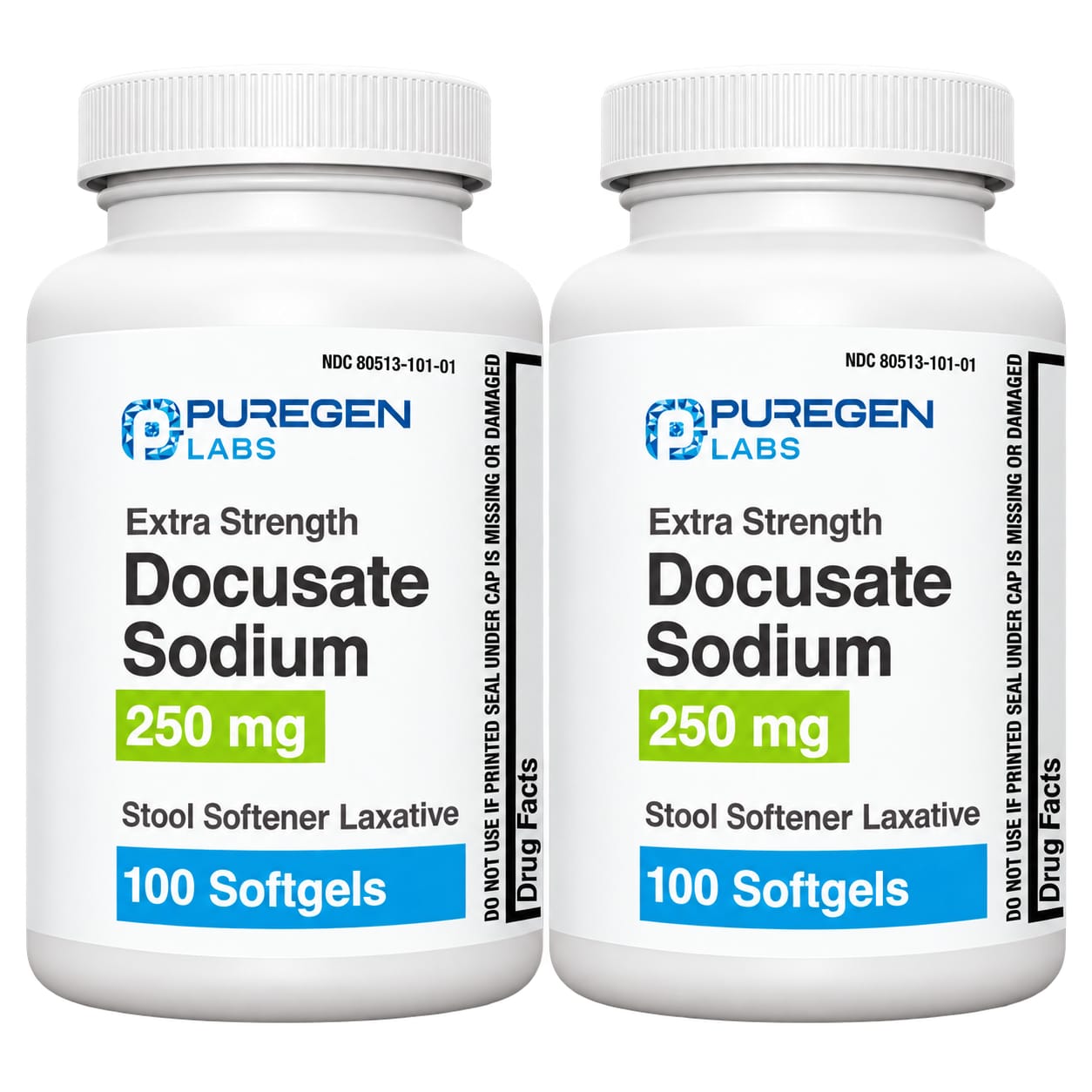
Docusate Sodium Capsule (docusate sodium) is a laxative and stool softener in the surfactant laxative class, available without a prescription. It treats occasional constipation by drawing water into the stool, making it softer and easier to pass. It is often used by people who should avoid straining during bowel movements, such as those recovering from surgery, childbirth, or heart attack, or those with hemorrhoids or anal fissures.
What is Docusate Sodium Capsule
Docusate sodium is a mild laxative, also called a stool softener, that can be bought without a prescription. It is used to treat occasional constipation by drawing water into the stool, making it softer and easier to pass.
Docusate Sodium Capsule uses
- Treats occasional constipation by making it easier to have a bowel movement
- Management and prevention of constipation due to hard, dry stools when straining should be avoided
- Recommended for patients who should not strain during bowel movements, such as those recovering from surgery, childbirth, heart attack, or with hemorrhoids or anal fissures
Benefits of Docusate Sodium Capsule
- Helps soften hard stools
- Makes bowel movements easier to pass
- Reduces straining
- Helps manage occasional constipation
- May be useful when avoiding straining is medically desirable
How Docusate Sodium Capsule works
Docusate sodium works as a surfactant that reduces the surface tension inside the bowel, allowing more liquid to mix into the stool and soften it. It usually takes 12 to 72 hours (1 to 3 days) to cause a bowel movement.
Docusate Sodium Capsule dosage
Follow the instructions on the medicine label if you are using this without a prescription, or follow your healthcare provider's instructions if it was prescribed. Daily doses can be taken all at once or split into smaller doses throughout the day. Swallow the capsule whole with a glass of water. Do not take this medicine within 2 hours of other medications, since it may reduce how well the other medicine works. Drink at least 6 to 8 full glasses of fluid a day to help produce a soft stool and prevent dehydration. Do not give to children younger than 12 years old unless a doctor has been consulted.
If you miss a dose, take it as soon as you remember; if you don't remember until the next day, skip the missed dose and continue your regular schedule; do not take extra to make up for a missed dose.
| Age group | Dose |
|---|---|
| 2–11 years | Usually 50–150 mg daily, depending on formulation and clinician guidance |
| 12–17 years | Usually 50–300 mg daily in one or divided doses |
| 18–64 years | Usually 50–300 mg daily in one or divided doses |
Available forms and strengths
- Capsule
- Tablet
- Oral solution (liquid)
- Suspension
Side effects of Docusate Sodium Capsule
Common
- Diarrhea
- Vomiting
- Loss of appetite
- Mild stomach cramps or abdominal pain
- Mild nausea
- Throat or mouth irritation (if using liquid forms)
Serious
- Rectal bleeding
- Black, tarry stools
- Blood in stools
- No bowel movement within 12 hours of taking docusate
- Allergic skin rash
Warnings and precautions
- Do not use docusate sodium if you have stomach pain, nausea, or vomiting.
- Do not use this medicine if you have appendicitis or its symptoms, rectal or unexplained bleeding, congestive heart failure, high blood pressure, fecal impaction, or a bowel blockage.
- Do not use any laxative for more than one week unless a doctor tells you to, since overuse can cause your bowels to become dependent on the medicine to work, and can cause changes in blood sugar and potassium levels.
- Do not take this medicine within 2 hours of another medication, because it may reduce how well the other medicine works.
- Do not give this medicine to young children up to 6 years old unless a doctor has prescribed it.
- Do not use mineral oil while taking docusate, as it can increase absorption of the mineral oil and cause harmful effects.
- Keep this medicine out of the reach of children.
- Do not use this medicine if you are pregnant until you have talked to a doctor.
- Do not use this medicine if you are breastfeeding until you have talked to a doctor.
- There isn't enough research to know the risk to the baby, so you should weigh the possible benefits against the possible risks with your doctor.
- Liver injury has been reported when docusate is combined with a laxative called Danthron, especially after repeated use.
- Talk with your healthcare professional about using alcohol with this medicine, since interactions may occur.
Storage
- Store docusate capsules, tablets, or liquid at room temperature
- Store between 15 - 30°C (59 - 86°F)
- Store in a tight, light resistant container in a dry area
- Keep out of the reach of children
- Do not keep outdated medicine or medicine no longer needed
- Ask your healthcare professional how you should dispose of any medicine you do not use
When to see a doctor
- Stop taking docusate and call a healthcare provider right away if you have rectal bleeding or do not have a bowel movement within 12 hours of taking the medicine.
- Check with your doctor right away if you notice black, tarry stools or blood in your stools.
- If you still need a laxative after using it for a week, talk to your doctor, since you may have a more serious problem that this medicine cannot treat.
- If your condition does not improve after a week, or gets worse, check with your doctor.
Alternatives
- Polyethylene glycol (PEG 3350)
- Lactulose
- Senna
- Bisacodyl
Watch the video
FAQs
What is Docusate Sodium Capsule used for?
It treats occasional constipation by drawing water into the stool to make it softer and easier to pass, and is often used by people who should avoid straining, such as those recovering from surgery, childbirth, or heart attack, or with hemorrhoids or anal fissures.
How long does it take for Docusate Sodium Capsule to work?
It usually takes 12 to 72 hours (1 to 3 days) to cause a bowel movement.
Can children take Docusate Sodium Capsule?
It should not be given to children younger than 12 years old unless a doctor has been consulted.
What are the common side effects of Docusate Sodium Capsule?
Common side effects include diarrhea, vomiting, loss of appetite, mild stomach cramps or abdominal pain, mild nausea, and throat or mouth irritation if using liquid forms.
Can I use mineral oil with Docusate Sodium Capsule?
No, mineral oil should not be used while taking docusate, as it can increase absorption of the mineral oil and cause harmful effects.
General information, not medical advice
Your prescriber and the leaflet in your pack know your situation. This page does not.
- Follow your prescriber and the leaflet
- Don't start, stop, or change a dose on your own
- Doses and warnings differ by country and product
Sources
Video
Related medicines

Injectafer Injection: Uses, Dosage, Side Effects, Precautions and Alternates
Iron products
Injectafer (ferric carboxymaltose) treats iron deficiency anemia and heart failure-related iron deficiency via IV. Learn uses, dosage, side effects, and

Gliclazide Tablet: Uses, Dosage, Side Effects, Precautions and Alternates
Sulfonylurea (hypoglycemic/antidiabetic agent)
Gliclazide Tablet is a sulfonylurea for type 2 diabetes that boosts insulin release. Learn about dosage, side effects, warnings, and precautions.