
Safety
General information, not medical advice
Your prescriber and the leaflet in your pack know your situation. This page does not.
- Follow your prescriber and the leaflet
- Don't start, stop, or change a dose on your own
- Doses and warnings differ by country and product
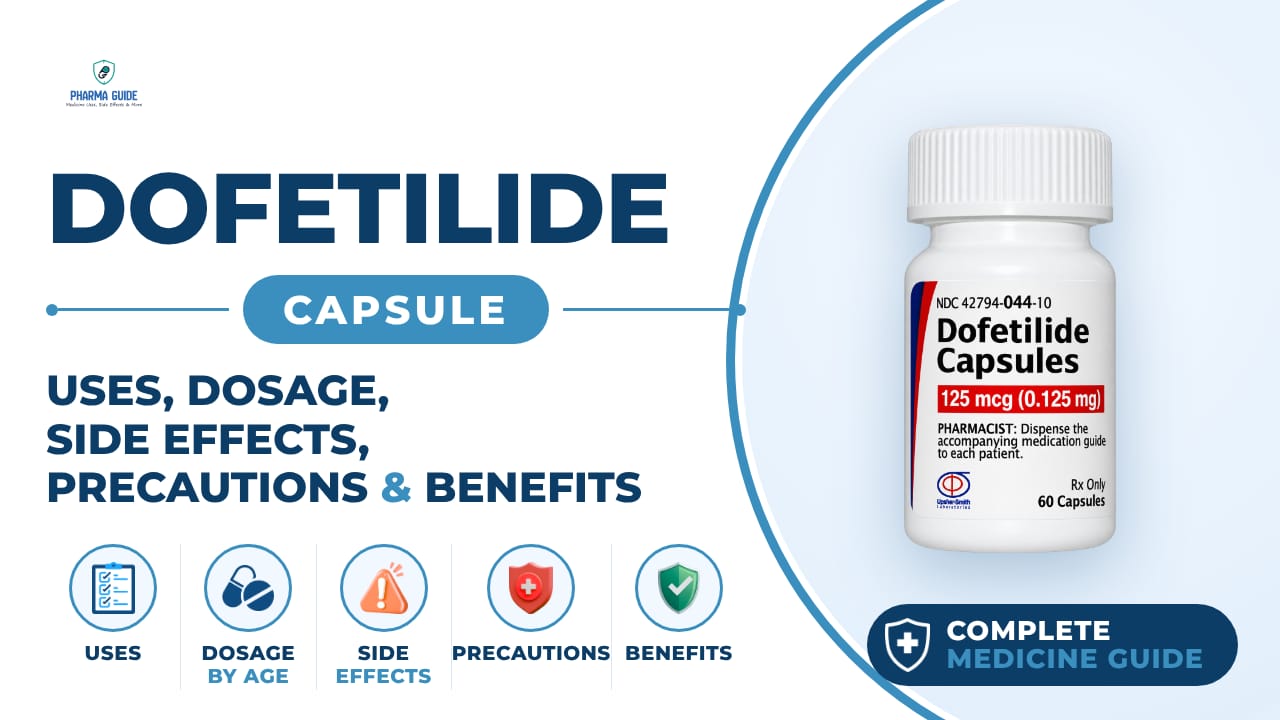
Dofetilide Capsule: Uses, Dosage, Side Effects, Precautions and Alternates
| Generic name | dofetilide |
|---|---|
| Drug class | class III antiarrhythmic |
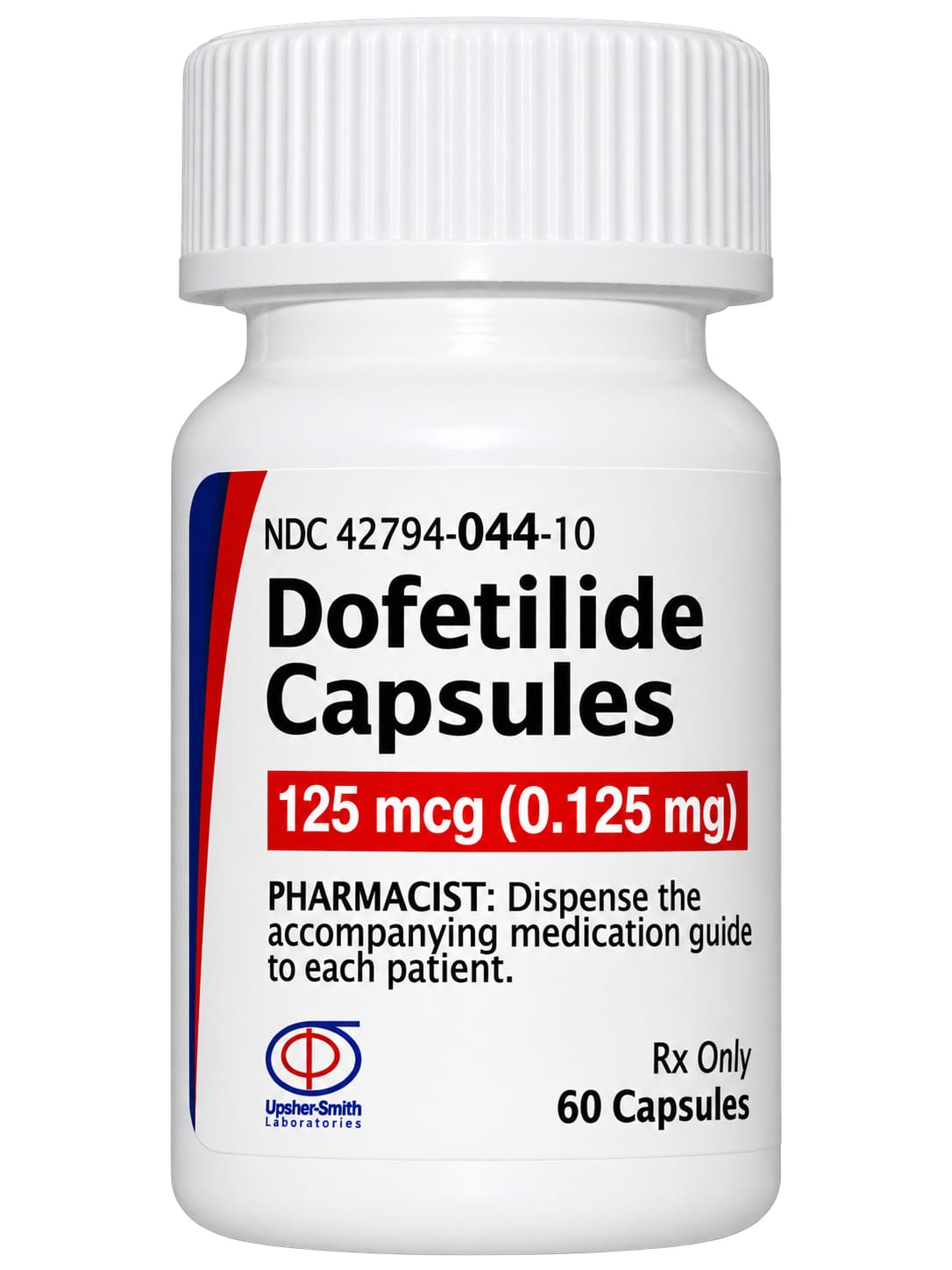
| Forms | 125 mcg oral capsules, 250 mcg oral capsules, 500 mcg oral capsules |
Quick overview
Dofetilide Capsule (generic name: dofetilide) is a prescription class III antiarrhythmic used to help correct certain abnormal heart rhythms. It is swallowed as a capsule once or twice a day, with the dose worked out by your doctor. Treatment must be started in a hospital, where your heart rhythm and kidney function are checked for the first few days so the right dose can be found.
What is Dofetilide Capsule
Dofetilide is a prescription medicine that helps correct certain abnormal heart rhythms. It is swallowed as a capsule once or twice a day, and your doctor works out the right dose for you.
Dofetilide Capsule uses
- Treating and preventing atrial fibrillation (an irregular heart rhythm starting in the upper chambers of the heart)
- Treating and preventing atrial flutter (another abnormal heart rhythm starting in the upper chambers of the heart)
- Off-label use for ventricular tachycardia (a fast heartbeat in the lower heart chambers)
- Off-label use for supraventricular tachycardias (other fast heartbeats starting in the upper heart chambers)
- Off-label use for Wolff-Parkinson-White syndrome (a fast heartbeat caused by an extra electrical signal path in the heart)
Benefits of Dofetilide Capsule
- Can help manage certain kinds of irregular heart rhythms, although it does not cure them
- Helps maintain normal sinus rhythm
- Used for certain cases of atrial fibrillation
- Used for atrial flutter
- Can help convert some persistent atrial arrhythmias to sinus rhythm
How Dofetilide Capsule works
Dofetilide works by blocking certain electrical signals in the heart that can cause an irregular heartbeat, which helps keep the heart rhythm normal.
Dofetilide Capsule dosage
Take dofetilide exactly as your doctor prescribes and at the same time every day. Keep taking your medicine even if you feel well. Do not change your dose unless your doctor tells you to, and do not stop taking this medicine until your doctor tells you to stop. You can take dofetilide with or without food. Don't skip a dose, and don't take a double dose if you miss one.
Treatment must be started in a hospital, where your heart rhythm and kidney function are checked for the first few days so the right dose can be found.
| Age group | Dose |
|---|---|
| Under 18 years | Safety and effectiveness have not been established |
| 18–64 years | Up to 0.5 mg twice daily, depending on kidney function and QT interval |
| 65–74 years | 0.125–0.5 mg twice daily, determined primarily by kidney function and QT interval |
Available forms and strengths
- 125 mcg oral capsules
- 250 mcg oral capsules
- 500 mcg oral capsules
Side effects of Dofetilide Capsule
Common
- Headache
- Chest pain
- Dizziness
- Nausea
- Diarrhea
- Pain in your belly
Serious
- Torsade de Pointes, a dangerous and potentially fatal fast heartbeat in the lower chambers of the heart
- Severe allergic reaction with breathing problems, wheezing, swelling of face/lips/mouth/tongue/throat, trouble swallowing, hives, or fainting
- Heart rhythm changes with chest pain, shortness of breath, dizziness, or fainting
- Electrolyte changes (low potassium, sodium, or chloride) causing unusual sweating, increased thirst, weakness, tiredness, muscle cramps, constipation, nausea, vomiting, severe diarrhea, confusion, or difficulty breathing
Warnings and precautions
- Dofetilide can cause a serious abnormal heartbeat called Torsade de Pointes, which can lead to death. Treatment must start in a hospital so your heart rate and kidney function can be monitored for the first few days.
- Do not take dofetilide if you have long QT syndrome, kidney problems, or are on kidney dialysis, or if you take certain medicines such as cimetidine, verapamil, ketoconazole, trimethoprim (with or without sulfamethoxazole), prochlorperazine, megestrol, dolutegravir, or hydrochlorothiazide.
- Grapefruit juice and several other drugs can raise the level of dofetilide in your body, so check with your provider before drinking grapefruit juice or starting other medicines.
- Never stop taking this medicine without asking your provider first, and always tell any provider or dentist that you take dofetilide before surgical, dental, or emergency treatment.
- Dofetilide should not be used if your kidneys are not working well or if you are on kidney dialysis. Your doctor may test your kidney function before and during treatment.
- Tell your doctor if you have liver problems before taking this medicine.
- It is not known if dofetilide is safe during pregnancy or if it could harm an unborn baby. Tell your doctor if you are or plan to become pregnant.
- It is not known if dofetilide passes into breast milk. You and your doctor should decide whether you will take this medicine or breastfeed, as you should not do both.
- There are no known interactions between dofetilide and alcohol, but if you drink, do so only in moderation, since alcohol can increase the risk of heart and liver problems and may increase dizziness.
- Dizziness may occur; avoid driving if affected.
Storage
- Store dofetilide in a tightly closed container at room temperature (59° to 86°F / 15° to 30°C) in a dry place
- Keep this medicine away from direct light and heat
- Don't store dofetilide in a bathroom or other damp areas because moisture can break down the medication
- Keep this and all other medications out of the reach of children
- Never share your medication with anyone
- Never take outdated medications; if the label has no expiration date or you're unsure how old it is, check with your pharmacy
When to see a doctor
- Call your doctor and go to the hospital right away if you feel faint, become dizzy, or have a fast heartbeat.
- Seek emergency treatment if you have fast or irregular heartbeat, a pounding or slow heartbeat, chest pain, dizziness or lightheadedness, difficulty breathing, severe diarrhea, vomiting with loss of appetite, unusual sweating, increased thirst, or rash.
- Get medical help right away if you think you've taken too much dofetilide, and bring the medicine container with you.
Alternatives
- Amiodarone
- Sotalol
- Dronedarone
Watch the video
FAQs
What is Dofetilide Capsule used for?
It is used to treat and prevent atrial fibrillation and atrial flutter, and is sometimes used off-label for ventricular tachycardia, supraventricular tachycardias, and Wolff-Parkinson-White syndrome.
Why must treatment start in a hospital?
Treatment must begin in a hospital because dofetilide can cause a serious abnormal heartbeat called Torsade de Pointes, so your heart rhythm and kidney function need to be monitored for the first few days to find the right dose.
How is Dofetilide Capsule taken?
It is swallowed as a capsule once or twice a day, exactly as prescribed, at the same time every day, with or without food, without skipping or doubling doses.
What are the serious side effects of Dofetilide Capsule?
Serious side effects include Torsade de Pointes, severe allergic reactions, heart rhythm changes with chest pain or fainting, and electrolyte changes causing symptoms like weakness, confusion, or difficulty breathing.
Can I drink grapefruit juice while taking Dofetilide Capsule?
Grapefruit juice can raise dofetilide levels in your body, so you should check with your provider before drinking it or starting other medicines.
General information, not medical advice
Your prescriber and the leaflet in your pack know your situation. This page does not.
- Follow your prescriber and the leaflet
- Don't start, stop, or change a dose on your own
- Doses and warnings differ by country and product
Sources
Video
Related medicines

Injectafer Injection: Uses, Dosage, Side Effects, Precautions and Alternates
Iron products
Injectafer (ferric carboxymaltose) treats iron deficiency anemia and heart failure-related iron deficiency via IV. Learn uses, dosage, side effects, and

Gliclazide Tablet: Uses, Dosage, Side Effects, Precautions and Alternates
Sulfonylurea (hypoglycemic/antidiabetic agent)
Gliclazide Tablet is a sulfonylurea for type 2 diabetes that boosts insulin release. Learn about dosage, side effects, warnings, and precautions.