
Safety
General information, not medical advice
Your prescriber and the leaflet in your pack know your situation. This page does not.
- Follow your prescriber and the leaflet
- Don't start, stop, or change a dose on your own
- Doses and warnings differ by country and product
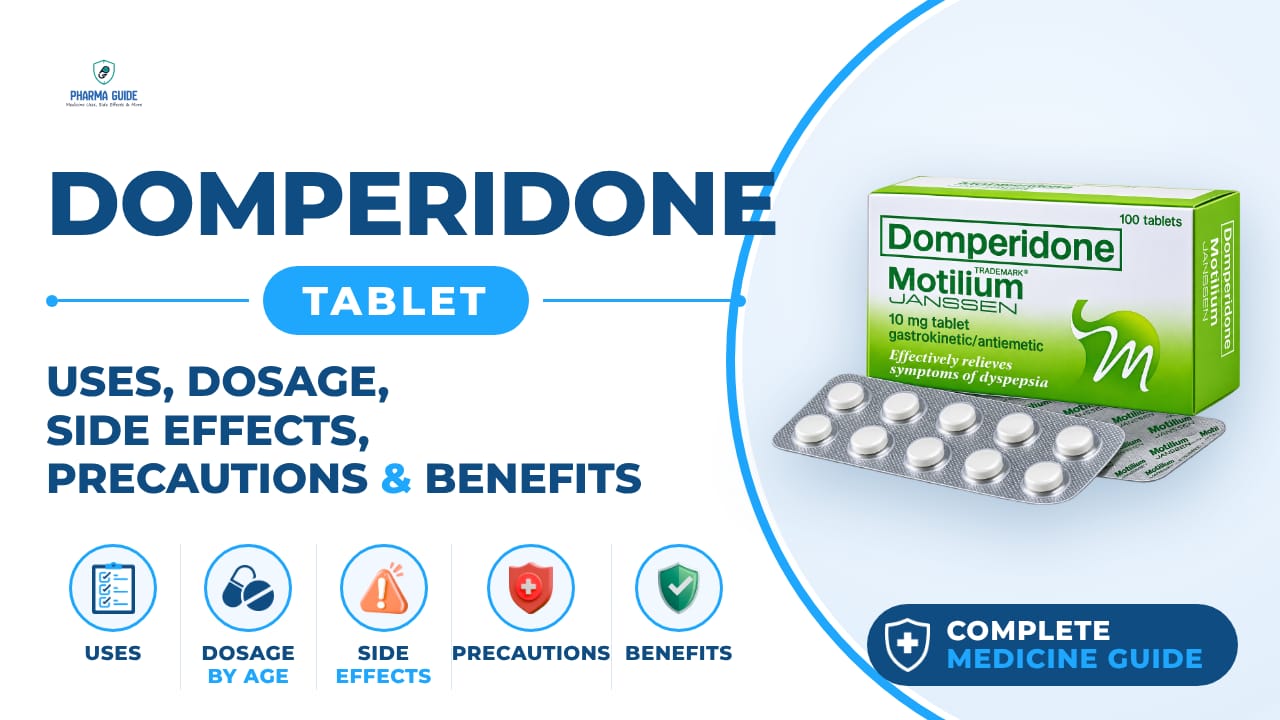
Domperidone Tablet: Uses, Dosage, Side Effects, Precautions and Alternates
| Generic name | Domperidone |
|---|---|
| Drug class | Dopamine antagonist (antiemetic and prokinetic / modifier of upper gastrointestinal motility) |
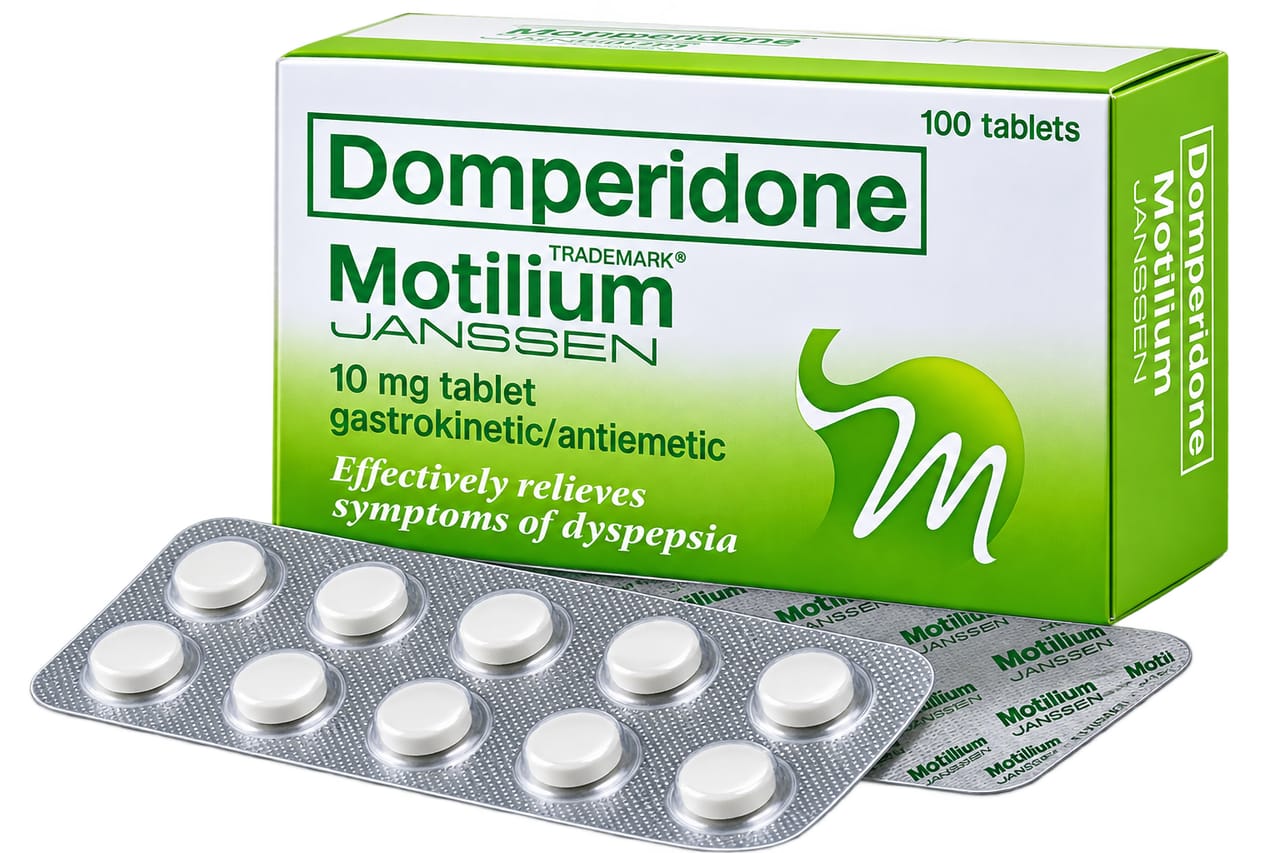
| Forms | oral tablet, oral suspension, oral drops, orally disintegrating tablet, suppository |
Quick overview
Domperidone Tablet (generic name: Domperidone) is a dopamine antagonist used as an anti-sickness and prokinetic medicine. It treats stomach-related problems such as nausea, vomiting, and discomfort caused by slow movement of the stomach and upper digestive tract. It works by blocking dopamine receptors in the gut and in a brain area involved in nausea and vomiting, while causing fewer brain-related side effects than similar medicines because it does not easily enter the brain.
What is Domperidone Tablet
Domperidone is an anti-sickness (antiemetic) and prokinetic medicine that belongs to a group of drugs called dopamine antagonists. It is used to treat stomach-related problems such as nausea, vomiting, and stomach discomfort caused by slow movement of the stomach and upper digestive tract.
Domperidone Tablet uses
- To treat nausea and vomiting, including when caused by migraine headaches
- To prevent nausea and vomiting caused by certain medicines used to treat Parkinson's disease, including levodopa and pergolide
- To relieve discomfort caused by a slow moving stomach known as gastroparesis, including indigestion, not being able to finish a meal, feeling too full or bloated, loss of appetite, feeling sick, or belching without relief
- To treat symptoms of slowed stomach emptying associated with chronic and subacute gastritis and diabetic gastroparesis
- To increase breastmilk supply (an off-label/unapproved use in some countries)
Benefits of Domperidone Tablet
- Helps relieve nausea and vomiting
- Improves stomach emptying by increasing gastrointestinal movement
- May reduce fullness, bloating, and discomfort related to delayed stomach emptying
- Can help reduce regurgitation associated with impaired gastric motility in appropriate patients
- Provides short-term symptom relief when prescribed appropriately
How Domperidone Tablet works
Domperidone blocks dopamine receptors in the gut, which helps the muscles of the stomach and intestines contract more and move food through the digestive system faster. It also acts on a part of the brain involved in nausea and vomiting, but because domperidone does not easily enter the brain, it causes fewer brain-related side effects than similar medicines.
Domperidone Tablet dosage
Take this medicine by mouth exactly as your doctor or pharmacist tells you. It is recommended to take oral domperidone 15 to 30 minutes before meals, since taking it after meals slightly delays how the medicine is absorbed. Swallow tablets whole with a drink of water; do not crush or chew them. Orally disintegrating tablets dissolve in the mouth and do not need to be taken with water. If using the oral suspension, use the plastic measuring cup that comes with it. If using oral drops, use the dropper provided.
Gastric symptoms usually improve within 3-4 days of use; do not take for more than 7 days without talking to your doctor. If you miss a dose, take it as soon as you remember, but if it is almost time for your next dose, skip the missed dose and continue your normal schedule; do not take a double dose. Older adults and those with kidney problems may need a lower dose or to take it less often, as advised by a doctor.
| Age group | Dose |
|---|---|
| Under 12 years | Tablet not recommended / efficacy not established |
| 12–17 years, <35 kg | Tablet not recommended |
| 12–17 years, ≥35 kg | 10 mg up to 3 times daily |
| 18–64 years | 10 mg up to 3 times daily |
| 65+ years | Use cautiously; increased heart-rhythm risk, especially over age 60 |
Available forms and strengths
- Oral tablet (10 mg)
- Oral suspension
- Oral drops
- Orally disintegrating tablet
- Suppository
Side effects of Domperidone Tablet
Common
- Dry mouth
- Headache
- Migraine
Serious
- Swelling of the hands, feet, ankles, face, lips or throat with difficulty swallowing or breathing, or an itchy, lumpy rash (signs of an allergic reaction)
- Uncontrolled movements such as irregular eye movements, unusual tongue movements, abnormal posture (like a twisted neck), trembling, or muscle stiffness — more likely in children
- Very fast or unusual heartbeat, which could be a sign of a life-threatening heart problem
- Seizures (fits)
- Unusual breast milk production, painful or tender breasts, or breast enlargement in men
- Irregular or stopped menstrual periods in women
Warnings and precautions
- Domperidone may increase the risk of serious heart rhythm problems and cardiac arrest, especially in people over 60 or those taking more than 30 mg a day.
- Do not take domperidone together with certain medicines used for fungal or bacterial infections, heart problems, psychosis, depression, digestive disorders, allergies, malaria, HIV/AIDS, or cancer, as these combinations can be dangerous.
- Do not take domperidone if you have a pituitary gland tumor, a blockage or tear in your intestines, signs of bleeding in the stomach or intestines, moderate or severe liver disease, certain heart rhythm problems, heart failure, or abnormal potassium or magnesium levels.
- Domperidone should be used at the lowest effective dose for the shortest time needed, especially in adults and adolescents 12 years and older weighing 35 kg or more.
- Do not use domperidone for more than 7 days without talking to your doctor.
- Domperidone is not usually recommended during pregnancy because there isn't enough information about its safety. It should only be used if a doctor believes the benefits outweigh the risks.
- Domperidone is not usually recommended while breastfeeding because small amounts pass into breastmilk and could cause heart-related side effects in the baby.
- It should only be used if a doctor considers it clearly necessary.
- People with kidney problems may need a lower dose or to take the medicine less often, and should be checked regularly by their doctor during long-term treatment.
- Domperidone should not be used by people with moderate or severe liver disease.
- Avoid alcohol while taking domperidone, as it may make you feel too sleepy.
- This medicine may make you feel dizzy or tired, so avoid driving or doing activities that need concentration until you know how it affects you.
Storage
- Store at room temperature between 68-77°F (20-25°C) or as directed
- Protect from light
- Do not refrigerate or freeze domperidone suppositories; do not store above 77°F (25°C)
- Keep out of sight and reach of children
- Store between 15-30°C and protect from light
- Medicine that is no longer needed or is out of date should not be kept
When to see a doctor
- Stop taking domperidone and get medical help right away if you notice swelling of your hands, feet, face, lips, or throat, trouble breathing or swallowing, or an itchy rash — these can be signs of an allergic reaction
- Get medical help if you notice uncontrolled movements, such as unusual eye or tongue movements, muscle stiffness, trembling, or an abnormal posture like a twisted neck
- Seek medical help immediately if you have a very fast or unusual heartbeat, as this could signal a life-threatening heart problem
- Get medical help if you have a seizure (fit)
- Stop taking domperidone and contact your doctor if you experience heart palpitations, trouble breathing, or loss of consciousness
- If you think you have taken too much domperidone, seek medical attention right away, even if you feel fine
Alternatives
- Dimenhydrinate
- Prochlorperazine
- Granisetron
- Ondansetron
- Metoclopramide
Watch the video
FAQs
What is Domperidone Tablet used for?
It is used to treat nausea and vomiting, including from migraines, to prevent nausea caused by Parkinson's medicines like levodopa, and to relieve discomfort from slow stomach emptying such as bloating, indigestion, and loss of appetite.
How should I take Domperidone Tablet?
Take it by mouth exactly as directed, usually 15 to 30 minutes before meals. Swallow tablets whole with water without crushing or chewing them. Gastric symptoms usually improve within 3-4 days, and it should not be taken for more than 7 days without consulting a doctor.
What are the serious side effects of Domperidone Tablet?
Serious side effects include allergic reactions with swelling or difficulty breathing, uncontrolled movements like unusual eye or tongue movements, a very fast or unusual heartbeat, seizures, unusual breast milk production or breast enlargement in men, and irregular menstrual periods.
Who should not take Domperidone Tablet?
People with a pituitary gland tumor, intestinal blockage or tear, signs of gastrointestinal bleeding, moderate or severe liver disease, certain heart rhythm problems, heart failure, or abnormal potassium or magnesium levels should not take domperidone.
Can Domperidone Tablet be used during pregnancy or breastfeeding?
It is not usually recommended during pregnancy or breastfeeding due to insufficient safety information and the risk of heart-related side effects in the baby from breastmilk, and should only be used if a doctor believes the benefits outweigh the risks.
General information, not medical advice
Your prescriber and the leaflet in your pack know your situation. This page does not.
- Follow your prescriber and the leaflet
- Don't start, stop, or change a dose on your own
- Doses and warnings differ by country and product
Sources
Video
Related medicines

Injectafer Injection: Uses, Dosage, Side Effects, Precautions and Alternates
Iron products
Injectafer (ferric carboxymaltose) treats iron deficiency anemia and heart failure-related iron deficiency via IV. Learn uses, dosage, side effects, and

Gliclazide Tablet: Uses, Dosage, Side Effects, Precautions and Alternates
Sulfonylurea (hypoglycemic/antidiabetic agent)
Gliclazide Tablet is a sulfonylurea for type 2 diabetes that boosts insulin release. Learn about dosage, side effects, warnings, and precautions.