
Safety
General information, not medical advice
Your prescriber and the leaflet in your pack know your situation. This page does not.
- Follow your prescriber and the leaflet
- Don't start, stop, or change a dose on your own
- Doses and warnings differ by country and product
Donepezil Tablet: Uses, Dosage, Side Effects, Precautions and Alternates
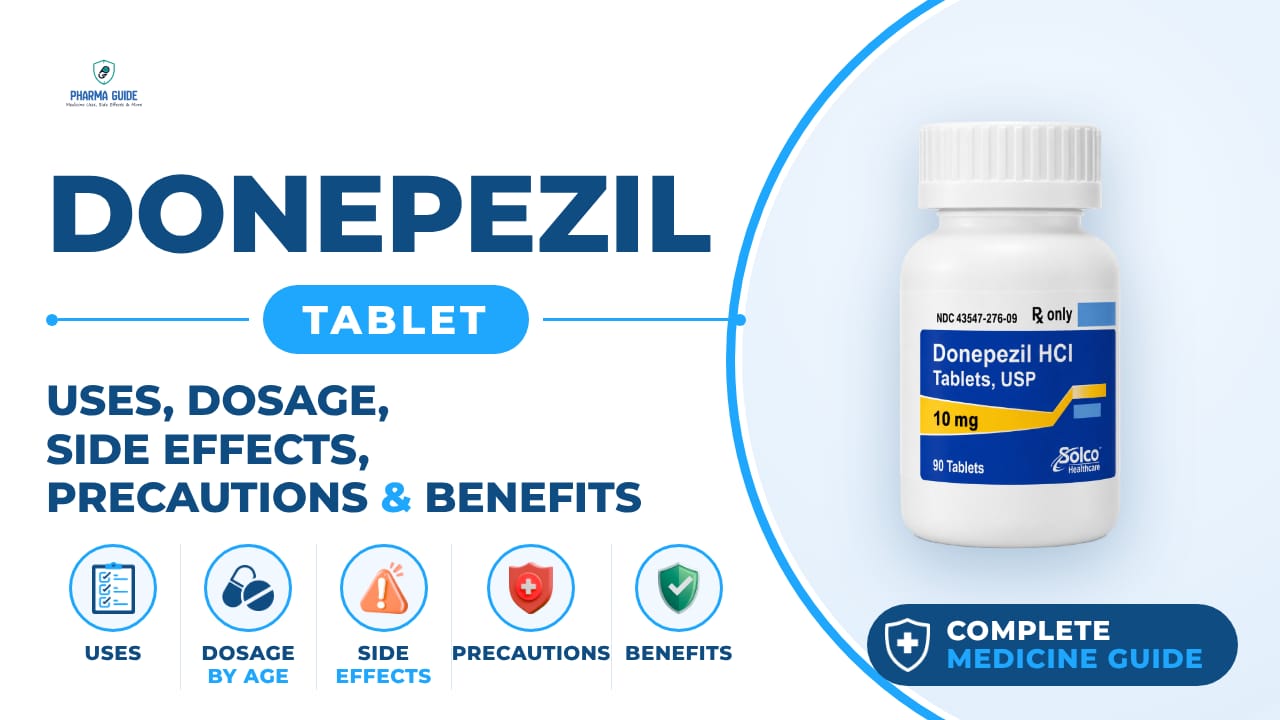
| Generic name | donepezil |
|---|---|
| Drug class | Cholinesterase inhibitors |
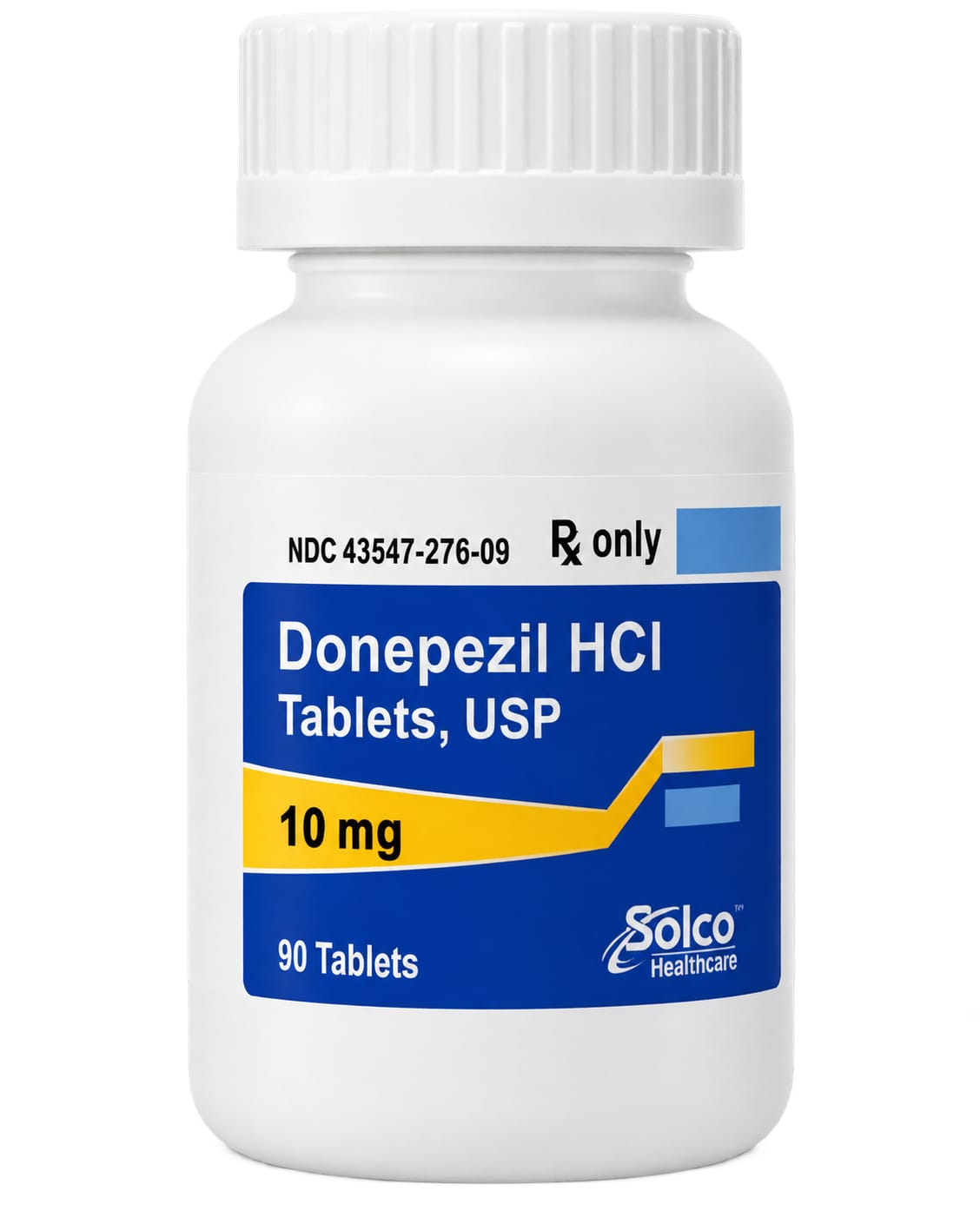
| Forms | Tablets (5 mg, 10 mg, 23 mg), Orally disintegrating tablets (5 mg, 10 mg), Transdermal (skin patch) system (5 mg, 10 mg) |
Quick overview
Donepezil Tablet, known generically as donepezil, is a cholinesterase inhibitor used to treat dementia caused by Alzheimer's disease. It comes as regular tablets, orally disintegrating tablets, and a skin patch. Donepezil may help improve memory, thinking, behavior, and daily activities, though it does not stop the disease from getting worse over time. It should be used exactly as prescribed, usually once daily in the evening.
What is Donepezil Tablet
Donepezil is a medicine used to treat dementia caused by Alzheimer's disease. It comes as regular tablets, orally disintegrating tablets, and a skin patch.
Donepezil Tablet uses
- Treating mild, moderate, and severe dementia caused by Alzheimer's disease
- Treating vascular dementia (dementia linked to blood vessel disease in the brain)
Benefits of Donepezil Tablet
- May help improve attention, memory, behavior, and the ability to do daily activities in people with dementia
- Can help improve thinking and memory skills, though it does not stop the disease from getting worse over time
- Supports thinking skills: may improve attention, awareness, and problem-solving abilities
- Slows symptom progression: helps temporarily slow the worsening of cognitive symptoms
- Improves daily activities: may help with tasks such as communication, self-care, and routine activities
How Donepezil Tablet works
Donepezil works by blocking the breakdown of a brain chemical called acetylcholine, which is important for memory and thinking. People with Alzheimer's disease usually have lower levels of this chemical, so increasing it can help improve symptoms.
Donepezil Tablet dosage
Take donepezil once a day, in the evening before bed. It can be taken with or without food. Swallow regular tablets whole; do not crush, chew, or break them.
For orally disintegrating tablets, keep the tablet in its blister pack until ready to use. Use dry hands to place it on the tongue and let it dissolve completely (do not swallow whole), swallowing several times as it dissolves, then drink a glass of water afterward.
Do not stop taking this medicine without talking to your doctor first, since stopping suddenly can make symptoms worse. If you miss a dose, take it as soon as you remember unless it is almost time for the next dose; do not double up. If you miss doses for more than a week in a row, call your doctor before restarting the medicine. Tell your surgeon or dentist you are taking donepezil before any surgery or dental work, since you may need to stop it for a short time.
| Age group | Dose |
|---|---|
| Under 18 Years | Not recommended unless prescribed by a specialist |
| Adults (18–64 Years) | 5 mg once daily initially; may increase to 10 mg once daily |
| Older Adults (65+ years) | 5 mg once daily initially; may increase to 10 mg once daily based on response |
Available forms and strengths
- Tablets (5 mg, 10 mg, 23 mg)
- Orally disintegrating tablets (5 mg, 10 mg)
- Transdermal (skin patch) system (5 mg, 10 mg)
Side effects of Donepezil Tablet
Common
- Nausea
- Diarrhea
- Trouble sleeping
- Vomiting
- Muscle cramps
- Feeling tired
- Loss of appetite
- Headache
- General pain
- Dizziness
- Joint pain
- Increased frequency of urination
- Weight loss
- Bruising
- Tingling or numbness of hands or feet
- Depression
- Unusual dreams
- Agitation
- Heartburn or indigestion
Serious
- Slow heartbeat and fainting
- Increased stomach acid, raising the risk of ulcers and bleeding
- Worsening of asthma or other lung problems
- Seizures (convulsions)
- Difficulty passing urine
- Severe or ongoing vomiting
- Signs of stomach bleeding such as severe heartburn, bloody or tarry stools, or vomit that looks like coffee grounds
- Allergic reaction with hives, difficulty breathing, or swelling of face, lips, tongue, or throat
- Hallucinations (seeing, feeling, or hearing things that are not there)
- Aggressive behavior
- Pisa syndrome (bending of the back forward and to one side)
- Signs of a heart rhythm problem such as fast irregular heartbeat or fainting
- Severe upper stomach pain with nausea, vomiting, and fever
- Yellowing of the skin, dark brown urine, and stomach pain (possible liver problem)
- Sudden high fever, sweating, muscle stiffness, or altered consciousness (possible neuroleptic malignant syndrome)
Warnings and precautions
Get emergency help right away for signs of an allergic reaction, including hives, trouble breathing, or swelling of the face, lips, tongue, or throat. Donepezil can cause a slow heartbeat and fainting, especially in people with heart problems. This medicine can increase stomach acid, raising the risk of ulcers and bleeding, especially at higher doses or in people with a history of ulcers or who take aspirin or other NSAIDs. Donepezil can worsen lung problems in people with asthma or other lung disease. Donepezil may increase the effects of certain muscle relaxants used during surgery, so tell your surgeon you are taking it. There is a risk of seizures, stomach bleeding, and difficulty passing urine while taking donepezil. The higher 23 mg dose has been linked to weight loss. Do not stop this medicine or change your dose without checking with your doctor, since stopping can cause symptoms to worsen.
Animal studies suggest donepezil could harm an unborn baby, and there isn't enough information in pregnant women. Tell your doctor if you are pregnant or planning to become pregnant.
It isn't known whether donepezil passes into breast milk or if it could harm a nursing baby.
People with kidney disease should tell their doctor, though a similar dosing schedule can generally be used since kidney problems don't significantly affect how the body clears donepezil.
Tell your doctor if you have liver disease. A similar dosing schedule can generally still be used since liver problems don't significantly affect how the body clears donepezil.
Alcohol can increase how quickly the body eliminates donepezil, which could make it less effective.
Donepezil can cause fatigue, dizziness, and muscle cramps, especially when starting treatment or after a dose increase, and the disease itself may affect the ability to drive safely. Be careful driving or using machinery until you know how this medicine affects you.
Storage
- Store at room temperature between 59° and 86°F (15° to 30°C)
- Keep tablets in their blister pack until it is time to take them
- Keep in a cool, dry place where the temperature stays below 25°C, away from moisture, heat, or sunlight
- Do not store in the bathroom, near a sink, in the car, or on window sills
- Keep out of reach of children
- Take any unused or expired medicine to a pharmacy for safe disposal
When to see a doctor
Stop taking donepezil and call your doctor right away if you have severe or ongoing vomiting, feel like you might faint, have a slow heartbeat, have a seizure, have painful or difficult urination, or notice new or worsening breathing problems. Get emergency help for signs of stomach bleeding, such as severe heartburn or stomach pain, bloody or tarry stools, or coughing up blood or vomit that looks like coffee grounds. Call your doctor immediately or go to the emergency department if you notice hallucinations, trembling and shaking of the hands, shuffling walk, stiffness of the arms and legs, bending of the back to one side, severe upper stomach pain with nausea and fever, or signs of an abnormal heart rhythm like fast irregular heartbeat or fainting. Get emergency help for breathing difficulties, allergic reactions, vomiting blood or material like coffee grounds, black sticky stools, seizures, weakness with yellowing skin and dark urine, or sudden high fever with sweating and muscle stiffness. If you think you have taken too much donepezil, get urgent medical help right away, even if you feel fine.
Alternatives
- Lecanemab
- Galantamine
- Memantine
Watch the video
FAQs
What is Donepezil Tablet used for?
It is used to treat mild, moderate, and severe dementia caused by Alzheimer's disease, as well as vascular dementia linked to blood vessel disease in the brain.
How should Donepezil Tablet be taken?
Take it once a day in the evening before bed, with or without food. Swallow regular tablets whole without crushing, chewing, or breaking them.
What is the dosage of Donepezil Tablet for adults?
Adults typically start with 5 mg once daily, which may be increased to 10 mg once daily based on response.
What are the common side effects of Donepezil Tablet?
Common side effects include nausea, diarrhea, trouble sleeping, vomiting, muscle cramps, fatigue, loss of appetite, headache, dizziness, and joint pain.
What should I do if I miss a dose of Donepezil Tablet?
Take the missed dose as soon as you remember unless it is almost time for the next dose; do not double up. If you miss doses for more than a week, call your doctor before restarting.
General information, not medical advice
Your prescriber and the leaflet in your pack know your situation. This page does not.
- Follow your prescriber and the leaflet
- Don't start, stop, or change a dose on your own
- Doses and warnings differ by country and product
Sources
Video
Related medicines

Injectafer Injection: Uses, Dosage, Side Effects, Precautions and Alternates
Iron products
Injectafer (ferric carboxymaltose) treats iron deficiency anemia and heart failure-related iron deficiency via IV. Learn uses, dosage, side effects, and

Gliclazide Tablet: Uses, Dosage, Side Effects, Precautions and Alternates
Sulfonylurea (hypoglycemic/antidiabetic agent)
Gliclazide Tablet is a sulfonylurea for type 2 diabetes that boosts insulin release. Learn about dosage, side effects, warnings, and precautions.