
Safety
General information, not medical advice
Your prescriber and the leaflet in your pack know your situation. This page does not.
- Follow your prescriber and the leaflet
- Don't start, stop, or change a dose on your own
- Doses and warnings differ by country and product
Doribax Injection: Uses, Dosage, Side Effects, Precautions and Alternates
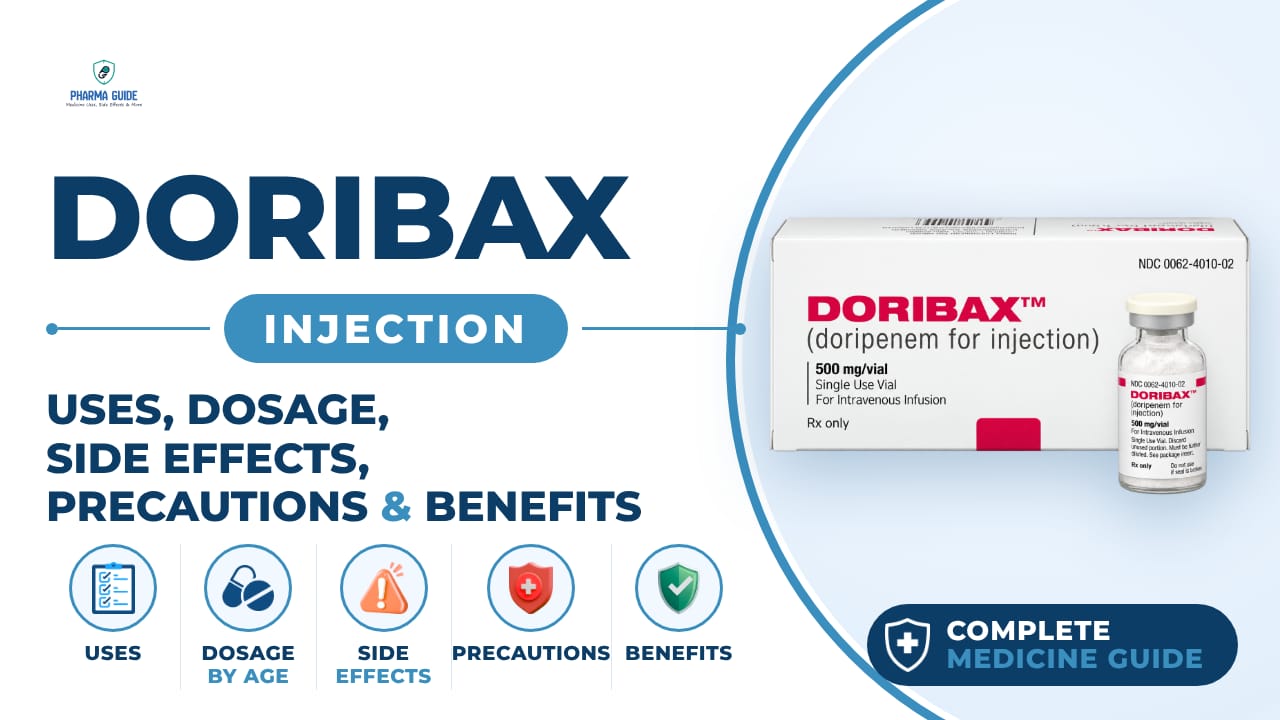
| Generic name | doripenem |
|---|---|
| Drug class | Carbapenem (antibacterial agent) |
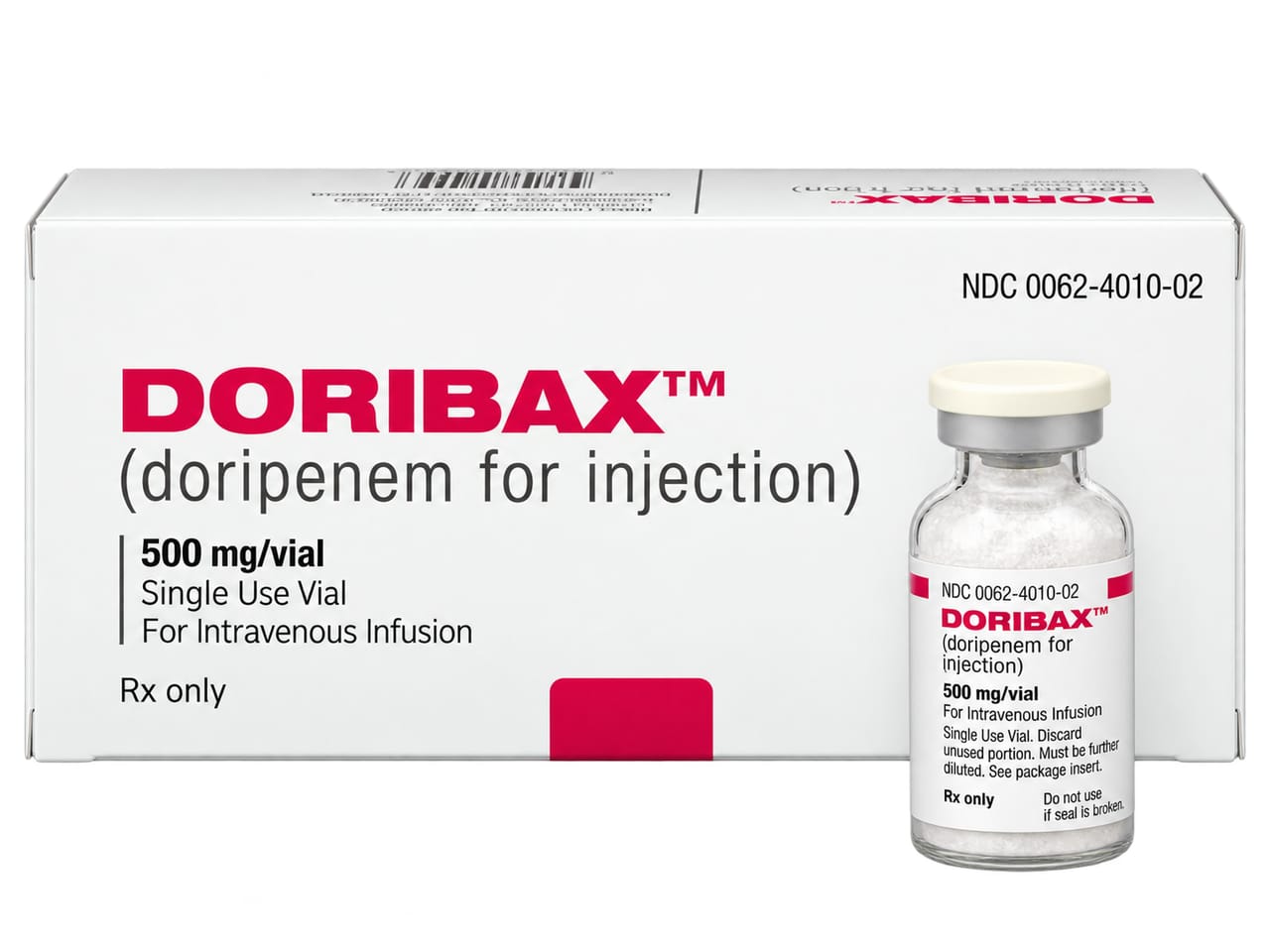
| Forms | Sterile powder for solution, for intravenous infusion (500 mg/vial; also available as 250 mg/vial in the US formulation) |
Quick overview
Doribax Injection (doripenem) is a carbapenem antibacterial agent given by IV infusion to treat serious bacterial infections, including hospital-acquired pneumonia, complicated abdominal infections, and complicated urinary tract infections. It works by stopping bacteria from building their cell walls, causing the bacteria to die. Note: Doribax has been discontinued in the United States, but this information may still be useful if you were previously prescribed it or if it is available in other countries.
What is Doribax Injection
Doribax is an antibiotic given by IV infusion that fights a wide range of bacteria. It belongs to a group of antibiotics called carbapenems and is used only for serious bacterial infections.
Doribax Injection uses
- Pneumonia that occurs in a hospital or similar setting, including pneumonia in patients on a breathing machine (ventilator-associated pneumonia)
- Complicated abdominal infections
- Complicated urinary tract infections, including kidney infections and cases that have spread to the bloodstream
Benefits of Doribax Injection
- Kills a wide range of bacteria that cause serious infections
- Can be used when infections are caused by bacteria resistant to other antibiotics
- Available for infections in multiple body sites, including the abdomen, urinary tract, and lungs
How Doribax Injection works
Doribax works by stopping bacteria from building their cell walls, which causes the bacteria to die.
Doribax Injection dosage
Doribax is given by a doctor or healthcare professional as an infusion into a vein; it is not a medicine you take by mouth. It is given on a schedule of every 8 hours. Treatment typically continues for about 5 days to 2 weeks, depending on the infection being treated. You may be switched to an oral antibiotic after you've had several days of the IV medicine and your symptoms have improved.
It is important to complete the full course of treatment exactly as prescribed, even if you feel better early, since stopping early can allow the infection to come back or become resistant to treatment. Tell your doctor if you develop watery or bloody diarrhea during or after treatment, and do not treat it yourself with anti-diarrhea medicine unless your doctor says to.
| Age group | Dose |
|---|---|
| 18–39 years | 500 mg IV every 8 hours |
| 40–64 years | 500 mg IV every 8 hours |
| 65–74 years | Usually 500 mg IV every 8 hours if kidney function is adequate |
Available forms and strengths
- Sterile powder for solution, for intravenous infusion (500 mg/vial; also available as 250 mg/vial in the US formulation)
Side effects of Doribax Injection
Common
- Headache
- Nausea and vomiting
- Diarrhea
- Rash, itching, or hives
- Fungal infection (thrush) in the mouth or vagina, vaginal itching or discharge
- Increase in certain liver enzymes
- Pain, swelling, or redness at the injection site
Serious
- Irregular and fast heartbeat
- Kidney problems (much more or less urination than usual, or no urination)
- Low blood pressure (lightheadedness, dizziness, or fainting)
- Decrease in white blood cells, which may increase risk of infection
- Seizures/convulsions
- Severe or bloody diarrhea, which may signal a serious bowel infection (colitis)
- Liver problems such as hepatitis or cholestasis (dark urine, pale stools, yellowing of skin or eyes, stomach pain)
- Serious allergic reactions (anaphylaxis): severe rash, itching or hives, swelling of the face, lips, tongue, or other body parts, shortness of breath, wheezing, or trouble breathing
- Serious skin reactions: widespread rash, peeling skin, blisters on skin, mouth, nose, eyes, and genitals
Warnings and precautions
- Serious and sometimes fatal allergic reactions have happened with this type of antibiotic and could occur with Doribax.
- Seizures have happened in people treated with this type of antibiotic, especially those with existing brain or nervous system conditions, kidney problems, or on higher doses.
- Taking this medicine together with the seizure medicine valproic acid can lower valproic acid levels in the blood, increasing the risk of seizures breaking through.
- This medicine, like other antibiotics, can cause a serious bowel infection called Clostridium difficile-associated disease, which can range from mild diarrhea to life-threatening colitis.
- In one study, people with ventilator-associated pneumonia treated with a short 7-day course of this medicine had a higher risk of death and lower cure rates compared to a 10-day course of a comparison antibiotic.
- This medicine should not be given by inhalation, since this has caused lung inflammation (pneumonitis) in studies.
- This medicine should only be used for infections that are proven or strongly suspected to be caused by bacteria, since unnecessary use can lead to antibiotic-resistant bacteria.
- Doribax is not expected to harm an unborn baby, but it should be used during pregnancy only if clearly needed, since there isn't enough research in pregnant women. It isn't known if this medicine passes into breast milk, so caution is advised and you should tell your doctor if you are breastfeeding.
- People with kidney disease need a different dose of this medicine, so tell your doctor if you have any kidney problems. This medicine hasn't been well studied in people with liver problems, but it isn't expected to be affected by liver disease since it isn't broken down by the liver.
- No major direct interaction with alcohol is established. Because this medicine can cause seizures in some people, especially those with certain nervous system conditions, this should be considered before driving or using machinery.
Storage
- The dry powder should be stored at 15°C to 30°C (59°F to 86°F).
- After mixing with the diluent and infusion solution, the mixture should not be frozen.
- If mixed with normal saline, the solution can be stored at room temperature for up to 12 hours or refrigerated for up to 72 hours.
- If mixed with 5% dextrose, the solution can be stored at room temperature for up to 4 hours or refrigerated for up to 24 hours.
- Any unused mixture should be thrown away after the allowed storage time, since the product has no preservative.
When to see a doctor
- Get emergency help right away if you have signs of a serious allergic reaction, such as hives, trouble breathing, or swelling of your face, lips, tongue, or throat.
- Call your doctor right away if you have severe stomach pain, or diarrhea that is watery or bloody.
- Seek help immediately if you think you may have been given too much of this medicine, even if you have no symptoms.
- Call your doctor if you have signs of liver problems, such as dark urine, pale stools, or yellowing of the skin or eyes.
- Seek medical help if you have a seizure or convulsion while taking this medicine.
Alternatives
- Meropenem
- Ertapenem
- Cefepime
Watch the video
FAQs
What is Doribax Injection used for?
Doribax is used to treat serious bacterial infections including hospital-acquired pneumonia (including ventilator-associated pneumonia), complicated abdominal infections, and complicated urinary tract infections, including kidney infections and those that have spread to the bloodstream.
How is Doribax Injection given?
Doribax is given by a doctor or healthcare professional as an IV infusion into a vein every 8 hours. Treatment typically lasts about 5 days to 2 weeks depending on the infection, and you may be switched to an oral antibiotic after symptoms improve.
What are the common side effects of Doribax Injection?
Common side effects include headache, nausea and vomiting, diarrhea, rash, itching or hives, fungal infections like thrush, increased liver enzymes, and pain, swelling, or redness at the injection site.
Is Doribax Injection still available?
Doribax has been discontinued in the United States, but this information may still be useful if you were previously prescribed it or if it is available in other countries.
What precautions should be taken with Doribax Injection?
Doribax can cause serious allergic reactions, seizures (especially in those with nervous system or kidney conditions), and Clostridium difficile-associated diarrhea. It should not be given by inhalation, and people with kidney disease need a different dose.
General information, not medical advice
Your prescriber and the leaflet in your pack know your situation. This page does not.
- Follow your prescriber and the leaflet
- Don't start, stop, or change a dose on your own
- Doses and warnings differ by country and product
Sources
Video
Related medicines

Doripenem Injection: Uses, Dosage, Side Effects, Precautions and Alternates
Carbapenem antibacterial agent
Doripenem Injection is a carbapenem antibiotic given by IV for hospital pneumonia, intra-abdominal, and urinary infections. Learn uses, dosage, and side

Injectafer Injection: Uses, Dosage, Side Effects, Precautions and Alternates
Iron products
Injectafer (ferric carboxymaltose) treats iron deficiency anemia and heart failure-related iron deficiency via IV. Learn uses, dosage, side effects, and